
Most visitors come to Dubrovnik for the same reasons. They come for the limestone streets polished smooth by centuries of footsteps. For the imposing walls that once protected one of the Adriatic’s most prosperous maritime republics. For the panoramic views that make the climb worthwhile, even after what feels like an endless staircase. And lately, they come because Dubrovnik has become one of Europe’s essential destinations. A city where history, tourism and popular culture collide beneath the Croatian sun.
But for basketball fans, there is another attraction hidden in plain sight.
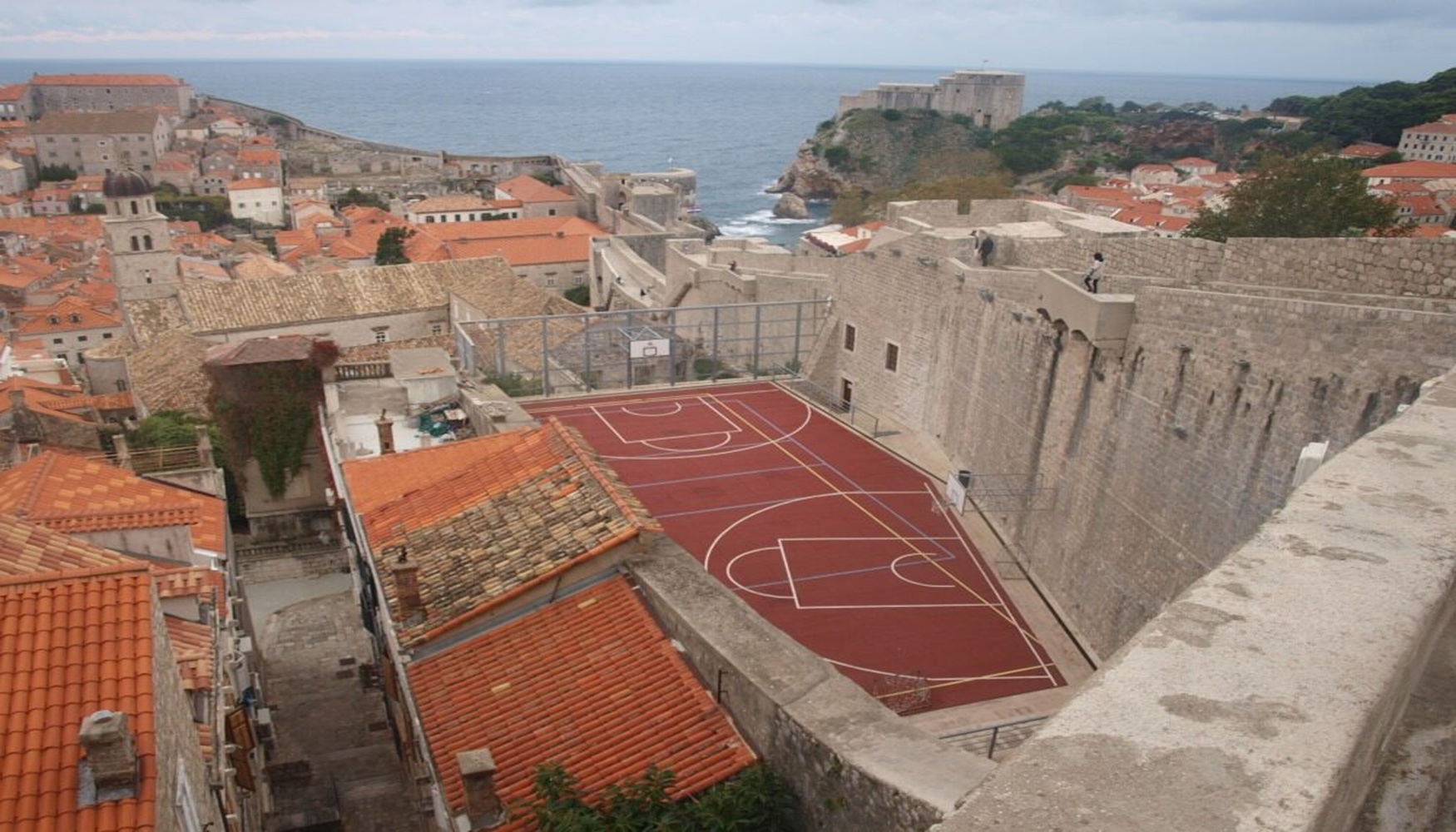
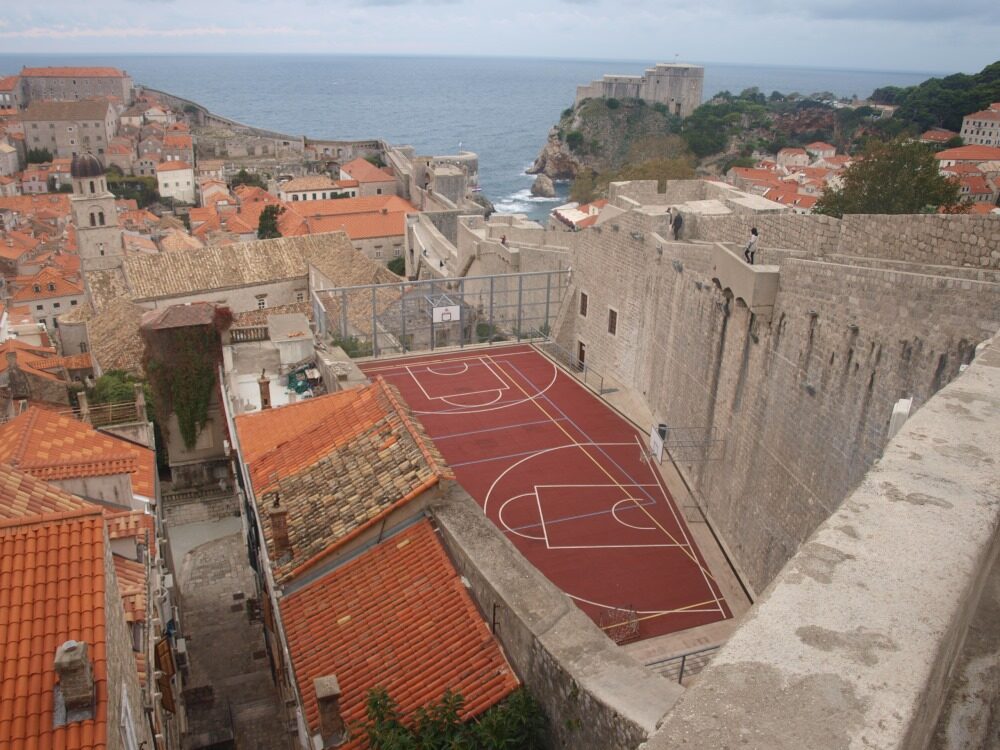
As you near the end of the walk along Dubrovnik’s famous city walls, something unexpected comes into view. Tucked into the northwestern corner of the old town, in an area known as Peline, sits one of the strangest basketball courts on Earth.
At first glance, it looks wrong.
One basket does not line up with the other. The court bends awkwardly through the middle, changing direction by roughly 45 degrees. It appears less like a regulation playing surface than a sketch forced to adapt to impossible surroundings.


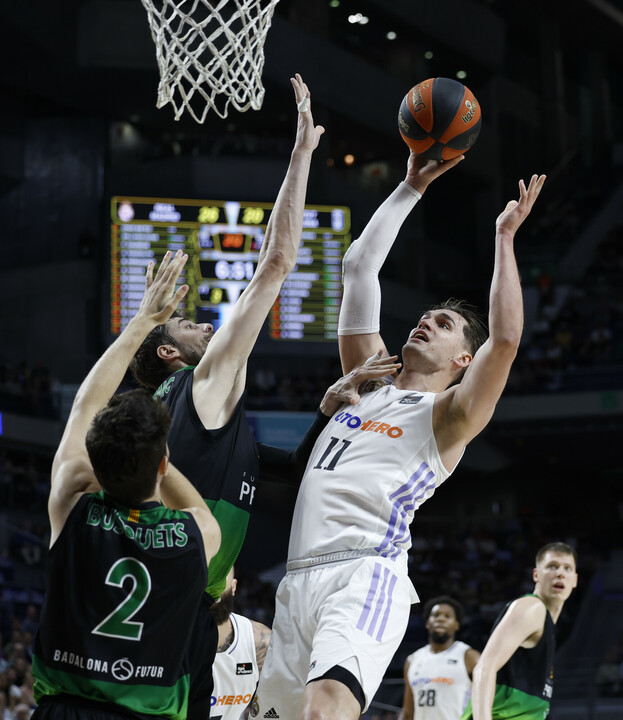
And in a way, that is exactly what it is. Because this isn’t just a basketball court. It is the latest chapter in a story that began more than six centuries ago. Croatia has produced basketball talent at a remarkable rate for a country of fewer than four million people. Dubrovnik, despite being better known for water polo, has contributed its own share of that tradition. Players such as Andro Knego, a member of the legendary Cibona Zagreb teams alongside Dražen Petrović, emerged from the city. So did Nikola Prkačin. More recently, Dubrovnik has produced NBA and EuroLeague-level talent including Mario Hezonja and Ante Tomić.
For a city of roughly 45,000 residents, it is an impressive basketball pedigree. Perhaps that helps explain why a game so dependent on creativity eventually found a home in one of the least conventional spaces imaginable.
The site’s story begins in the 14th century, when Dubrovnik expanded its defenses with the construction of the fortifications known today as Minčeta and Gornji Ugao. Centuries later, after the Ottoman Empire’s advance into neighboring Bosnia altered the geopolitical landscape of the region, the city strengthened its defenses again. A connecting wall created an enclosed space between the two fortifications.
In 1545, that space took on an entirely different purpose: a foundry was built there, producing everything from everyday metal goods to cannonballs. Protected by the surrounding walls and isolated from the city itself, the facility became an important industrial site within the Republic of Ragusa.
For more than a century, the foundry operated beneath the shadow of the city walls. Then disaster struck.
In 1667, a catastrophic earthquake devastated Dubrovnik. Much of the city was destroyed, and the foundry was buried beneath rubble and debris. Over time, the ruins disappeared from sight. But they did not disappear from use.
Children eventually reclaimed the forgotten space. Long before archaeologists arrived, local kids were already playing there.
The ground was rough—dirt, stones and whatever else happened to be underfoot—but that hardly mattered. The enclosed area became an improvised playground where football, basketball and every imaginable street game found a place.
Locals knew it simply as Partizan, remembering those who fought in the II World War. Generations grew up there. For years, the site also served as a sports ground for students attending the nearby primary school in Dubrovnik’s old town. Few people gave much thought to what lay underneath.
Then came the excavations.


Beginning in 2005 and continuing through 2008, archaeological work revealed the remains of the long-lost foundry exactly where historical records suggested it would be. The discovery created a dilemma: the ruins were historically significant and deserved protection, but the city also wanted to preserve the public sports space that local children had used for decades.
And the solution was ingenious.
The archaeological remains were covered and protected beneath a concrete structure. Above it, a new court was built. The result is the court visitors see today: a basketball floor suspended over a medieval industrial site. A streetball court literally built on top of history.
Its unusual shape was unavoidable. A standard full court would never fit inside a space originally designed as part of a defensive fortress system. So rather than force a conventional layout, the designers embraced the constraints.
The court was intended primarily for pickup basketball—3-on-3, 2-on-2 and youth games. The geometry may be unconventional, but the purpose is not. Like countless neighborhood courts around the world, it exists because people wanted a place to play.
What separates Peline from every other outdoor court is everything surrounding it. One basket faces the old city. The other points toward the Adriatic.
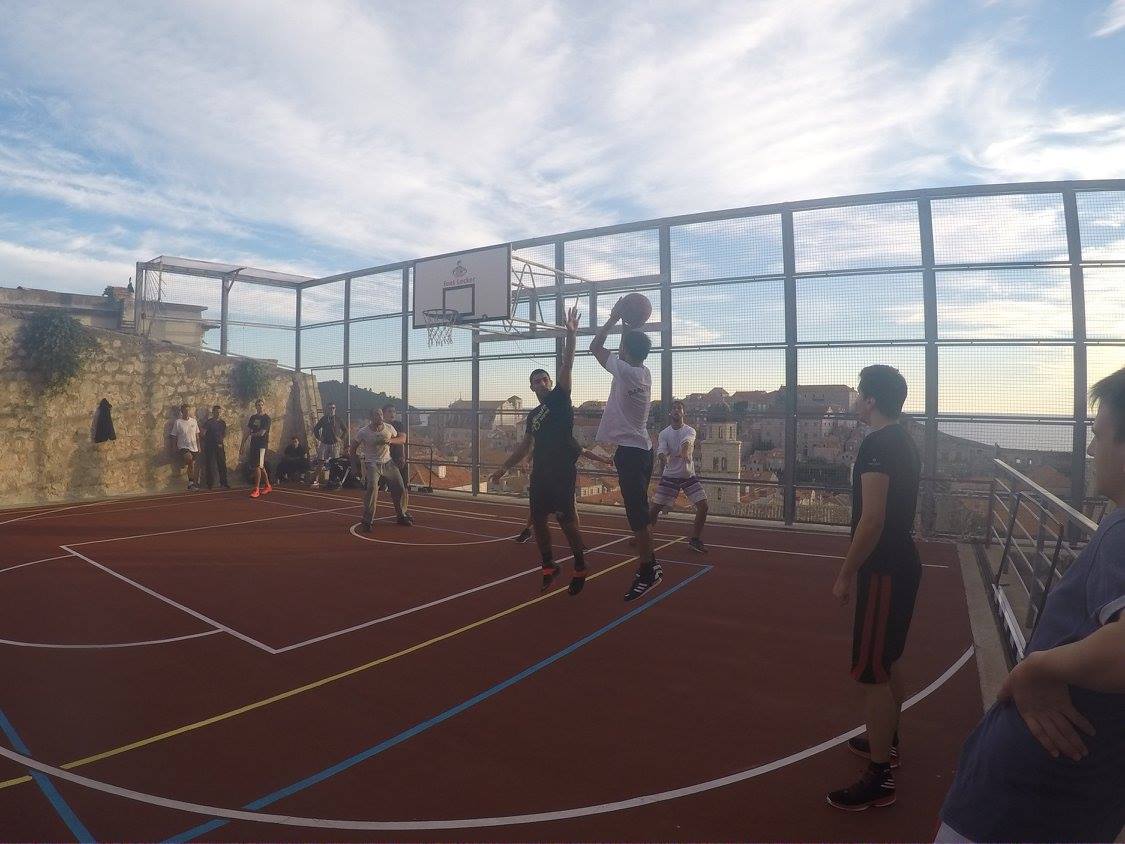
When you attack the southern hoop, your peripheral vision fills with terracotta rooftops, stone towers and the deep blue sea beyond. There are few places in basketball where a fast break comes with a UNESCO World Heritage backdrop. The setting is so striking that it has repeatedly attracted global attention.
The court appeared in promotional material connected to the video game FIFA Street, where players could watch Lionel Messi perform tricks in a digital recreation of the venue. It has also featured in commercial campaigns involving NBA superstar Kevin Durant.
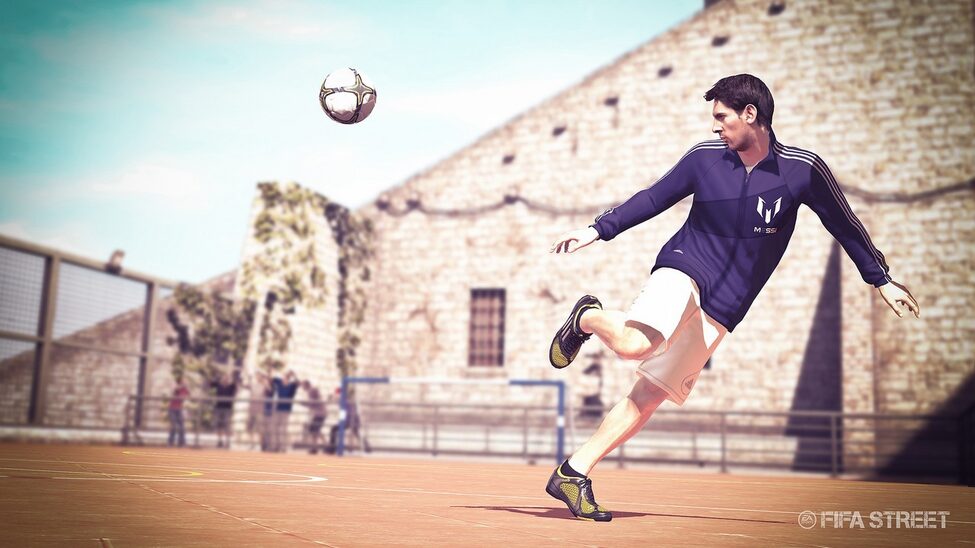
Yet despite the photos, the advertisements and the social-media fascination, the court remains fundamentally what it has always been: a neighborhood place to play. That may be the most appealing part of the story.
In a city increasingly defined by tourism, cruise ships and television fame —thanks in part to Dubrovnik’s role as King’s Landing in Game of Thrones— the Peline court still feels authentic. It was not built to become an attraction. It became an attraction because people played there. Because children turned forgotten ground into a playground. Because a city with a deep sporting culture refused to let a public space disappear.
And because basketball, perhaps more than any other sport, has always found a way to adapt to whatever space is available. Even if that space happens to sit atop a buried foundry, inside a medieval fortress, overlooking the Adriatic Sea.
In Dubrovnik, that combination has created something unique: not just one of the world’s most unusual basketball courts, but one of its most remarkable places to play.