




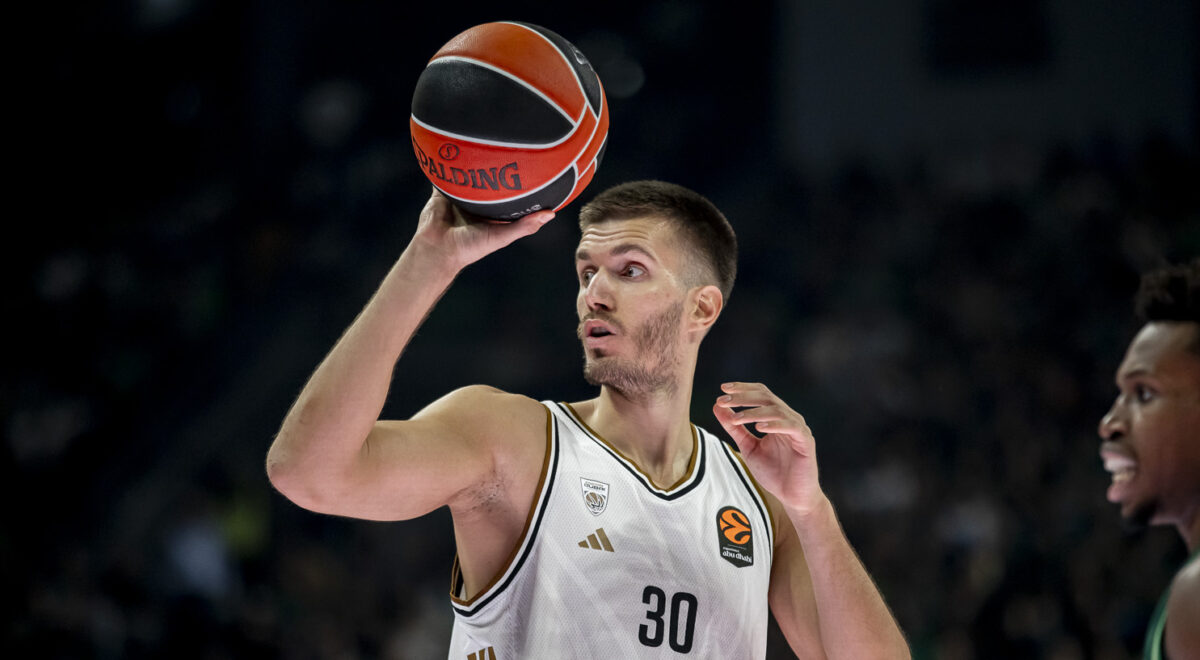


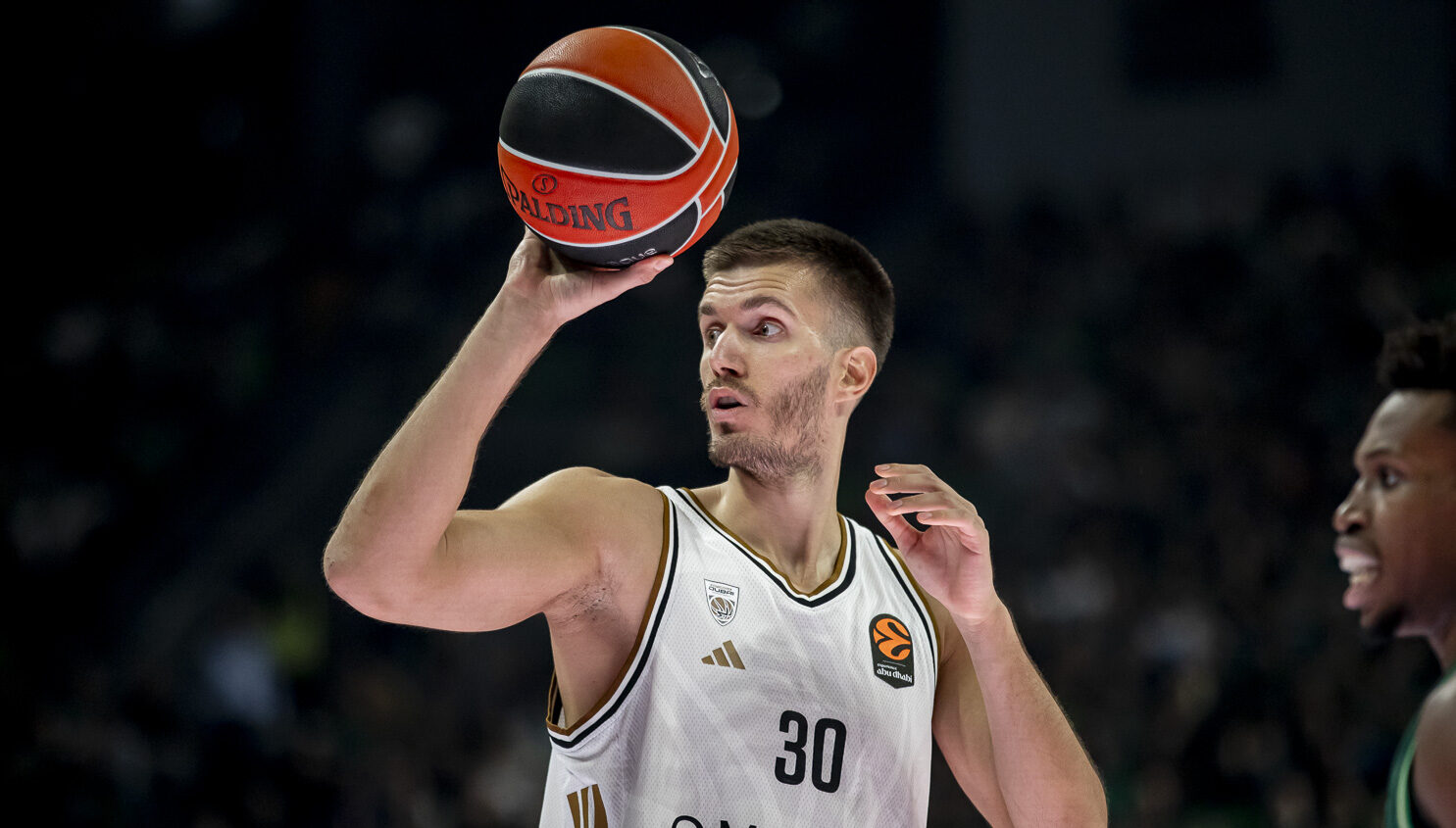
At 26, Filip Petrušev has already experienced more than many players do in an entire career.
He has been an NBA player, won trophies in Europe, played under some of the continent’s most demanding coaches, represented Serbia on the biggest international stage and, last summer, became one of the most talked-about names on the transfer market by joining Dubai Basketball.
The road hasn’t always been smooth. Injuries have tested him. So has criticism.
Now, though, Petrušev says the biggest change has happened away from the court.
“I’ve become calmer,” he says. “I don’t let narratives, other people’s opinions or the media affect me anymore.”
In this conversation with SK Week, Petrušev opens up about recovering from a knee injury, explains why Dubai exceeded his expectations, reflects on working under coaches such as Duško Ivanović, Ergin Ataman and Giorgos Bartzokas, recalls guarding LeBron James, discusses Vasilije Micić’s influence and shares how his perspective on basketball – and life – has changed over the past few years.
“I Just Can’t Say No. I’ll Play Through Pain.”
Let’s start with your health. You had a difficult season physically. How are you feeling now?
Yeah, I had a pretty serious issue. It’s the kind of cartilage damage you usually see in players in their thirties, not at 26. So…
What exactly happened?
I have significant cartilage damage in one knee. I also developed two bone bruises, and I played through the entire season with those, relying on injections, painkillers and everything else. Somehow I got through it, although I had to miss quite a few games and practices. It’s much better now. Right now I’m focused on getting my knee ready for what’s ahead.
What’s the treatment now?
I’ve finished the injections and therapies that help regenerate the knee. The main thing now is strengthening the muscles around it. I also need to get the inflammation under control so I can play without pain and without limitations.
Is that why you missed Serbia’s FIBA qualifying games this summer?
I also missed almost the entire ABA League playoffs with Partizan. I tried to play one and a half games because I wanted to contribute to the team’s success. Winning the club’s first trophy meant a lot to me, so I’m glad I was able to be part of it.
Maybe it wasn’t the smartest decision, but I just can’t say no. I’ll play through pain. I’ll play even when I’m not nowhere near 100 percent.
Have you spoken with Serbia head coach Dušan Alimpijević?
We’re in constant contact – not only with the head coach, but with the entire national team staff, the strength coaches and the physiotherapists. Everyone is working toward making the best decisions for the national team.
From everything I’ve seen so far, coach Alimpijević seems like a fantastic person. We’ve known each other for a few years now, and I hope I’ll have the chance to work with him on the court very soon.
“Dubai Exceeded Every Expectation.”
Last summer there was a lot of discussion about your decision to join Dubai Basketball. A year later, what do you see as the biggest positives of that move?
“Honestly, the decision itself. Dubai is a great project. I had certain expectations when I signed, and they’ve all been exceeded – both on the basketball side and off the court.”
In what way?
“The club is constantly trying to improve and provide players with absolutely everything they need so they can focus solely on basketball.
The travel is longer, but it’s actually easier on us than it was with some of my previous teams in Europe. Back then I’d spend three hours squeezed into an economy seat. Here we travel on the best plane I’ve ever been on, so the trips feel much shorter and much more comfortable.
Life in Dubai is as good as it gets. That’s not just my opinion – every player on the team feels the same way.”
From a basketball perspective, there’s also less pressure, isn’t there?
“It definitely makes life easier. Although, to be honest, I don’t mind pressure. I actually enjoy everything that comes with playing in Europe, especially in the Balkans. But I also believe the biggest pressure should come from yourself. That’s how every professional athlete should think. I set the highest expectations for myself first. Only after that come the coach, the club or anyone else.”
“If People Knew the Whole Story…”
Quite a few Crvena zvezda fans didn’t take your departure very well. Does that bother you?
“I’d say there’s a very thin line between love and… let’s call it the opposite of love. Hate is probably too strong a word. Does it get to me? Maybe it does. But over the last few years I’ve trained myself not to let other people’s opinions affect me.
If people knew the whole story, they’d understand everything. But it’s not my place to talk about it. A lot happened behind the scenes.”
Dubai has a new head coach in Xavi Pascual. What are your first impressions?
“He’s an outstanding coach with an incredible résumé.
I haven’t worked with him personally yet. We’ve only had some indirect communication so far, but the most important thing is that we’re building a really strong team and addressing the areas where we felt we needed to improve after last season.
I’m confident we’ll take a step forward. Now we’ll see how big that step will be.”
When a new coach arrives, do you call players who have worked with him before to get some insight?
“I think that depends on the player. I’m not someone who overthinks things or tries to analyze everything.
I focus on what I can control. I adapt to every coach and every environment, and I try to do my job as well as I can. That’s pretty much it.”
“I Need Coaches Who Push Me Hard.”
That leads nicely to my next question. Since returning from the NBA, you’ve played for Ergin Ataman, Duško Ivanović, Giorgos Bartzokas, Ioannis Sfairopoulos and Jurica Golemac. Ivanović seemed to revive your career. Which coach suited you the most?
“In general, I respond better to coaches who push me hard. Coaches who aren’t afraid to get on me, who point out every mistake and constantly challenge me to improve.
That’s the environment I grew up in, and I think that’s why I had the most success under Duško and Sfairopoulos. They’re very different personalities, of course, but Sfairopoulos also pushed me to get the best out of myself.
Ataman and Bartzokas are outstanding coaches with incredible careers, but they don’t work with players in quite the same way. It’s not just about communication – it’s also about their overall coaching style, which maybe suits me a little less.
I’m not making excuses. I’m just saying I probably fit better with more demanding, old-school coaches.”
What is Bartzokas’ system like?
“He has a system that almost never changes. He believes in it completely, and in the end it brought Olympiacos the EuroLeague title after five Final Four appearances.
I was really happy for everyone at the club. It felt like a huge weight had been lifted off their shoulders.
It reminded me a little of our Olympic semifinal against the United States. For them, it wasn’t so much, ‘Yes, we won,’ but more, ‘Thank God we finally got it done.'”
“I’ve Never Watched That Game Back.”
Speaking of that game against the United States, it actually brings me to something I wanted to ask you. If you could replay one game in your career, which one would it be?
“I try not to think too much about that game because it brings back so many emotions… That’s definitely the one I’d replay. And the World Cup final in Manila, too. I’d love another chance to go for the gold medal.”
Have you ever watched the highlights?
“No way! Well… I’ve seen a few clips here and there, but that’s it.
I usually watch all my games afterward, but not that one. It stirs up too many different emotions.”
On the other hand, which game would you love to experience all over again because of the emotions it gave you?
“That’s an easy one – I actually have to pick two, and both are from my time at Zvezda.
The EuroLeague derby against Partizan away from home, maybe even the first one. There were only a handful of our fans in the arena, everything was against you… Those are the games that stay with you. They carry the most weight, and they’re the most enjoyable to play.
I’d also pick the Serbian Cup final in Niš. We were down by 15 or 20 points, then came back to win. Duško got ejected… It was complete chaos.
I love those kinds of games. That’s when basketball is the most fun.”
When we spoke at the beginning of 2025, I asked whether you preferred playing power forward or center. You said you enjoyed playing center more offensively because it gave you more options, but that you didn’t like the constant physical battles inside. Defensively, you preferred playing power forward. Has anything changed since then?
“Not really. I still feel the same way.
Last season I mostly played at power forward, so I didn’t get enough minutes at center to really put that theory to the test.”
For readers who may have missed that interview, here’s what Petrušev said a year and a half ago:
“At center I can space the floor, attack off the dribble because I’m usually quicker than the opposing big, but that’s not all. I can also slip to the rim, catch lobs and finish above the basket. I think that kind of versatility at the five isn’t very common.
Of course, it also depends on who’s guarding you. If you’re playing against someone like Walter Tavares, naturally you’ll spend more time on the perimeter.
Overall, I feel I have more freedom offensively at center. I can read the matchup and make different decisions out of the pick-and-roll. The only thing I don’t like is the constant physical contact.
That’s why I prefer defending at power forward. Especially in Europe, where fours are different from the NBA. I can match up athletically with most of them, inside and outside, and there’s less contact, so it’s less demanding physically.
Offensively, I also feel I have an advantage in the post because many power forwards are undersized. I can punish mismatches, whether it’s one-on-one or against double teams. Teams also don’t run as many pick-and-rolls with the four, which sometimes creates confusion for the defense and opens up different options for me.”
“People Have No Idea How Big Kabengele Is.”
Mfiondu Kabengele was one of the biggest surprises in the EuroLeague last season. What was it like playing alongside him?
“That’s my brother!
He’s a unique guy, but I’m someone who understands people.”
What do you mean by unique?
“Some people might say he’s a little unusual because he’s very emotional. One day he’s like this, the next day he’s completely different.
But we understand each other really well. We built a great relationship, both on and off the court.
Even I was surprised when I met him in person. People have no idea how big and strong he really is. And despite that size, he’s incredibly mobile.
On top of that, he has the creativity to improvise in certain situations, make a guard-like move and score. You watch it and think, ‘There’s no way someone built like that should be able to do that.’
He’s a fantastic basketball player.”
In your opinion, who’s the toughest player to guard in the EuroLeague?
“Sylvain Francisco is really difficult.
So is Kendrick Nunn, especially when he gets matched up against a bigger defender. At that point, the whole defense has to be involved because there’s not much you can do one-on-one.
I really respect players who force an entire defense to focus on them.”
Nikola Kalinić once said he reached a point where he simply didn’t know what else to do when guarding Kevin Durant. Have you ever felt that way against someone?
“Not in the EuroLeague.
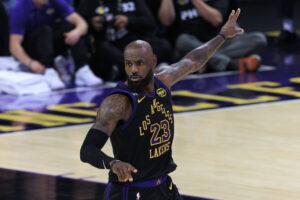
I didn’t guard Durant that much, so I’d probably say LeBron. You always had the feeling that whenever he wanted, he could just put his head down, get to the rim and there was nothing you could do about it.
Then there’s Embiid and Jokić. I mean… there’s not much to say. That’s just unreal quality.”
Now that you’ve mentioned all those players… is there still a part of you that thinks about returning to the NBA?
“Yes and no.
Definitely not the way I used to, but I’d still like to get a real opportunity. The first time, things started really well, but then, like so many things in the NBA, a trade that had nothing to do with me changed everything, and from there it all went downhill.
Players from this part of the world usually make the most of their opportunities when they get them. Of course I’d like another chance, but it’s not something I’m obsessed with anymore.”
“He Loves Talking. I Love Listening.”
What would you still like to achieve with the Serbian national team before your career is over?
“Definitely a gold medal. It doesn’t matter which tournament it’s at.
We’ve won silver at the World Cup and bronze at the Olympics. Gold is the one we’re still missing.”
How do you see your role with the national team in the years ahead?
“I think I’ve established myself pretty well in the national team, and a lot of the credit goes to Coach Pešić. He believed in me and knew how to use me.
Just like before, we follow our leaders – Bogdan (Bogdanović) as our captain and Nikola (Jokić) as the best player in the world. The goal is to keep showing up every summer, stay together as much as possible and keep chasing the best results.”
You’re still far from being a veteran, but younger players are already coming into the national team. When you first arrived, what did it mean to have older teammates around you?
“The biggest thing for me was knowing there was always someone I could turn to.
At Efes, I had Vasa (Micić). At Olympiacos, it was Milutinov. With the national team, I remember some of the FIBA windows when Miroslav Raduljica welcomed me into the group.
It wasn’t about one specific thing. It was more about getting to know everyone naturally, spending time together and feeling accepted.”
That brings me to another question. Who was the best teammate you’ve had in that sense – not necessarily as a player, but as a person?
“There have been quite a few, but I’d probably single out Vasa.
Efes was the first time I played professionally outside Serbia. Vasa has always liked helping younger players, not just me.
At that stage of my career, it meant a lot because I wasn’t playing much and there was a lot going on. He probably helped me more than anyone.”
Did you actually follow his advice, or was it more about the way he treated you?
“Well, Vasa can definitely overdo it with the advice sometimes,” Petrušev laughs.
“It was an everyday thing. He loves talking, I love listening.
Most of his advice was about work and constant improvement. No matter what you’ve achieved, there’s always something you can get better at. That’s something that’s stayed with me.”
With that in mind, what’s the next area of your game you’d like to improve?
“Right now the priority is my knee. I want to give it the attention it needs so I can play for as long as possible.
From a basketball standpoint, I’d like to become a more consistent three-point shooter and improve my percentages.”
The EuroLeague schedule has become a major topic in recent years. How difficult is it to stay mentally fresh through such a demanding season?
“It’s a serious challenge.
Every year I get to know myself a little better. I’m learning to recognize when I need to rest, when the schedule becomes too much and when I need to find time for extra work without overdoing it.
It’s all about finding the right balance between recovery, practice and rest so you can get the most out of yourself.”
“I’m More at Peace With Myself.”
What do you like most about yourself – and what would you like to change?
“The thing I like most is that I’m pretty easygoing.
A lot of things simply don’t affect me anymore – narratives about me, other people’s opinions, the media…
On the other hand, sometimes I’m a little too easygoing,” he laughs.
“There are moments when I probably need to be more serious and approach certain situations differently.
It’s really two sides of the same coin.”
Finally, how have you changed the most as a person over the past five or six years?
“I’m calmer now.
I don’t have big emotional reactions anymore, and I try to look at everything in life – and in basketball – with a cooler head.
I’m still working on it, but overall I’m much happier with who I am. I’m more at peace with myself.
I think that’s going to be very important for my future.”