European basketball is entering a season in which the traditional relationship between sporting success, financial power and access to the continent’s elite is being tested like never before. STAY IN TOUCH FOLLOW ON GOOGLE Few clubs find themselves closer to the centre of that debate than JL Bourg. After reaching the EuroCup final in 2024, […]
European basketball is entering a season in which the traditional relationship between sporting success, financial power and access to the continent’s elite is being tested like never before.
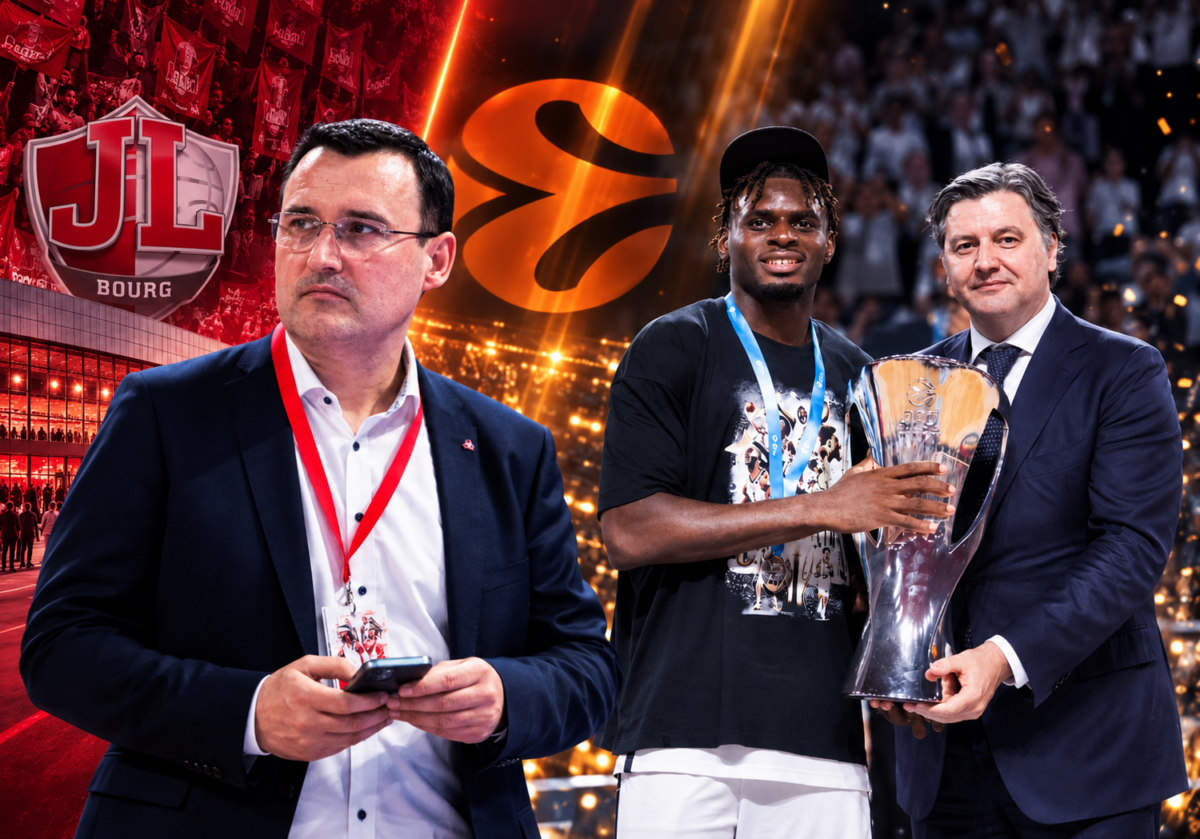
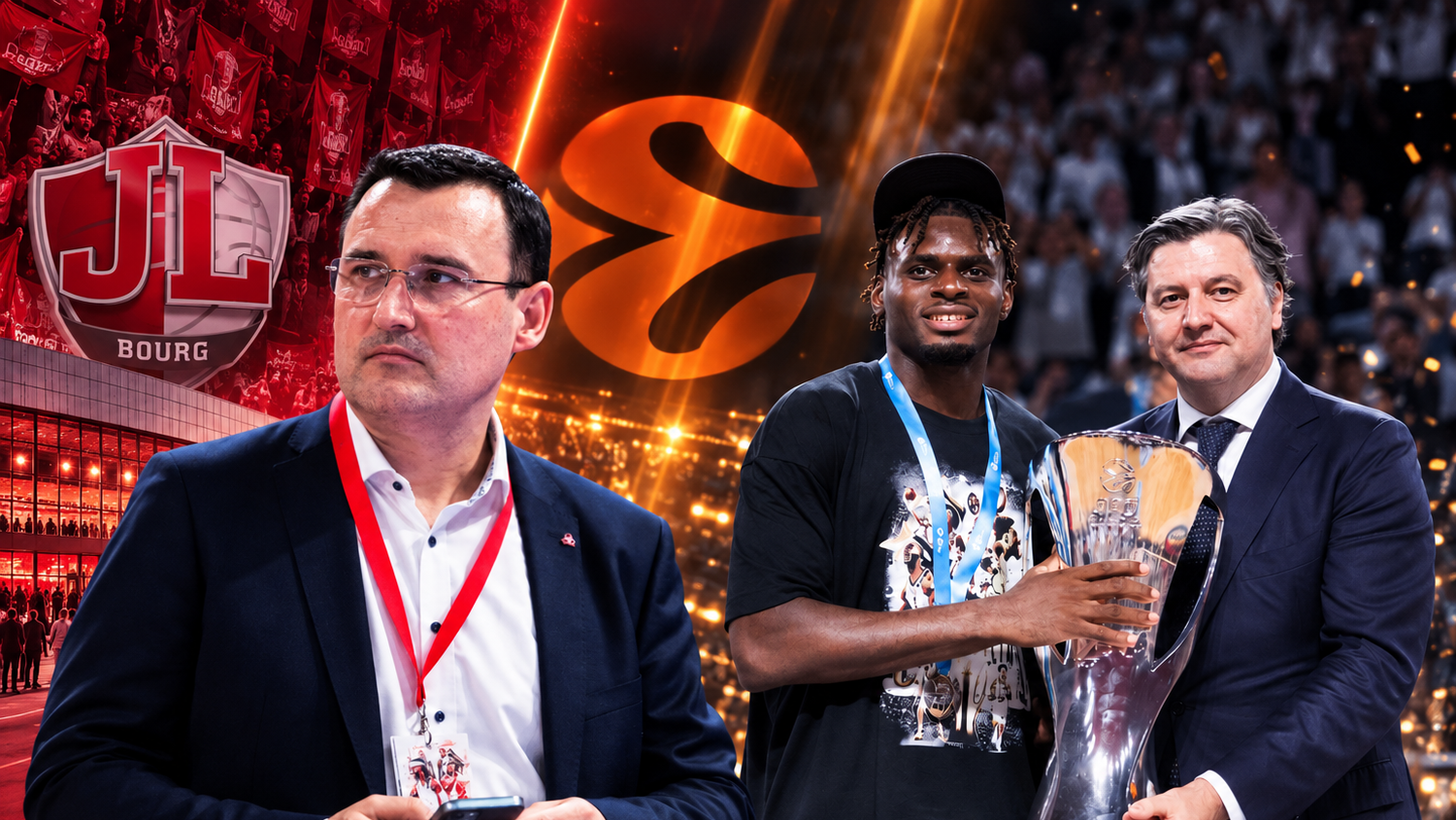
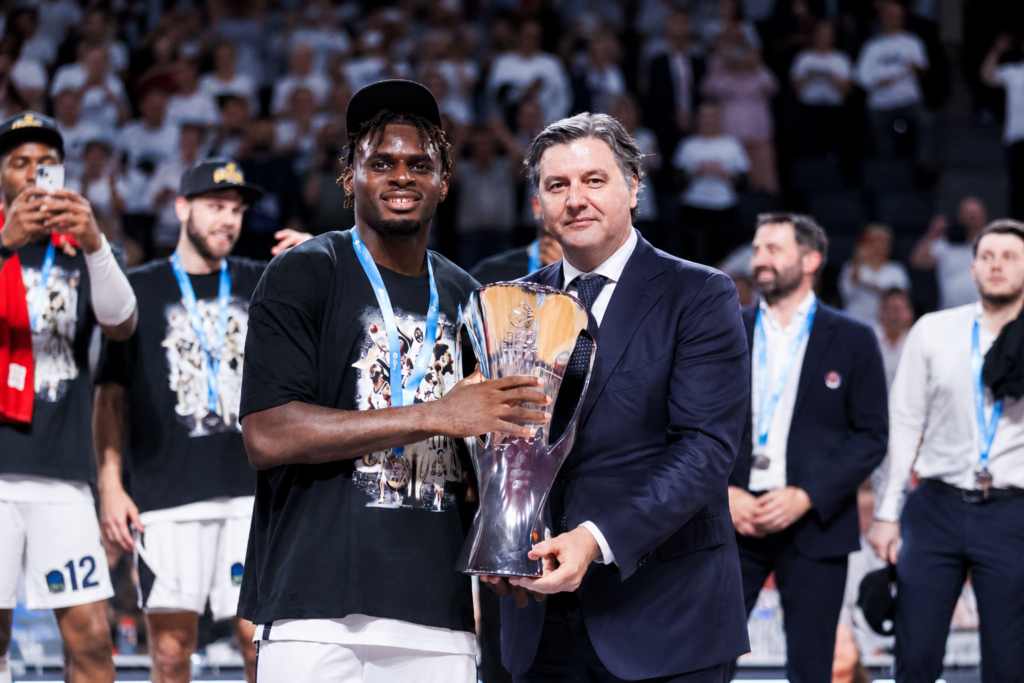
Few clubs find themselves closer to the centre of that debate than JL Bourg. After reaching the EuroCup final in 2024, the French club went one step further in 2026, winning the competition and earning the sporting opportunity to move into the EuroLeague. Yet the realities surrounding such a step proved considerably more complicated than simply accepting the reward that came with the title.
Bourg operates in a very different financial universe from many of the organisations now shaping the European market. Across both the EuroLeague and EuroCup, budgets have risen sharply, salaries have accelerated and ambitious projects backed by substantial private investment have changed what clubs must spend simply to remain competitive.
The landscape is particularly striking this season. Panathinaikos and Olympiacos remain among the major forces of the EuroLeague, while Hapoel Tel Aviv and Dubai have added another financial dimension to the competition. One level below, clubs including PAOK and Aris enter the EuroCup with renewed ambition and resources, further raising the competitive and economic bar.
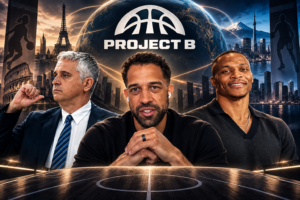
At the same time, the structure above those competitions is itself in flux. EuroLeague is planning its next stage of development while the NBA and FIBA continue working on their proposed European competition, creating questions over franchises, markets, investment and the future role of sporting qualification.
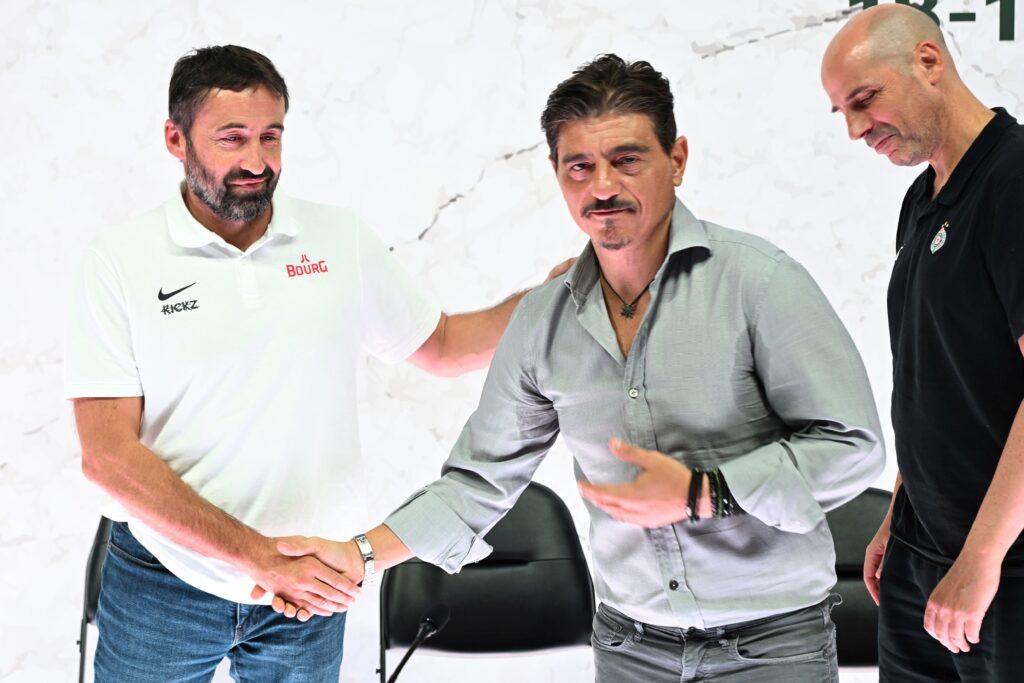
Bourg has already experienced those contradictions firsthand. Despite entering the season as EuroCup champion, the club was ultimately not included in the EuroLeague SuperCup in the UAE. Instead, Bourg traveled to Athens after being invited by Panathinaikos to the Pavlos Giannakopoulos tournament, an invitation that gives the reigning EuroCup winner the opportunity to test itself against EuroLeague opposition before returning to the competition it won last season.
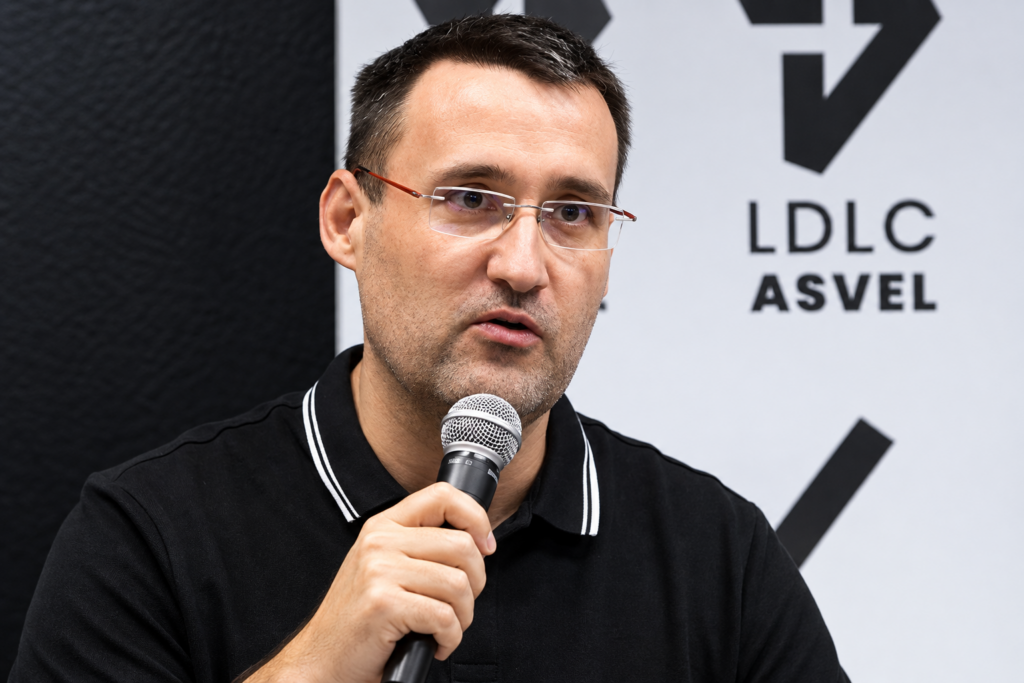
Against that backdrop, Francois Lamy offers an unusually broad perspective. Now at the age of 50, Lamy has experienced European basketball from almost every side of the business. Before becoming one of the architects of Bourg’s rise as the club’s sports director, he spent more than two decades as a player agent, representing hundreds of players and playing an important behind-the-scenes role in Nanterre’s remarkable rise, which included the 2013 French championship and European success.
He then moved into club management, joining Tony Parker at ASVEL in 2019 and helping the organisation through its transition into EuroLeague and the process that culminated in a permanent licence in 2021. After a spell as assistant general manager at Zalgiris Kaunas — becoming the first French executive to hold such a position at a foreign EuroLeague club — he joined Bourg in 2022. Since then, the club has reached two EuroCup Finals in three years, culminating in the 2026 title, the first European trophy in Bourg’s history.
In this extensive conversation, Lamy discusses the economics behind Bourg’s choices, the rapidly changing transfer market, the new European projects, recruitment and player development, the EuroLeague–NBA Europe divide and a fundamental question facing the sport: what place remains for clubs whose greatest competitive advantage is not money, but the quality of their work?
You won the EuroCup, earned the sporting right to move up, but decided that entering the EuroLeague could be financially dangerous — you even described it as potentially “almost suicidal.” What numbers made you reach that conclusion? What would a competitive EuroLeague season actually have cost Bourg, and how far was that figure from the budget you could responsibly sustain?
It is difficult to estimate the exact cost. EuroLeague’s LRL under its Financial Fair Play Regulations was raised this season. For an associated club through Eurocup, it is 3 million euros net more than we will spend on our roster this coming season. Given the French tax system, it would have been unsustainable. The workload involved in constantly having to play games on the road would also have taken an unbearable toll on the club’s employees. That is what I meant by that expression. It would have been a one-off, and the club might have lost half of its workforce, if not more, with people leaving after such an overloaded season.
“Our net roster spending will be €1.6 million”
You said earlier this year that the median net salary on a EuroLeague roster is now around €1 million, whereas not long ago that was star-player money. Now you are seeing EuroCup clubs with €5-10 million net player payrolls. Where does Bourg sit in that landscape?
As I just mentioned, our net roster spending for this season will be €1.6 million. There are teams competing with much smaller budgets, but I think we are at the lower end of the scale, probably somewhere between 15th and 20th among the 32 clubs. Compared with the powerhouses preparing to bid for EuroLeague franchises, we are a very long way behind, probably by a factor of three to six.
From your perspective as someone actually operating in this market, what do you make of what Aris and PAOK are building? Are we reaching a point where clubs traditionally outside the EuroLeague can suddenly spend at a EuroLeague level because they are positioning themselves for whatever comes next?
Those teams are preparing to make the jump into a whole new reality with EuroLeague 3.0. That is exactly why there was such a high level of investment this summer and, consequently, very significant salary inflation across the market. I do not know enough about Aris’s plans or project. I was shown what PAOK wants to build, as well as the owner’s ideas and plans, and it looked well thought through and carefully planned as a long-term project that could become a healthy part of the overall picture.
Bourg’s alternative to money
Bourg won this competition last season, yet you have said that officially targeting another title would be unrealistic against clubs with five times your resources or more. So what is your competitive advantage? When you cannot win the auction for a player, what can Francois Lamy and JL Bourg offer that wealthier clubs cannot?
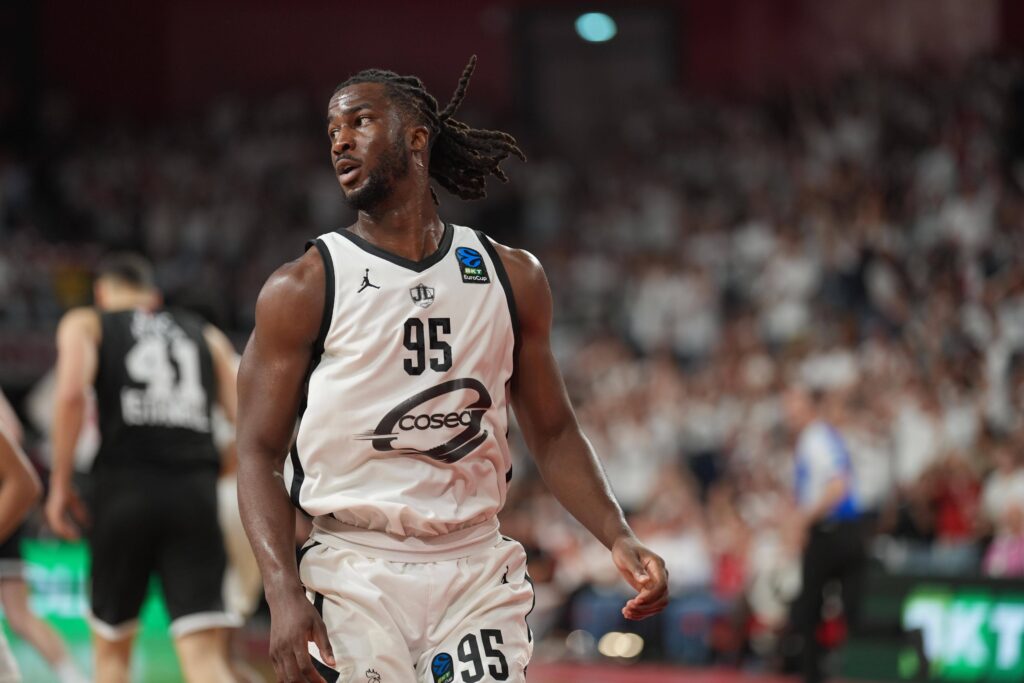
We decided to be a launching pad for players with the potential to reach the highest level. That was particularly obvious in 2023-24 with Zaccharie Risacher, but also with Isiaha Mike, Jeremy Morgan and Bodian Massa. Those players made major strides in their careers after signing with Bourg.
We try to be precise in identifying the profiles of players whom we believe we can help reach the next level; we do not make that promise to every player. In fact, we never overstate what we can do. We are realistic, hard-working people who offer a no-drama environment in which players can focus on their development through collective results. But we are not the only club doing this. It is common among clubs with fewer financial resources that work hard and try to overperform; there are many of them in both the EuroCup and the BCL.
How do you identify a Tyson Walker before a richer club does, how much of recruitment today is analytics versus scouting versus relationships, and how much has your 20-plus-year background as an agent become an advantage?
There is no single recruitment formula, particularly at our financial level. Data, video scouting, live evaluation and relationships all provide different pieces of information, but none of them should become a belief system that excludes the others.
Working at Ζalgiris alongside a very good data scientist opened my mind to advanced statistics. They can identify tendencies, challenge an impression or direct us towards a player, but they should never determine an entire recruitment strategy. Tyson Walker is a good example of what we try to do.
It is not about discovering a player nobody else knows. It is about identifying early which qualities can translate to our level, understanding how the player fits our basketball and our environment, and then being prepared to make a clear commitment before the market has completely formed.
We cannot wait until July for a player who has already rejected us five times and eventually accepts because every other option has disappeared. The mindset required to compete collectively within our budget cannot coexist very well with a decision based mainly on financial motives. I understand and respect those motives, but that is simply not our reality.
My background as an agent is definitely an advantage because I understand how agents and players approach the market, and I can rely on long-standing relationships with former colleagues. Those relationships may provide information and create trust, but they never replace evaluation.
In the end, recruitment remains a combination of evidence, experience, knowledge of people and, inevitably, some intuition. We mostly have to ackowledge that nobody is right all the time. We have to remain humble, examine why a decision worked or failed, and continuously improve our process.
An unlimited budget? Jean Montero
Tomorrow Julien Desbottes tells you: “Francois, forget the budget. You can sign any one player in European basketball for JL Bourg.” Who do you sign? And who is the undervalued player you believe could become an elite EuroLeague player?
Tony Parker once asked me that question, and at the time I answered Toko Shengelia. That was four or five years ago.
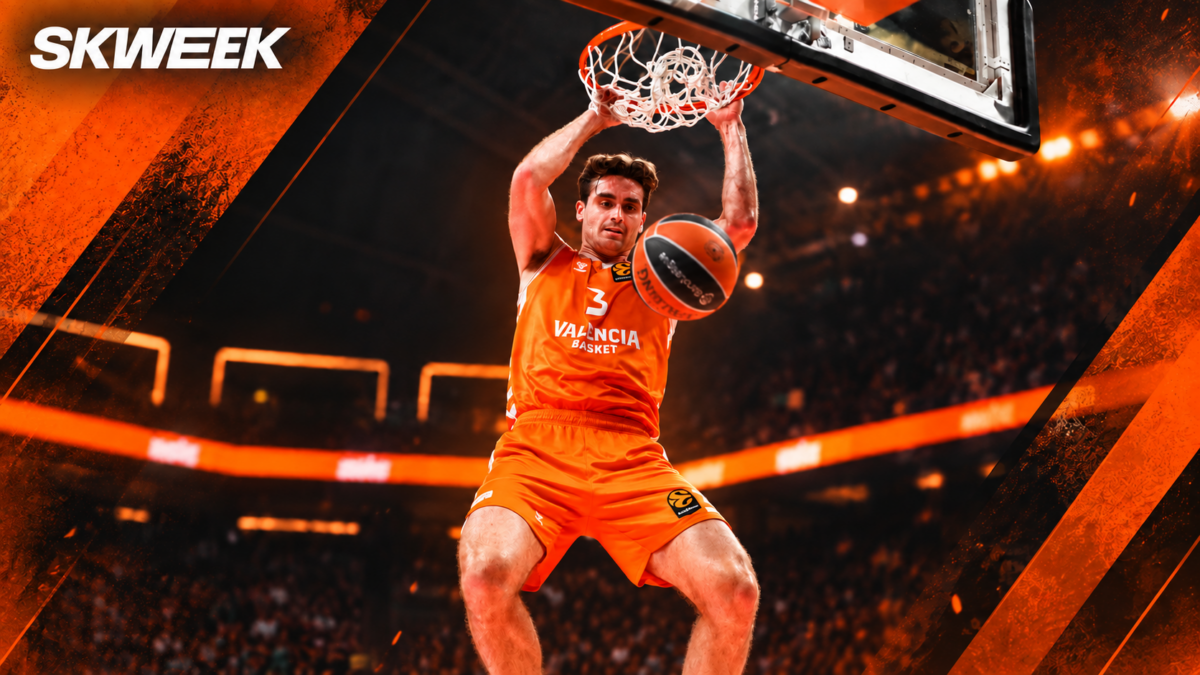
Nowadays, considering how guard-oriented basketball has become, it would definitely be a guard. Valencia’s guards were truly amazing last season, but if I had to pick one today, it would be Jean Montero. His motor and confidence are mesmerising; it feels as though the sky is the limit for this still-young player.
If I had to choose a diamond in the rough, I would go with our current guard, Assemian Moulare. He has the same speed, motor and grit that elevated Montero, Brancou Badio and Sylvain Francisco.
Panathinaikos, the SuperCup and the irony of sporting merit
As EuroCup champion, Bourg were apparently supposed to participate in the new EuroLeague SuperCup, but were ultimately left out while Olympiacos, Fenerbahce, Real Madrid and Dubai will form the field. At almost exactly the same time, Panathinaikos invited you to the Pavlos Giannakopoulos tournament precisely because of what Bourg achieved. Did you see some irony in that?
Considering the historically tumultuous relationship between Panathinaikos and EuroLeague management, yes, there is some irony. But things seem to have smoothed out.
I did not like this change of plan by EuroLeague management. I understand it, but I do not like it. I think many people can find inspiration in Cinderella stories, especially in today’s world. Rewarding our achievement—and particularly the fact that we reached the final in 2024 and then managed to win in 2026—would, in my view, have been a good idea.
It would also have sent a positive signal to all the clubs that are not destined to play in the EuroLeague, showing them that they can still feel part of this ecosystem. That change to the rules governing SuperCup participation made me feel that smaller organisations are not part of that ecosystem.
Τhat being said, we are extremely honored and thankful for Panathinaikos to have extended this invitation for us, and offer us a feel of EuroLeague before the season starts.
Does that tell us something deeper? Is European basketball moving from a sporting hierarchy toward one based primarily on economic value? Where does sporting merit survive?
The answer is in the question: it does not survive. Again, as much as I disapprove of this and think it sends the wrong signal to the general public, I understand the financial realities behind it.
There is a fierce institutional battle under way in pan-European basketball that looks a lot like an arm-wrestling contest. Obviously, gathering as much financial support as possible behind your product is one way to demonstrate your strength. It is a short-term vision and objective, but I understand that this is the reality decision-makers are facing.
Let us say that JL Bourg was unlucky in terms of timing. It still could and should have been handled with much more elegance and respect—not only for our result and our club, but also for the important concept of sporting merit, which has a strong legal meaning under European regulations. But it is time to move on and refocus on the court.
Panathinaikos, Olympiacos, Hapoel, Dubai and the spending boom
When you look at Panathinaikos, Olympiacos, Hapoel and Dubai, are they simply ambitious clubs — or are they symptoms of the “speculative bubble” you have warned about? Where is the line between healthy investment and economically irrational spending?
Those clubs and their financial power are crucial to professional basketball. One of the fundamental motivations in elite sport is the possibility of maximising your potential and being rewarded for your talent and effort with a life-changing contract. Only clubs with significant resources can provide that, so investment itself is not the problem.
The line is crossed when spending no longer has a credible relationship with recurring revenues, and when the entire project depends either on one owner permanently accepting the losses or on the promise of a future valuation that has not yet been demonstrated.
Ambition is healthy when investment helps the club, the competition and the overall basketball economy grow. It becomes economically irrational when expenditure is treated as proof of value in itself. That is where the organisations running the competitions have a responsibility. Their role should be to create the conditions in which investment becomes sustainable and benefits more than a small number of clubs and players.
Instead, money is too often allowed to become the primary objective of institutions that should also be protecting competitive balance, contractual stability and the long-term development of the sport.
The NCAA situation is one example. Everyone complains about the recruitment of young European talent, but I do not see a sufficiently collective and structured European response. Institutions presented as educational organisations can come to Europe and encourage young players to disregard existing agreements, while we remain largely passive. I have seen better examples of education.
Money is not inherently the problem; the problem is the environment institutions create around it. It may sound idealistic, but sporting organisations should be idealistic. Their purpose cannot be limited to maximising the short-term financial interests of the most powerful stakeholders.
Who ultimately pays for European basketball’s boom?
If clubs are paying €5-6 million net to individual players and building €50-60 million budgets while basketball’s commercial revenues do not remotely resemble the NBA’s, who ultimately pays for this? What happens if investors decide the valuations they were promised are not achievable?
For the moment, the difference is mainly paid by owners, shareholders and sponsors who accept that their investment may not be supported by the club’s direct commercial revenues. There is nothing inherently wrong with that. Many important sporting projects have been built through patient investment. But if the promised valuations are to become real, someone eventually has to consume the product at a level capable of sustaining them.
Basketball’s value as a commercial product ultimately depends on public interest and on the creation of regular, affordable and sustainable consumption habits. There are obviously business-to-business revenues, sponsorship and other channels that can support the model, but the Covid period reminded us that the fundamental value of professional sport still comes from its connection with the public.
I am entirely open to the optimistic scenario in which European basketball grows significantly and creates the revenues required to justify these budgets. But if the economic model assumes that the average spectator will soon be able and willing to pay €150 for an elite basketball game, I do not think that reflects the reality of most of the European public today.
If the expected revenues and valuations do not materialise, there are only a few possibilities. Owners continue to finance the difference without a financial return; clubs reduce their expenditure; prices are pushed towards supporters and commercial partners; or some investors eventually withdraw.
The danger is that clubs may have built permanent costs and expectations around capital that was only temporary. We should also remember that basketball is, in some respects, a common good. No organisation owns the commercial potential of the sport itself. A competition can develop a powerful product around basketball, but its long-term value still depends on players, clubs, domestic competitions and generations of supporters whose attachment was created well before the current financial promises. Financialisation can help develop that ecosystem, but it cannot sustainably replace it.
EuroLeague vs NBA Europe
You connect much of this capital influx to the coming battle between EuroLeague and NBA Europe. Five years from now, what does your map of European basketball look like? Where does Bourg fit if access to the top increasingly depends on market size and capital rather than results?
I still stand by this thought, even though I may eventually be proved wrong after the October 5 meeting in Italy. I stand by the view that the EuroLeague has set itself on a different course in recent months. Again, I understand why it has done so, and I am in no way criticising it for doing so.
For the two projects to come together, NBA Europe and FIBA would have to abandon many, if not all, of their essential principles they communicated on for NBA Europe creation. It has become increasingly difficult to predict what will happen three months from now, so looking five years ahead is a highly speculative exercise.
I believe the EuroLeague will continue to exist as a commercial entity and that NBA Europe should also exist; I do not agree with the idea that the two cannot coexist. The NBA has communicated which key markets it intends to target for its launch and, unless I am mistaken, those are markets that have failed to generate economic value for the EuroLeague as a whole in recent years.
I mainly hope there will be room for more than the roughly 40 elite clubs that may eventually occupy this space, and that the institutions in charge will not forget their mission to ensure that this elite does not cannibalise the general interest. I believe the clubs outside this elite should be able to focus on more locally driven revenue and on creating structural value for themselves. We have started doing so in Bourg.
Before I arrived, the club had created a leisure centre and a restaurant, and I initiated a sports medicine facility, financed by the club’s sponsors, that is scheduled to open in mid-2027. It will bring added value to the club while also providing services to the local population. It is a win-win situation, and clubs should be encouraged to pursue these external sources of value and revenue, which also strengthen people’s attachment to a club’s project.
Tony Parker and two different visions
You know Tony Parker very well and worked closely with him at ASVEL. What does he understand about the business of European basketball that people outside the industry often miss? And where would the two of you disagree about its future?
Tony became a friend and remains one; we have very direct and honest conversations. We had a wonderful two-year period while I was at ASVEL, and securing the EuroLeague licence was indeed our biggest achievement, although we also had very respectable sporting results during those years.
Tony’s greatest qualities are his optimism and his unmatched energy and dedication. He is a “product” of the NBA, and he understands the value of that global brand and the strength of the organisation.
We disagree often, as people should in healthy friendships, but he would probably tell me that it would be good for the EuroLeague and NBA Europe to find a common path, while my more cautious mind would tell him that this is unlikely to happen for the reasons I explained earlier.
Fauthoux and Bourg’s “David-versus-Goliath” identity
What makes Frederic Fauthoux particularly suited to Bourg? And when the day comes to replace him, are you looking for someone like Fauthoux or someone different enough to begin the next cycle?
I think Freddy’s character suits Bourg’s David-versus-Goliath mindset very well, although his duties as head coach of the national team are helping him develop a different perspective that will benefit his future, as he is still a young coach. He is excellent at developing players, as well as realistic and patient—important qualities for coaches working in environments such as JL Bourg’s.
I think we have developed something of a trademark in terms of what JL Bourg brings to the table, and my job has been to ensure that this identity becomes firmly embedded and remains in place, regardless of who the coach or even the general manager may be. The idea will be to maintain the same philosophy and character: going into every battle with a positive mindset, constantly trying to overachieve and seeking to develop players.
Can good management still overcome geography and money?
If Paris and ASVEL eventually become almost structurally untouchable domestically because of their markets, what incentive remains for a brilliantly run club in Bourg-en-Bresse to keep chasing them? Is there a point where excellent management simply cannot overcome geography and capital anymore?
At some point, I think it is important to be happy with what you have. Market size is now a component of a club’s value, and it would be counterproductive not to recognise this reality. Again, it is in the hands of the institutions running the competitions to ensure that it remains sport and that competitions are run with the objective of balancing inequalities.
Ultimately, nobody will be satisfied if they are always watching a heavyweight defeat a lightweight by first-round knockout. But as I mentioned earlier, those powerhouses are also essential in a professional sporting environment, and a competition needs the ambition of having a pinnacle in order to remain attractive. There is a proper balance to be found.
“I hope basketball-driven decisions will once again shape our ecosystem”
What worries you most about where European basketball is heading — and what excites you most? What would have to happen for you to say five years from now that this transformation worked?
I have also seen the European game through a particular lens, related to how I function and to the fact that French professional basketball clubs often operate from a position of needing to overachieve. I would not want to omit my time with JSF Nanterre from 2012 to 2017, which was a very special period with a very special organisation that will always have a place in my heart.
I do not think there is any reason to worry, since most of the decisions to come are beyond the control of 99.99% of European basketball stakeholders. It is always pointless to worry about something you cannot control. I hope that basketball-driven decisions will once again shape some of the realities of our global ecosystem.
Basketball is largely absent from most of the debates, and it also seems to me that the quality of the work is absent from the criteria by which projects are evaluated. We tend to become obsessed with rankings based on financial power. Financial power is important, but it is not what creates sustainable success.
I do not think I am anywhere near being one of the people responsible for shaping what comes next, and I will not be entitled to say, “We got this transformation right.” But I certainly hope to be able to say, “They got it right.”
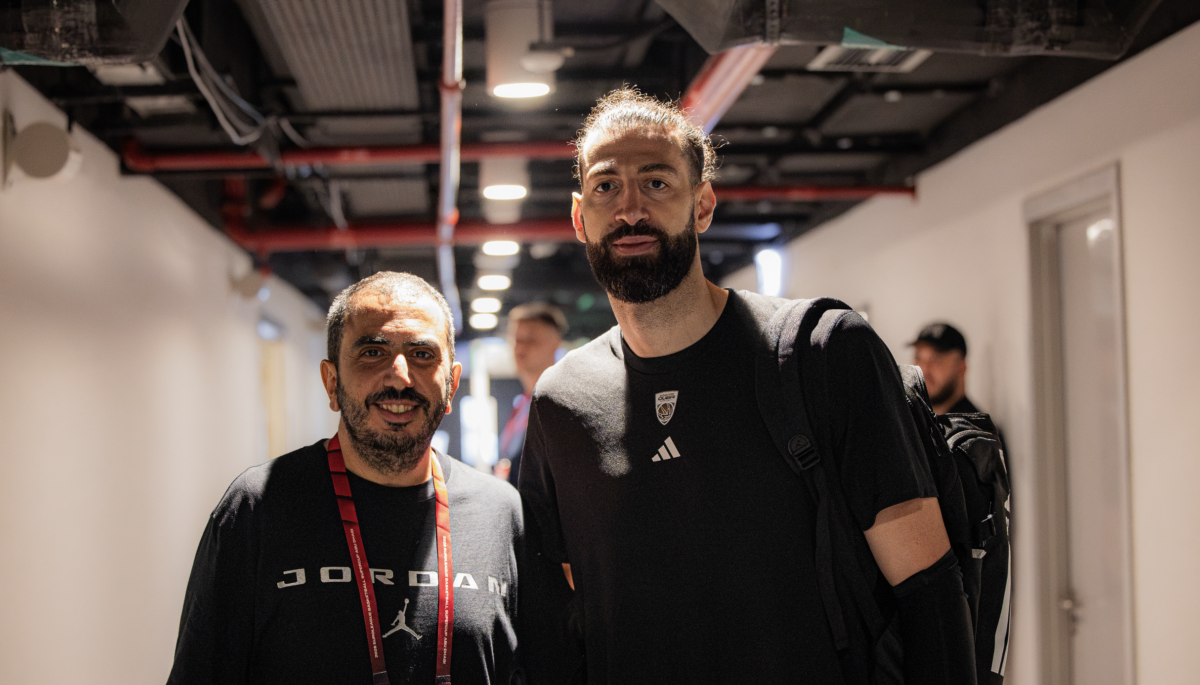
Toko Shengelia speaks to SKWEEK from Abu Dhabi about a new chapter in his career with Dubai Basketball, the ambitions of a club determined to establish itself among Europe’s elite, and his desire to keep chasing the EuroLeague title. STAY IN TOUCH FOLLOW ON GOOGLE The 35-year-old forward opens up about his decision to leave […]