




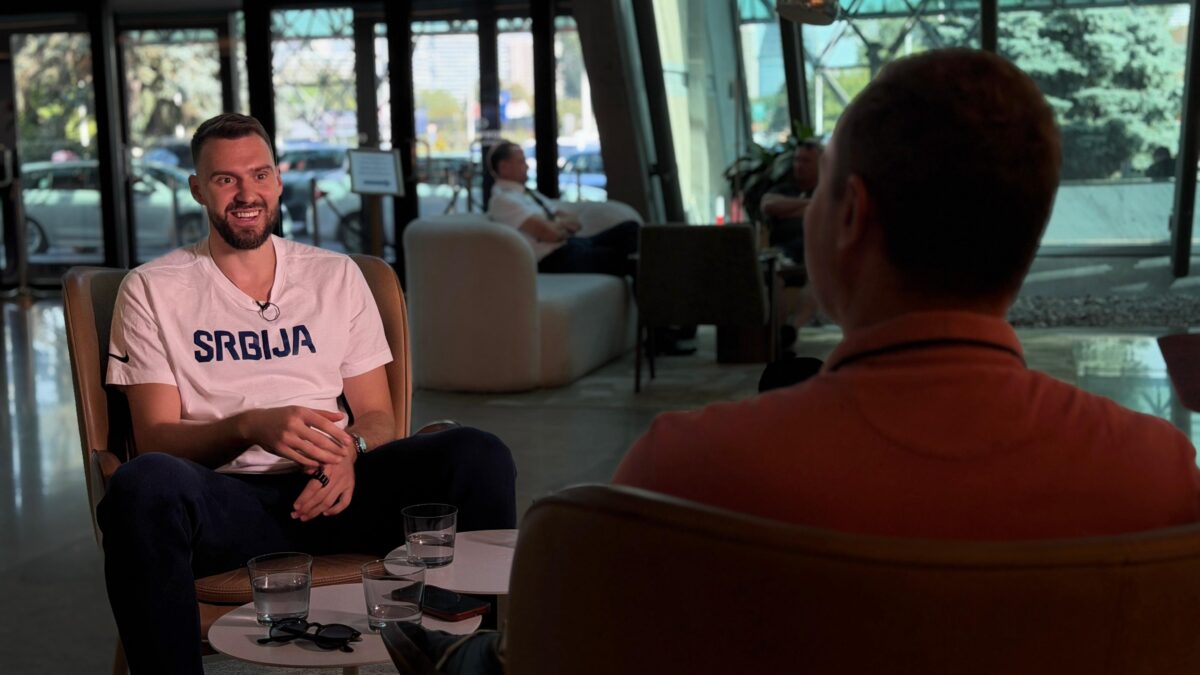







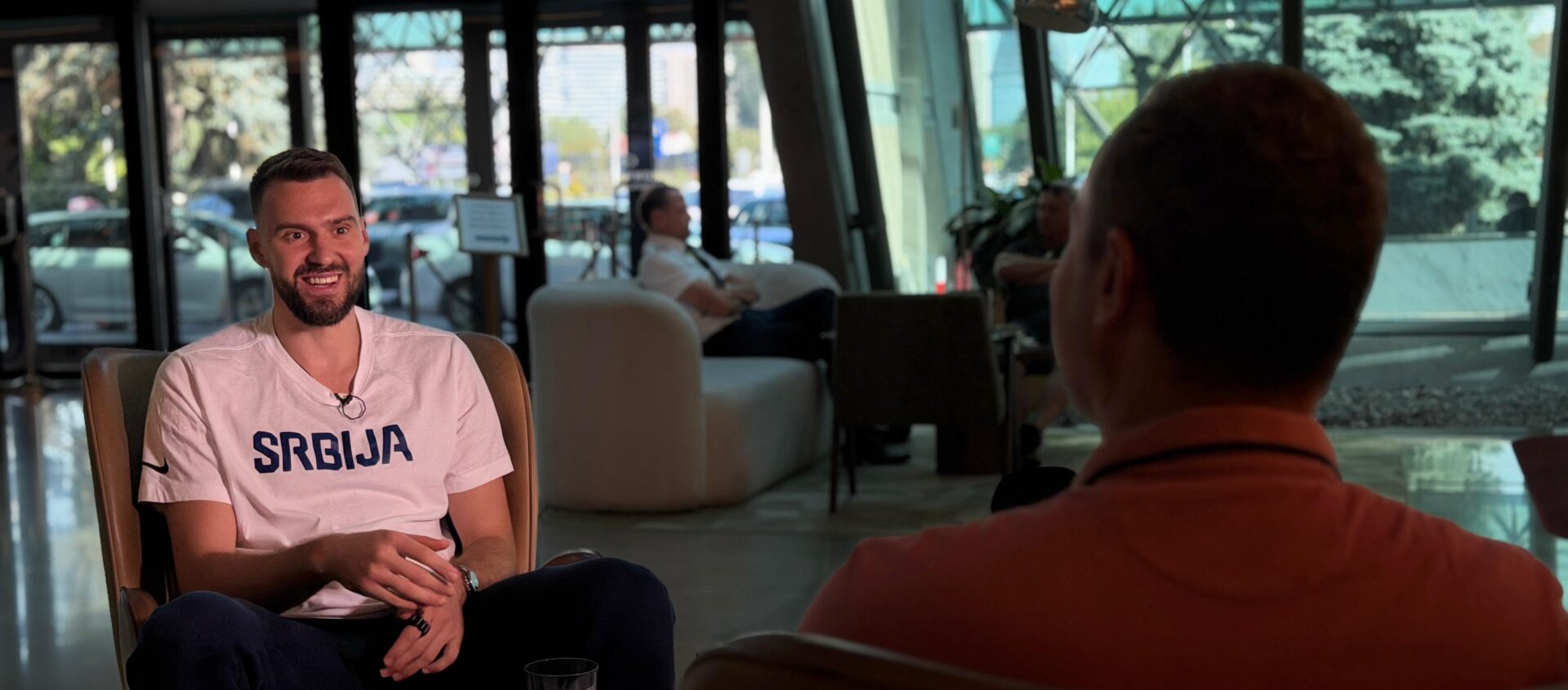

“Every team has a couple of players who care more about their own numbers. That’s more important to them. Even if the team loses, if they got their 15 or 20 points, they’re happy.”


For Marko Gudurić, that’s the kind of teammate he has never particularly enjoyed playing with – the one who makes everything about himself.
Gudurić has always been wired differently.
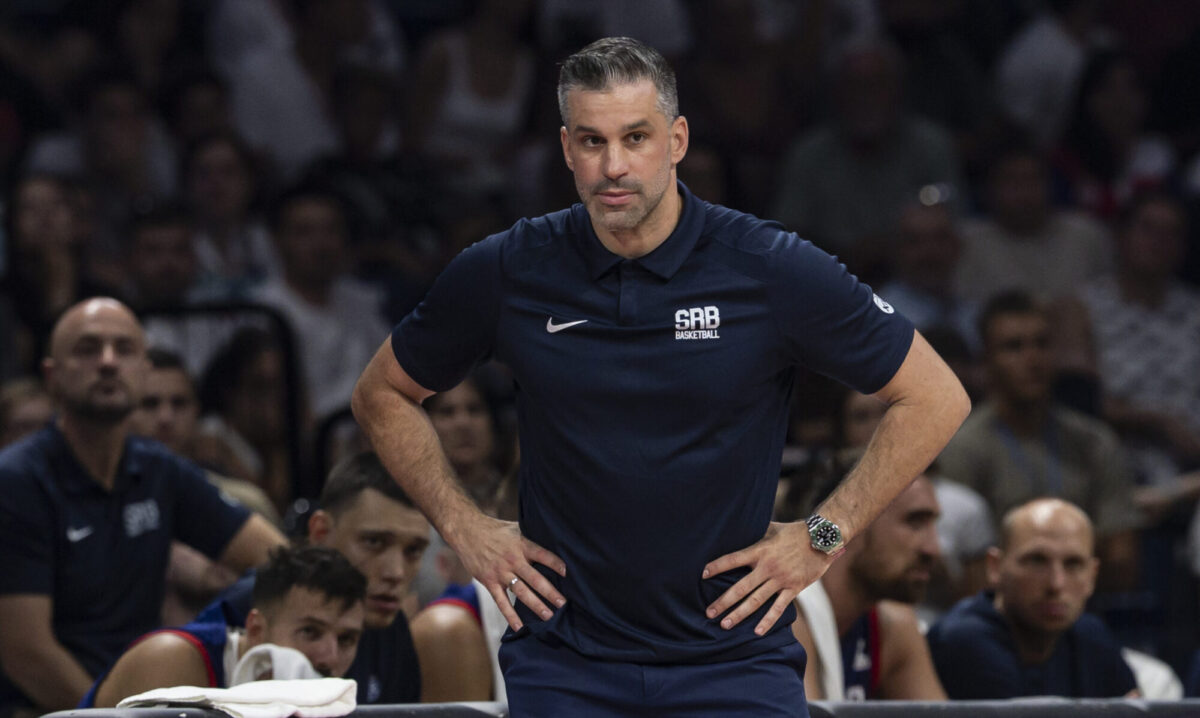
Some of his coaches have actually had to push him to be more aggressive, to take more shots.
Over time, he has become one of the best guards in European basketball without ever developing the kind of ego that often comes with that status.
That’s not a combination you see every day.
So how did the 31-year-old Gudurić become that kind of player?
This conversation offers a few clues.
Gudurić talks about growing up, the sacrifices his parents made and the values they passed on to him. He reflects on how becoming a father changed him, as well as his time with Dejan Radonjić, Željko Obradović and Šarūnas Jasikevičius, and the difficult period he went through in Memphis.
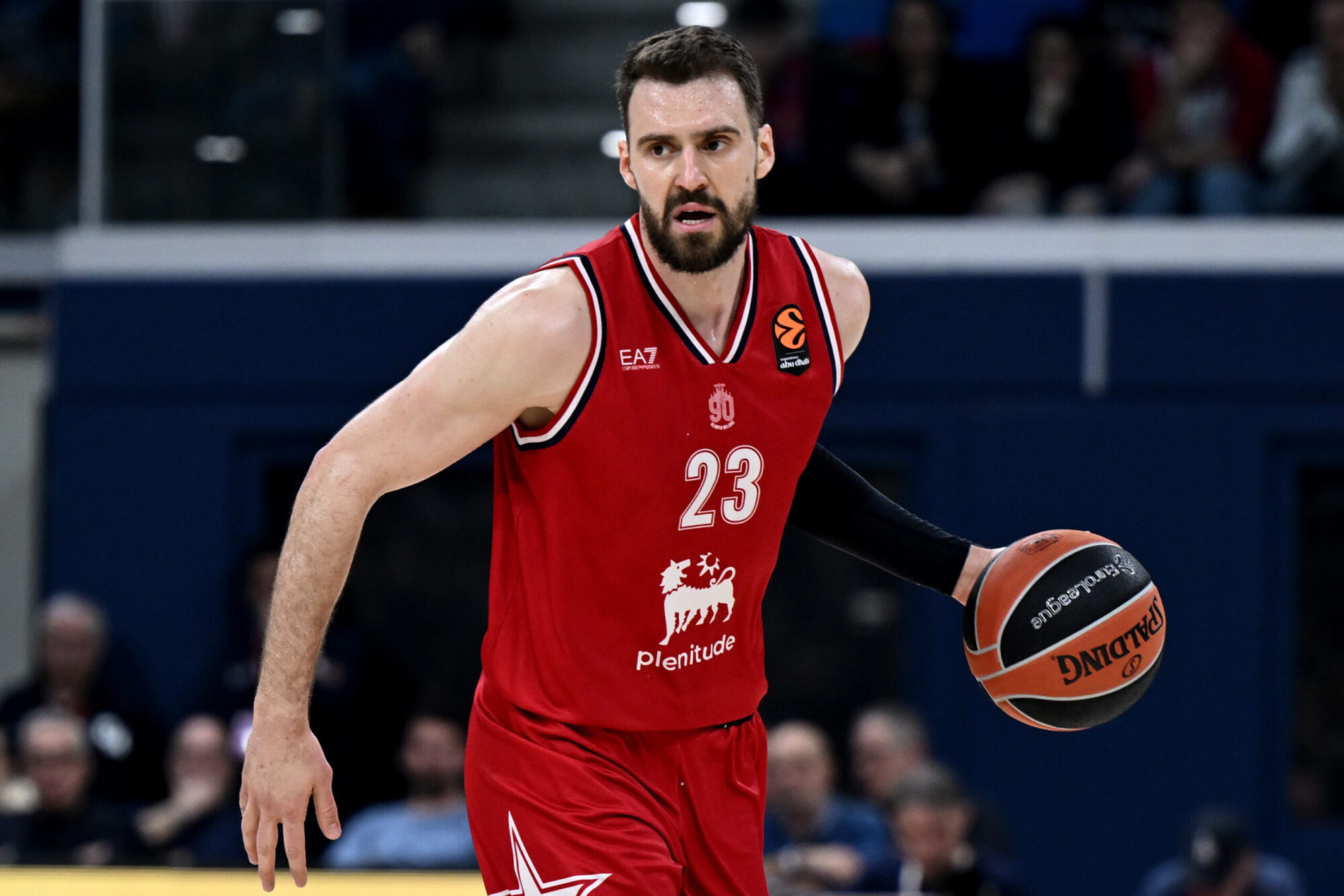
It’s 2026. If you could go back and give some advice to that kid who came from Priboj to Block 70 in New Belgrade, what would you tell him?
To never give up, to believe in himself and to stay true to who he is. Not to try to change himself to fit in with others.
Everyone will have something to say and everyone will try to give you their own perspective, but I think you have to stay true to yourself and follow what you believe in.
That’s probably what I’d tell him.
How much do you actually remember about what was going through your head back then, as a 14-year-old kid?
I remember being scared at first. Belgrade was this huge city and I simply didn’t know what to expect.
The guys I was playing with seemed older and more mature than me.
I hadn’t experienced anything like that in Priboj because I was the tallest kid in my age group there. Then I came here and suddenly I was around guys who were much taller, stronger and further along physically.
That’s my first memory of that period – the fear and the question of whether I’d even be able to play at that level, whether I could compete.
“My Parents Put Their Lives on Hold for Me”
I assume your parents played the biggest role in helping you get past that fear. Whenever people talk about you, one of the first things they usually say is, “Gudura is such a nice, well-mannered guy.” And we know parents usually have the biggest influence on that.
Absolutely, especially in my case.
They were incredibly important to me. I had my family’s support from day one, and my mom in particular was the one pushing for us to come to Belgrade and give it a shot.
It wasn’t easy back then. It’s not easy now either, of course, but somehow it felt even harder at the time.
They left their jobs and we came to Belgrade just to try – and whatever happened, happened.
Because of them, I had the support I needed to chase my dream, and eventually I was able to make it happen. Things could easily have turned out very differently.
I’m incredibly grateful to them.
That was always in the back of my mind when I went to practice, and later in my career as well – they had put their own lives on hold for me. That’s really what they did.
How many of us would actually do that today?
Maybe we’d all say we would. But when the moment actually comes to leave your jobs behind and move to some completely different city… I don’t know how many people would really do it.
I was lucky. Blessed, really. I know a lot of my teammates who came from smaller towns were on their own back then. That doesn’t necessarily mean they had a bad experience, but having my family there meant a lot to me.
I didn’t really have the time – or the desire – to go down any other path. There was only one goal in front of me.
What values did your parents instill in you? Are there any particular things from your childhood that you remember shaping the person you eventually became?
The thing that stayed with me most from my mom was good manners – respecting your elders, speaking to them with respect. She really insisted on that from the time I was little. That’s the first thing that comes to mind.
And from my dad – don’t lie.
That was something I heard from him for as long as I can remember: “Don’t lie. Whatever happened, tell the truth. We’re here, we’ll figure it out.”
Those are the first two things that come to mind. Of course, there were many more.
“Dad, I Missed You – Let’s Play”
View this post on Instagram
How much has becoming a father changed you? When you compare the person you were five years ago with who you are today, what’s different?
It’s definitely changed me, although obviously you change as you get older anyway.
But yes, you become more responsible. You have to think ahead more.
Of course, with our schedule and all the traveling, my wife has to handle most things at home. But whenever I’m home, I try to step in and help as much as I can.
That added responsibility is probably the biggest change.
And what kind of dad are you when you’re home and playing with your son? Are you the serious one, or is it all fun and games?
I don’t consider myself particularly funny, but I try to find a balance.
You’d probably have to ask my wife, but I think I’m doing OK.
I love spending time with my son. We play a lot, and I try to make up for all the time I’m away from home.
Over the last few years, there have been more and more games, which means we’re spending more and more time away from our families. So whenever I’m home, I really try to give both him and my wife my full attention.
At the same time, you still need time for recovery and to work on yourself.
But we’re doing well, thank God. As long as everyone is healthy, everything else falls into place.
Has becoming a father changed the way you look at basketball as well? Do you take losses a little easier now, for example?
It has, to be honest.
That may actually be the biggest change – I’m calmer and more secure in myself.
You simply don’t have time to sit around feeling bad or analyzing every little detail when you get home. Partly because there are so many games now, but also because the moment you walk through the door, it’s:
“Dad, Dad, let’s play! I missed you. I haven’t seen you in so long. Let’s play with the cars. Let’s do this, let’s do that. Let’s play some basketball…”
I was actually talking about this with Dobrić recently. There’s no time to dwell on it. You move on, and tomorrow is a new day, a new, another opportunity.
“May You Always Be on Your Way to the Top – but Never Quite Get There”
You’ve spoken many times about how important your time with Dejan Radonjić was for you, especially his strictness and discipline. Do you remember any particular situations that really pushed you forward?
There were many.
It wasn’t easy, that’s for sure. But I think that was good for me. It made me tougher, made me better and strengthened my character.
Even now with the national team, if you took every player and looked at the path he took to get here, you’d see that all of them went through difficult periods.
Or at least most of them – I haven’t exactly gone into everyone’s story in detail.
I joke about it with Aleksa and Dobrić. Everyone had their own journey. Guys came from smaller towns, didn’t play, went through different leagues, got their opportunities, had setbacks and then fought their way back.
I think all of that is good for you.
I recently heard a saying that I really liked:
“May you always be on your way to the top, but never quite get there.”
It’s good to move forward little by little, step by step. To fall sometimes, get back up and keep going.
It’s probably not good for you when everything goes smoothly all the time.
I wouldn’t single out one specific situation now, but every coach I’ve had in my career has meant a lot to me. I learned something from every one of them and took something from each experience that helped me later in my career.
Looking back now, it feels like every coach came along at exactly the right time for me. Each one prepared me for the next, almost in step with my own development as a player and as a person.
Šaras and the A4 Notebook
You’ve certainly had some great coaches along the way. You’ve often talked about the similarities between Željko Obradović and Šarūnas Jasikevičius. Šaras played for Željko, after all. They both demand discipline and pay enormous attention to detail. When you talk about attention to detail, what does that actually look like on a day-to-day basis – in practice and in games?
Let me try to give you a specific example.
Šaras is the freshest in my mind. We spend two or three days preparing for every game, and after every practice, he’s immediately on his laptop. We stay on the court getting shots up, and he’s already watching film.
He spends all day preparing for the opponent – looking at where we can attack them, how we want to guard them, how we want to approach the game.
And he writes everything down.
He always has this A4 notebook, and for every game the pages are covered from top to bottom in tiny handwriting. I assume he uses it to keep track of everything as we go through the game plan.
A lot of coaches do that. What impressed me most, though, was that Šaras would prepare exactly the same way for a Turkish League game against the team at the bottom of the standings.
The page would still be filled from the first line to the last.
It’s incredible. I’d never seen anything like it.
That’s what I mean when I talk about details.
He approaches every game exactly the same way. He never underestimates anyone. He knows he’s done everything on his end, and then, of course, it’s up to us.
That’s why he’s so emotional on the sideline. He knows how much he’s put into the preparation and that he’s done everything on his end.
So when we lose focus and make a mistake on something he’s gone over a hundred times, of course it gets to him.
And everything I’ve just said applies to Željko as well. It’s just that my experience with Šaras is much more recent, so it’s fresher in my mind.
So where do they differ?
That’s a more complicated question.
I’d say there aren’t many differences – and yet there are.
They’re from different generations, and basketball keeps changing.
I think that’s actually one of Željko’s greatest strengths. Throughout his career, he’s shown this incredible ability to adapt and stay ahead of where the game is going, whether the new trends are coming from USA or somewhere else.
Šaras, on the other hnd, has youth and energy on his side.
The NBA – “A Difficult Time That Helped Me in Life”
I know how important Jan Veselý was to you when you first arrived at Fenerbahçe. Other than Jan, which teammate meant the most to you on a personal level – not as a basketball player, but as a person?
Oh, that’s a good question. I’m not sure anyone has ever asked me that before.
There were a lot of them. Everyone contributed in their own way.
Even the guys I got along with and the guys I didn’t – I learned something from all of them.
The people you don’t naturally click with teach you things, too. They teach you to calm down, to be patient and to understand that basketball is a team sport.
Sometimes you just have to be patient with people.
Even if you don’t particularly get along with someone, you still have to find a way to make it work for the sake of the team. I’ve had teammates like that, too.
But if we’re talking about the guys who really helped me, and we’re leaving aside the national team and the Serbian players, Gigi Datome is someone who stands out.
I remember how much he helped me during that first year. He welcomed me and helped me settle in. He was always there for me.
The same goes for Nicolò Melli and Sloukas.
We had really good chemistry. I’d single that out because it was my first year abroad and, honestly, the transition didn’t feel that difficult.
That was probably also because there were so many familiar faces around me – coaches, assistant coaches, Bata Zimonjić… Everyone helped me.
Kalina (Nikola Kalinic), of course.
It was much harder later when I went to the States. I didn’t have many people from back home around me.
Actually, I didn’t have anyone.
That must have been a real mental test.
It was.
Having familiar people around you makes a huge difference.
How did you get through it?
I don’t know how I got through it, or whether I even did… It doesn’t really matter.
But I learned from it.
It was a difficult period in my life. There was COVID, and later there was the frustration of not playing.
But you learn a lot when you go through something like that. You get a different perspective on life.
All of that helped me later when I had to make decisions in my personal life and start a family.
I’m grateful to Memphis and to the NBA for that.
And as far as basketball goes, I’m really glad I had that experience. I’m grateful to God that I got the chance to be there, live that dream and experience firsthand how things work, how people carry themselves and what everyday life in the NBA looks like.
Sometimes a Coach Has to Be the “Bad Guy”
Let me go back to something you said earlier – basketball is a team sport and you have to find a way to get along with everyone. I won’t ask you for names, but what does a bad teammate look like to you?
So I have to think of someone before I can answer, is that it? [Laughs]
Every team has a few players who care more about their own numbers.
That’s more important to them. Even if the team loses, if they got their 15 or 20 points, they’re happy.
And sometimes they’re laughing in the locker room after a loss.
Yeah, you see that too.
But in a way, that’s normal. Every team needs guys who can score.
That’s where the coach is really important. One thing I’ve learned throughout my career is that a coach has to know how to manage all of that and find the right balance.
Sometimes a coach has to be the “bad guy.”
It’s not easy managing 15 or 16 different personalities. You can’t keep everyone happy.
A coach has to know when to give guys some freedom and when to tighten the screws.
But generally, I’ve never liked selfish players. I didn’t like that even when I was a kid.
Even now, when I see someone forcing things and making everything about himself – “Me, me, me” – it bothers me.
Then again, I think every team probably needs at least one guy like that.
You just don’t want too many of them.
In the second part of our interview with Marko Gudurić, he talks about his relationship with faith and why it has become especially important to him, “that” shot against Germany in the World Cup final, the Olympics and the Djokovic–Alcaraz match, this season’s Olimpia Milano team, and life after basketball…