

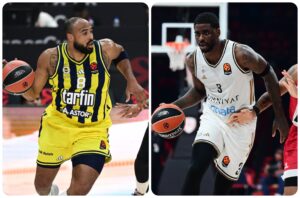

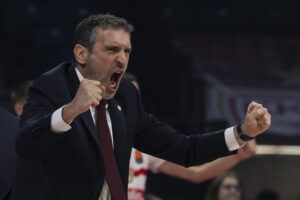
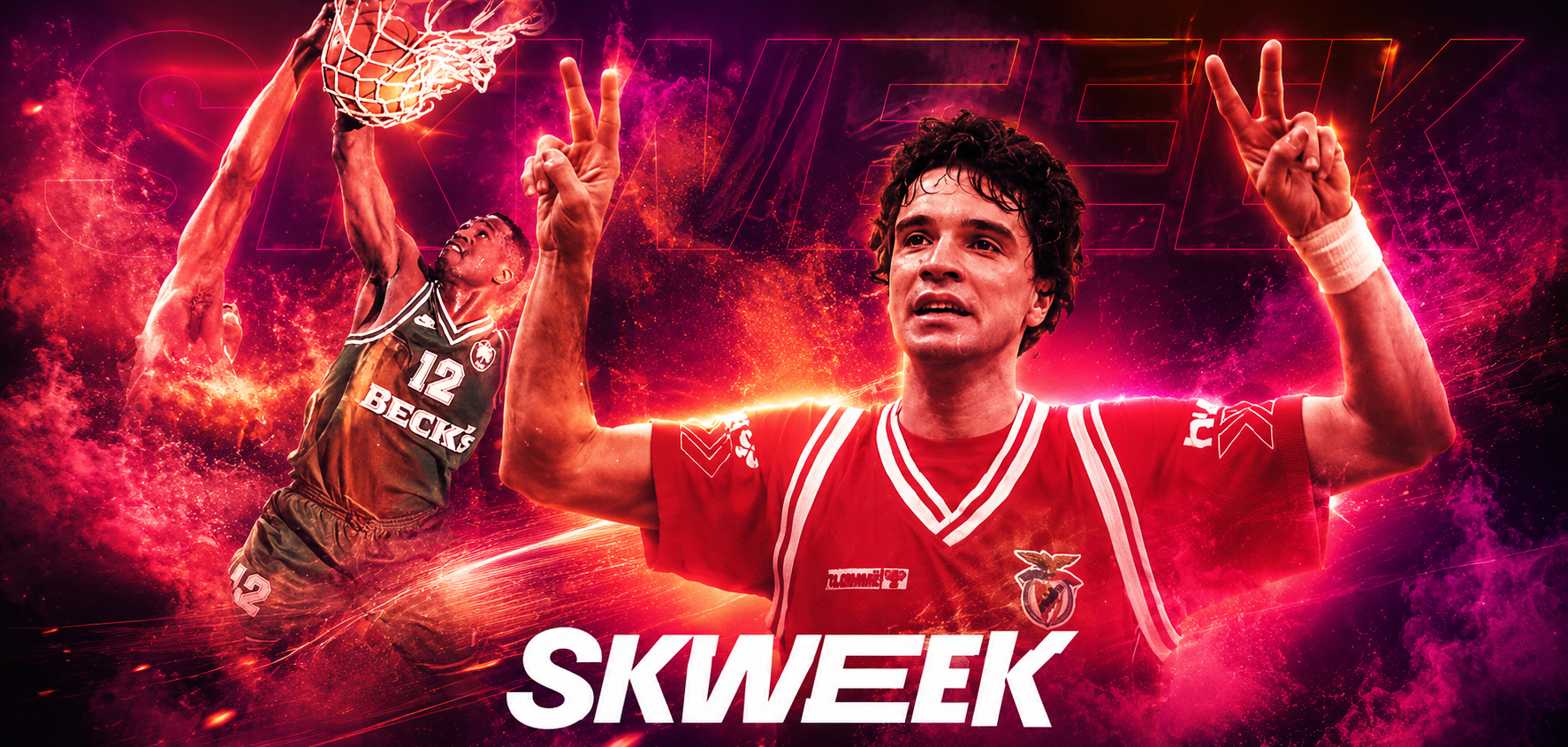
Some basketball stories fade with time. Others only grow bigger. More than three decades later, Carlos Lisboa—the greatest Portuguese basketball player of all time—joins SKWEEK to revisit one of those nights: when Benfica stunned Hall of Famer Dominique Wilkins and Panathinaikos.


On January 31st, 1996, Benfica found itself facing not only the legendary Dominique Wilkins, but also a Panathinaikos team that would go on to win the 1996 European Champions Cup—the first of the club’s seven EuroLeague titles. On paper, the odds couldn’t have been more one-sided. On the court, however, the story unfolded very differently.
More than three decades later, Benfica icon Carlos Lisboa looks back on that unforgettable night, revealing the emotions, the atmosphere, and the untold moments behind one of the most memorable performances in European basketball. What was it like to share the floor with one of basketball’s greatest legends? And why does that game still resonate all these years later?
What was the biggest lesson you learned growing up and playing basketball in a country where football dominates everything?
Almost every country in Europe has football as its number one sport. But in Portugal, football is on a completely different level compared to every other sport. I have no doubt about that.
Today, people are working to create better conditions for other sports, but when I was playing, especially during the 1990s, we had to be realistic. We knew football was operating on a completely different level. Our job was to focus on our own goals, work hard, improve, and help our team succeed.
Between 1990 and 1995, we were competing at the highest European level. Today it would be called the EuroLeague. We played against great teams: Barcelona, Partizan and many others. Against Greek clubs, I faced Panathinaikos, Aris and PAOK. Interestingly, I never played against Olympiacos.
It wasn’t easy, but we had to fight for our place. Basketball, like every other sport in Portugal, exists in a country where football dominates everything. You can see it even today. Cristiano Ronaldo is one of the most famous athletes in the world and an ambassador for Portugal everywhere he goes.
The difference between football and basketball is much smaller in Greece than it is in Portugal. Greek people have a special relationship with basketball. In Portugal, people enjoy basketball too, but football is still far ahead of every other sport.
Still, I chose basketball over football, and I’m proud of what we achieved with Benfica. We won many championships in Portugal and earned respect across Europe. When we played teams like Panathinaikos, we knew they were stronger than us on paper. But once the game starts, it’s five against five. Until the referee blows the final whistle, you fight for your goal. That’s why we managed to win so many important games.
We beat Panathinaikos. We beat Badalona when they were one of the strongest teams in Europe and the reigning European champions. We even beat them in Spain after overtime.
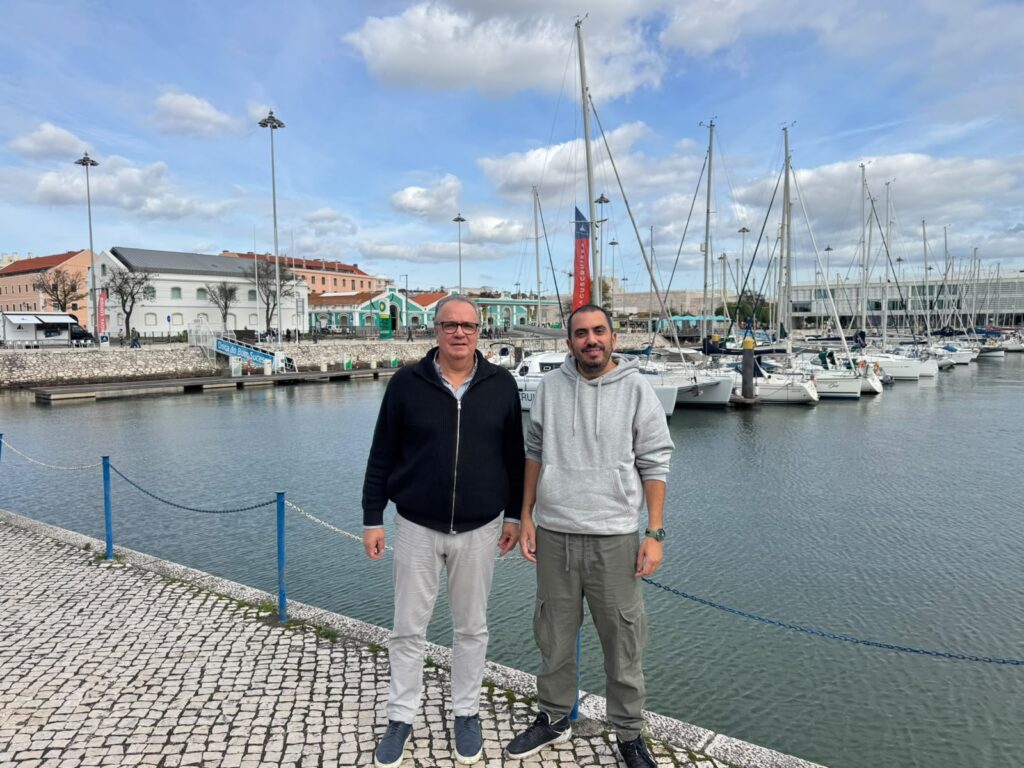
Alvertis Didn’t Let Me Breathe!
Portuguese basketball is still searching for its place today. How much more challenging is that journey in a country where football continues to dominate the sporting landscape, with stars like Cristiano Ronaldo still shaping its global identity?
Yes, but it’s not only basketball. At Benfica, for example, we have football, basketball, handball, futsal, volleyball, roller hockey and many other sports. Benfica is a huge sports club.
Some supporters prefer basketball, others volleyball, others handball. That’s normal.
I don’t know every detail about Panathinaikos, but Benfica has men’s and women’s teams across many sports and competes at the highest level in almost all of them. That’s a big difference.
The reality is simple: Portuguese people love football. Benfica’s football stadium holds around 65,000 spectators and is often full. The basketball arena holds around 2,500 people and is not full every game. Attendance usually increases during the playoffs and finals, but football remains the country’s passion.
That’s not even a debate.
However, basketball has been growing little by little. Step by step, it has earned more space and more attention. If you look at the recent progress of the Portuguese national team, for example, you can see that. Portugal may not be considered a favorite, but the team has become more competitive and continues to improve.
Basketball is trying to claim a bigger place in Portuguese sports, and I think it has already made important progress.
Over all those years, did you ever feel pressure to prove that basketball deserved more attention in Portugal?
Not really. We always had the support of the federation and the people responsible for developing sport in Portugal.
For me, the best way to earn attention was through results.
When we played Panathinaikos, for example, our arena was packed. Normally we would have around 3,000 spectators, but that game was different. The old gym didn’t even have seats in some areas! There were more than 5,000 people inside and many others outside who couldn’t get in and had to watch on television.
I remember arriving at the arena about an hour and a half before tip-off. As I approached with my car, I looked around and asked myself: “Is there a basketball game today or a football match?”
There were people everywhere. Fans were already gathering, eating, drinking, talking about the game. The atmosphere was incredible.
My routine was always a little different. Some teammates would go onto the court early to shoot before the coach’s meeting. I never did that. I preferred to stay in the locker room, relax, talk with teammates and prepare mentally for the game.
That was always my way.
I always stayed in the locker room. That was my routine. But I would ask my teammates what it was like outside.
About an hour and fifteen minutes before tip-off, they were already telling me there were more people outside the arena than inside! Many fans eventually had to go back home and watch the game on television because there simply wasn’t enough space.
The gym was old. The floor was slippery, especially with so many people inside. It wasn’t a modern arena by any means, but the atmosphere… incredible. Truly incredible.
I’ve watched that game again several times and I still remember it very clearly.
I have a story from one of those games against Panathinaikos.
During the game, I was being defended by Fragiskos Alvertis. There was also another veteran guard whose name I can’t remember now. We were playing in Lisbon, and I had just hit two or three three-pointers in a row during the second half. The game was close.
At one point, I noticed Panathinaikos’ players talking on the bench. I didn’t understand Greek, of course, but I could tell they were discussing how to stop me.
After that, Alvertis started guarding me everywhere.
Everywhere.
If I went to the bathroom, he would have followed me there too. He was on me all the time. Every possession, every space on the court. He didn’t let me breathe.
We had some battles because he was a big, strong player and very competitive. He wanted to establish himself and earn his place. I respected that.
That wasn’t the game we won against Panathinaikos. It was another season, a game we eventually lost. The year we beat them; they had players like Dominique Wilkins.
But I remember thinking that if we could win that game, maybe we could reach another level in Europe. We didn’t make it that time, but a year later we managed to achieve something special.
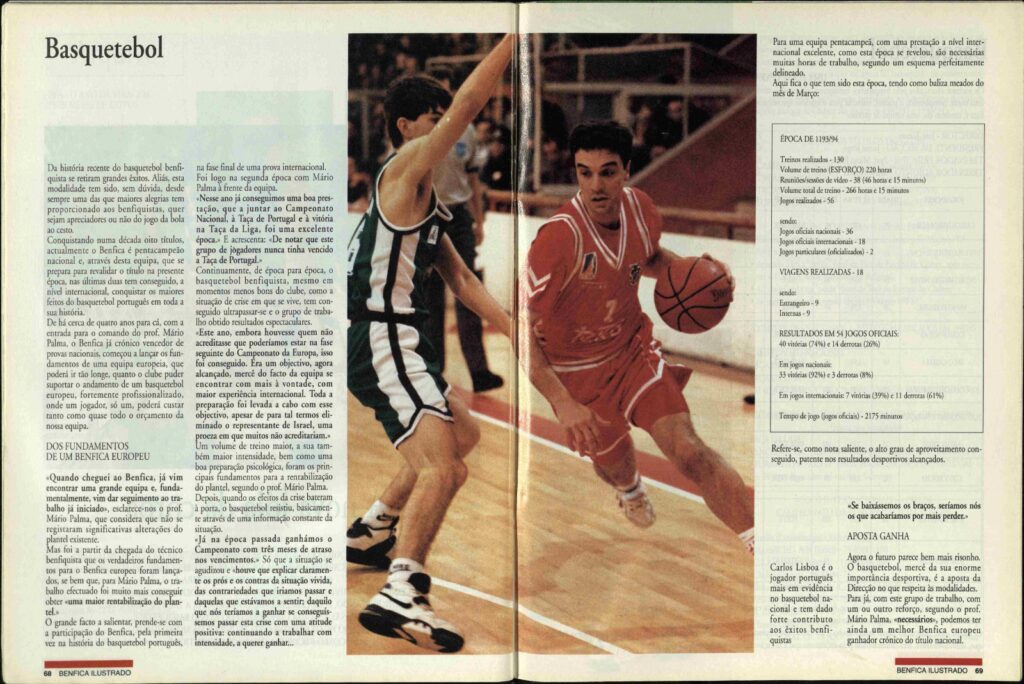
On a personal level, what does it mean to be considered the best player in a sport that isn’t the country’s main attraction? Does success have a different meaning in that context?
That’s a difficult question for me because I don’t like talking about myself too much.
What makes me proud is what we achieved together. Basketball is a team sport. Nobody wins alone.
Even Michael Jordan, who for me is the greatest player ever, couldn’t have won without his teammates. Some players score more points, grab more rebounds or get more assists, but everyone has an important role.
So, when I look back, I’m proud of my career. Not because of individual recognition, but because of what we accomplished as a team.
Second Place Is Simply First Among The Losers
In those years, opportunities abroad were much more limited. The Bosman ruling changed everything in 1995. Did you ever have serious offers to leave Portugal?
Yes, I did.
When I was young and travelled to the United States, several colleges wanted me to stay and play there. But at the time I had military service obligations and had to return to Portugal.
To be honest, I never had that adventurous mentality.
There was another interesting story. Around 1985 or 1986, people connected to the NBA contacted me. Their idea was to create two new NBA franchises backed by South American investors.
When I received that letter, I felt like I was in the clouds. It was a dream. At that time, reaching the NBA was much harder than it is today. There were fewer teams and fewer opportunities for international players.
Eventually, those plans never materialized because the investors couldn’t meet the NBA’s requirements. A few years later, expansion happened through other markets, with teams like the Toronto Raptors.
But for a moment, I allowed myself to dream.
As for Europe, it was also difficult. Teams could only have two foreign players, and most clubs preferred to sign Americans or players from Yugoslavia. Opportunities for Portuguese players were extremely limited.
I remember one occasion when I was playing for Queluz. We faced Stade Français in a preseason tournament, and their sporting director expressed interest in signing me. But nothing came of it.
For Portuguese players at that time, proving yourself abroad was very difficult. Still, I have no regrets. I’m proud of what I achieved here in Portugal.
How did you develop such a relentless winning mentality throughout your career?
For me, second place is simply first among the losers. That’s what I’ve always told my children and my teammates. If there are twelve teams and you finish second, you’re first among everyone who didn’t win.
I always wanted to be number one.
Of course, you don’t win every time. That’s impossible. But professional sport only makes sense if you’re trying to win. Not through bad behavior, not without respect, but through hard work, discipline and competition.
That has always been my philosophy. You compete to win. That’s how I approached every game, every season and my entire career.
Looking back, was there a moment when you realized you weren’t just playing basketball, but actually making history for Portuguese basketball?
What we achieved with Benfica at that time was truly historic for Portuguese basketball.
Of course, today’s national team is also making history. One of my sons, Rafael, is part of that journey, and I’m very proud of it. But in our era, we were doing something that Portuguese clubs had never really done before.
Back then it wasn’t called the EuroLeague, but it was the highest level of European basketball. We were playing against Real Madrid, Barcelona, Partizan, Badalona, Limoges, Pau-Orthez — the champions of France and many of the teams that people now consider traditional EuroLeague clubs.
Sometimes I have to remind younger people of that. Today, when Portuguese fans watch the EuroLeague on television, they see those clubs as giants. We played against them.
And that’s why I believe what we did was historic.
What makes it even more impressive is that we did it with very limited resources. Modern basketball is much more demanding. To compete at that level today, you need a deep roster because you’re playing twice a week in Europe and then again in your domestic league.
We didn’t have that.
Most of the time, we were relying on seven or eight players. The rest of the roster was there to help, but the main workload was carried by a small group: Jean-Jacques Conceição, Pedro Miguel, Steve Rocha, myself and a few others.
By January and February, we were exhausted. We had travelled all over Europe, played difficult games every week and sometimes dropped matches in the Portuguese league because of fatigue.
But there was another side to it.
When the European season ended and we could focus entirely on domestic competitions, we were playing at a completely different rhythm from everybody else. Once we recovered physically, it became very difficult to beat us.
That’s why, many times, we would reach the playoffs and win series 3-0, 3-0, 3-0. Not every year, but very often.
The level of competition we experienced in Europe made us stronger.
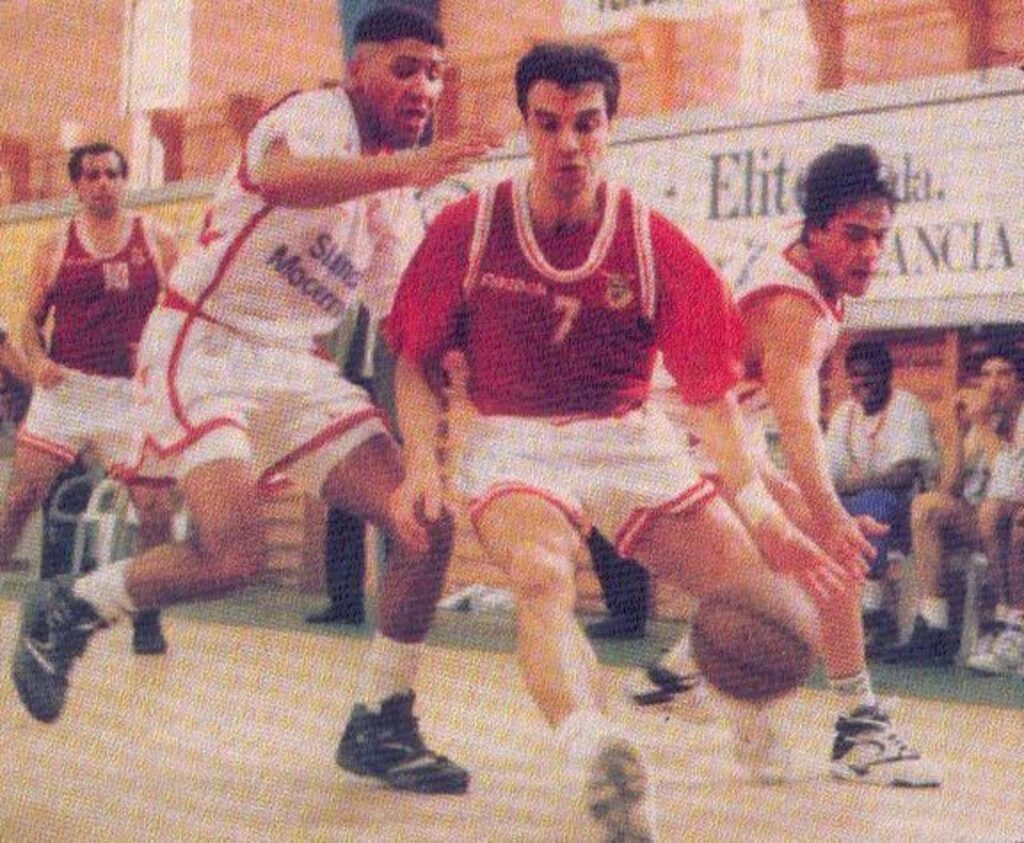
January 31st, 1996. Panathinaikos arrived in Lisbon with Dominique Wilkins — one of the greatest NBA players of all time. What do you remember from that night? The expectations, the atmosphere inside the arena, the preparation… and what was going through your mind before tip-off?
Before I talk about Dominique or Panathinaikos, I have to explain something about preparation.
People think preparation starts when you arrive at the gym. For me, that’s not true. Preparation starts in your mind.
Of course, practice is important. Shooting is important. Conditioning is important. If you don’t put the ball in the basket, you have a problem. But basketball isn’t only about what happens on the court.
When you’re at home, sitting on the sofa, watching television, lying in bed before going to sleep — that’s also preparation.
You have to think about the game. You have to imagine situations before they happen. What if we’re down by five points with three minutes left? What if their star player gets hot? What if I miss my first few shots? What if we’re leading and they make a comeback?
You have to play those situations in your head before they happen. Because the most powerful computer in the world is not a machine. It’s the human mind.
Your brain stores experiences, emotions and possibilities. If you’ve already imagined a situation a hundred times, when it actually happens on the court, you’re ready for it.
You don’t panic. You react.
That’s how I always prepared.
So, when Panathinaikos came to Lisbon and Dominique Wilkins was on the other side, of course we knew who he was. We knew we were facing one of the greatest players ever to come from the NBA to Europe.
But my preparation didn’t change. I wasn’t thinking about Dominique Wilkins. I was thinking about the game.
I was thinking about all the situations that could happen and how we could win. That’s how I approached every big challenge in my career. That’s what I mean when I talk about preparation.
When you imagine situations before a game, your mind stores them. Then, when something similar happens during the game, your reaction is faster than a click. You’ve already seen it before in your head. You don’t need to think. You just react.
I did that before every game, but this one was different because we were facing one of the best teams in Europe.
We prepared for hours.
Today it’s easy. Coaches have software that allows them to select clips instantly, organize possessions and create video presentations. Back then, it wasn’t like that. Everything was manual. You had to stop the tape, rewind it, cut it, analyze it. It took much longer.
But we spent countless hours studying Panathinaikos. And speaking of Dominique Wilkins, I have another story…
Now You Stick with Dominique Until the End
You had already played against him before?
Yes, in the United States.
We were on a tour, playing many games in a short period of time. One day you played, the next day you travelled, then you played again. I think we played twelve games in twenty-five days.
One of those games was against Dominique’s college team. At the time, we didn’t really know the players. Before the game, our coach started assigning defensive matchups.
“You’re guarding the point guard.”
“You take the shooting guard.”
Then one of my teammates looked at me and said: “Carlos, you’ll guard number 21, Dominique.” But none of us really knew who Dominique Wilkins was yet.
What really caught our attention was another player wearing number 42. He was like a beast. My teammate looked at me and said: “Forget number 21. You take 42, and I’ll take Dominique.”
The game starts. The very first offensive possession. The ball goes out of bounds, they run a play, somebody throws a lob pass…
And Dominique flies.
Absolutely flies.
He catches the ball above everybody and dunks it right in my teammate’s face. Two minutes later, another dunk. A few minutes after that, another one.
My teammate came to me and said: “Carlos, let’s switch.”
I told him: “No chance. You wanted number 42. Now you stick with Dominique until the end.”
He must have dunked on him five or six times that day. That’s when we realized who Dominique Wilkins was.
Years later, when I saw him arrive with Panathinaikos, I immediately remembered that game in the United States and told my friends: “Trust me, this guy is special.”
So, let’s go back to that night in Lisbon…
It was a special game from the beginning.
We couldn’t play it at Benfica’s home court because FIBA didn’t approve the venue. They felt the floor wasn’t good enough and the facilities didn’t meet the standards they wanted.
So, we moved to another gym across the river. The place was packed. Absolutely packed. And we played a great game.
I still remember one play by Dominique. He received the ball, turned, elevated and dunked over one of our players. It reminded me of what he had done years earlier in the United States.
But then came our answer.
In the second half, Jean-Jacques Conceição was leading a fast break down the middle of the court.
Dominique was already waiting near the basket.
I was running on one wing and another teammate was on the opposite side. It was a three-on-one situation, maybe three-on-two.
Everybody in the arena expected Jacques to pass.
Dominique was standing there, ready to block the shot.
But Jacques kept going.
He took off from around the free-throw line.
And he dunked right over Dominique Wilkins.
Right over him.
The whole arena exploded.
It was almost as if we were saying: “Now you know what it feels like.”
Because years earlier Dominique had done exactly the same thing to us.
Jean-Jacques Conceição was a tremendous player. One of the best Portuguese players I’ve ever seen. After Benfica, he played abroad, including in France and later in Spain with Unicaja. He was younger than me, so many people outside Portugal may not fully appreciate how good he was.
But for me, he was a top-level player.
That dunk remains one of the moments I’ll never forget from that night.
Jean-Jacques was around two meters tall, but his wingspan was incredible. When he stretched his arms, it felt like he was 2.12 meters. Big hands, great athleticism. He was one of the key players on that team.
During that game against Panathinaikos, was there a moment when you started to believe you could actually beat them?
We always believed we could win. Every game. Of course, there are moments when reality hits you. I remember once we beat Bologna in Portugal, 110-98. Then we went to Italy for the return game and lost by 40 points.
When you’re down by 35 with ten minutes left, you still have to do your job, but of course part of you is thinking: “Let’s get this over with.”
But if a game was close, we never quit. Never. That’s why we always believed.
I’ll tell you another story. It wasn’t that Panathinaikos team with Dominique. It was the previous one, when Stojko Vranković was there.
After one of our games in Glyfada, I shook his hand and told him:
“Vranković, if you played for Benfica, we would win.”
And I meant it.
Not because he scored 25 points every game. It was everything else. The rebounds. The intimidation. The way players thought twice before attacking the basket when he was there.
Some players change games without scoring. He was one of them.
Coins Started Flying — Drachmas Everywhere!
I remember there was also a strange incident involving Žarko Paspalj and some coins being thrown from the stands.
(laughs) Yes, I remember. But first, let me say something. It wasn’t really about Paspalj. The incident started after a play involving Sasha Volkov.
Volkov did something I didn’t like on the court. Not trash talk — I don’t mind trash talk. If someone talks to me, that’s basketball. What I don’t like is elbows, cheap shots and things that cross the line.
At that moment I got a little upset. Maybe a little confused. I felt what happened wasn’t fair.
A minute or two later, I picked up my fifth foul and had to leave the game. As I was walking off, I looked toward the crowd.
And suddenly…
Coins started flying.
Drachmas everywhere!
The fans were throwing them onto the court. After the game one of my teammates came to me laughing. He opened his warm-up jacket and it was full of coins. Completely full.
He had been collecting them the entire time. Fortunately, nobody got hurt. The coins never hit me. But honestly, I’ve always felt that Greek fans liked me.
So, why do you think that after 30 years we are still talking about that game? What makes it so memorable?
Probably because it was a big surprise at the time. People didn’t expect a Portuguese team to compete and win at that level. It was something different.
But for me, it’s very special to still talk about it today. And I want to say thank you, because I like when people remember those moments. I like speaking about the past, but at the same time…
I would love to play again.
I know I can’t, but I would love it. I’d love to be on the court again, under that pressure. I like pressure. I like when people say things against me. For me, it’s like fuel — like vitamins. It gives me energy and motivation.
I don’t know if other players feel the same. Maybe someone like Spanoulis feels it too — that kind of environment where people push you, even with negativity, can actually motivate you.
It definitely motivated me.
Now I don’t have that anymore because I’m older. Even as a coach, I like pressure. I like building teams, coaching practices, coaching games home and away. That responsibility motivates me.
When I face Panathinaikos or other big teams, I always feel it. Even if I cannot say everything in Greek, inside I’m thinking: “I want to compete. I want to win you.”
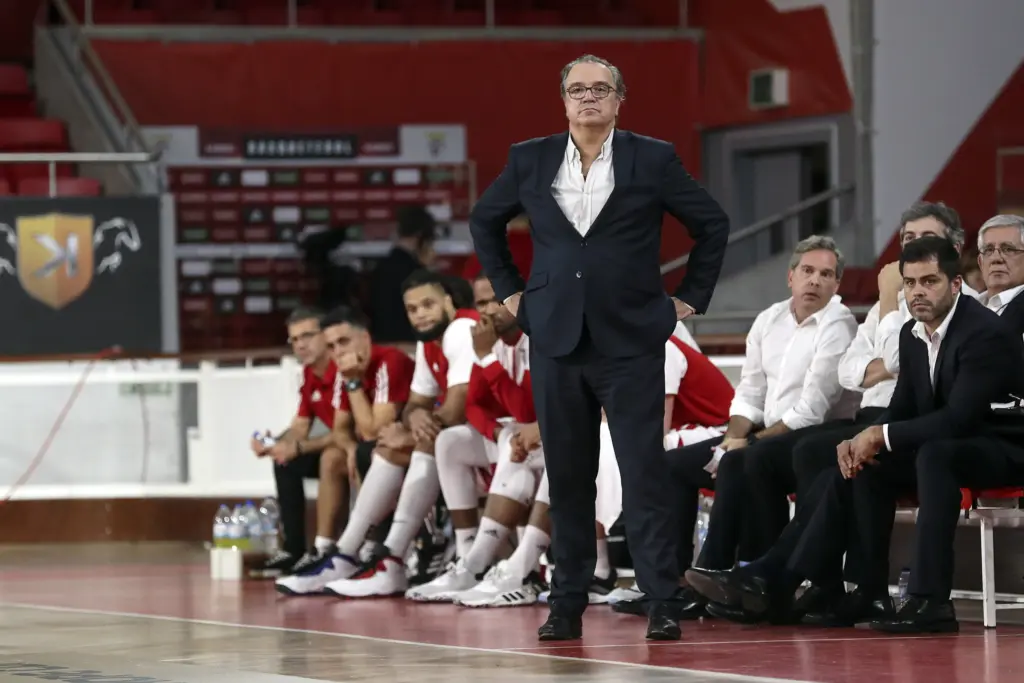
Do you have any other special memories from games against Greek teams, such as PAOK or others?
Yes, many.
We beat PAOK in Thessaloniki once. It was a very tough game. PAOK at that time was a very strong team. Today maybe it’s different, but back then it was very difficult to play against them.
I remember something very clearly — twice in my career, once as a player and once as a coach, something unusual happened in Thessaloniki.
When the game started, the referees dropped the ball… and suddenly paper started flying everywhere from the stands. The whole floor turned white. It was like La Bombonera in Argentina!
We had to stop the game and wait until everything was cleaned. It was chaotic.
And then years later, as a coach in Portugal during a playoff game in the north, the same thing happened again. The moment the referees tossed the ball, papers came down from the stands. I looked around and thought: “I’ve seen this before in PAOK.”
Those atmospheres stay with you.
We also played against very strong players there. One of them was Roy Tarpley — a very talented big man. He was a strong, skilled player, but unfortunately, he had a difficult life outside the court. Many people consider him one of the most talented Americans to play in Greece.
But for me, Dominique Wilkins was on another level entirely.
If only the Bosman Ruling Had Come Earlier
If you could change something in your career, what would it be?
Maybe if the Bosman ruling had come earlier, things could have been different. Maybe I could have played more abroad.
Some people also told me that when I received offers from the United States, especially from colleges, I should have gone. Maybe my career would have taken another path.
I don’t know. But I am proud of what I gave to Portuguese basketball.
You were born in Cape Verde, right? And then moved to Mozambique?
Yes. I was born in Cape Verde. My father is from Cape Verde, and my mother is Portuguese, from Porto.
My grandfather was a doctor and went to work in Cape Verde, and that’s where my parents met.
Later, we moved to Guinea for a short period, and then to Mozambique when I was very young. I arrived there when I was about three years old and stayed until I was sixteen.
Mozambique was very important for me.
At that time, Mozambique was still strongly connected to Portugal, and sport was very important there. Especially basketball.
In Mozambique, basketball was actually one of the main sports. Stadiums were full. There was a lot of passion for the game.
I remember sleeping with a basketball next to my bed. That’s how much I loved it. Football existed, of course, but basketball was everywhere in my daily life. That’s where I really started playing seriously, every day, all the time.
That’s how everything began for me.
And finally, what do you think is the legacy of Carlos Lisboa in Portuguese and European basketball? What did you leave behind?
What I left behind—and what I could still give more of—is my way of competing.
I am very competitive. When I played basketball, I wanted to win. When I was at home with my kids—Rafael, Bernardo, and Tiago—when we played, most parents let their kids win. I didn’t do that. I said, “No, we play to win.” And my wife said, “Come on, don’t be like that.” But I still played to win.
Even when we played PlayStation basketball at home, I sometimes won. Not always, but sometimes. And when they started winning more often, I would say, “No, I don’t want to play anymore,” because I don’t like to lose.
But my three kids are the most important people in my life. I give them everything. Still, in competition, it’s 50-50—whoever is better wins. They have inherited their father’s mentality.
Of course, times are different now, and they express it in their own way. But that competitive spirit is there.
I think that’s part of what I left behind.
As a player, I already told you. As a coach, I also won many titles. In total, I have 48 titles. That’s as a player and coach combined, mainly with Benfica. I also won titles with Calouge, one national championship, and a Portuguese Cup. With Sporting, I won three leagues and a few more cups.
So, in total, I think I have more than 50 titles. But at Benfica alone, I won 48.
I also had a jersey hanging in the rafters.
I tried to give everything. I played for the national team. And I think people can see my legacy online. I’m proud of what I did.
The only thing I cannot change is this: I am a winner. I love to win. I finished my career in 1996 as a player—and I lost my last game.
It was against Porto, in the playoffs. Benfica against Porto. We were second in the regular season, and Porto took the lead 2–0 in the series. We came back, made it 2–1, and then needed to win the fourth game to go to Porto for the decider.
But we lost. And we lost the series 3–1.
So, in 12 years at Benfica, we won the league 10 times and lost it twice. And my last game as a player… I lost.
That is the one thing I would change. Only that last game.
I stayed in the arena for hours after the final buzzer. The game finished around 5 p.m., and I remained there until almost 8 or 9. I was just sitting there, thinking. It was very hard for me to watch the celebrations of the other team.
When I finally left the locker room, I saw the TV crew waiting for me. I remember saying to them:
“You never waited for me when I won 10 titles in 12 years. But now you’re here waiting for me after a loss.”
I was half joking, but also serious. I had to say it. Because I stayed there for hours. I couldn’t believe I had lost.
At that time, I didn’t even have children yet. I was married at 32, but we didn’t have kids then because my wife is a psychologist and also involved in sport—figure skating, artistic skating. We were both professionals, constantly traveling, always away.
So, we said: if we have children now, I will be away all the time, flying, playing, coaching… and it wouldn’t be fair.
So, how would you like to close this conversation—more like a conversation than an interview?
First of all, I want to tell you that I really appreciate your message when you reached out to me. I’m proud that in Greece, journalists like you still remember my name.
Even when we played against Panathinaikos, it’s always a pleasure to know that Greek people—both older and younger generations—remember me, respect me, and appreciate what I did.