




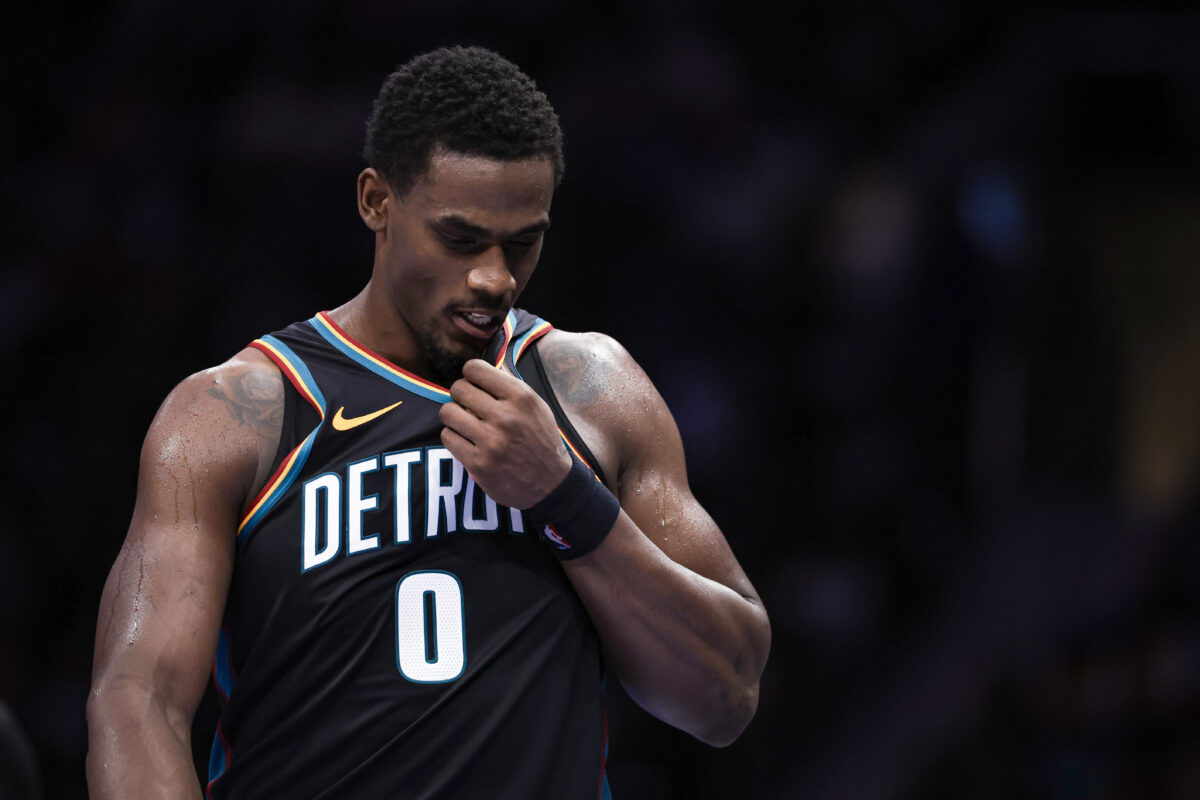








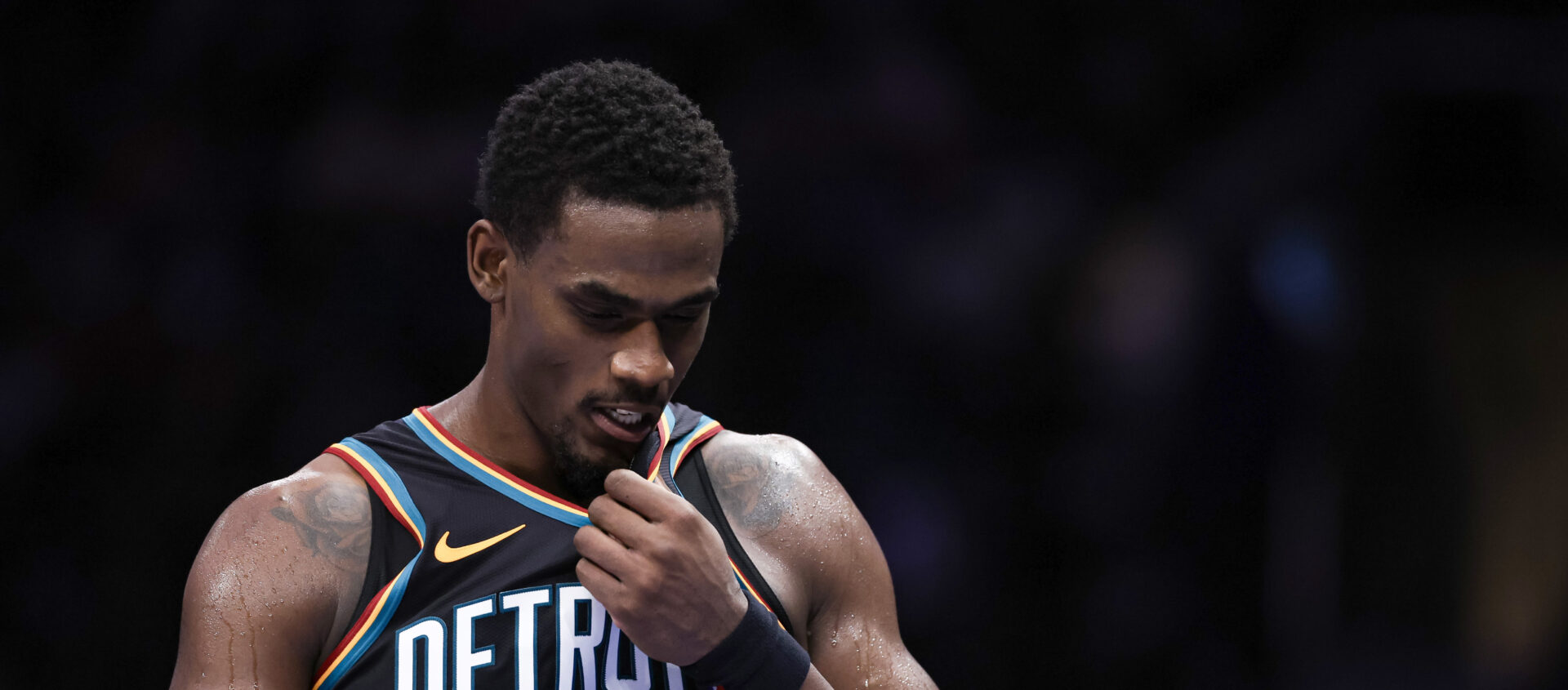

Jalen Duren had until October 1 to choose between $200 million in guaranteed money and a $9.6 million qualifying offer for one season, after which he would have become an unrestricted free agent the following summer. He waited until nearly the deadline, then he chose a five-year, $200 million contract without the monthly weigh-in clause Detroit had initially insisted on.


At first, Duren had already won one round when he decided a year earlier not to sign an extension and bet on himself. After an All-Star and All-NBA season, his value climbed to $200 million. But when it came time to turn that value into either a maximum contract or a way out of Detroit, the Pistons held the stronger hand. They did not agree to the roughly $287 million max, refused to entertain a sign-and-trade, and left Duren to choose between their offer and the significant personal risk of taking the qualifying offer. In the end, he accepted their number.
Duren’s First Bet on Himself Worked
The story began on October 20, 2025, when the deadline passed for players from Duren’s draft class to sign rookie-scale extensions. Detroit and Duren’s camp were nowhere close to an agreement. ESPN later reported that a deal had never been particularly likely because the two sides were far apart on his value. Duren entered the final year of his rookie contract knowing he was taking a risk, but also that his play would determine how much his market value could grow.

He responded with the best season of his career. During the regular season, he averaged 19.5 points and 10.5 rebounds while shooting 65 percent from the field, made his first All-Star team and earned Third Team All-NBA honors. Detroit won 60 games and finished with the best record in the East, while Duren’s All-NBA selection made him eligible for a five-year contract worth roughly $287 million.
Had he accepted a significantly smaller extension the previous fall, he never would have reached a position to negotiate over $200 million the following summer.
The Playoffs Gave Detroit a Reason to Draw the Line
The playoffs, however, strengthened Detroit’s negotiating position. Duren fell to 10.2 points and 8.5 rebounds per game in the postseason, and there were games against Cleveland in which his minutes were reduced late. The Pistons had a legitimate argument against offering the max. Duren does not space the floor, averaged only 0.8 blocks the previous season and still has to prove that his impact can hold up when opponents spend an entire playoff series targeting the limitations in his game.
After the season, Trajan Langdon publicly said Detroit wanted to keep Duren, but the gap in valuation remained. Earlier in the summer, the possibility of a sign-and-trade surfaced and other teams showed interest. Sacramento and Milwaukee were among the teams monitoring the situation, but Detroit had no interest in discussing a deal involving its center. According to The Athletic, Sacramento had not spoken with the Pistons about Duren since late June.
With the market effectively closed off, Detroit gradually increased its offer. ESPN and The Athletic reported figures ranging from $170 million to $190 million over five years during the summer. Around early September, the number was reported to be roughly $175 million, and by the middle of the month it had moved closer to $190 million. About two weeks before the final deadline, the Pistons put $200 million in fully guaranteed money on the table. Duren still did not immediately accept.
The Market Around Him Kept Moving
In the meantime, the financial landscape had shifted again. Houston gave Amen Thompson a five-year, $208 million extension, while Detroit agreed to a five-year, $155 million deal with his twin brother Ausar. Duren had just completed an All-Star and All-NBA season, so it was understandable that his camp was unwilling to view his value strictly through the lens of Detroit’s earlier offers.
Another detail added tension to the negotiations. At one point, Detroit proposed language tied to Duren’s weight and regular weigh-ins during the season. According to The Athletic, the idea was never formally written into the contract, and by September 30 it had been removed from the discussions entirely. The final $200 million offer did not include the provision.
By media day on September 28, the situation had moved beyond ordinary negotiations over price. Duren did not attend and was not taking part in training camp. Langdon said at the time that he had not spoken directly with Duren all summer, even though the organization had been negotiating with his representatives. ESPN reported that same day that Duren’s camp no longer viewed the issue as strictly financial and that the player was unhappy with how the process had been handled.
Detroit did not want a sign-and-trade. Langdon essentially made it clear publicly that Duren would be a Piston the following season regardless of what he decided. He could accept $200 million or sign the qualifying offer and play another season in Detroit. What he could not do was simply choose another team.
How Realistic Was the Qualifying Offer?
The $9.6 million qualifying offer was Duren’s strongest piece of leverage, but using it would have been extremely expensive. Had he signed it, he would have played one more season in Detroit and entered unrestricted free agency in 2027. He also would have had the right to block a trade during that season. At 23, with another strong year behind him, he could have chosen his next destination and potentially secured a max contract.
To get there, he would have had to turn down $200 million in guaranteed money and accept the risk that one serious injury, a weaker season or another playoff run that exposed the same limitations could dramatically change his market. Even if he had landed a maximum offer elsewhere the following summer, the difference in total earnings compared with the $200 million Detroit had already guaranteed him was not large enough to make the risk easy to justify. Duren had a real negotiating tool, but Detroit had little reason to fear that he would actually use it.
Detroit Raised the Offer — Then Stopped
Detroit raised its offer from the $170 million to $190 million range to $200 million, then stopped. The Pistons did not bid against themselves all the way to $287 million, did not agree to send him to a team willing to pay more and did not change course when Duren missed the start of camp.
On the day of the decision, owner Tom Gores personally became involved. According to The Athletic, he spoke with Duren and his family and promised to help make his experience with the organization more positive going forward. Gores’ involvement also showed how far the negotiations had moved beyond a simple disagreement over price.
Duren then accepted the five-year, $200 million deal roughly 90 minutes before the deadline. The contract is fully guaranteed and includes neither a player option nor a team option.
It would therefore be inaccurate to say Duren was forced to sign. Nothing prevented him from taking the $9.6 million qualifying offer and waiting for unrestricted free agency. Detroit, however, created a situation in which rejecting its offer required Duren to assume almost all of the risk while the team had relatively little to lose.
Is $200 Million Too Much?
Duren will earn an average of $40 million per season, placing him among the 10 highest-paid NBA centers by average annual salary. For a 22-year-old who is already an All-Star and a Third Team All-NBA selection, that alone is not enough to call the contract an overpay.
Detroit is also paying for what Duren may still become. He will spend most of the five-year deal in what should be his physical prime. If he makes a significant jump as a rim protector, in pick-and-roll defense and in his ability to read playoff situations, his salary should become easier to absorb as the cap continues to rise.
The contract becomes a problem if the gap between his regular-season and playoff impact persists. A center without a reliable outside shot or elite rim protection has to justify $40 million per year in other ways when teams can spend an entire series attacking the same weakness. That was precisely the concern that kept Detroit from offering the full $287 million max.
Duren Won the First Bet, but Detroit Controlled the Second
Duren won the first bet. In October 2025, he passed on what Detroit was prepared to offer, produced the best season of his career and secured $200 million a year later. Had he accepted the earlier deal, he would have left a substantial amount of money on the table.
Detroit, however, won the negotiation that followed.
The Pistons set a limit on how far they were willing to go, maintained control of his restricted free agency, refused a sign-and-trade and did not give him a path to another team. Duren succeeded in pushing the offer to $200 million, getting the weight-related language removed and securing a fully guaranteed deal with no options, but he did not get the max or a way out of Detroit. In the end, he accepted an offer that had been waiting for his signature for two weeks.
The Contract Solved the Financial Question, Not Necessarily the Relationship
Detroit still had to raise its offer, ownership became personally involved and the relationship with one of its most important young players had clearly been strained. Duren later pushed back on much of the reporting about his unhappiness, saying many of those claims had not come from him and that he wanted to be a Piston for life.
Duren was right to wait in 2025 and was rewarded handsomely for doing so. But when he tried a year later to turn that season into either a maximum contract or greater control over his future, Detroit did not give him either. The Pistons kept the player they wanted, at a number they could live with and nearly $90 million below his theoretical maximum.