








Tonight, a championship banner will be raised at Madison Square Garden, something New York has waited more than half a century to celebrate. Knicks fans will finally get to enjoy a title that generations grew up hoping to witness but never did. Yet once the ceremony is over and the ball is tipped against Philadelphia, a considerably tougher challenge begins. New York will attempt something no NBA champion has accomplished since the Golden State Warriors in 2018: defend its title.


The new NBA season tips off on Tuesday, October 20, under circumstances that would have seemed unusual not long ago for a league historically defined by great dynasties. Boston and Los Angeles built a rivalry that spanned decades, Michael Jordan led Chicago to six championships in the 1990s, San Antonio became a model of sustained success, and Golden State, led by Stephen Curry, helped redefine modern basketball.
From Toronto in 2019 through the Lakers, Milwaukee, Golden State, Denver, Boston, Oklahoma City and finally New York this past season, the NBA has crowned eight different champions in eight consecutive years. More remarkably, none of those defending champions even made it back to the Finals the following season. There have been eight different Finals matchups in eight years, with 13 franchises winning conference titles over that span.
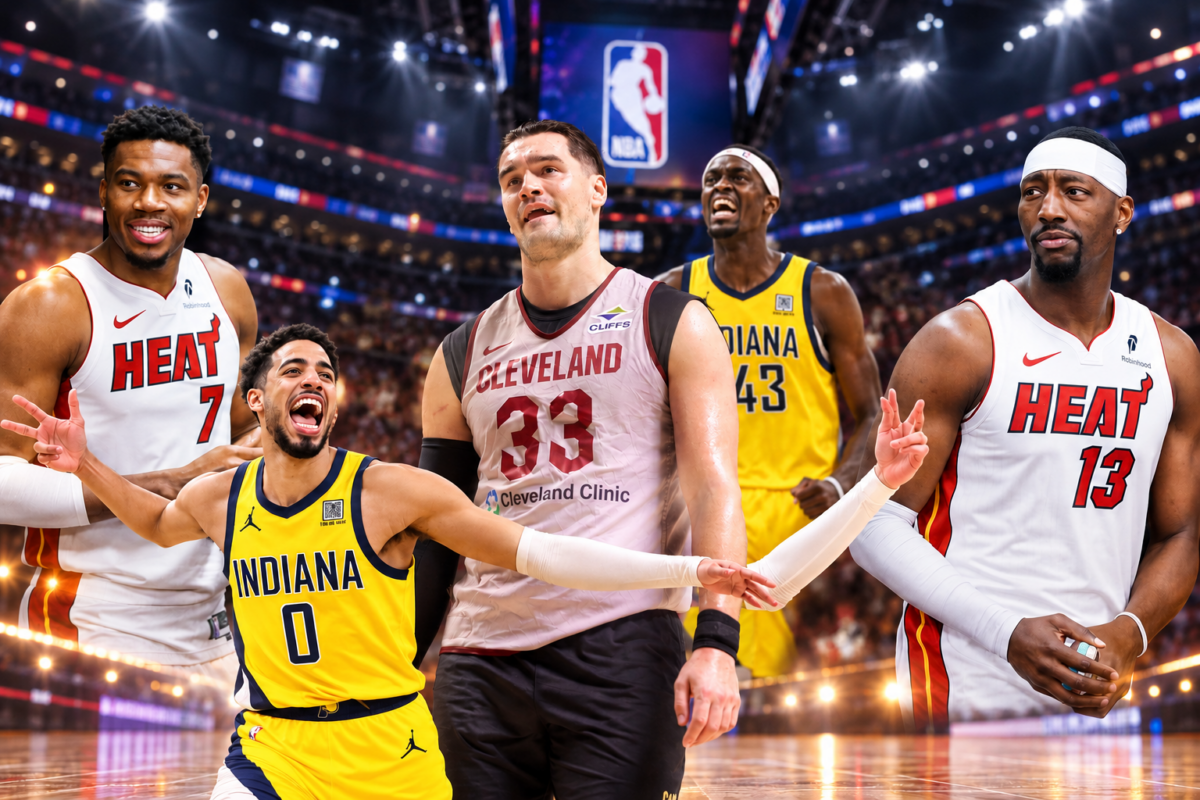
San Antonio now believes it has a player in Victor Wembanyama around whom it can build a championship contender for the next decade. Oklahoma City is trying to preserve the core that won the title in 2025, while Philadelphia and Miami took a different approach this summer, bringing together established stars in hopes of accelerating their pursuit of a championship. Then there is Nikola Jokić and Denver, a team that continues to demonstrate how much an exceptional individual can do to keep a franchise competitive, but also how difficult it is to sustain a championship-level supporting cast around him.
What does it take to win an NBA championship today, and what does it take to stay on top afterward?
New York Found a Championship Formula. Can It Work Again?
When the Knicks defeated San Antonio 4-1 in the Finals in June, they ended a 53-year championship drought. Their path to the third title in franchise history was impressive: 16 wins against just three losses in the playoffs, a record that places them among the most successful championship teams of the modern era.
Still, the final result hardly captures how unusual New York’s victories were. In all four wins against San Antonio, the Knicks had to overcome double-digit deficits. They closed out the series with a 94-90 victory despite trailing by 16 points, with Jalen Brunson scoring 45 to cement his Finals MVP award.
Brunson is perhaps the best example of what New York has built over the past several years. The Knicks have assembled a roster with clearly defined responsibilities around a point guard who may lack the physical tools of the league’s biggest stars. Mikal Bridges, OG Anunoby and Josh Hart provide defensive toughness, mobility and the flexibility for coach Mike Brown to vary his approach against opposing stars. Karl-Anthony Towns spaces the floor and creates driving lanes for Brunson, while the rest of the rotation accepts roles that do not require a high volume of offensive touches.
The value of that system became particularly apparent in the playoffs. New York was the only team to score more points per 100 possessions in the postseason than during the regular season, improving from 118.7 to 119.9. Anunoby, Towns and Bridges all shot more efficiently once the playoffs began, allowing Brunson to maintain a significant offensive role without having to create every opportunity himself.
Mitchell Robinson’s departure for Boston has left a gap in the frontcourt. Andre Drummond, an excellent rebounder who does not offer the same defensive mobility or rim protection, is expected to take over his role. That will place greater defensive responsibility on Towns, potentially creating problems against the league’s best centers.
There is also the financial challenge of keeping a championship team together. New York has retained its entire starting five, but the future contracts of Towns and Hart raise difficult questions about the roster’s long-term construction. Winning a championship increases players’ value, and NBA rules have made it increasingly difficult to pay top stars while maintaining a strong bench. The restrictions associated with the second apron are particularly significant. That threshold stands at $221.686 million for the 2026-27 season, and teams that exceed it face additional limitations on player acquisitions and trades. The system is designed to make it harder for teams to accumulate expensive contracts without restriction and to encourage a more balanced distribution of talent.
Financial rules alone, of course, do not explain the run of different champions, which began several years before the current collective bargaining agreement took effect. Injuries, stronger competition and changes within the teams themselves have also played major roles. But maintaining a championship-caliber roster has become more complicated.
Despite entering the season as defending champions, New York is not the leading title favorite among NBA general managers. In the league’s traditional preseason survey, only one general manager picked the Knicks to win the championship, although 60 percent expect Brunson and his teammates to win the Eastern Conference. New York holds a significant advantage over most of its Eastern rivals, but the teams attracting the greatest confidence among general managers are in the West.
Wembanyama and Oklahoma City: The West’s Next Powerhouses?
A rivalry is developing in the Western Conference that could define the next several years. San Antonio and Oklahoma City have young cores, have already won conference titles and feature players capable of deciding the biggest games. Their meeting on opening night will be a continuation of last season’s Western Conference finals, when the Spurs eliminated the defending champions in seven games.
San Antonio finished the regular season with 62 wins before reaching the NBA Finals for the first time with Wembanyama. Although New York ultimately prevailed, the experience the Spurs gained could prove valuable in their next championship pursuit. At 22, Wembanyama is already one of the most influential defensive players in the world. Last season, he averaged 25 points, 11.5 rebounds and 3.1 blocks. With his extraordinary wingspan and unusual mobility for a player of his size, he can change the way opponents run their offense. Even when he does not block a shot, his presence often forces players to abandon drives or change their decisions at the last moment.
Importantly for San Antonio, Wembanyama does not have to carry the entire offensive burden. Stephon Castle made significant progress as a playmaker in his second NBA season, increasing his assists per 36 minutes from 5.5 to 8.9. Dylan Harper showed considerable promise during his first playoff run, averaging 14.1 points, while De’Aaron Fox has enough experience to take control of the offense in crucial moments.
The Spurs will need to balance the minutes and offensive roles of Castle, Harper and Fox without compromising the spacing Wembanyama needs. San Antonio is already a legitimate title contender, with its most important young players still short of their primes.
In the annual survey of NBA general managers, 50 percent picked San Antonio to win the championship, compared with 43 percent for Oklahoma City. Wembanyama was the overwhelming MVP favorite with 77 percent of the vote, while an extraordinary 93 percent would choose him as the player around whom they would build a new franchise.
Mark Daigneault’s team finished last season with the league’s best record at 64-18. Shai Gilgeous-Alexander won his second consecutive MVP award, and the Thunder produced one of the best defensive seasons of the past three decades. Oklahoma City allowed 8.3 fewer points per 100 possessions than the league average, the second-best such mark since the NBA began tracking detailed possession-level data.
That defense relies on aggressive ball pressure, exceptional perimeter mobility and Chet Holmgren’s ability to protect the rim without sacrificing much effectiveness when switching. Oklahoma City regularly turns opposing turnovers into easy points, while Gilgeous-Alexander remains one of the league’s best players at creating advantages in isolation. The loss to San Antonio exposed certain weaknesses, however. In their four defeats in the Western Conference finals, the Thunder scored just 95.8 points per 100 possessions. Their offense struggled to find solutions against an organized defense, while injuries to Jalen Williams and Ajay Mitchell further limited Daigneault’s options.
Oklahoma City lost Lu Dort, Aaron Wiggins and Isaiah Joe during the summer as financial commitments and the need for long-term sustainability forced changes to the roster. All three were important rotation players whose defensive assignments and outside shooting had contributed significantly to the team’s championship formula. Gilgeous-Alexander, Holmgren and Williams remain together, but Daigneault will need to find ways to replace those contributions. Oklahoma City still has exceptional talent in its starting lineup, although the depth that had given the team such a significant advantage in recent years is no longer the same.
The Return of Superteams: Philadelphia and Miami Take a Different Approach
Bringing several major stars together was long considered the quickest route to an NBA championship. Miami won two titles with LeBron James, Dwyane Wade and Chris Bosh, while Golden State further strengthened its dominance by adding Kevin Durant. In recent years, however, similar projects have often struggled with injuries, insufficient roster depth and difficulty finding offensive balance.
Philadelphia signed Jaylen Brown and LeBron James this summer, with the 41-year-old James choosing a new destination and another opportunity to pursue a fifth championship ring. They join Joel Embiid and Tyrese Maxey, giving Philadelphia perhaps the most star-studded roster in the league. According to NBA data, Embiid and Brown had identical usage rates of 32.5 percent during the previous postseason, putting them among the league leaders among players with at least 100 minutes played. Maxey averaged 11.2 minutes of possession time per game over the same period, more than almost any other player.
Now they are joined by LeBron, who has spent most of his career as a primary playmaker. His ability to read defenses, find teammates and control the pace could make it easier to integrate the team’s stars. With less need to finish possessions himself, James can focus more on orchestrating the offense. Embiid’s health remains the biggest question. Philadelphia’s center appeared in just 45 of the 94 games his team played across the regular season and playoffs last season. The Sixers have enough talent to distribute offensive responsibilities among several players, but without a healthy Embiid, they will struggle to maximize the potential of this roster.
In Miami, the biggest expectations center on the partnership between Giannis Antetokounmpo and Bam Adebayo. The arrival of the Greek star from Milwaukee, along with the additions of Klay Thompson and Bobby Portis, has given Erik Spoelstra a roster with considerable defensive potential. Giannis and Bam are exceptionally mobile big men who can switch onto opposing guards, protect the rim and cover large areas of the floor. Miami finished 24.9 percent of its possessions in transition last season, the highest figure since Synergy began tracking the data. Now the Heat have added one of the world’s best transition players. Over the past five years, Antetokounmpo has averaged 1.21 points per transition possession, well above the league average.
With Giannis and Bam both capable of securing rebounds, pushing the ball and quickly finding teammates, Miami has an opportunity to play at an even faster pace. The problem arises when opponents manage to slow the game down. Neither Antetokounmpo nor Adebayo is a reliable three-point shooter, which will often allow defenses to collapse into the paint and make their drives more difficult. That makes Klay Thompson particularly important. He made 202 three-pointers last season at a 38.3 percent clip. Tim Hardaway Jr. and Andrew Wiggins will also need to punish defenses for sending additional help away from them.
Jokić and Denver: A Championship Window That Cannot Stay Open Forever
Three seasons have passed since Denver won the championship in 2023, and the Nuggets have not returned to the conference finals in that time. Nikola Jokić remains one of the best basketball players in the world, but his individual dominance has not been enough to carry Denver back into championship contention. Denver’s problem in recent years has not been its offense. Quite the opposite. The Nuggets finished last season with the league’s most efficient offense and 54 regular-season wins. Jokić’s ability to serve simultaneously as the primary scorer, playmaker and centerpiece of almost every offensive action continues to keep Denver operating at an exceptionally high level.
Their defense, however, ranked just 21st for the second consecutive season. When opponents manage to slow Denver’s offense, the Nuggets do not always have enough defensive quality to compensate for the decline in efficiency. DeMar DeRozan arrived this summer, bringing extensive experience and the ability to create his own shot in isolation. That could be valuable when Jokić rests or when opposing defenses disrupt Denver’s usual offensive actions. Still, at 37, DeRozan is not a natural solution to Denver’s defensive problems, and his midrange-heavy playing style will require some adjustments.
That is why Alpha Diallo, the former Monaco player and last season’s EuroLeague Best Defender, could prove to be an even more important addition. Diallo brings mobility, a long wingspan and the ability to switch onto opposing perimeter players, qualities Denver particularly needs following Peyton Watson’s departure. Aaron Gordon’s health will also be crucial after he played just 36 games last season. Gordon’s physical strength, excellent chemistry with Jokić and ability to defend multiple positions make his presence particularly important to the team’s overall balance.
Denver went 18-5 last season when coach David Adelman had his preferred starting five available. With three MVP awards, Jokić has already secured his place among the NBA’s all-time greats. Yet Denver has managed to turn his sustained individual dominance into a championship only once, and each passing season increases the pressure to assemble another team capable of going all the way.
What About the Other Contenders?
Boston won 56 games last season despite Jayson Tatum missing most of the regular season. The Celtics are now trying to remain among the league’s best following Jaylen Brown’s departure. The additions of Paul George and Mitchell Robinson give the team a different roster structure, although finding its offensive balance again will take work.
Detroit posted an even more impressive regular-season record. Led by Cade Cunningham, the Pistons won 60 games before Cleveland eliminated them in Game 7 of the Eastern Conference semifinals. To make another leap, Detroit will need better offensive options when playoff opponents concentrate their defensive attention on Cunningham.
Minnesota enters a new phase with Anthony Edwards and LaMelo Ball. Ball’s arrival allows Edwards to spend more time playing off the ball and focus on his role as the primary scorer, while Rudy Gobert and Jaden McDaniels remain important defensive anchors. Houston also has the potential for a deep playoff run with Kevin Durant, Alperen Şengün and Amen Thompson, particularly if Fred VanVleet’s return brings greater control to the offense. The Rockets have lost in the first round in each of the past two seasons, and expectations for a more substantial playoff run are now higher.
The Los Angeles Lakers will also attract considerable attention as they begin a season without LeBron James for the first time in eight years. Luka Dončić has assumed full responsibility for the team after a season in which he claimed his second scoring title and led the Lakers to 53 victories. The additions of Walker Kessler and Collin Sexton give him a different kind of supporting cast, but the team’s ceiling will depend heavily on its defense and the contribution of Austin Reaves.
Last season’s results illustrate just how demanding the competition has become. Oklahoma City won 64 games but failed to reach the Finals. Detroit won 60 but fell short of the conference finals, while Denver was eliminated in the first round despite having the league’s best offense.
The NBA Searches for Its Next Dominant Team
Last season offers a clear example of how quickly the balance of power can shift. A year ago, San Antonio was nowhere near the leading group of title favorites, yet the Spurs finished the season in the NBA Finals. Oklahoma City was the top championship pick at the time, only to lose its standing as the West’s best team the following spring. Now half of the league’s general managers believe San Antonio will win the title.
New York, meanwhile, enters the season in a position that has not produced success for any defending champion over the past eight years. The Knicks return almost the same core that won the championship, but their opponents have made significant roster changes over the summer, looking for answers to the approach that brought New York success.
New York begins its title defense tonight, and its biggest challenge will be to remain good enough as opponents adjust their approach and strengthen their rosters to counter what made the Knicks successful in the first place.
None of the past eight champions has managed that. New York will try to end the streak.