





The middle of the NBA’s competitive hierarchy might be its most fascinating territory.


These are not necessarily teams lacking talent. Some possess established All-Stars, others have assembled excellent young cores, and several could realistically finish among the top six in their respective conferences. What separates them from the championship favorites is uncertainty: injuries, roster fit, offensive limitations or the absence of a proven postseason formula.
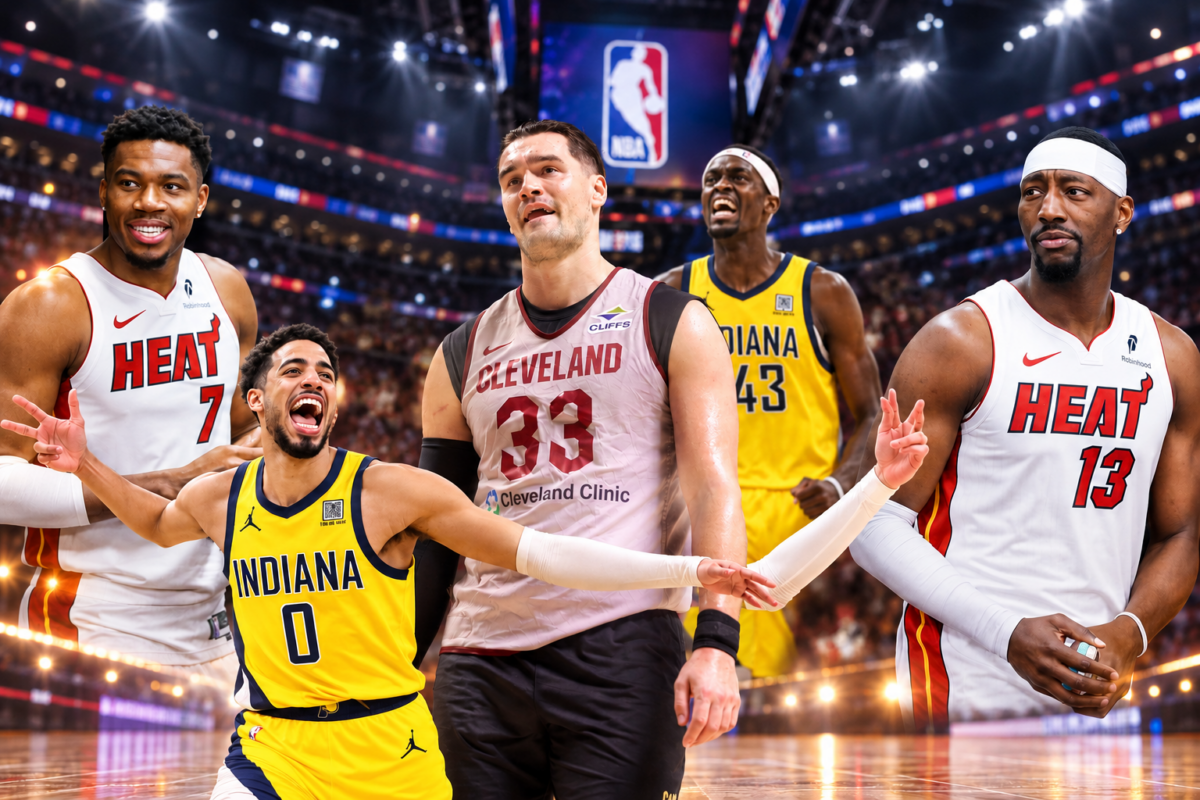
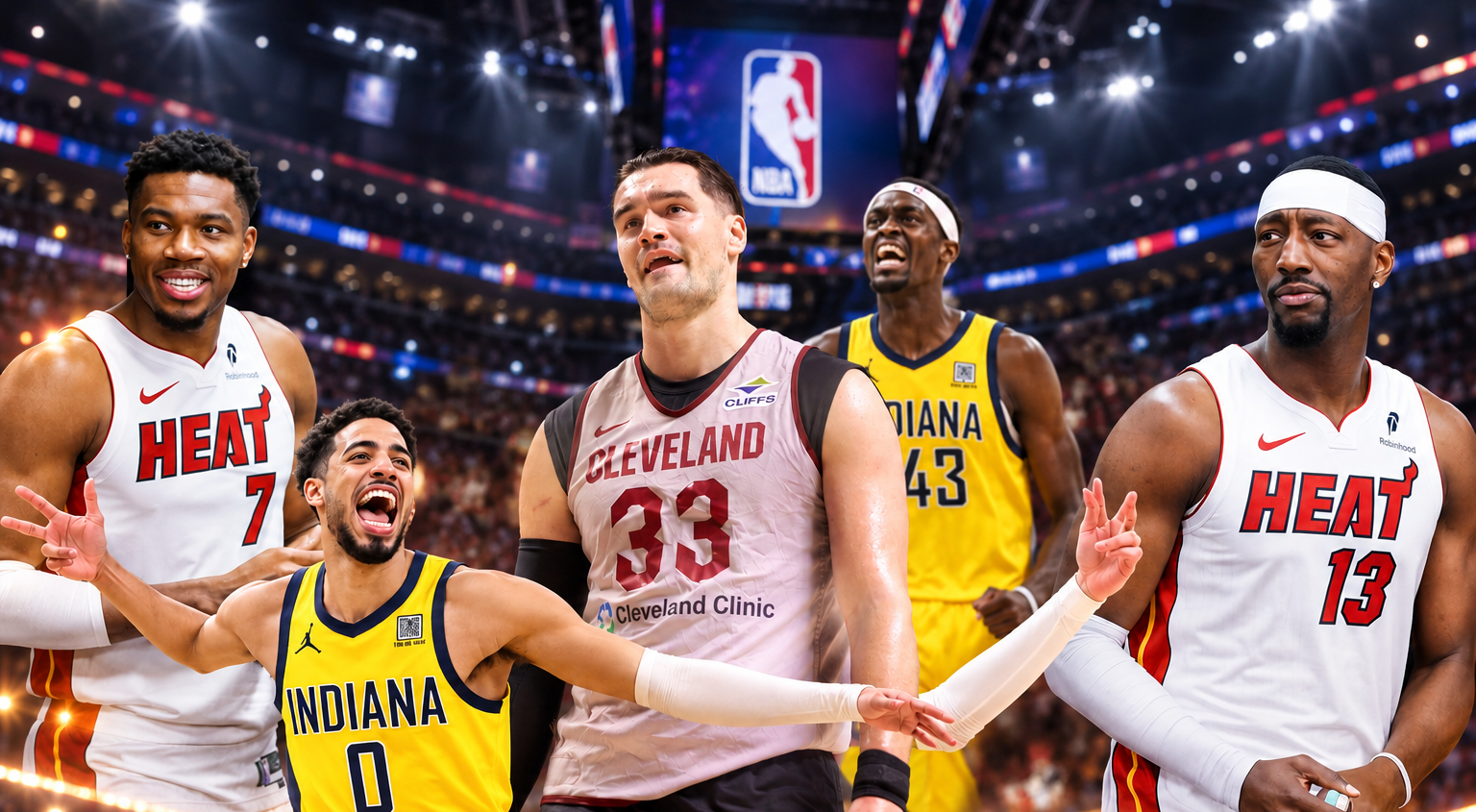
The second installment of SKWEEK’s Power Rankings features ten franchises with wildly different ambitions. Miami must discover how to maximize Giannis Antetokounmpo, Indiana welcomes back Tyrese Haliburton, and Minnesota begins an ambitious experiment with LaMelo Ball alongside Anthony Edwards.
Elsewhere, teams such as Utah and Atlanta are attempting to convert individual talent into collective progress.
There will almost certainly be surprises in this group. The question is which teams can turn intriguing potential into sustained winning basketball.
20. New Orleans Pelicans (26-56)
New Orleans is running out of excuses. Zion Williamson remains a uniquely powerful offensive weapon, Trey Murphy III provides elite perimeter scoring potential, and Dejounte Murray offers experienced playmaking.
Yet the Pelicans have repeatedly struggled to convert their individual talent into consistent winning. The fit between Williamson and Derik Queen is particularly complicated, especially defensively, where neither provides the ideal protection required from a modern interior combination.
New coach Jamahl Mosley must establish a clearer structure without sacrificing the offensive strengths of his most important players.
There is enough talent for a meaningful improvement, especially if Williamson stays healthy and the team discovers productive combinations around him.
But the Pelicans have been waiting for that combination of health, chemistry and execution for years. Until they demonstrate it consistently, projecting them as a playoff team requires considerable faith.
19. Phoenix Suns (45-37)
Phoenix enters another season with Devin Booker as its offensive reference point and a roster that could outperform its modest expectations.
Jalen Green’s availability will be particularly important after an injury-disrupted campaign. When Green, Booker and Dillon Brooks shared the floor, the offense showed encouraging signs, even if the sample was limited.
Miles Bridges and Luke Kennard provide additional scoring options, but the departures of Grayson Allen and Royce O’Neale could affect the team’s balance.
The Suns improved substantially defensively last season, an achievement they must preserve while integrating their new personnel.
Phoenix has enough shot creation to challenge stronger opponents, although interior depth and defensive consistency remain potential weaknesses.
If Green finally stays healthy and Booker maintains his production, a top-six finish is possible. The more conservative expectation is another competitive season near the Play-In boundary.
18. Charlotte Hornets (44-38)
Charlotte’s transformation last season was one of the NBA’s most encouraging developments. The Hornets finished with a winning record and ranked among the league’s most efficient offensive teams, despite ultimately missing the playoffs.
Now they must adapt to LaMelo Ball’s departure. Coby White inherits greater playmaking responsibility, while Kon Knueppel, Grayson Allen and Royce O’Neale provide perimeter shooting and secondary creation.
Naz Reid strengthens an already impressive rebounding group, although replacing Ball’s creativity will not be straightforward.
Charlotte’s offensive system should remain productive, particularly if White handles the transition successfully and Knueppel continues developing.
The question is whether the Hornets can maintain their previous efficiency without the player who created so many of their best opportunities.
Another winning season is realistic, but a playoff appearance will require greater offensive balance and fewer costly turnovers.
17. Miami Heat (43-39)
Giannis Antetokounmpo’s arrival instantly transforms Miami’s ceiling. Pairing the Greek superstar with Bam Adebayo gives Erik Spoelstra an extraordinary defensive foundation, capable of switching, protecting the paint and disrupting almost any opponent.
The offensive fit is more complicated. Miami lost several important perimeter contributors in the trade, including Tyler Herro and Norman Powell, and its backcourt lacks proven shot creation.
Tim Hardaway Jr. and Davion Mitchell will be asked to provide complementary scoring and organization, while Bobby Portis gives the frontcourt additional versatility.
The Heat should remain extremely dangerous in transition, where Antetokounmpo is virtually unstoppable.
Half-court execution, however, could determine whether Miami becomes a genuine contender or merely an uncomfortable playoff opponent.
Giannis guarantees relevance. Building an efficient offense around him and Adebayo will determine how far that relevance extends.
16. Utah Jazz (22-60)
Utah could become one of the NBA’s biggest surprises. Its previous record reflects a team focused more on development than immediate results, but the talent now available to Will Hardy suggests a very different ceiling.
Lauri Markkanen remains an elite offensive weapon, Jaren Jackson Jr. adds defensive versatility and scoring, while rookie Darryn Peterson could quickly emerge as a franchise-changing perimeter talent.
Keyonte George provides another attacking option, giving the Jazz considerably more offensive potential than their recent results suggest.
The departure of Walker Kessler, however, creates concerns about rim protection and defensive rebounding.
Peterson will also need time to adjust to NBA physicality and decision-making.
Utah may struggle to establish defensive consistency, but its offensive ceiling is genuinely exciting. A Play-In push would represent a major improvement, and a top-eight finish cannot be completely dismissed.
15. Orlando Magic (45-37)
Orlando enters a critical season with a new coach and familiar questions. Sean Sweeney replaces Jamahl Mosley, inheriting a roster built around Paolo Banchero, Franz Wagner, Desmond Bane and Jalen Suggs.
The talent is undeniable, but the Magic have struggled for years to create an above-average offense. Their inability to convert open three-point opportunities has repeatedly limited a team that otherwise possesses considerable physicality and versatility.
Nikola Vučević returns to provide additional interior scoring, although his presence does not automatically solve the team’s spacing problems.
Sweeney’s defensive expertise could restore Orlando’s identity on that end of the floor, but meaningful progress will require better ball movement and less predictable half-court possessions.
The Magic have enough talent to reach the playoffs. Whether they can advance beyond the first round depends largely on Banchero’s development and their collective shooting efficiency.
14. Atlanta Hawks (46-36)
Atlanta has quietly assembled one of the Eastern Conference’s most interesting rosters. Jalen Johnson has developed into a versatile offensive centerpiece, while Dyson Daniels and Nickeil Alexander-Walker provide defensive intelligence and complementary creation.
The additions of Lu Dort and Aaron Wiggins strengthen the perimeter rotation, giving Quin Snyder even more flexibility.
The Hawks were dramatically better after last season’s All-Star break, suggesting that their improved identity was more than a temporary development.
Their biggest question is whether Johnson can become a reliable primary scorer against elite postseason defenses. His passing and transition play are already impressive, but consistent pull-up shooting would elevate the entire offense.
Atlanta’s depth and defensive potential make it a credible playoff team.
If Johnson takes another significant step forward and the new additions integrate smoothly, the Hawks could challenge for home-court advantage in the first round.
13. Indiana Pacers (19-63)
No team may have a wider range of outcomes than Indiana. Tyrese Haliburton returns after a season lost to injury, restoring the creative force behind one of the NBA’s most dynamic offenses.
Pascal Siakam remains a dependable scoring option, while Andrew Nembhard and Aaron Nesmith provide the movement and versatility essential to Rick Carlisle’s system.
Ivica Zubac adds a genuine interior presence, although adapting to Indiana’s constant movement will require adjustments. Kelly Oubre Jr. also provides another athletic wing option.
The Pacers’ dreadful record last season should not obscure the quality of their established core.
Everything depends on Haliburton’s health and ability to regain his previous explosiveness and decision-making.
If he returns at his best, Indiana could quickly become a top-four team in the East. If his recovery proves more complicated, even reaching the playoffs could become difficult.
12. Cleveland Cavaliers (52-30)
Cleveland remains talented enough to win the Eastern Conference, but its recent postseason disappointments make optimism difficult to separate from skepticism.
Donovan Mitchell is still an elite scorer, Evan Mobley anchors the interior and James Harden provides experienced playmaking. Mario Hezonja adds offensive versatility, while Peyton Watson’s presence offers the kind of athletic wing defense the Cavaliers have often lacked.
The challenge is translating regular-season efficiency into postseason reliability.
Cleveland’s offense struggled badly against elite defenses last spring, and its reliance on individual creation became particularly visible when opponents disrupted its preferred actions.
A full training camp and greater continuity should improve the chemistry between Mitchell and Harden.
Nevertheless, the Cavaliers must show that they can defend consistently, generate easier shots and avoid falling into large deficits.
Another strong regular season seems likely. Their true evaluation will begin in April.
11. Minnesota Timberwolves (49-33)
Minnesota has made one of the offseason’s boldest decisions by pairing LaMelo Ball with Anthony Edwards.
The potential is enormous. Ball’s vision could create easier opportunities for Edwards, whose catch-and-shoot efficiency suggests he can thrive without dominating every possession.
Jaden McDaniels remains an essential defensive presence, while Rudy Gobert continues to protect the rim at a high level.
However, the departures of Julius Randle and Naz Reid have significantly weakened the frontcourt rotation. Minnesota will depend heavily on Gobert’s durability, especially during the postseason.
Ball’s defensive limitations also create difficult lineup decisions against elite opponents.
The Timberwolves have enough star power to finish among the West’s best six teams, but their roster is less physically imposing than before.
If the new backcourt develops chemistry quickly, Minnesota could outperform this ranking. If not, its lack of depth may become costly.