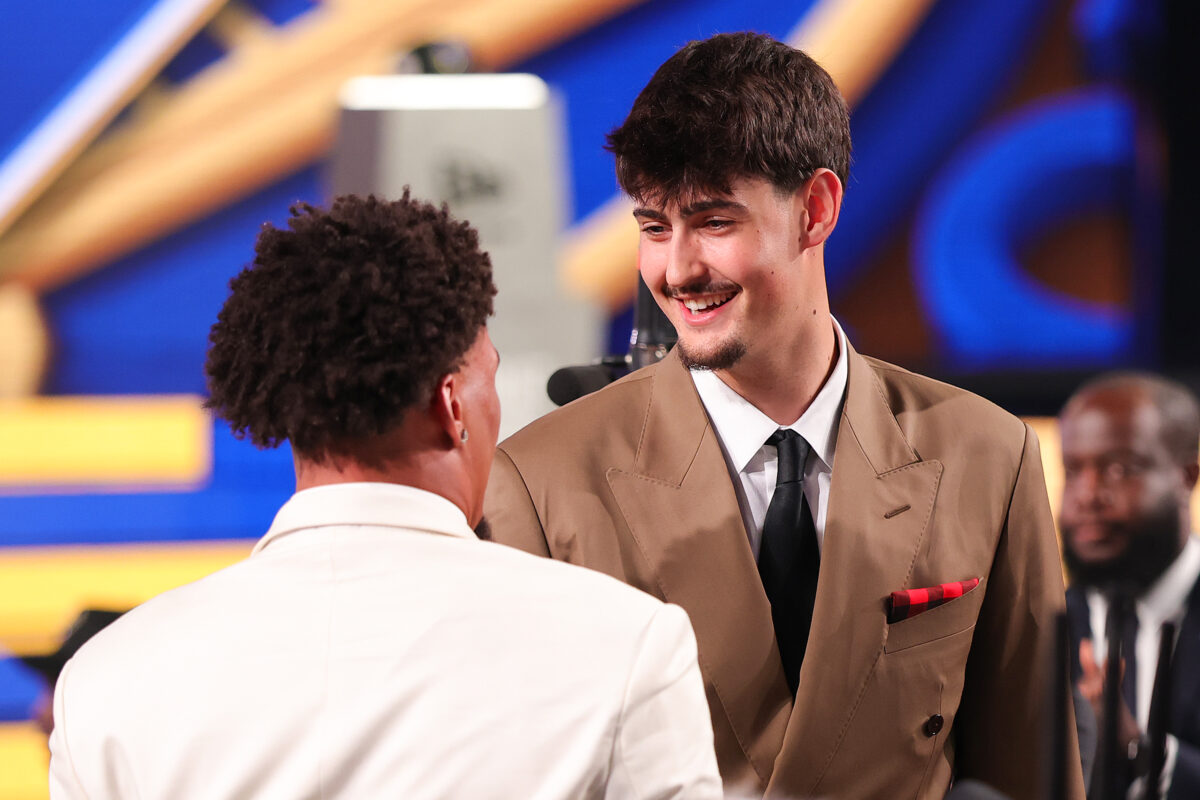


When the NBA draft ended, Robbie Avila had not heard his name called. There was no cap, no photograph and no brief interview in which he thanked his family and promised he was ready to work. None of it was unexpected.


For months, the assumption had been that the Saint Louis center would have to take the longer route, through Summer League, training camp and one of the contract arrangements that gives a player a chance without offering much security. The call came quickly. The Los Angeles Lakers offered him an Exhibit 10 deal.
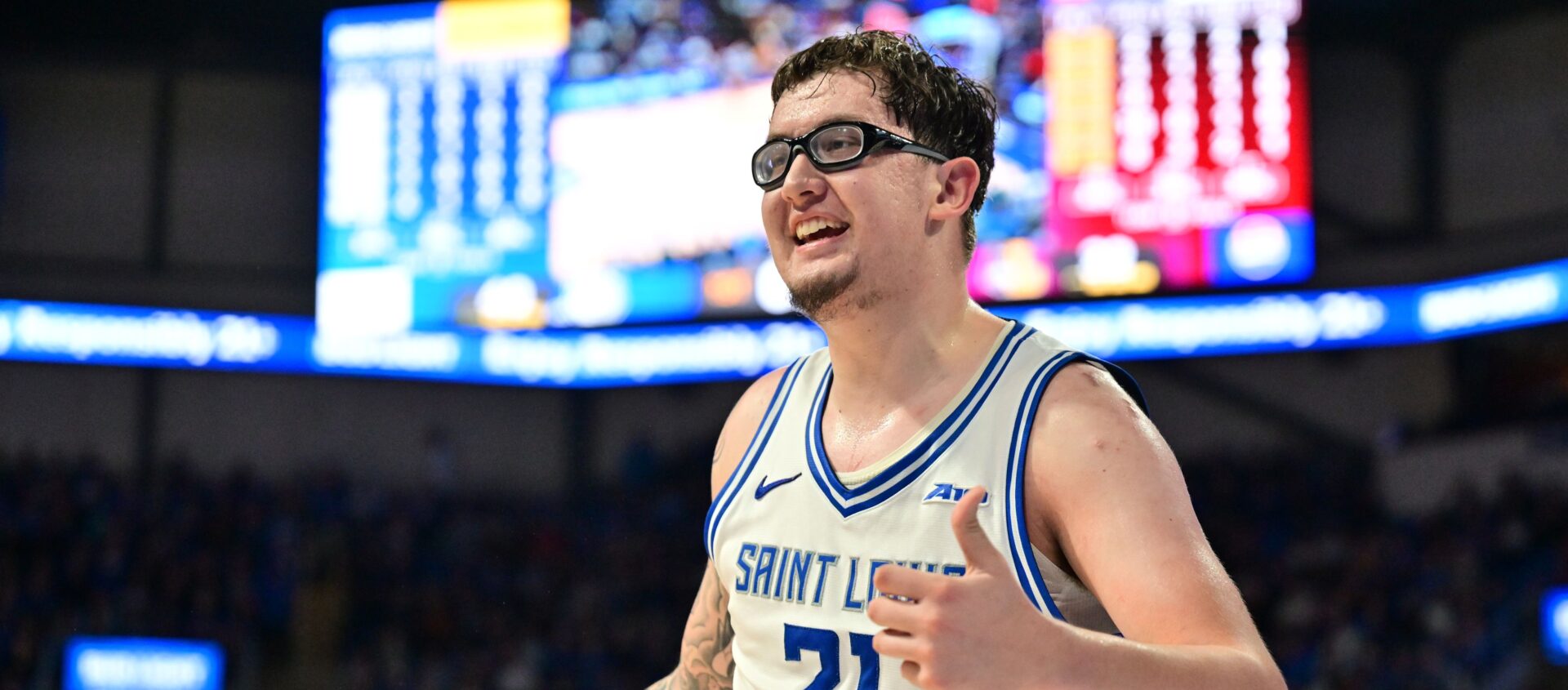
Of course, the internet loved it. Cream Abdul-Jabbar was going to the Lakers. A big man in protective goggles, with a slow first step and perhaps the best collection of nicknames in college basketball, was getting a shot with the franchise where the real Kareem Abdul-Jabbar once played. The headline was already there, but the Lakers did not sign him for the joke.
Avila is a 6-foot-10 center who can make 3-pointers, bring the ball up the floor, run offense from the top of the key and spot passing lanes before most players on the court. He does not play above the rim. At times, the game seems to be moving at one speed while he works at another. The ball still tends to end up in the right place.
An Exhibit 10 contract fits the uncertainty around him. The deal can be converted into a two-way contract, and if Avila does not make the NBA roster, he could continue the season with the Lakers’ G League affiliate. The Lakers have not given him an NBA job. They have brought him into their building and given themselves time to look at him.
There is little risk involved. They get to find out whether Avila’s unusual offensive skill set can hold up against NBA athletes. He gets Summer League, camp and a chance to show that the things he lacks physically do not erase everything he can do with the ball.
Basketball Out of Necessity
Avila grew up in Oak Forest, a Chicago suburb where basketball was part of everyday family life. As a boy, he followed his older brother to practice, and his father, Juan, brought him into the drills as soon as he was old enough to understand what was going on.
Robbie was never going to stand out because of his athleticism. His father concentrated on the things he could develop: footwork, finishing with either hand, changes of pace, shot fakes and passes from different angles. What later came to look like an unusual style of play began as a practical response to his limitations. He needed ways to beat opponents without jumping over them or getting to a spot first.
He also played chess with his grandfather. Years later, his father used the game to describe the way Robbie sees a basketball court. He is rarely concerned only with what is happening in front of him. He is thinking about what the next movement will open up, and sometimes the one after that.
It is a neat comparison, perhaps a little too neat, but it shows up in his game. The pass itself is not always what makes a play. Often, it is the timing. A backdoor lane can exist for less than a second, and Avila has a habit of recognizing it while the defense still thinks it is closed.
The goggles came long before the nicknames. He wore them as a child, even when he played football, because ordinary frames would not fit under his helmet. He broke pairs while playing and wrestling with his older brother. In high school, he tried contact lenses, but they never felt right. His brother told him that without the goggles, he did not look like Robbie.
So he kept them. Over time, they became part of the way people identified him, often before they knew his last name.
At Oak Forest High School, Avila became the school’s all-time leading scorer. As a senior, he averaged nearly 24 points and more than 10 rebounds. He still was not one of the high school prospects chased by the wealthiest and most powerful college programs. His game required a coach willing to imagine how it might work. Josh Schertz was willing.
The Coach Who Did Not Ask Him to Be Someone Else
Schertz brought Avila to Indiana State and gave him a role that players with his body type rarely receive. He did not park him in the paint, ask him to set screens and wait for guards to throw the ball back. The offense moved through him. Avila could work on the low block or step well away from the basket. He could pop after setting a screen, find a cutter or begin the action himself.
He averaged 10.7 points in his first season at Indiana State. A year later, that number rose to 17.4, along with 6.6 rebounds and 4.1 assists, while he shot close to 40 percent from 3. The Sycamores won 32 games, played some of the most watchable basketball in the country and reached the NIT final.
Then Avila scored 35 points against Evansville, and the internet took over.
The clips offered exactly the sort of contrast social media tends to reward. A heavyset center in goggles was hitting 3s, moving defenders with slow fakes, throwing behind-the-back passes and playing at a pace that looked borrowed from another period of basketball. The nicknames arrived almost immediately.
The one that stuck was Cream Abdul-Jabbar. There was Larry Nerd, Larry Blurred, Steph Blurry, Milk Chamberlain, Shaquille Oatmeal and College Jokić. Avila preferred Rob Wave, a play on the name of his favorite musician, Rod Wave. By then, however, the internet had made its choice.
The jokes worked because Avila looked different, but also because the basketball underneath them was real. A clip from the Evansville game approached 18 million views. Within days, dozens of NIL offers started coming in, including some from eyewear companies that immediately understood the value of the goggles.
When that popularity brought him his first meaningful NIL money, he sent part of it back to Oak Forest and bought 20 pairs of shoes for the high school team.
Schertz left Indiana State after the season to take the Saint Louis job. Avila entered the transfer portal with a “Do Not Contact” designation. He was not shopping around or waiting to see which major program would offer the most money. Other coaches did not need to call. He was following Schertz.
There was loyalty in the decision, but also basketball logic. Schertz already knew how to use him. Avila did not have to convince a new staff that a center could run offense or that he should be trusted with the ball away from the basket. At Saint Louis, those ideas came with the coach.
Before Avila’s final college season, Schertz showed him the program’s available NIL budget. He explained how much Saint Louis could offer him while keeping enough money to build a roster capable of reaching the NCAA Tournament. Avila accepted, even though better individual offers were available elsewhere. He also accepted fewer shots.
His scoring average fell to around 13 points, but Saint Louis became a better team. He continued to shoot about 41 percent from 3 and average more than four assists. Some nights, he was a scorer. On others, his work was less visible, pulling a center away from the rim, finding cutters and keeping the offense moving.
Saint Louis won 29 games. Avila finally made the NCAA Tournament, two years after Indiana State had been left out despite its 32-win season. He followed him to another school, took less money and gave up some of his offensive role. In return, he played for a coach who never treated his strengths as a novelty that might be abandoned after a few bad games.
Why He Went Undrafted
There was little mystery around Avila before the NBA draft. His offensive value was easy to identify. Big men who can shoot and pass always receive a closer look. Avila finished his college career with 1,990 points, 473 assists and 214 made 3-pointers, making him one of the few centers in NCAA history to pass 200 from beyond the arc. He can connect guards and bigs, drag an opposing center out of the paint and punish help defense.
The reason he was not drafted was just as clear. The NBA puts slow lateral movement under constant pressure. Avila does not have the explosiveness to protect the rim consistently or the vertical ability to recover when he is late. Teams will bring him into pick-and-roll actions and make him defend quicker guards in space. They will return to the matchup until he proves they should stop. If he cannot survive defensively, it may not matter how much he adds at the other end.
His performance at the Portsmouth Invitational did not help change the discussion. He shot poorly and never produced the game that might have forced scouts to reconsider. By draft night, he remained the sort of prospect teams preferred to call afterward rather than spend a pick on. The Lakers made that call.
They will not learn much from Avila scoring 25 points in a Summer League game. The more useful possessions will come when an opponent puts him in five pick-and-rolls in a row. Can he hold his ground against traditional centers? Can positioning compensate for his lack of foot speed? Does his shot remain reliable from the NBA line? Can he defend well enough to stay on the floor long enough for his passing to matter? The defense will determine whether those stretches can grow into an actual role.
That is where the Exhibit 10 contract leaves him. The Lakers saw enough to bring him into the organization, but not enough to make a real commitment. He is neither an NBA player nor simply another Summer League body. For now, he is a question they considered worth asking.
The goggles and nicknames have made him more recognizable than most undrafted players. None of that will matter much when he is switched onto a quicker guard 25 feet from the basket. What matters is how he reached this point.
Lakers have given him the opening. Avila will have to recognize what comes next before everyone else does.