

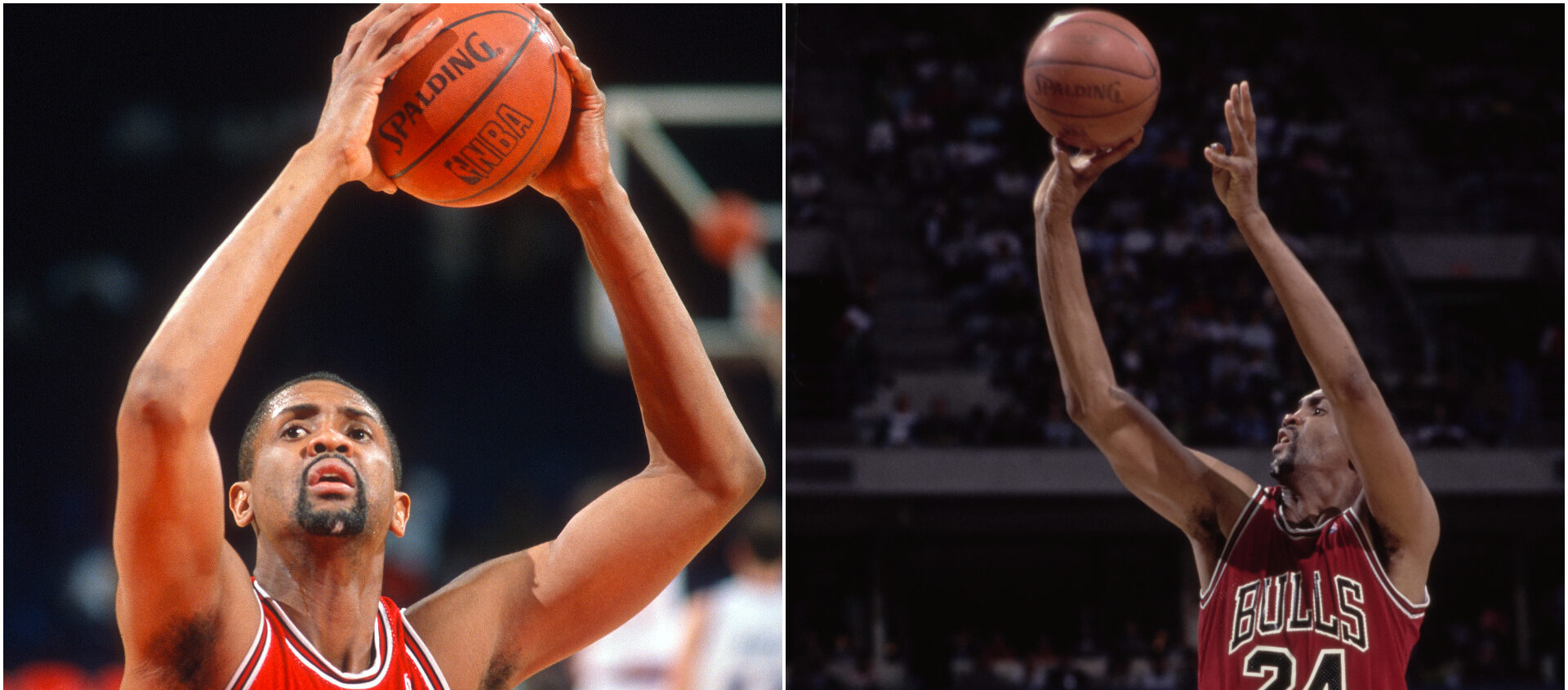

Whenever Bill Cartwright stepped to the free throw line, his shot seemed to contain almost everything a shooting coach might want to fix. He lifted the ball high, almost behind his head. His elbows flared out, the motion looked stiff, and the release seemed to come from several disconnected parts. Watching that routine, it was hard not to expect the ball to finish somewhere well away from the rim. More often than not, it went in.


Cartwright finished his NBA career shooting 77.1 percent from the free throw line. He also made 52.5 percent of his shots from the field and scored 12,713 points in 963 games. The field goal percentage comes with the context of his position and the number of attempts he took around the basket, but the free throw number requires no such qualification. The mechanics looked awkward. They were also repeatable enough to work.
Cartwright turned 69 on July 30, a good reason to look back at a player whose career is now too often reduced to his unusual shot, to put it mildly, and his place in the starting lineup of the Chicago Bulls’ first championship teams. He was a far more accomplished player than some fans remember, especially those who came to the NBA through Michael Jordan and the dynasty of the 1990s.
Before Chicago, He Was an All-Star in New York
The New York Knicks selected him with the third pick in the 1979 NBA Draft, right after Magic Johnson and David Greenwood. As a rookie, he averaged 21.7 points and 8.9 rebounds while shooting 54.7 percent from the field and nearly 80 percent at the line. He made the All-Rookie First Team and earned the only All-Star selection of his career.
He averaged more than 20 points in each of his first two seasons. Cartwright was not yet the veteran who would later handle the less visible work alongside Jordan. He was one of the league’s most productive young centers and a major part of the Knicks’ offense.
Injuries and Ewing Changed the Hierarchy
Then his body changed the course of his career. Foot problems forced him to miss the entire 1984/85 season, and he appeared in only two games the following year. In the meantime, the Knicks had won the first pick and drafted Patrick Ewing, which completely changed the hierarchy of the team. Cartwright returned and spent some time playing alongside Ewing, but he never regained the status he had built during his early years in New York.
The Trade Jordan Did Not Initially Welcome
In the summer of 1988, he was traded to Chicago for Charles Oakley. The Bulls gave up one of the league’s best rebounders and a player who was close with Jordan, so the move was not greeted with much enthusiasm at first. The front office believed the team needed a true center, while Horace Grant’s development meant Oakley’s minutes at power forward could be replaced from within the roster.
Cartwright no longer received the number of shots he had during his best years with the Knicks. The Bulls built their offense around Jordan and Scottie Pippen, while Cartwright took on work that rarely stands out in a box score. He set hard screens, protected the paint, guarded opposing centers and gave the team some of the physical balance it had been missing.
Finding Value in a Smaller Role
His career had moved in a completely different direction. An All-Star center and one of New York’s main offensive options had become a veteran who needed to find value in a much smaller role. Cartwright did not continue playing as though nothing had changed, and he did not expect Chicago to shape its system around the reputation he had earned years earlier.
Phil Jackson made him one of the Bulls’ captains alongside Jordan. That said more about his place within the team than his scoring average did. Chicago was not built around Cartwright, but his experience and presence mattered in a locker room trying to make the last step from contender to champion.
The Physical Work Behind Three Championships
He started for the Bulls teams that won three consecutive titles in 1991, 1992 and 1993. His numbers during that run were not especially large, but Chicago played in a league filled with centers such as Patrick Ewing, Hakeem Olajuwon, David Robinson, Shaquille O’Neal and Robert Parish. Someone had to absorb the contact, defend the paint and deal with the physical work Jordan, Pippen and Grant could not take on every night.
Cartwright was not merely a large body placed in the middle of the floor. He could be irritable, confrontational and careless with the sharp elbows that became part of his reputation. One of them fractured the bone around Hakeem Olajuwon’s right eye and kept the Rockets center out for about a month. Another opened a cut near Isaiah Thomas’ eye, adding another layer to the hostility between Chicago and Detroit. Cartwright also had his share of bruising exchanges with Charles Barkley and Dennis Rodman, players who were hardly likely to step away from contact themselves. He played in an era when frontcourt matchups often became personal, and he was usually willing to meet that physicality.
Cartwright’s three rings were not simply the reward for landing next to the best player in the league at the right time. He reached Chicago’s championship years after serious injuries, the loss of his old status in New York and an adjustment to a role that brought fewer touches and far less attention.
Plenty of former All-Stars have struggled to accept that kind of change. Cartwright remained useful after he could no longer play the way he had during his first NBA seasons. That willingness extended his career and made him an important part of one of the most recognizable teams the league has produced.
Five Rings as a Player and Coach
After retiring as a player, he returned to the Bulls as an assistant coach and was part of the staff that won two more championships in 1997 and 1998. He later became Chicago’s head coach, worked as an assistant with the New Jersey Nets and Phoenix Suns, and continued coaching in Japan and with the Mexican national team.
The Shot Was Ugly, but It Was His
Old clips of his free throws still make the rounds on social media. No coach would show Cartwright’s routine to young players as an example of textbook shooting form. Still, he had what every dependable free throw shooter needs: a routine he trusted and a motion he could reproduce often enough when he stepped to the line.
The release remains an obvious place to begin any story about Bill Cartwright, but it was never the most important part of his career. He was an All-Star, a starter on three championship teams and a player who found a way to remain valuable after his career took a completely different path from the one his early years in New York had suggested.
His shot continues to attract the most attention, but the numbers and the three championship rings tell the rest of the story.