



Late August brings back one of the less interesting parts of the NBA calendar. Most of the major offseason business is winding down, players are starting to return to team facilities, and G League affiliates are opening their doors for local tryouts.


For the 2026/27 season, those tryouts will run from late August into early October, with registration for some teams costing between $200 and $300. Players will come from smaller colleges, semi-pro leagues and different parts of the world. For some, it will probably be one last attempt to catch on somewhere as a professional. Most will not get much further than that day in the gym.
The NBA Was Already Starting to Look Unrealistic
Jonathon Simmons knows what that feels like. When he went undrafted in 2012, he was not one of those prospects people expected NBA teams to regret passing on. He had spent one season at the University of Houston after coming through two junior colleges, then entered the draft a year earlier than his coaches had advised.
Simmons later admitted he had rushed the decision. He had three children, wanted to start making money and did not really understand all the different routes available to a college player trying to build a professional career.
He ended up with the Sugar Land Legends in the short-lived American Basketball League, where he could play and score plenty of points without getting much closer to financial security. His responsibilities at home kept growing, money was tight and basketball was starting to look less and less like something that could support a family.
His mother, LaTonya, wanted him to find something steadier. Barber school was one possibility. Simmons knew how to cut hair, and at that point the idea was not some distant fallback plan. It was far more realistic than playing in the NBA.
$150 for One More Chance
A year after the draft, he heard about an open tryout for the Austin Toros, the San Antonio Spurs’ developmental affiliate. The registration fee was $150. Simmons found the money and paid for a chance to get inside the system of one of the NBA’s best organizations.
Several dozen players showed up, none with a contract and none with much reason to believe one afternoon would change their career. Simmons did enough to earn an invitation to training camp. From there, he made the team. That only got him started.
The Hardest Part Came After the Tryout
The $150 has become the detail that follows Simmons whenever his story is told, largely because it sits so neatly next to the multimillion-dollar contract he signed a few years later. What tends to get lost is everything in between. He spent two seasons in the D-League and, for much of that time, still did not know whether basketball was ever going to provide a real living.
He was making less than $25,000 a year and by then had four children. There were times when he borrowed money for diapers or lunch. Earl Watson, then an assistant coach in Austin, later talked about buying Simmons meals and sneakers. A regular job was still something Simmons had to consider.
His basketball did not take off right away, either. He averaged 9.8 points in his first season in Austin. He was strong, athletic and capable of changing the energy of a game, but there was still plenty he had to learn about playing on the perimeter in an NBA system.
Two Years Inside the Spurs’ System
During his second year, Austin put more responsibility in his hands. Simmons spent time initiating the offense and had to make reads instead of leaning mostly on his physical advantages. His numbers rose to 15.2 points, 4.3 rebounds and 3.7 assists, and he earned a spot on the D-League All-Defensive Third Team.
By then, the Spurs had a much clearer idea of what they had. Watson believed Simmons had a chance to stick in the NBA because he could defend, play with strength and handle different assignments. San Antonio had watched him from close range for two years and understood both what he could do and what he could not. When the Spurs went looking for an athletic, affordable perimeter option in the summer of 2015, Simmons was already in their building and ready to prove himself. And, he still had another audition ahead of him.
Summer League Finally Opened the Door
Simmons started the 2015 Summer League with Brooklyn in Orlando before joining San Antonio in Las Vegas. The Spurs, coached that summer by Becky Hammon, won the title. Simmons had 23 points, three rebounds, three assists and two steals against Phoenix in the championship game and was named Finals MVP.
Two days later, the Spurs signed him. Simmons was 26 when he made his NBA debut, so there was never going to be much patience for a long developmental process. He needed a role right away and found one through the parts of his game that already translated: transition play, energy and perimeter defense.
From Open Tryout to Playoff Starter
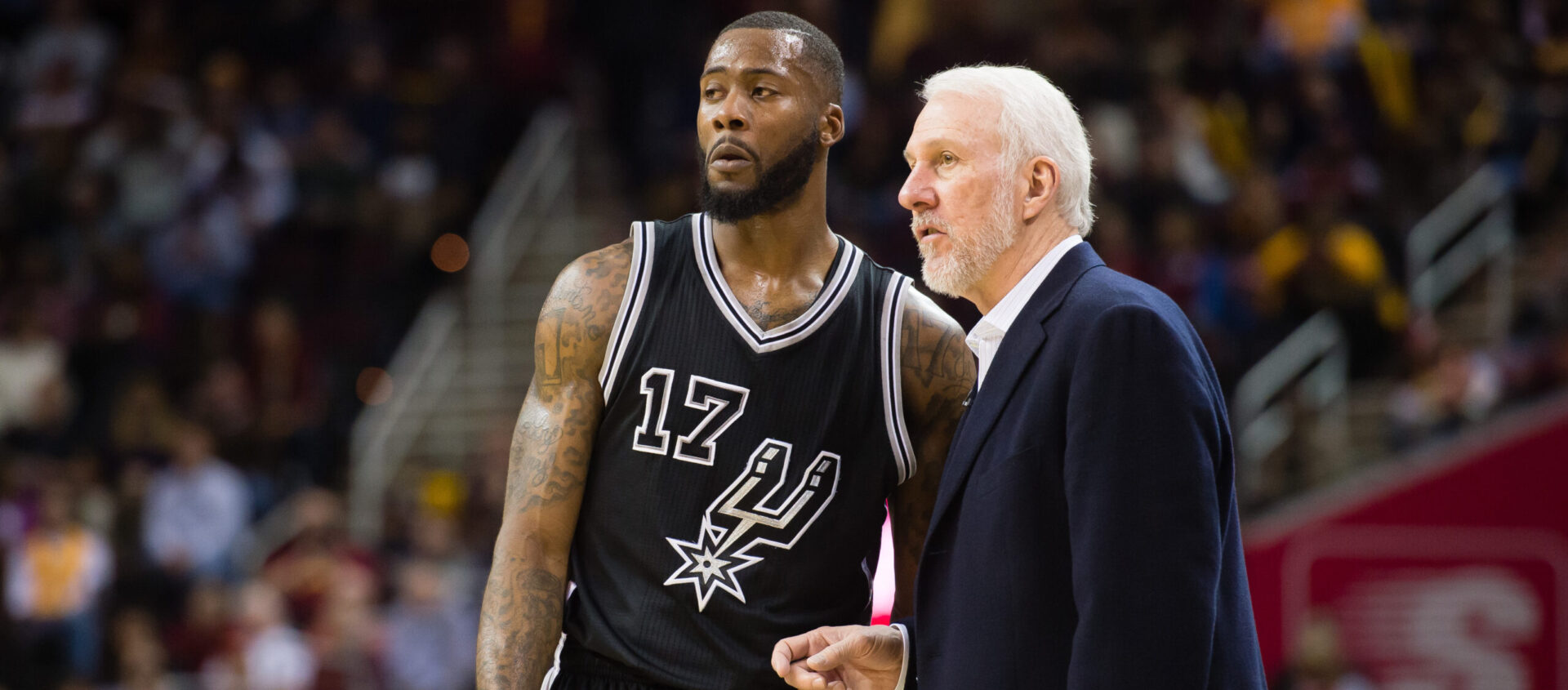
Gregg Popovich gradually gave him more responsibility. On opening night of the 2016/17 season, Simmons scored 20 points against Golden State in Kevin Durant’s first official game as a Warrior. The more meaningful test came several months later in the playoffs.
Kawhi Leonard was unavailable for Game 6 of the Western Conference semifinals against Houston. Simmons started and scored 18 points as San Antonio overwhelmed the Rockets 114-75 to close out the series. Four years after fighting for a spot with the Spurs’ developmental team, he was playing major minutes in a playoff game where San Antonio had to deal with James Harden.
The $18 Million Contract
That postseason put Simmons in position to get paid. San Antonio renounced his rights in the summer of 2017, and Orlando offered him a three-year contract worth $18 million, although some reports at the time described the deal as being worth around $20 million. Simmons averaged 13.9 points and started 50 games in his first season with the Magic, the largest role he would have in the NBA.
But, it did not last as long as he probably hoped. Orlando sent him to Philadelphia in 2019 as part of the Markelle Fultz trade. He later had a brief stop with Washington and soon found himself outside the NBA. His career continued in China and later Saudi Arabia, far from the league he had spent so long trying to reach.
The Tryout Was Only the Beginning
Even now, his name tends to come up when G League open tryouts begin. His story is useful precisely because the tryout itself was such a small part of what happened. Paying an entry fee and getting noticed did not make Simmons an NBA player. The next two years did.
This summer, hundreds of players will again spend a few hundred dollars for a similar opportunity. Most will leave with nothing more than the experience. A few will get another workout, an invitation to camp or another phone call.
Simmons got one of those calls in 2013, and he managed to make it matter.