













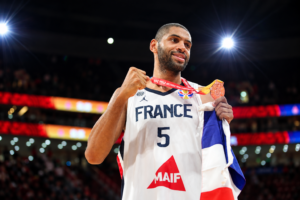


Exactly 35 years after his father Richard died on a basketball court, Nicolas Batum sat next to his 10-year-old son Ayden in the stands of the small gym in Pont-l’Évêque, where he had started playing basketball as a child. The date was not chosen by accident. Batum was two years old and in the crowd when his father suffered a ruptured aneurysm during a game on September 21, 1991, and died. Richard did not get to choose how his basketball career would end. Nicolas did. At 37, after more than two decades of professional basketball and 18 NBA seasons, he said it was time to go home.


Batum retires without an NBA championship or an All-Star appearance, without the individual honors that usually come up first when great careers are evaluated. He did, however, play 1,205 NBA games, starting 877 of them, score 11,553 points, make 1,842 3-pointers, collect 5,656 rebounds and hand out 3,612 assists. His averages of 9.6 points, 4.7 rebounds and three assists explain part of his longevity, but not nearly well enough why so many different coaches kept finding answers to different problems in his game.
One Block in Tokyo Explains Batum Better Than Any Box Score
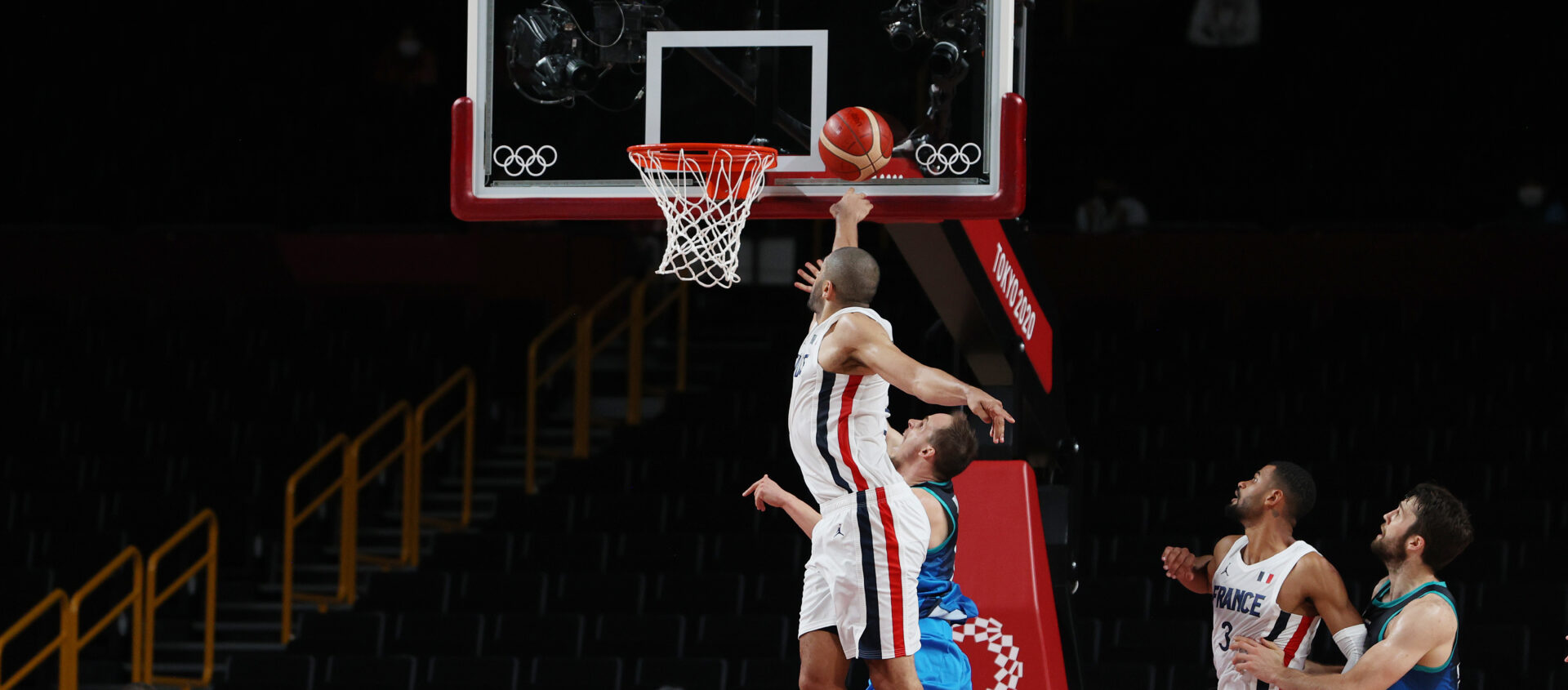
The 2021 Olympic semifinal in Tokyo probably explains better than anything what kind of player Nicolas Batum was. France led Slovenia 90-89. Luka Dončić passed out of a double-team to Klemen Prepelič, who drove toward the rim and appeared to have a clear path to the basket that would have sent Slovenia to the final. Batum rotated over and blocked him almost at the buzzer.
France advanced, and Batum finished the game with only three points. And four blocks! With him, it was never unusual for the most important thing he did in a game to come without a basket, an assist or anything else that immediately draws attention in a box score. He could guard a guard, a wing or a center, run the offense for a few possessions, hit an open 3, connect different parts of the floor, work as a secondary creator or simply step aside and let better scorers have the ball. When necessary, he could take over offensively himself.
Portland Revealed the Full Range of His Game
Portland was where it first became clear how many different things Batum could do at a high level. He entered the NBA in 2008 as the 25th pick and, over seven seasons, developed from an athletic, defensively gifted wing into one of the most versatile players of his generation. Against New Orleans in December 2012, he had 11 points, 10 assists, five rebounds, five steals and five blocks. He became only the third player in NBA history to reach at least those numbers in all five categories in the same game. That season, he also became the only player in league history with at least 360 assists, 80 blocks and 165 made 3-pointers.
A year later, he played all 82 games and averaged 13 points, 7.5 rebounds and 5.1 assists. Portland already had LaMarcus Aldridge and a young Damian Lillard, so Batum did not have to be the first option to be indispensable. That version of his game perhaps showed most clearly what would later keep him in the league well beyond his physical peak: he did not depend on one skill or on having the ball a certain number of times.
Charlotte Gave Him More Responsibility and a $120 Million Contract
Charlotte offered him something different in 2015, more responsibility. In his first season with the Hornets, he averaged 14.9 points, 6.1 rebounds and 5.8 assists, at the time career highs in scoring and playmaking. He was one of only six NBA players to average at least 14 points, six rebounds and five assists, alongside Kevin Durant, Draymond Green, James Harden, LeBron James and Russell Westbrook. Charlotte returned to the playoffs and pushed Miami to Game 7 in the first round.
That season earned him a five-year, $120 million contract. That deal would later become an important part of his career for very different reasons. After signing it, he never again reached the level of his first season in Charlotte. His production gradually declined, injuries took their toll, and the size of his salary changed the way every poor stretch was viewed. In his final season with the Hornets, he played only 22 games and averaged 3.6 points before the team waived him to create room for Gordon Hayward.
It was a period in which Batum went from being one of the league’s more respected all-around players to being mentioned far more often because of his contract than his basketball.
The Clippers Let Him Become Useful Again
The Clippers signed him late in 2020 with almost no risk attached. They were getting a player who no longer had to justify a $120 million contract, or score 15 points and organize the offense to be useful. Batum accepted a smaller role: he no longer had to create a large share of the offense, but could defend several positions, space the floor and make quick decisions with the ball. During that first season, NBA.com described his arrival as a career revival.
It was most obvious in the 2021 playoffs. Dallas took a 2-0 lead against the Clippers, and Luka Dončić repeatedly hunted Ivica Zubac in pick-and-roll and punished the matchups he created. Tyronn Lue quickly pulled Zubac in Game 3 and turned to Batum. With a smaller lineup, the Clippers could switch without giving Dončić an obvious target to attack possession after possession. Lue started Batum in Game 4, and the series was soon tied.
Batum did not “stop” Dončić, and he was not the reason the Clippers won the series by himself. Yes, Kawhi Leonard and Paul George carried the heaviest load, but using Batum at center removed one of the weaknesses Dallas had been exploiting most easily. A few weeks later, the Clippers eliminated Utah as well and reached the Western Conference finals for the first time in the franchise’s 51-year history. At 32, Batum had already shown how a player can extend his career by accepting in time that he is no longer what he once was, while also understanding what he can still provide.
Three years later, with Philadelphia, another game fit neatly into his résumé. The Sixers trailed Miami by 14 in the 2024 play-in, and Batum came off the bench to score 20 points and make six 3-pointers. With 25 seconds left and Philadelphia ahead 99-96, Tyler Herro took a 3 to tie the game and Batum blocked it. The Sixers won 105-104 and secured the seventh seed in the East. The 3-pointers were needed to bring Philadelphia back into the game, and when the result was on the line, Batum’s most important play once again came on defense.
His Place in French Basketball Goes Far Beyond the NBA
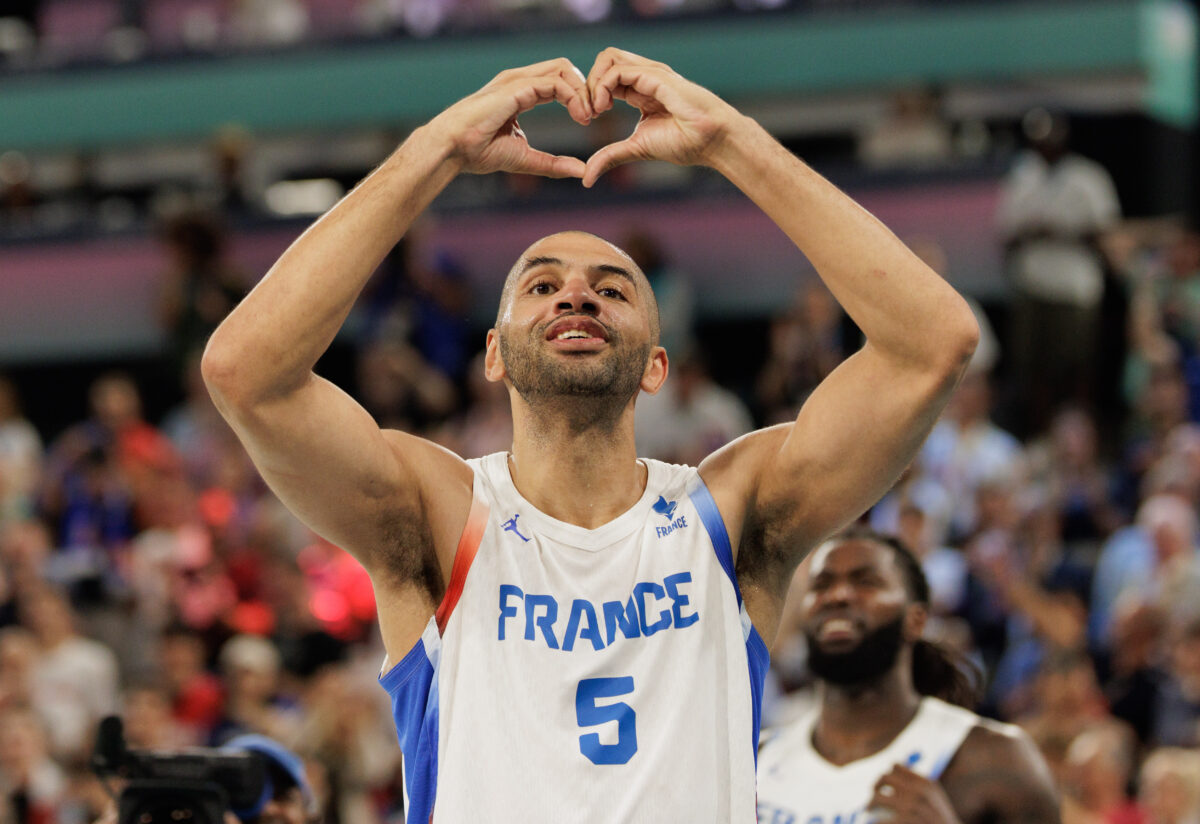
His NBA career lasted 18 seasons, but Batum’s place in French basketball cannot be explained without the national team. He played 177 games for France and won seven major medals, more than any other French international. He was a European champion in 2013, a silver medalist in 2011 and a bronze medalist in 2015, won World Cup bronze in 2014 and 2019, and finished his international career with back-to-back Olympic silver medals in Tokyo and Paris.
For France, he was not always only the player doing the “little things.” In the 2013 EuroBasket final against Lithuania, he led the team with 17 points and added six rebounds as France won 80-66 to claim its first European title. A year later, against Serbia in the World Cup semifinal, he played probably the best offensive game of his international career: 35 points, 11-of-17 shooting and eight 3-pointers on 12 attempts. Serbia survived his run and won 90-85. Batum’s 35 points remained his career high for France.
Still, whenever his international career is revisited, those three points against Slovenia will probably come up most often. On the final possession, he was the player who recognized before everyone else where he needed to be on the floor and got there in time.
His Final French Memory Was Shared With His Son
There were many moments like that throughout his career. Batum did not need to finish a possession to have a decisive influence on it. His game was broad enough for years to create the impression that he might become an NBA star. In Charlotte, he earned a contract that paid him like one of the franchise’s core players. He did not live up to those expectations, and the end of that period was poor. But few players manage to change the way the league sees them after that kind of decline. Batum did. He went from a player criticized for not doing enough to justify his contract to a veteran serious teams wanted precisely because of everything he could do without needing an action drawn up for him.
His final game for France came in the gold-medal game at the 2024 Paris Olympics, again against the United States. France took silver for the second straight Olympics, and Batum closed an international career that had begun back in 2009. When he later spoke about his favorite memories, he specifically mentioned the semifinal win over Germany at those Games. His son was there with him, and Batum explained that he had never been able to share moments like that with his own father.
That is also why his retirement looked the way it did. There was no final NBA season designed as a farewell tour, and no waiting around for someone to offer him a few more months on a contract. He sat next to his son in the gym where it had all started and told him he was done.
The Career Came Full Circle in Pont-l’Évêque
What remains are 1,205 NBA games and 177 appearances for France, a EuroBasket title, two Olympic finals, two World Cup bronze medals, the Portland years that showed the full range of his talent, a difficult ending in Charlotte and a return to being an important player on serious NBA teams when it had already seemed that his career in the league was nearing its end.
Among all those numbers and games, one block in Tokyo still explains Nicolas Batum better than anything else. It may have been the clearest example of what he did throughout his career: he found a way to help his team win.