






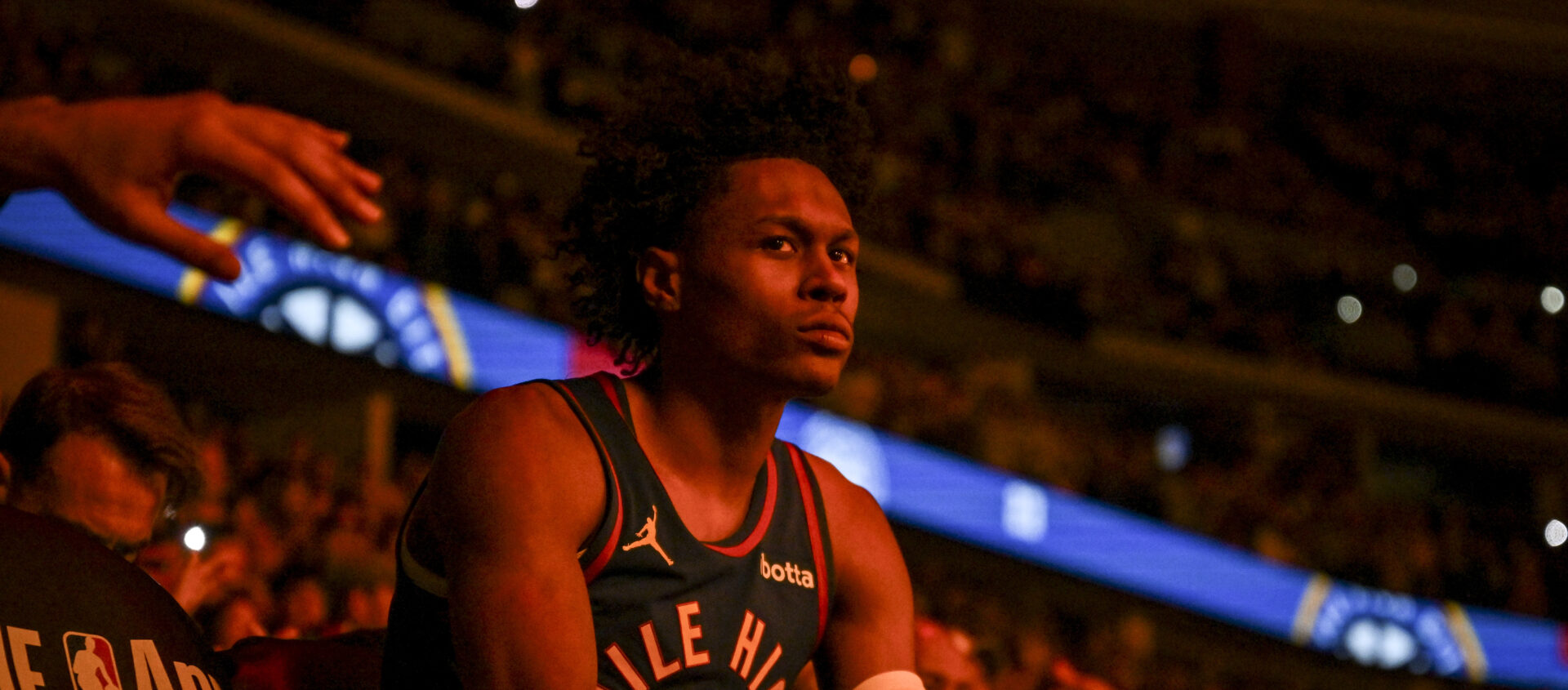

Over the past few years, the Denver Nuggets have lost several important pieces from their championship team, spent draft capital trying to repair the financial structure of the roster, and increasingly turned to younger players who were supposed to extend the life of the team around Nikola Jokić. This summer, they reached perhaps the strangest point in that process. They lost Peyton Watson, the best young player they had managed to develop in recent years, at a time when they needed his skill set more than ever.


Cleveland offered him a contract Denver was not willing to match financially, and the 23-year-old wing ended up with the Cavaliers in a five-team trade. The Nuggets did not receive a player who can help them next season, only future draft capital. It can all be explained by the fact that Denver is currently the only franchise in the NBA operating above the second apron, but that is where the larger issue begins. The Nuggets did not end up in this position overnight, and Watson is not the first quality player they have lost as their room to maneuver has continued to shrink.
Denver Developed Exactly the Player It Needed
Peyton Watson spent four years developing in Denver, going from a raw No. 30 pick to a player who averaged 14.6 points and 4.9 rebounds last season while shooting 41.1 percent from three. At 23, he could defend several positions and provided exactly what the Nuggets have been lacking for some time, most of all athleticism on the perimeter. Just as Denver reached the point where it could begin to benefit from its own development work, Watson ended up in Cleveland.
The Cavaliers gave him a four-year, $88 million contract with a player option and a trade kicker. In a deal involving five franchises, Denver received Cleveland’s unprotected 2031 first-round pick, Sacramento’s 2032 second-round pick and Julian Reese, a player on a two-way contract whom the Nuggets planned to waive. Cleveland, along with Watson, received Cam Whitmore, the Clippers got Max Strus, Charlotte received Dennis Schröder, while Washington took Tre Mann, another second-round pick and cash.
In practical terms, Denver received no immediate return. Cleveland’s unprotected 2031 first-round pick does nothing to solve the problems of a team trying to win a championship while Nikola Jokić is still at his peak. It is difficult to know what that pick will be worth five years from now, and even harder to know whether Denver will eventually get a player anywhere close to Watson’s level. Right now, the Nuggets have lost an important rotation player without receiving any basketball help for the present.
The Second Apron Turned Watson Into a Massive Expense
The reason is primarily financial. The second apron for the 2026/27 season is set at $221.686 million, and Denver is currently the only NBA team above that line. The consequences also go well beyond the luxury tax. Teams above the second apron face major restrictions on combining salaries in trades, have limited access to certain exceptions, face restrictions on trade exceptions, and can eventually see future draft picks affected by remaining in that territory for too long.
The clearest illustration of how expensive Watson had become for Denver comes from ESPN cap expert Bobby Marks. When the Nuggets matched Oklahoma City’s two-year offer sheet for Spencer Jones, worth roughly $11.8 million, their projected luxury tax bill jumped from about $36 million to $68 million. Had Watson stayed only on his $6.5 million qualifying offer, that figure would have risen to approximately $112 million. With a salary in the $22 million to $23 million range, which is what he ultimately received from Cleveland, Denver’s tax bill would have climbed to around $230 million. Combined with player salaries, the season would have cost ownership close to half a billion dollars.
Denver therefore had a financial reason to walk away. The second apron, however, does not prevent a franchise from keeping its own player. The Nuggets could have paid Watson. The price was enormous, and ownership was clearly unwilling to accept it. More important than the decision itself is how the franchise reached a point where a 23-year-old player developed within its own system became a luxury it could no longer justify.
The Financial Squeeze Started After the Championship
The problem goes back to the period immediately after the 2023 championship. Bruce Brown was the first major piece to leave, but his case is difficult to use as evidence of poor management. Denver did not have his Early Bird rights and could offer him no more than $7.8 million, while Indiana offered $45 million over two years. The rules left the Nuggets with very little room to respond. A year later, the situation with Kentavious Caldwell-Pope was different. Denver had his Bird rights but did not want to match Orlando’s three-year, $66 million offer and accept the second-apron consequences. One of the best perimeter defenders from the championship starting lineup left without compensation.
That same summer, Denver sent Reggie Jackson and three unprotected second-round picks to Charlotte simply to remove his $5.25 million salary from the books. Only a year earlier, the Nuggets had given him a new contract. Zeke Nnaji received a four-year, $32 million extension in October 2023 despite never developing into a reliable playoff rotation player. Today, his contract represents another salary Denver would gladly move in order to recover some financial flexibility.
The Draft Strategy Was Supposed to Solve This
That was where Calvin Booth’s draft strategy was supposed to help. The logic was understandable, with Jokić, Jamal Murray, Aaron Gordon and others taking up a large share of the salary cap, the rotation had to be filled with players on rookie contracts. In 2023, Denver gave up its 2029 first-round pick to acquire Julian Strawther, Jalen Pickett and Hunter Tyson. None of them became the kind of player who solved the Nuggets’ depth problem the way the organization had hoped. A year later, Denver moved from No. 28 to No. 22 to select DaRon Holmes, paying with Ryan Dunn, the 56th pick and two additional future second-rounders. Holmes’ serious injury immediately after arriving was simply bad luck, but more draft resources were gone.
Bones Hyland, the 26th pick in 2021, lasted less than two seasons before being sent to the Clippers for two second-round picks. Christian Braun has been a hit and was rewarded with a five-year, $125 million contract. Watson was the other obvious success of that model. That is what makes his departure so difficult for Denver. The Nuggets spent years using draft capital in an effort to find inexpensive young players who could extend Jokić’s championship window, yet they were unable to keep one of the few players they clearly got right.
A New Front Office Inherited the Same Problem
The front-office change did not immediately solve the problems it inherited. Calvin Booth left in April 2025, with Ben Tenzer and Jon Wallace taking over basketball operations. Their first major move was sending Michael Porter Jr. and an unprotected 2032 first-round pick to Brooklyn for Cameron Johnson. Denver cut more than $17 million from its payroll and temporarily moved out of the tax, but once again paid for financial relief with a distant unprotected first-round pick. A year later, the Nuggets are back above the second apron.
Watson’s situation is even more uncomfortable because Denver tried to keep him in late July with a five-year, $70 million offer. His camp believed he was worth considerably more, and the market confirmed that with the four-year, $88 million deal from Cleveland. In the meantime, Denver matched the offer for Spencer Jones, the payroll climbed further, and the Nuggets failed to move another contract that might have created enough room. Once Cleveland came with the money, Denver’s choice was essentially reduced to an enormous tax bill or losing Watson.
The Basketball Loss Is Immediate
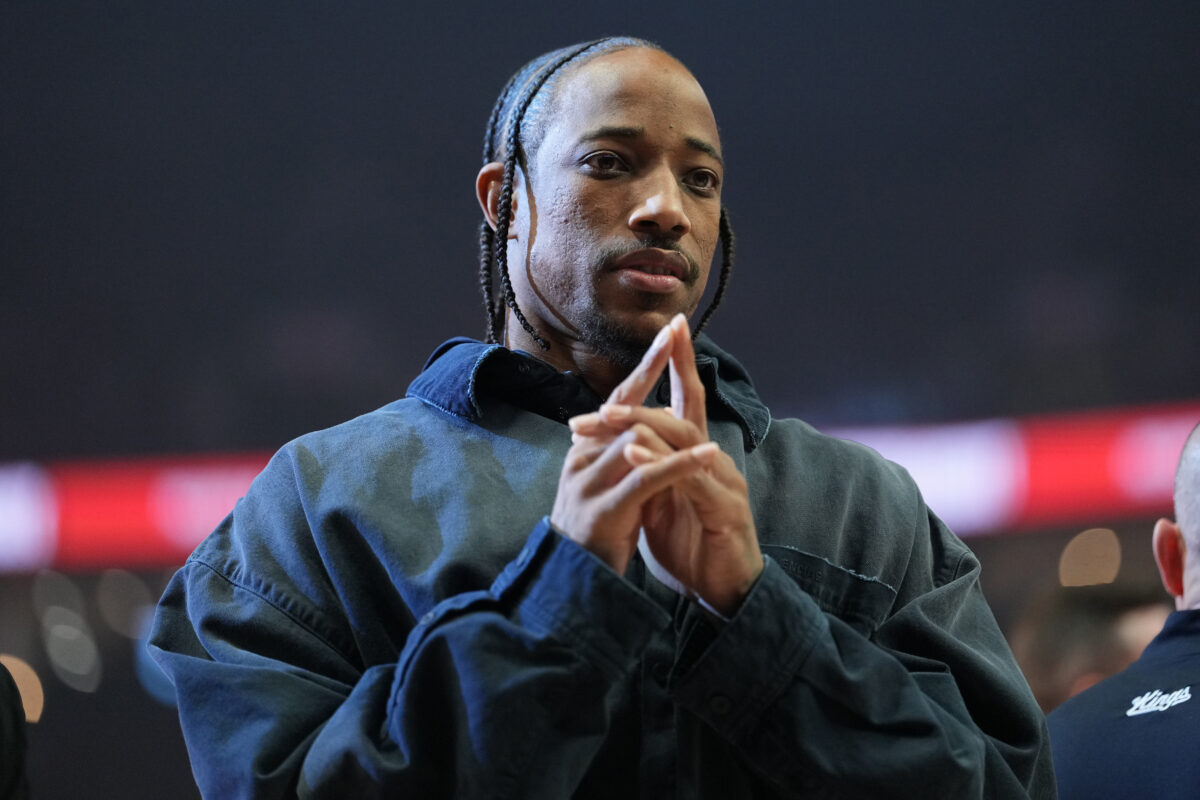
The basketball consequences are immediate. Three of Denver’s eight leading scorers from last season are gone: Watson, Tim Hardaway Jr. and Jonas Valančiunas. The Nuggets brought in Marvin Bagley III, Alpha Diallo and, later, 37-year-old DeMar DeRozan for $3.9 million. At that price, DeRozan is an excellent addition and can address some of the second unit’s scoring problems, but he cannot replace what Denver lost with Watson, the youth, multi-position defense and perimeter athleticism. After DeRozan’s signing, the Nuggets are again roughly $3 million above the second apron, with a projected tax bill of about $75 million.
This Is Bigger Than One Restricted Free Agent
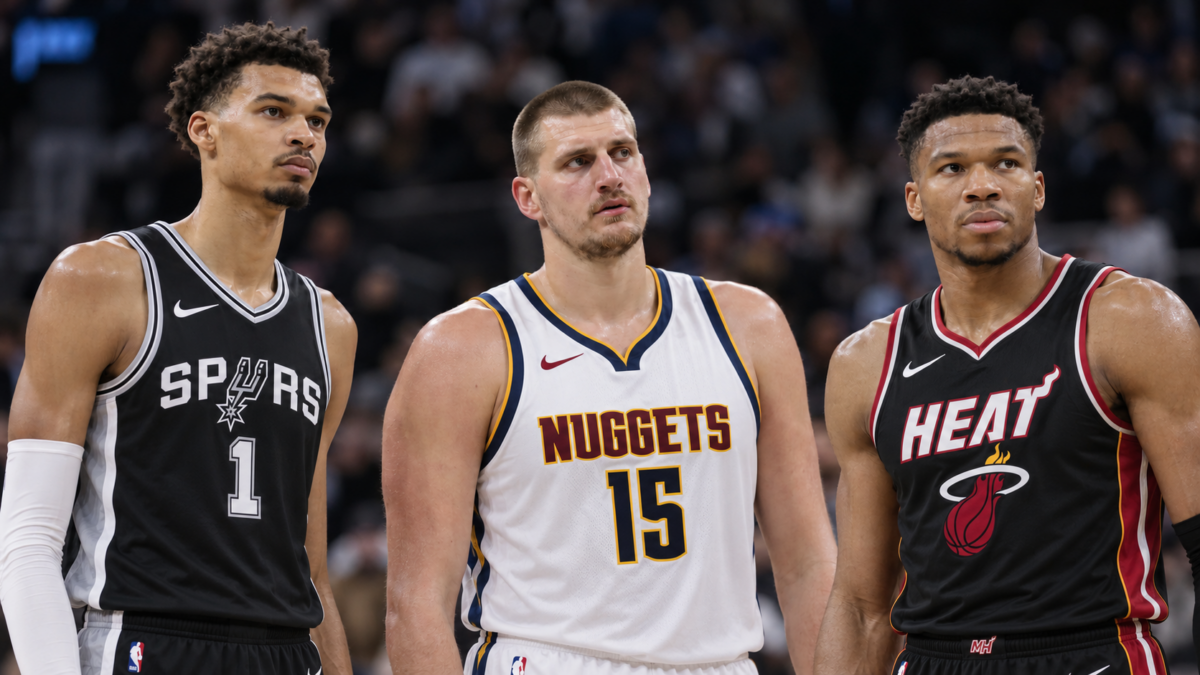
That is why Watson’s departure should not be viewed as an isolated decision from one offseason. For several years, Denver has tried to save money around the edges of the roster while leaving its largest contracts untouched, spending draft capital to repair its financial structure and asking young players to replace veterans who leave. That model can work only if a team hits in the draft and then manages to keep the players it develops.
Denver hit on Watson and developed a player it needed, but ultimately failed to keep him. Cleveland will now pay $88 million to see how much further a player Denver spent four years developing can improve. The Nuggets received a pick that could become valuable one day and can already be used in another trade. That leaves open the possibility that the evaluation of this deal changes if Denver turns that asset into a player who can help Jokić immediately.
Another Bill From Decisions Made Years Ago
For now, the picture is uncomfortable. Denver has the best player of his generation, the most restrictive financial position in the league and fewer young players who can grow with the current core. Watson is only the latest bill coming due for decisions that have been accumulating for much longer than one offseason.