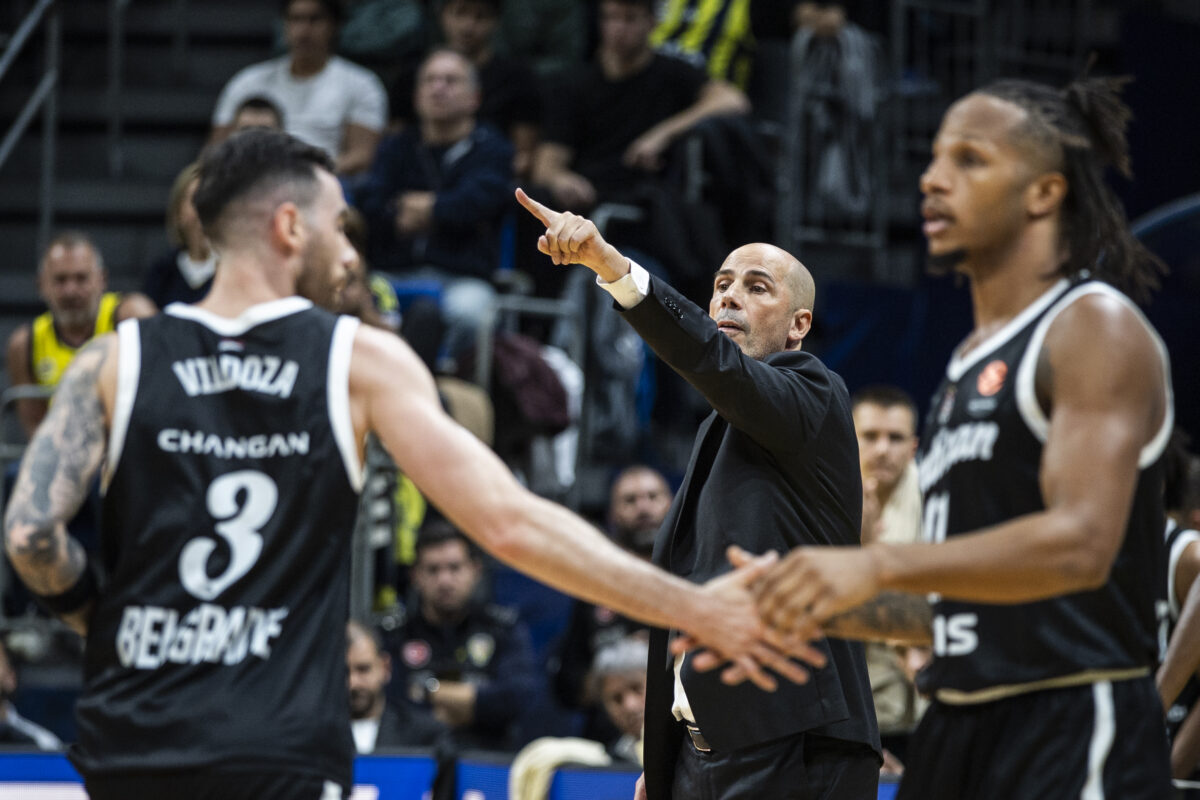








Three consecutive EuroLeague losses are never a pleasant sight, but they don’t necessarily have to be cause for alarm. Not after a trip to Real Madrid, a home game against Panathinaikos and another difficult test against Fenerbahçe in Istanbul, especially with Partizan having opened the season with three straight wins. Still, the past two weeks have given Partizan a reality check.


The concern is less about the results themselves than the way Partizan lost its last two games. On both occasions, the opponent built a third-quarter lead that Joan Peñarroya’s team simply lacked the offensive firepower to overcome. Unless that problem is addressed early, it could once again become a recurring weakness for Partizan, as it has been in previous seasons.
Four Minutes Were Enough to Undo an Excellent First Half
Against Europe’s elite, Partizan has shown that its defense can seriously disrupt opponents, but also how vulnerable its offense becomes when Carlik Jones has no room to attack the basket. That contrast was particularly evident in Istanbul. Fenerbahçe scored 18 points in just three minutes and 48 seconds, having managed only 25 throughout the entire first half. That was all Šarūnas Jasikevičius’ team needed to turn a three-point deficit into a double-digit lead and take control of the game.

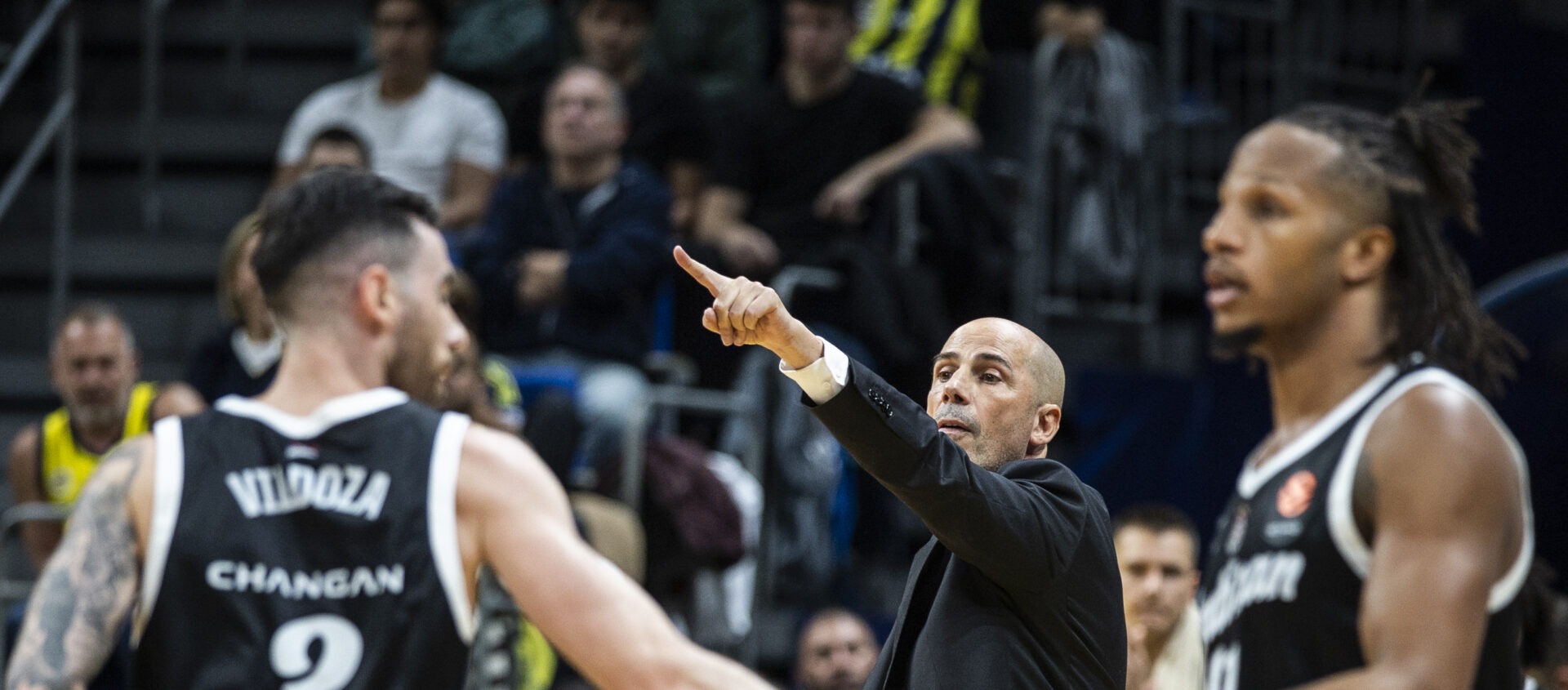
Peñarroya identified the start of the third quarter as the turning point in the 74-65 defeat. His team had allowed just 25 points in the opening 20 minutes, forced Fenerbahçe into numerous mistakes and largely disrupted the offensive rhythm of one of Europe’s best teams. Yet all that work produced only a three-point lead, with Partizan scoring just 28 points of its own.
Maintaining that level of defensive control for 40 minutes against a team featuring Shavon Shields, Talen Horton-Tucker, Wade Baldwin and Will Clyburn is a difficult task. Jasikevičius had plenty of reasons to be dissatisfied at halftime, but despite its offensive struggles, Fenerbahçe was still only one possession behind.
Fenerbahçe Found the Paint and Partizan Lost Control
Fenerbahçe turned a 28-25 deficit into a 43-33 lead with an 18-5 run in less than four minutes. During that stretch, Partizan made just two of seven field-goal attempts, missed two of three free throws and committed a turnover. Three of its shots were blocked. Shields scored seven points in that short span, Horton-Tucker added six, and the home team found increasingly easy opportunities around the basket.
Partizan’s problems continued even after Fenerbahçe’s initial surge subsided. Over the entire third quarter, Partizan shot 5-for-13 on two-pointers and 1-for-6 from three, missing 13 of its 19 field-goal attempts. It also missed four free throws, committed three turnovers and had five shots blocked. Nikola Tanasković was denied twice, while Carlik Jones, Kevarrius Hayes and Joffrey Lauvergne each had one attempt rejected.
Fenerbahçe finished with 14 blocks, setting a EuroLeague record. Much of the credit belongs to the home team’s excellent defenders, particularly Marcus Bingham, but that many blocked shots also says something about Partizan’s shot selection and finishing. Partizan often manages to get into the paint without creating a good enough scoring opportunity, leaving attempts over opposing big men as the final option far too often.
Interestingly, Kyle Allman scored seven of Partizan’s 16 third-quarter points despite playing fewer than 12 minutes in the game. Carlik Jones did not make his first field goal until that period, while Fenerbahçe, led by Shields and Horton-Tucker, continued to extend its advantage. By the end of the quarter, the score was 59-44.
Same Problem, Different Opponent
Partizan had experienced a similar situation just two days earlier against Panathinaikos. Željko Obradović’s team led 35-28 at halftime before winning the third quarter 20-8 and taking a 19-point advantage into the final ten minutes.
Against Fenerbahçe, Partizan lost the third quarter 34-16. Across those two games, it scored a combined 24 points and conceded 54 in the third periods alone. That’s a 30-point deficit over just 20 minutes of basketball.
Against Panathinaikos, the offense almost completely stalled. Against Fenerbahçe, poor shooting was compounded by the disappearance of the defensive intensity Partizan had shown in the first half. After the game in Istanbul, Peñarroya spoke about seven consecutive easy layups by the home team, a clear indication of how badly Partizan had lost control of the paint.
In both games, Partizan allowed its opponent to establish a lead after halftime that it could no longer seriously threaten. Deficits of that size are extremely difficult to overcome against teams of Panathinaikos’ and Fenerbahçe’s caliber, particularly with Partizan’s current offensive limitations.
Stop Carlik and Half the Job Is Done
That also raises questions about the coaching staff’s response to adjustments made by opponents at halftime. Jasikevičius found ways for his players to attack the rim more aggressively and use their physical advantages, while Partizan struggled to contain penetration or answer with a scoring run of its own. A similar offensive breakdown occurred against Panathinaikos. Two games are too small a sample to draw firm conclusions about Peñarroya’s tactical adjustments, but the recurring problems after halftime deserve closer examination.
Partizan’s offense has become predictable. Carlik Jones is this team’s best individual creator, but opponents are increasingly aware of how heavily Partizan depends on his ability to create an initial advantage off the dribble. Take away his path to the basket and force him to give up the ball, and much of the work is already done. Partizan has players willing to make the extra pass, recognize an open teammate and make the right basketball play, but far fewer who can create a quality shot and convert it themselves.
In Istanbul, Carlik finished with just six points on 1-for-7 shooting from the field. He also recorded eight assists against only two turnovers, so it would be unfair to say he failed completely as a playmaker. However, Partizan also needs him to be a genuine scoring threat. When that element disappears, the other players struggle to compensate.
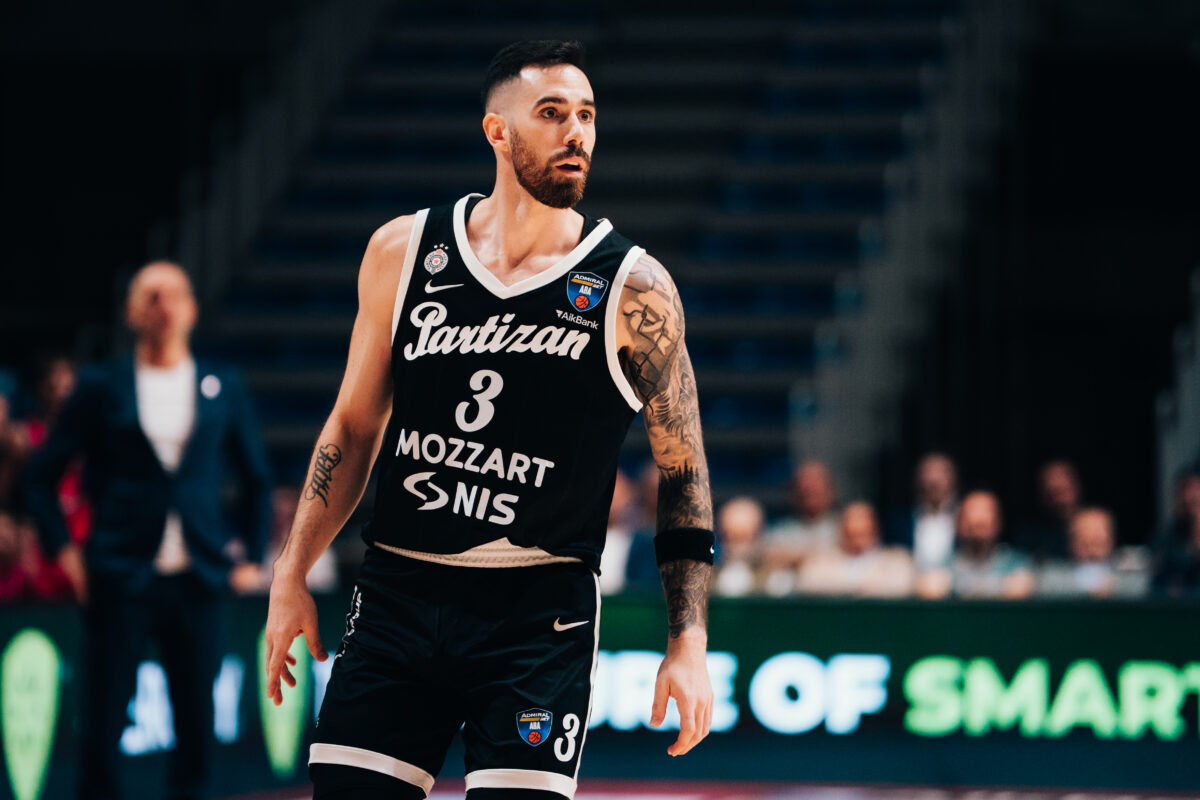
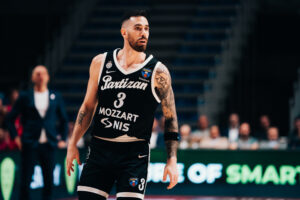
Alessandro Pajola played more than 21 minutes against Fenerbahçe without scoring, missing all five of his three-point attempts. Luka Vildoza made some useful defensive plays but contributed too little offensively. Ethan Thompson and Lamar Stevens showed they can be efficient, but that alone has not been enough to give Partizan consistent production against the EuroLeague’s strongest defenses.
The Three-Point Collapse Has Changed the Way Opponents Can Defend Partizan
Partizan made 11 of 24 threes against Olimpia Milano, eight of 19 against Paris and nine of 27 in Munich. That adds up to 28-for-70, or 40 percent, over the first three games.
In the next three, against Real Madrid, Panathinaikos and Fenerbahçe, Partizan shot just 13-for-66, or 19.7 percent. More specifically, it went 3-for-20 in Madrid, 4-for-26 against Panathinaikos and 6-for-20 in Istanbul.
Its three-point percentage has fallen by more than 20 percentage points. Luka Vildoza and Alessandro Pajola have combined to shoot 0-for-20 from three over the last three EuroLeague games! Each has missed ten attempts. During the same stretch, Carlik Jones has made one of six three-pointers, while Kyle Allman has connected on two of seven.
Those four perimeter players have combined to make just three of 33 three-point attempts over the last three games, a dismal 9.1 percent. They have also accounted for half of Partizan’s total attempts from beyond the arc.
Vildoza and Pajola can both contribute as playmakers, but their current shooting gives opposing defenses far more freedom to take risks. Without a credible perimeter threat, defenders can collapse more aggressively on drives while opposing big men can remain closer to the basket. That makes Carlik Jones’ job even more difficult.
Real Madrid, Panathinaikos and Fenerbahçe have defenders capable of limiting primary creators and disrupting ball movement, but a shooting decline of this magnitude deserves particular attention. Especially considering that Partizan averaged 90 points over its first three games and only 65.3 over the next three.
Partizan Is Also Missing a Four Who Changes the Geometry of the Floor
There is also a problem at power forward. Partizan needs a player whose three-point shooting poses a constant threat, draws opposing big men away from the paint and creates more driving space for Carlik. Right now, opponents can pack the paint too easily, knowing that Partizan is unlikely to punish them consistently.
A 3-3 record is a perfectly acceptable start to the season when the schedule is taken into account. Partizan defeated Olimpia Milano, Paris and Bayern, opponents it could realistically compete with and against whom it showed considerable quality. Those wins were followed by losses to three former European champions: Real Madrid on the road, an unbeaten Panathinaikos team and Fenerbahçe, which had to work hard to secure the victory in Istanbul.
Partizan made life extremely difficult for Jasikevičius’ team, forcing 20 turnovers and holding it to just 25 first-half points. Still, defense alone cannot be expected to win games, particularly when the offense has so many limitations. Tonye Jekiri’s injury in Istanbul made Peñarroya’s job even harder, forcing him to change his rotation and game plan. But that setback cannot explain all the problems that had already been evident in previous games.
The NBA Cut Market Is Approaching at the Right Time
That is why Partizan needs to be ready for the upcoming changes in the NBA player market. NBA teams have until October 19 to finalize their rosters for the start of the season, meaning a number of players will be left without spots in NBA rotations over the coming days. That does not mean all of them will be available or willing to move to Europe, but an opportunity is approaching that Partizan cannot afford to miss.
The priority has to be a proven scorer, someone capable of taking responsibility when Carlik Jones cannot get to the basket. Partizan also needs a power forward with a reliable outside shot, someone who can change the way opponents defend the team.
Those additions would not automatically solve every weakness. Peñarroya still has to find better offensive solutions, particularly against teams with strong rim protection, and a way to prevent the severe second-half drop-offs that have become a recurring issue. But adding individual talent would give him more options and reduce the team’s dependence on the form of a handful of players.