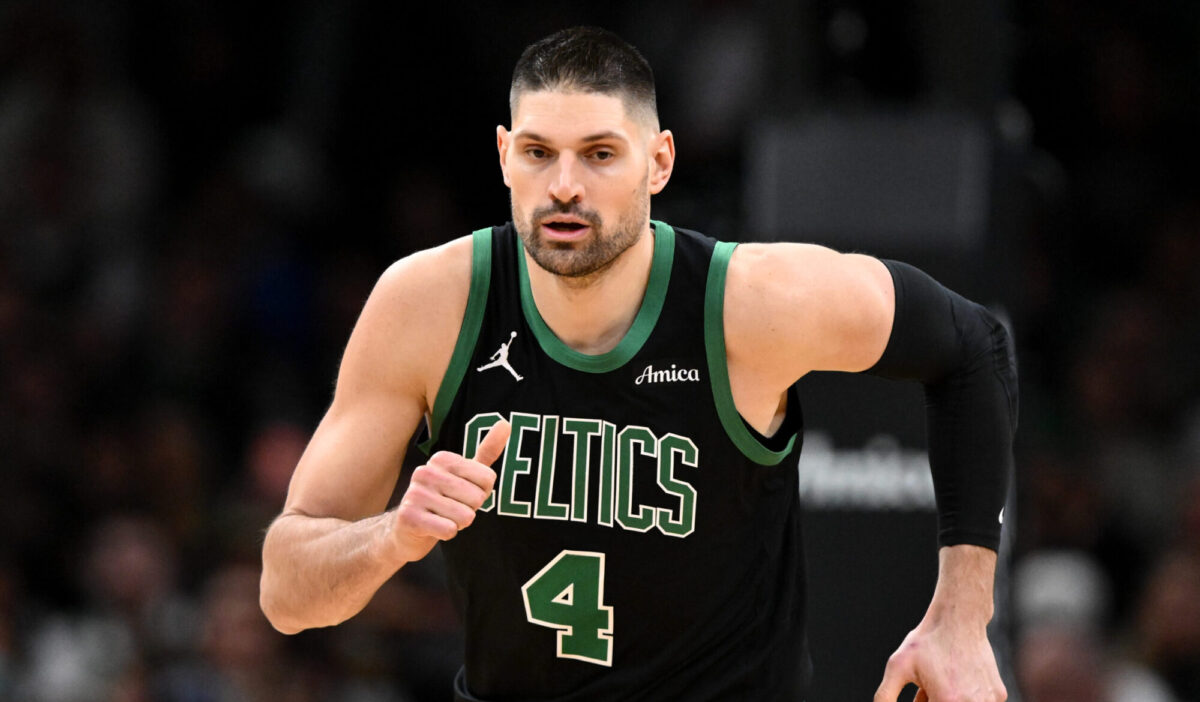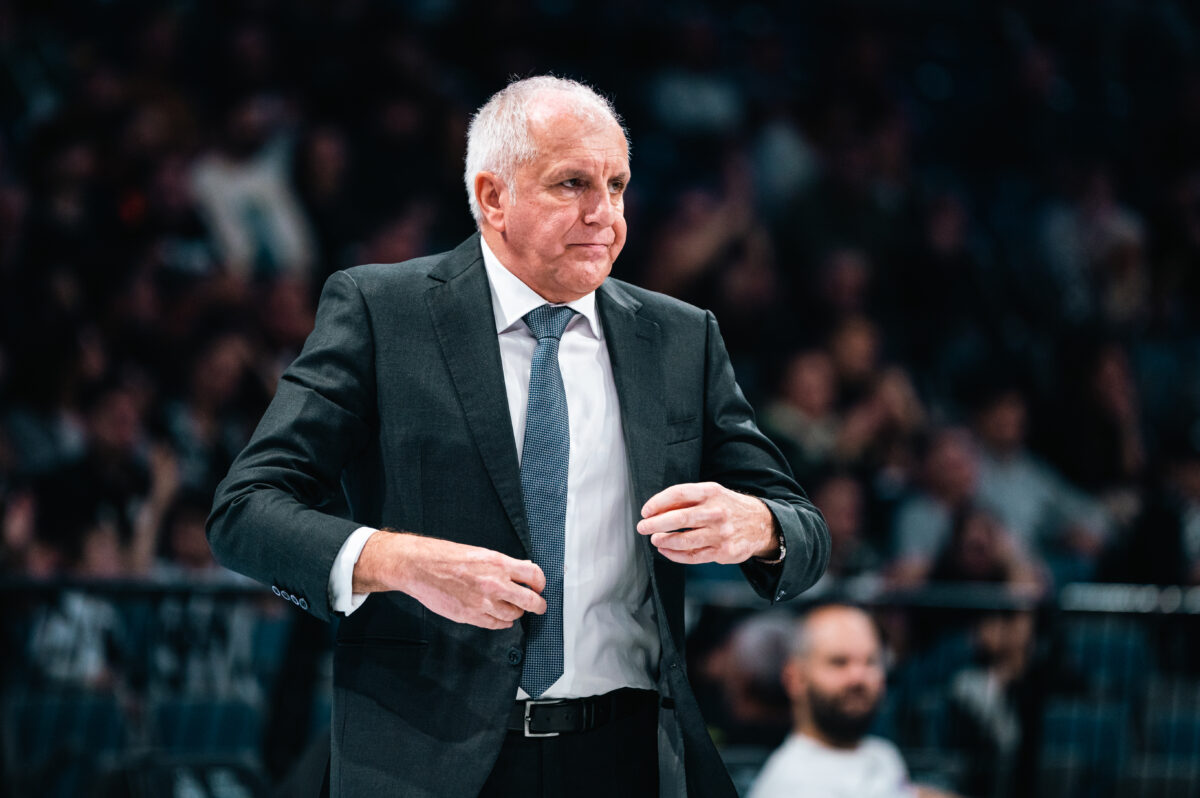








Within two days, the Denver Nuggets lost one of their most important young players and added a man with 26,711 career NBA points. Peyton Watson left for Cleveland on a four-year, $88 million contract, while DeMar DeRozan accepted a one-year veteran minimum deal worth $3.9 million. At first glance, the Nuggets moved quickly to add enough quality to soften a painful loss. The problem is that those two decisions say more about Denver’s current situation than any August signing should.


For $3.9 Million, DeRozan Is an Easy Decision
For that money, DeRozan is an excellent piece of business. The six-time All-Star played 77 games for Sacramento last season at age 37, averaging 18.4 points and 4.1 assists while shooting 49.7 percent from the field. A team that has spent years relying too heavily on Nikola Jokić to create, organize and finish offense now has a player capable of taking over when an action breaks down and turning a bad possession into a respectable shot. For Denver, especially during the minutes without Jokić, that has real value.
That may be the most important part of his fit. DeRozan is not an ideal player for every Denver lineup, but he is the type of player this rotation has needed for a long time. Jamal Murray remains the first option in the backcourt and Jokić’s natural partner, while DeRozan can take on some of the playmaking and individual creation when the Canadian rests or when an opposing defense takes Denver out of its initial action. He can run pick-and-roll, attack a smaller defender, punish switches and get to his spots without needing much setup.


The Fit Will Require Some Care
That does not mean the basketball fit will be perfect. As much as 85.4 percent of his attempts last season were 2-pointers, and he shot 32 percent from 3. Nearly half of all his shots came from the midrange, where he converted an excellent 47.6 percent. DeRozan has built a career operating in the exact area modern NBA defenses are usually willing to concede, but Denver already has Jokić doing much of his work around the paint and from the high post. If DeRozan spends significant minutes next to Aaron Gordon, who is also not a traditional floor-spacing wing, Denver will have to be careful with how it organizes the floor.
Jokić could ease that problem considerably. Few players in the league make better use of cuts or punish defensive help more effectively, while DeRozan has learned over the course of his career to play without needing every possession to begin in his hands. The greater benefit, however, may come when the Serbian center goes to the bench. Denver would no longer have to turn every possession into a collective exercise in survival. DeRozan can simply use a screen, get to his preferred spot from 15 or 18 feet and finish the possession. In the playoffs, when scouting takes away much of what an offense wants to run, that ability matters.
What DeRozan Cannot Replace Is Watson’s Defense
The defensive question is more serious. DeRozan cannot provide what Watson gave Denver on the perimeter. Watson finished last season averaging 14.6 points and 4.9 rebounds, started 40 games and, at 23, was only entering the stage of his career when his physical tools and defensive versatility should become even more valuable. Denver did not lose him because he was not good enough. It lost him because he became good enough for the market to establish a price the Nuggets were unwilling to pay.
His contract is nominally worth $3.9 million, but because of the rules governing veteran minimum deals, he will count for roughly $2.4 million against Denver’s cap. After the signing, the Nuggets have 14 guaranteed contracts, sit approximately $3.15 million above the second apron and are projected to face a tax bill of roughly $75 million. In other words, a player who agreed to almost the smallest contract available has once again forced Denver to consider how to remove more salary from its books.
The second apron is not simply a line beyond which an owner pays more luxury tax. It restricts teams in trades, limits access to certain exceptions and makes almost every meaningful roster adjustment more difficult. Over the past few years, Denver has repeatedly found itself in situations where sound basketball decisions have had to be weighed against much less comfortable financial consequences.
Good Individual Decisions Have Created a Larger Problem
Christian Braun received a five-year, $125 million extension last fall. This summer, the Nuggets matched Oklahoma City’s two-year, $12 million offer sheet for Spencer Jones, a move that at the time raised their projected tax bill from $36 million to $68 million and pushed the team over the second apron. Each decision can be defended on its own. Braun was an important part of the championship team and later became a starter, while Jones was developed within Denver’s system and showed he could become a useful rotation player. The problem comes when the combined effect of those contracts prevents the club from keeping Watson, another player it developed itself and one who still had room to improve.
That is why it would be wrong to use the DeRozan signing as proof that Denver successfully cleaned up its offseason. The Nuggets found an excellent short-term solution to a problem they partly created themselves. CBS calculated that keeping Watson at the price Cleveland paid would have pushed Denver’s total roster costs beyond $400 million once the luxury tax was included. That figure cannot realistically be dismissed as irrelevant, regardless of the owners’ wealth. It is still fair to ask how a franchise with the best basketball player in the world reached the point where keeping a 23-year-old starter became almost financially unsustainable.
DeRozan Chose a Championship Chance Over More Money
DeRozan also made Denver’s job easier with his choice more than Denver made his easier. Miami, Washington and New Orleans had all shown interest, and some of those teams had the ability to offer more money. There is not enough reliable evidence to say that DeRozan turned down a specific $15 million offer, but there is enough to suggest that money was not his primary consideration. Before making his decision, he spoke with Jokić, Murray and Gordon, while Chris Haynes reported that he was attracted to the chance to finally join a team entering the season with a realistic championship goal. After 17 NBA seasons, DeRozan still does not have a ring. Denver can offer him something a larger contract in Washington cannot at this stage of his career.
That is another reason the move makes sense for both sides. DeRozan no longer needs to be a player around whom an entire team is structured. Denver does not need that version of him anyway. If he accepts slightly fewer minutes, a possible role off the bench and the reality that some late-game lineups will depend on the defensive matchup, the Nuggets gain something they have not had in recent seasons: an experienced creator who can be trusted with stretches without Jokić and Murray without leaving the offense without a clear direction.
The Difference Between DeRozan and Watson Is the Real Issue
Still, this move was made for the present. DeRozan is on a one-year contract and recently turned 37. Watson received four years and has yet to enter his prime. Much of the problem Denver is trying to solve is contained in that difference.
The Nuggets have no reason to panic about Jokić. At the beginning of July, he publicly said his plan was to sign a new contract next summer and remain in Denver for the rest of his career. Waiting also makes financial sense for him, because in 2027 he could become eligible for a projected five-year extension worth around $359.5 million, significantly more than the four-year deal available to him this summer.
Jokić’s Prime Cannot Be Spent Repairing Previous Summers
That is exactly why Denver cannot afford to spend Jokić’s best years constantly repairing the consequences of previous decisions. DeRozan can help immediately, and at $3.9 million there is little rational argument against the signing. He brings experience, creation and a player who can still solve NBA possessions at a high level.
His arrival, however, does not solve what happened with Watson, nor does it give Denver a much clearer picture of what the roster will look like two or three years from now. The Nuggets found a very good answer for the season directly in front of them. The harder task is building a financial structure in which every good summer does not have to begin by repairing the consequences of the previous one.