


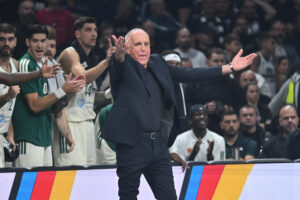
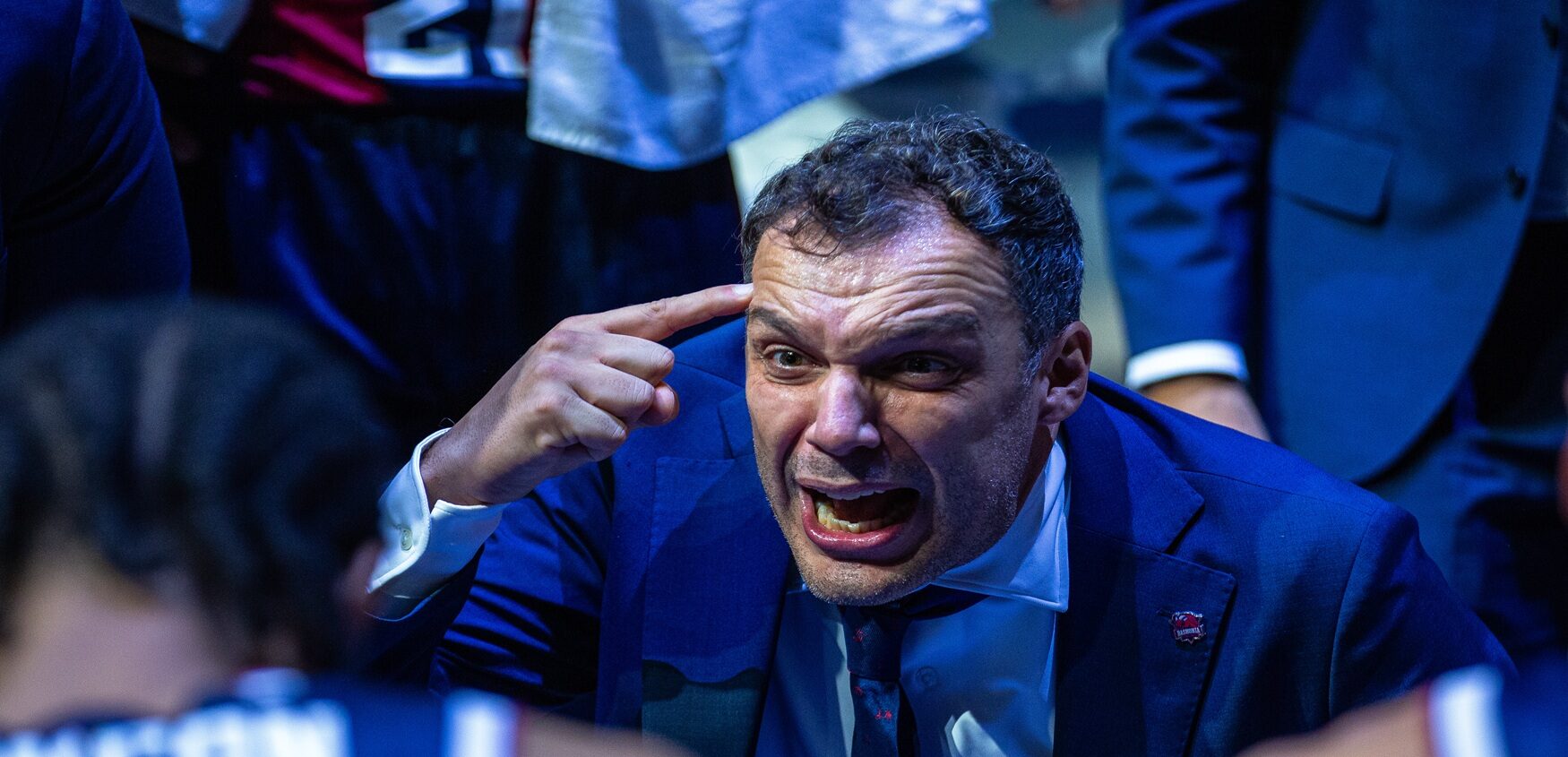

Less than a month into the official season, the coaching carousel in European basketball is already spinning. And it has started with a position that has historically been anything but one of the most secure jobs on the continent: the head coaching role at Baskonia. There is, however, a curious twist to this latest development: the Basque club currently sits joint-top of the Liga Endesa standings, having won all three of its games so far. Alongside Real Madrid and Río Breogán, Baskonia remains one of only three unbeaten teams in the competition.


That leaves the EuroLeague as the only plausible sporting justification for the dismissal of the Italian coach, who led Baskonia to the Copa del Rey title last season. In Europe’s premier club competition, the Vitoria-based side has managed just one win in its opening five games.

Yet there is far more to Galbiati’s difficult-to-explain departure and Velimir Perasovic’s return for a fourth stint on the sidelines in Vitoria. It is a move that many had been anticipating for weeks, regardless of Baskonia’s results.
The Italian’s story at Baskonia went from euphoria to a complete breakdown in his relationship with the club in a matter of weeks. Galbiati took the Vitoria-based team back to the top by winning the Copa del Rey in February 2026, restoring a taste of championship glory in what is arguably the club’s favorite competition, one it had not won since 2009.
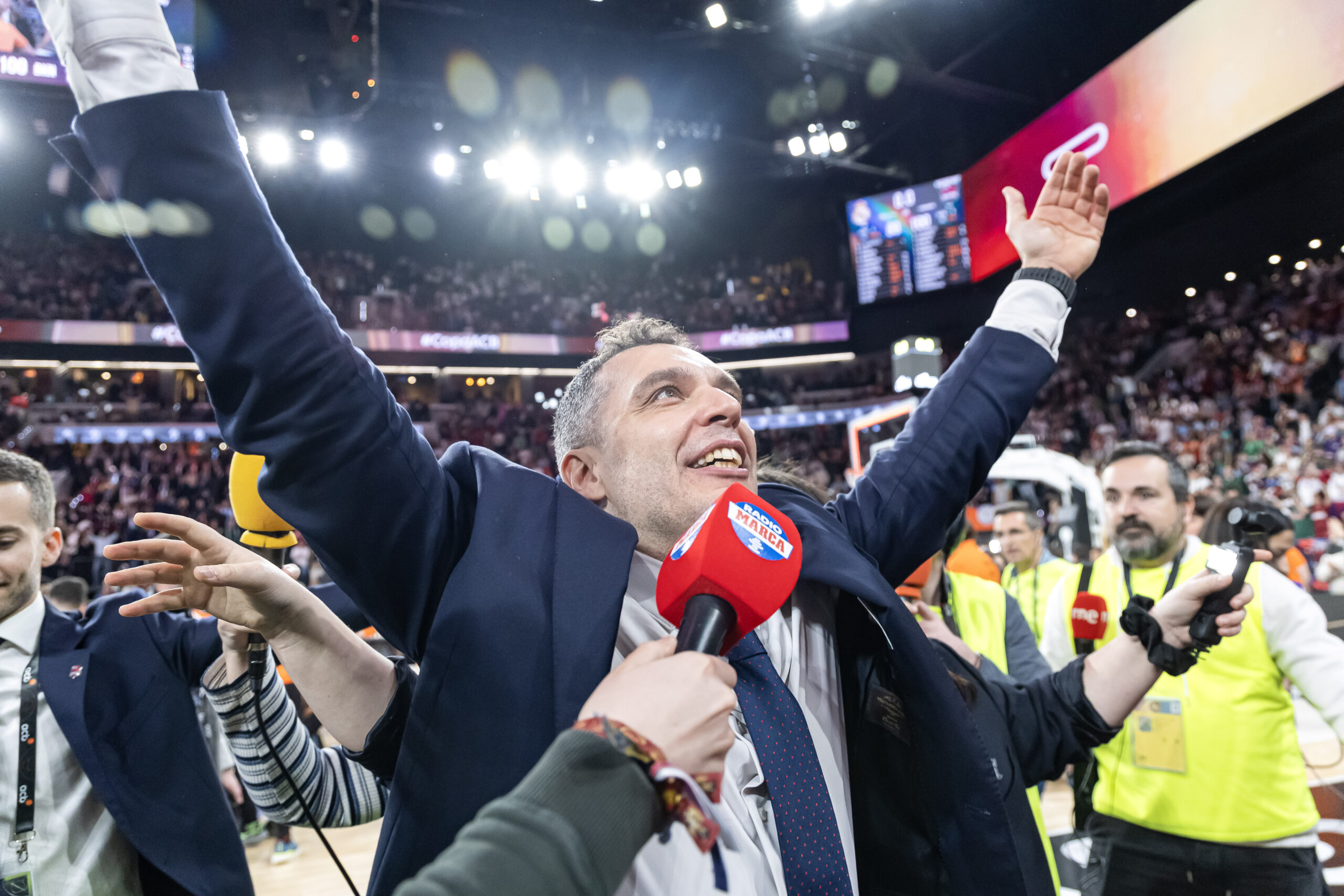
Stories about the Italian coach were everywhere. His relationship with the players —often joining them during warmups and even taking shots alongside them just minutes before tip-off— and his connection with Baskonia’s passionate fanbase suggested that the club had finally found someone capable of establishing a long-term presence on its bench.
And yet, less than eight months later, on October 14, Galbiati is out of a job. Neither the team’s strong results in domestic competition nor the obvious limitations of its roster, particularly in the frontcourt, were enough to keep the relationship alive. Instead, the increasingly strained relationship between coach and club ultimately proved decisive.
Galbiati arrived in Vitoria in August 2025 from Trento, where he had also won the Italian Cup, tasked with rebuilding a team accustomed to losing key players. After a difficult start to the season, during which his position came under scrutiny, his energy, intensity in practice and ability to connect with both the locker room and the fans eventually paid off.
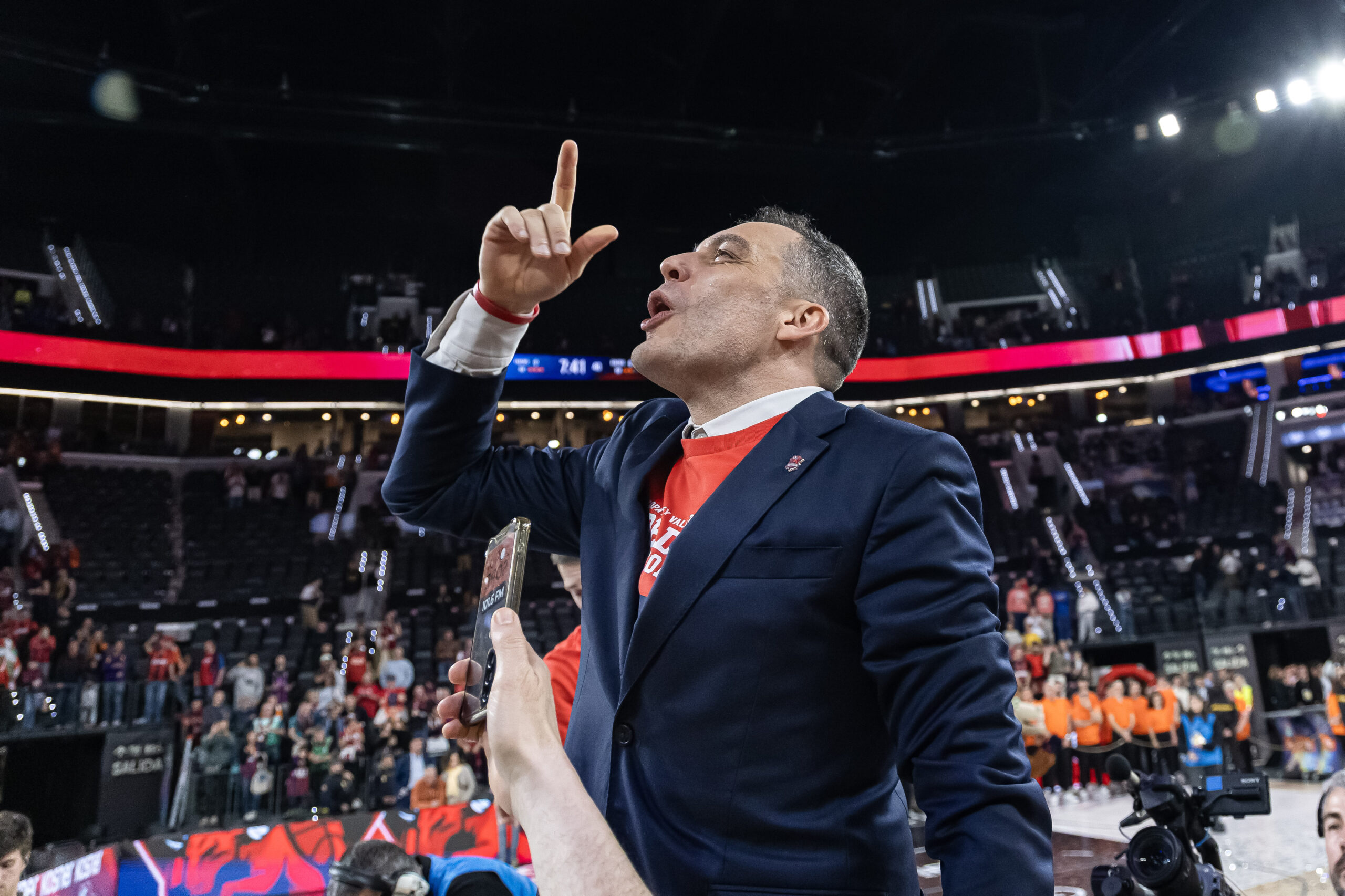
The reward was a Copa del Rey triumph that came despite Baskonia entering the tournament severely depleted by injuries. Khalifa Diop and Tadas Sedekerskis were unavailable, while Rodions Kurucs and Markus Howard were also visibly hampered by physical problems. Yet, in one of the most memorable recent stories produced by a tournament with a long tradition of delivering them, Baskonia reclaimed the trophy almost two decades later, overcoming a particularly demanding path to the title: La Laguna Tenerife in the quarterfinals, Barça in the semifinals and Real Madrid in the final. Considering how unexpected that triumph had been —especially for a club that had failed even to qualify for three of the previous five editions— it seemed almost impossible that Galbiati would emerge from the tournament without his standing at Baskonia being significantly strengthened.
And yet, the reality was that his future had never been entirely secure.
Amid rumors that Baskonia’s management remained unconvinced about keeping the Italian in charge, strong interest from Barça emerged over the summer following Xavi Pascual’s departure. So strong, in fact, that Galbiati and the Catalan club reached an agreement, further complicating the situation and setting the stage for a high-stakes poker game between Barça and Baskonia, complete with plenty of bluffing.
Baskonia publicly maintained that Galbiati would remain in charge. Sporting director Félix Fernández insisted in June that both parties were already working toward the following season and played down reports linking the coach with Barça. But those reports were far more than mere speculation: Baskonia’s real objective was to persuade the Catalan club to pay a fee of approximately €1 million to secure Galbiati’s release.
Barça, however, never came close to meeting that figure and ultimately appointed Slovenian coach Aleksander Sekulić instead. The outcome left Baskonia without the coach it had actually wanted —Velimir Perasovic— while Galbiati found himself fully aware that he was facing an extremely complicated situation with little prospect of a long-term future at the club. Indeed, tensions between the two sides soon became impossible to ignore.
The team’s glaring frontcourt problems, which had already been apparent during preseason, became another major source of friction. The departures of Mamadi Diakite and, above all, Khalifa Diop’s unexpected exit in September left Baskonia’s big-man rotation badly weakened. The team desperately needed more physicality, size and rim protection to have any realistic chance of competing at the required level in the EuroLeague.
The arrival of Kenneth Faried and the subsequent signing of Alex Len were supposed to address those shortcomings. But the Ukrainian center developed discomfort in the sole of his foot shortly after joining the team and ultimately parted ways with Baskonia without ever making his debut. By the time the official season began, coinciding with the Supercopa Endesa, Galbiati’s frustration with the situation had become more than evident, as Skweek reported several weeks ago. The setback only deepened an already strained relationship between the Italian and the club.
With the season underway, Baskonia was still in desperate need of one —or perhaps two— additional frontcourt players. It had become increasingly clear that the roster simply did not meet the minimum standards required to compete in the EuroLeague. The team’s interior rotation, rim protection and rebounding were all major concerns, and even the addition of Brazilian big man Marcio Santos seemed insufficient to solve what had become an undeniable problem.
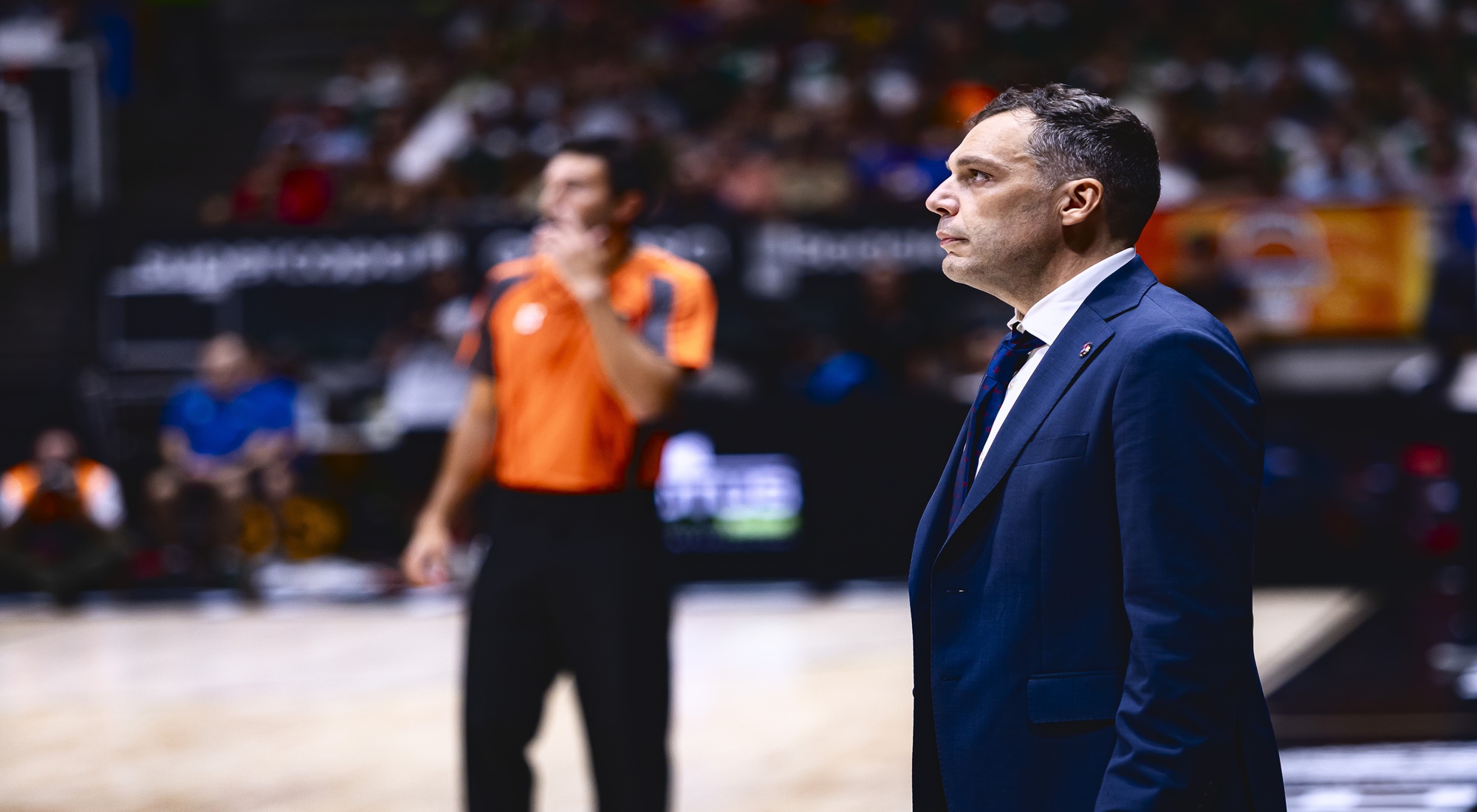
Now, Baskonia’s 1–4 EuroLeague record, following Tuesday’s 79–93 defeat to Dubai Basketball, has provided the perfect justification for the club’s front office to make the coaching change it had already wanted to make during the summer. It was a move Baskonia had failed to complete months earlier while trying to squeeze a little more money out of its poker game with Barça.
From a purely sporting perspective, there seems to be little justification for the dismissal of a coach whose team remains unbeaten in the Liga Endesa. Even with Baskonia sitting at the bottom of the EuroLeague standings, it is difficult to ignore the fact that the current roster simply does not appear capable of achieving much more in European competition. Perhaps, following Markus Howard’s departure to Zenit Saint Petersburg, a much-needed reinforcement of the frontcourt will finally give Perasovic a better chance of putting EuroLeague wins on the board.
Whatever happens next, one thing is certain: Galbiati leaves Baskonia after coaching 87 official games, including 43 in the EuroLeague, 40 in the Liga Endesa and four across the Supercopa Endesa and Copa del Rey. His departure is undoubtedly a contradictory one, serving as yet another reminder that, in professional sports, even winning trophies is not always enough.
Baskonia’s iconic 2026 Copa del Rey triumph will forever remain a defining achievement on the résumé of a coach who, despite forging a genuine bond with the city of Vitoria, never quite managed to see eye to eye with the club’s front office.