




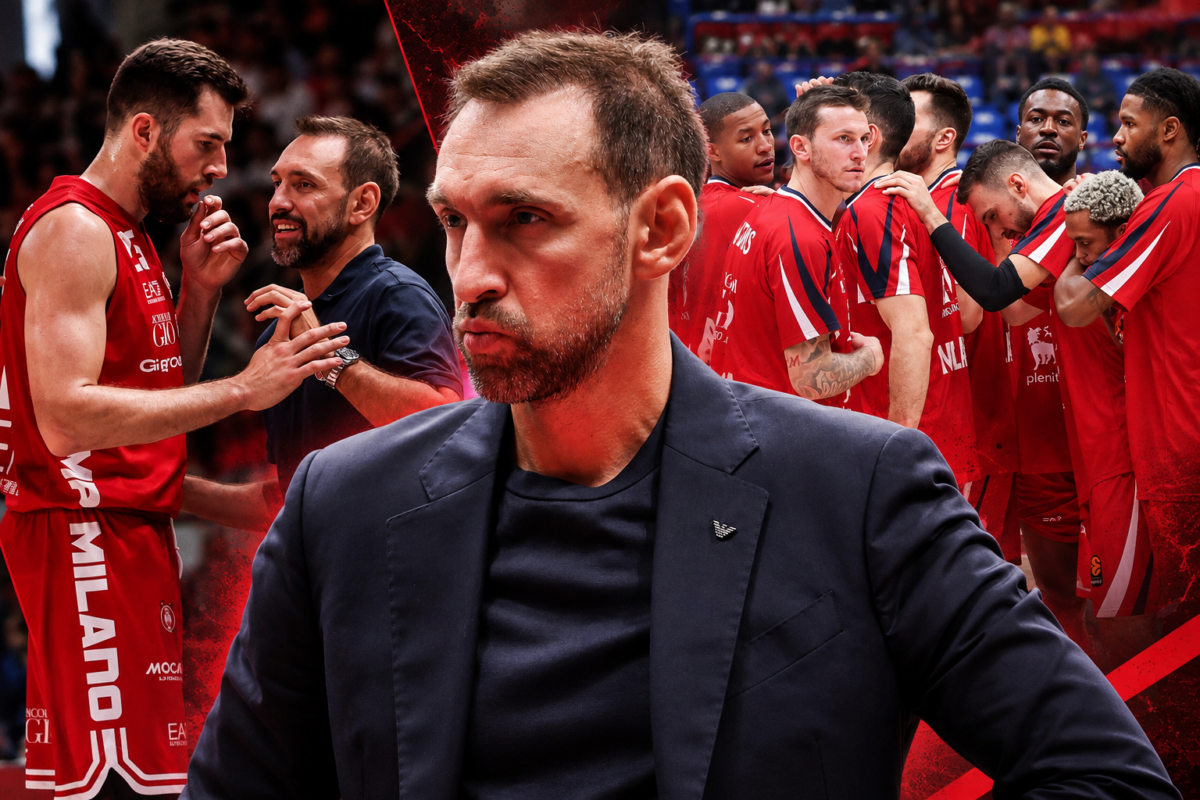


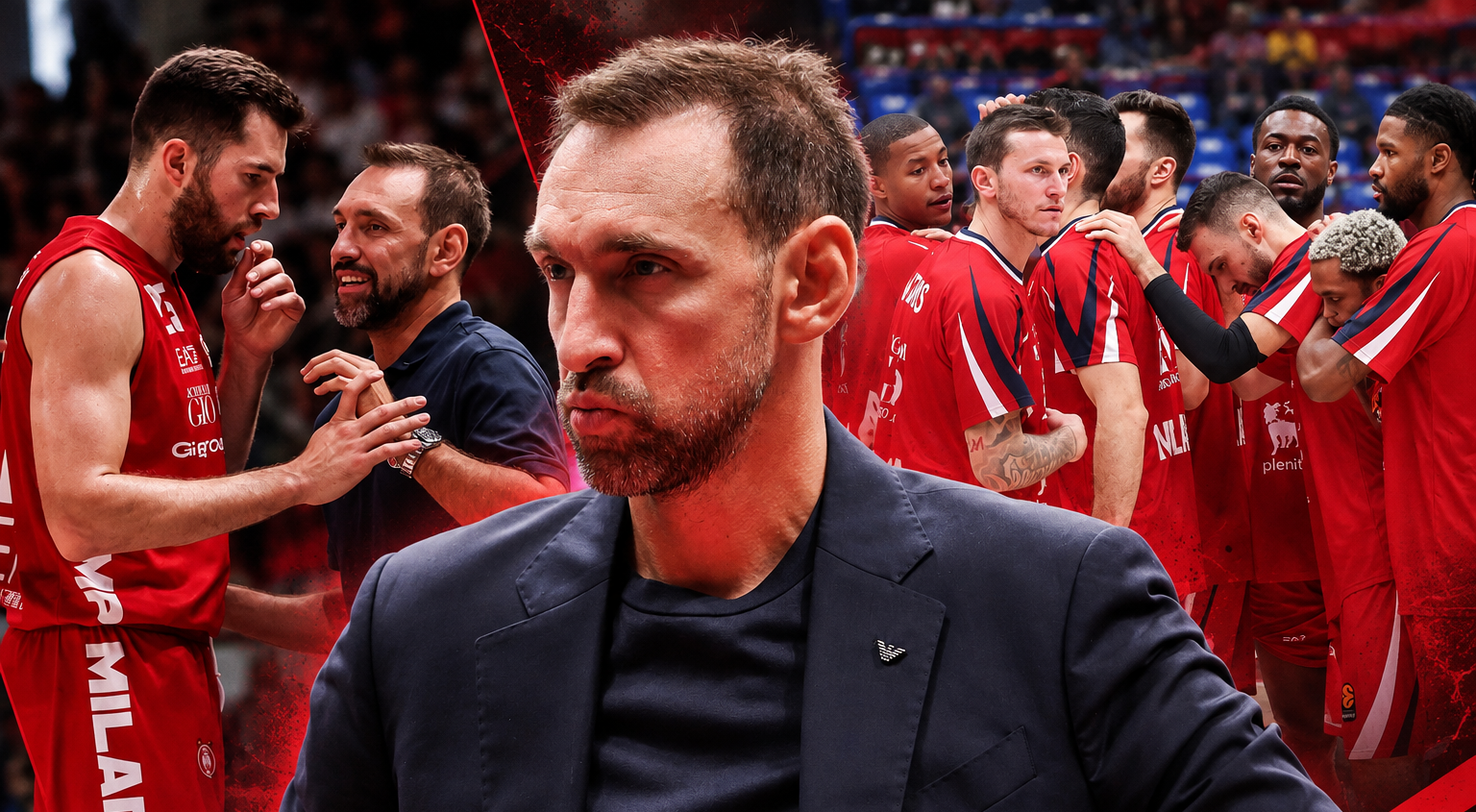

Five EuroLeague games into the 2026-27 season, Olimpia Milano are already confronting questions they hoped would not arise until much later. A 1-4 record, a disjointed offense, defensive shortcomings and an increasingly impatient home crowd have turned an ambitious summer rebuild into an uncomfortable examination of the team’s direction.


Tuesday’s 98-89 home defeat to Real Madrid was particularly revealing. Milano competed during the opening quarter, which they finished ahead 25-21, but conceded 32 points in the second period and trailed by as many as 21. Their late improvement did little to disguise another performance in which the team struggled to respond when the opposition increased the pressure.
For Peppe Poeta, the problem is that several of its most important players are struggling to perform the roles for which they were recruited, while the collective structure has yet to provide them with the conditions to succeed.
The most visible example is Alec Peters, whose difficult transition from Olympiacos has become one of the defining stories of Milano’s opening month.
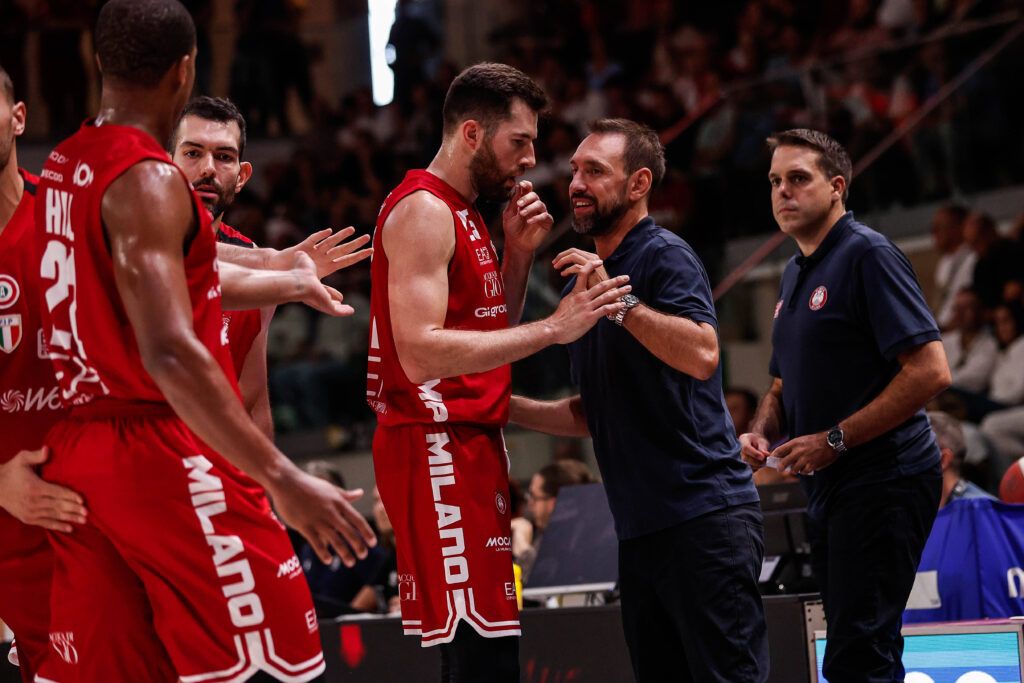
A rebuild that has yet to produce a functioning team
Milano entered the season with legitimate ambitions and considerable changes to their roster. The club had backed Poeta, who succeeded Ettore Messina during the previous campaign and went on to win the Italian championship and domestic cup, to oversee a new phase.
The additions of established EuroLeague names such as Peters, Marko Guduric and Darius Thompson, alongside newcomers including RJ Cole and James Burnell, offered an interesting combination of experience and potential. On paper, the squad appeared capable of competing at a high level.
Five rounds later, however, Milano look less like a team waiting for its chemistry to develop and more like one still searching for a clear offensive identity.
The departure of players capable of creating their own shots, particularly Armoni Brooks and Shavon Shields, has left a significant gap. Milano have shooting talent, experienced finishers and players who can make intelligent decisions within an organized system. What they lack, at least in their current form, is consistent penetration and individual creation when an initial action breaks down.
Thompson has struggled to establish control of the offense, while Cole is experiencing the demands of EuroLeague basketball for the first time. Guduric has not consistently supplied the attacking leadership expected of him, leaving Leandro Bolmaro and Devon Hall to assume responsibilities that extend beyond their natural strengths.
Poeta acknowledged the issue after the Real Madrid defeat, pointing to Thompson’s difficulties and Cole’s inexperience as part of a wider inability to generate offense. He also explained how attacking frustration has affected defensive concentration.
That connection is important. Milano’s problems are not neatly divided into separate offensive and defensive categories. Poor possessions frequently leave the team vulnerable, while defensive breakdowns further undermine its confidence and composure.
The defensive problem goes beyond effort
Milano’s defense has been especially concerning. Before the Real Madrid game, the team was already recording the EuroLeague’s worst defensive rating, conceding approximately 126 points per 100 possessions, according to figures cited by La Gazzetta dello Sport.
The numbers reflect a broader structural issue. Poeta has emphasized defensive switching, but that approach requires mobility, communication and the ability to survive unfavorable matchups. Several members of Milano’s roster have found those situations difficult to manage.
Peters is particularly exposed when required to defend quicker opponents or navigate repeated switches away from his preferred position. But identifying him as the problem would overlook the collective responsibilities involved. Perimeter defenders must contain the ball, teammates must communicate and the entire unit must react coherently.
Milano have too often failed to do those things simultaneously.
Against Madrid, their defensive organization deteriorated as the game progressed. The visitors exploited gaps in coverage, created favorable situations and repeatedly punished Milano’s inability to sustain pressure.
Poeta’s frustration was understandable, but the question is whether the current defensive philosophy sufficiently reflects the characteristics of his players. Greater effort would certainly help; a more suitable tactical framework might help just as much.
Alec Peters: From a defined role to an uncomfortable spotlight
Peters arrived in Milan with an established reputation as one of Europe’s most reliable shooting forwards. His years at Olympiacos demonstrated his value in a structured offense built around ball movement, spacing and clearly defined responsibilities.
But there is a considerable difference between thriving within a settled system and being expected to provide leadership in a team that has not yet established its own. At Olympiacos, Peters knew where his opportunities would come from. He could stretch defenses, punish rotations, attack favorable matchups and contribute without being required to manufacture a large proportion of his team’s offense.
Milano need more from him, particularly with their perimeter creation falling short of expectations. Yet the offense has not consistently produced the quality of opportunities that would allow him to make that transition.
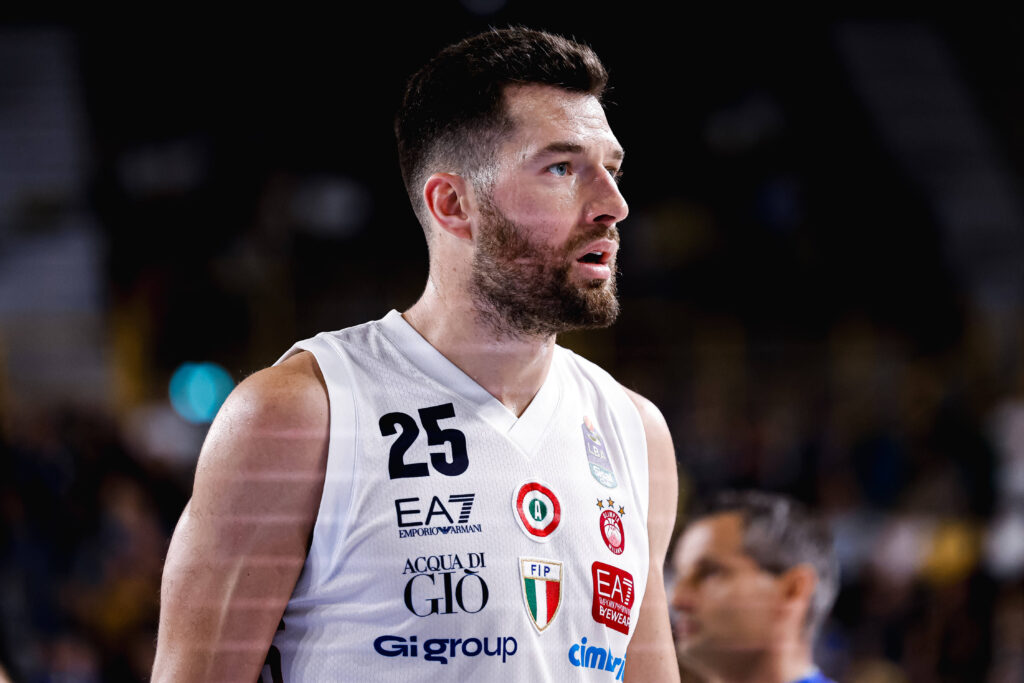
Poeta had already admitted before the Madrid game that Peters’ adaptation was progressing more slowly than expected, explaining that a player accustomed to several years within one system cannot automatically adjust to another.
Tuesday provided the clearest illustration yet as Peters finished with just one point in approximately 15 minutes. His offensive involvement was minimal, while defensive mistakes became increasingly costly. Late in the third quarter, with Madrid leading 80-59, the Forum crowd began chanting the name of captain Pippo Ricci.
Shortly afterward, Poeta replaced Peters with Ricci, who received an enthusiastic reception. The American did not return.
The coach insisted that the substitution was not dictated by the supporters. He attributed it to consecutive defensive errors and described the decision as a desperate attempt to provoke a reaction. He also acknowledged the wider implications: when a player of Peters’ status cannot be trusted for meaningful minutes, Milano have a serious problem.
There is no reason to dispute Peters’ quality on the evidence of five EuroLeague games. His shooting ability, experience and understanding of the game have not disappeared. However, the possibility that Milano have overestimated how easily he could assume a more prominent role deserves consideration.
A player can be an excellent acquisition in isolation and still be a difficult fit within a particular roster. That is the distinction Milano must now confront.
Poeta’s public criticism: Necessary accountability or additional pressure?
The defeat also produced Poeta’s strongest public intervention of the season.
The Italian coach argued that basketball cannot be played without heart, suggesting that some members of his team were not displaying sufficient commitment. He singled out Hall and Bolmaro as positive examples and demanded greater responsibility from the rest.
His dissatisfaction was understandable. A team with Milano’s ambitions cannot repeatedly lose its organization after a few unsuccessful possessions, nor can experienced players allow frustration to dictate their defensive effort.
Nevertheless, public criticism carries risks, especially when a squad is still developing relationships and defining its hierarchy.
Poeta’s handling of Peters illustrated the delicate balance. The substitution may have been justified tactically, but its timing, immediately after the crowd demanded Ricci’s introduction, created the impression of a player being publicly singled out. Poeta denied responding to the crowd, and there is no evidence that the supporters determined his decision. Still, the episode placed additional attention on a player already struggling for confidence.
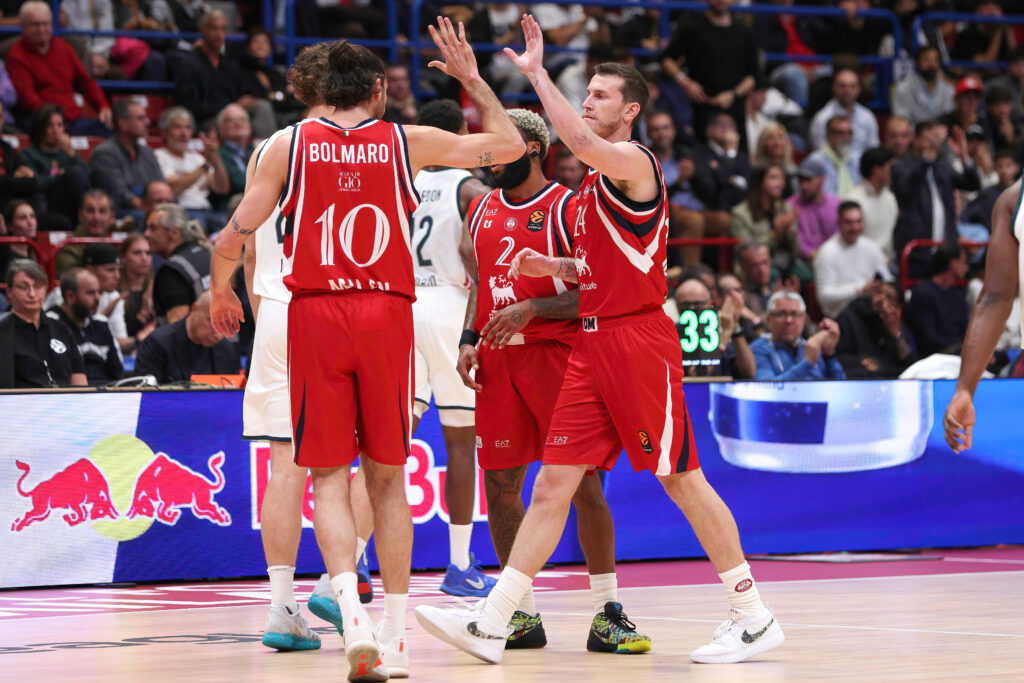
The coach has every right to demand accountability. He must also ensure that his messages strengthen rather than further destabilize the group. His challenge is particularly complex because he is managing an ambitious EuroLeague project as a relatively inexperienced head coach at this level. The authority he established through last season’s domestic success now has to be translated into a convincing European identity.
For the moment, Milano’s management continues to support him. Reports indicated that the club had full confidence in Poeta despite the disappointing start.
That backing matters, but results will eventually determine how much patience remains.
What needs to change, and how much time does Milano have?
Milano’s 106-77 victory over Treviso demonstrated that the team can play with better offensive flow, involve more contributors and defend with greater intensity. Yet the subsequent defeat to Madrid showed how difficult it remains to reproduce those qualities against stronger opposition.
The immediate priority should be to simplify responsibilities.
Thompson and Cole need a clearer framework for organizing the offense. Guduric must become a more dependable source of creation. Peters needs better opportunities and defensive assignments that maximize his strengths rather than repeatedly expose his limitations.
Poeta must also consider whether switching so frequently is sustainable with the available personnel. Tactical consistency is valuable, but insisting on an approach that is not producing results would only compound the difficulties.
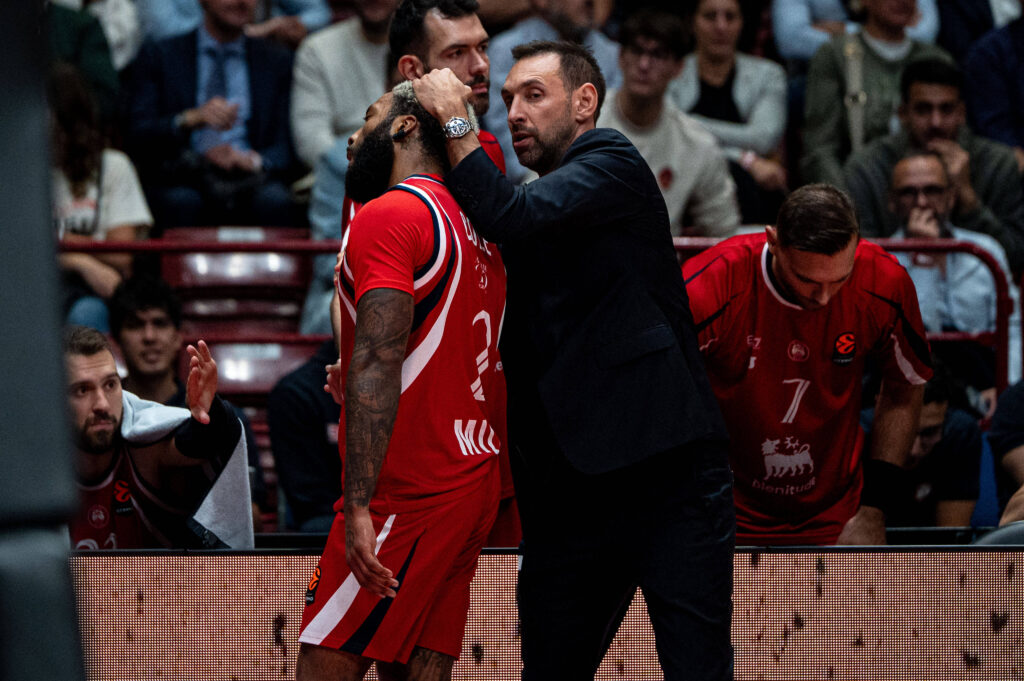
The transfer market represents another possibility. Milano could benefit from an additional perimeter creator, although another signing would not automatically repair problems of spacing, defensive coordination or confidence. Poeta himself has argued that the existing group should first establish a shared understanding before the club evaluates potential changes.
Time, however, is becoming a significant factor.
Milano face Dubai in their next EuroLeague game, followed by a demanding sequence of fixtures that includes Barcelona and away meetings with Panathinaikos and Olympiacos. A 1-4 start is recoverable, but prolonged struggles in a competitive regular season can quickly leave a team chasing ground.
The next few weeks will therefore test more than Milano’s results. They will reveal whether Poeta can adjust his system, whether his senior players can assume greater responsibility and whether Peters can become the influential contributor the club expected.
There is enough talent in this roster to believe that improvement is possible. There is also sufficient evidence to suggest that patience alone will not resolve the problems. Milano’s challenge is to rediscover confidence, and also to construct a team in which its most talented players can consistently function together.
Until that happens, every defeat will raise the same uncomfortable questions.