











Madrid, September 12, 2014.


With the legendary Aleksandar Đorđević on the bench and a brilliant Miloš Teodosić running the show, Serbia are playing like a team possessed in the FIBA World Cup semifinal.
So am I, sitting in my living room in Belgrade.
And so is pretty much everyone in Serbia who loves basketball. We know there are plenty of us.
One man, however, refuses to let us relax.
Whatever Serbia do, he has an answer.
Calm, precise, focused. No wasted movement. Getting every last drop out of his talent, just as he had throughout his career.
He finishes with 35 points and eight three-pointers. He doesn’t manage to break Serbia that night, but I come away from the game with a whole new level of respect for him.
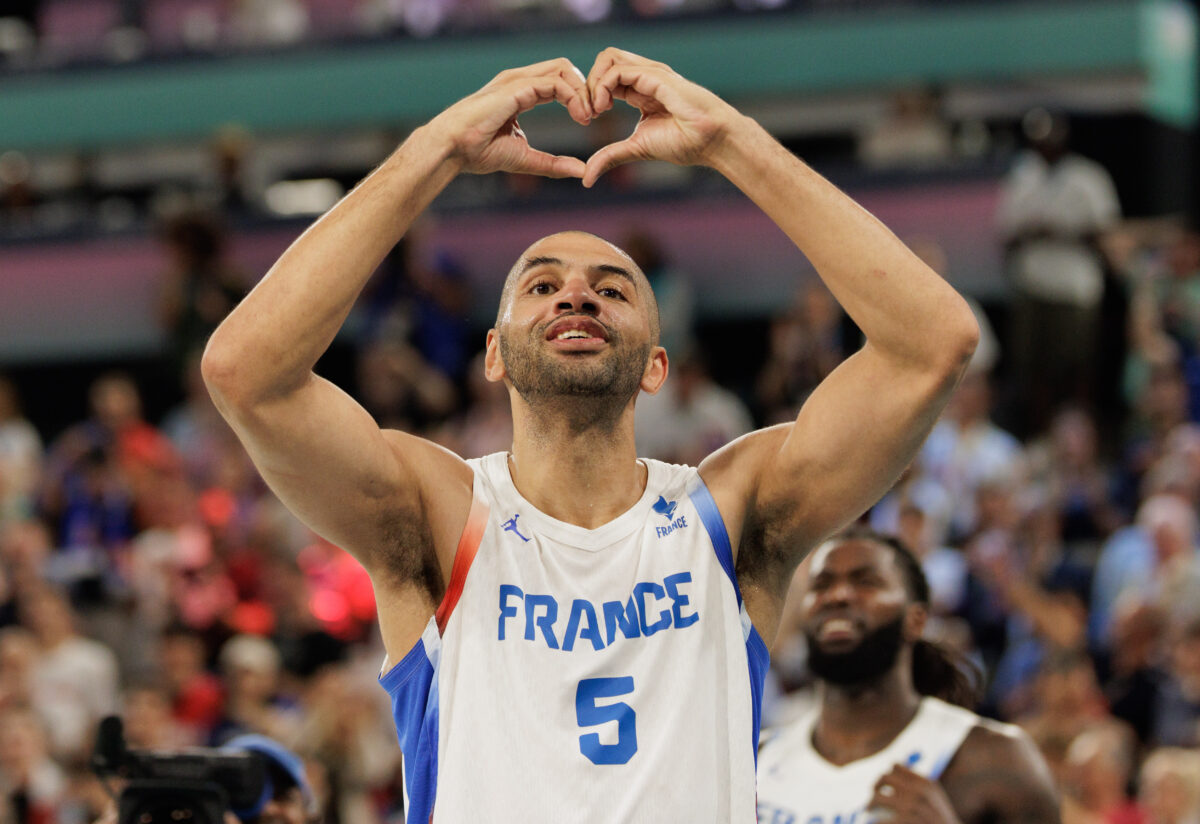
Today, September 21, 2026, Nicolas Batum announced his retirement from professional basketball.
Bodiroga, Pippen and the Making of Batum
One of his basketball idols was Dejan Bodiroga. Another was Scottie Pippen.
That tells you quite a lot: from an early age, Batum appreciated the intellectual and tactical side of basketball – and, above all, the team side of it.
Batum was, first and foremost, an exceptionally smart basketball player. An athlete, of course, but plenty of athletes with similar physical tools never became more than average players.
Even when he was a star, he put the team first – something only the truly great players know how to do. And he could affect the game equally at both ends of the floor.
“He’s like our personal handyman. Whatever we need to do, we just throw him out there,” DeMarcus Cousins once said.
Always Half a Step Ahead
In fact, the evolution of Batum’s defense might be the best illustration of the kind of player he was.
Early in his career, he was an elite defender because he was an elite athlete.
Later, he was an elite defender because he always knew where to be, because he saw the game half a step ahead and because he always had the full picture of the opposing offense in his head.
Offensively, the story was similar. At 6-foot-7, he was comfortable with the ball in his hands, could create his own shot and attack the rim with his leaping ability and length. As an excellent passer at the three, he gave every team he played for another dimension.
“I fell in love with it – the extra pass,” Batum once said, describing a trait that followed him from his earliest days.
As the years went by, he relied more on catch-and-shoot opportunities, on his feel for where an offense was going and on knowing exactly how to use the space created when opposing defenses focused on the stars around him.
Mr. Do-It-All, as Kemba Walker once called him.
That adaptability allowed Batum to remain at basketball’s highest level long after his athletic prime was behind him.
Eighteen NBA seasons. 1,205 games. The Trail Blazers, Hornets, Clippers and 76ers.
“It’s basketball IQ. Both ends of the floor decision-making, knowing where the ball should go before you catch it,” Steve Clifford, Batum’s coach in Charlotte, once said.
With the Clippers, Batum reached the Western Conference Finals in 2021. It’s a shame he didn’t get to play more high-stakes NBA games over the course of his career.
When he did, he was almost always up to the task.
More Than an NBA Career
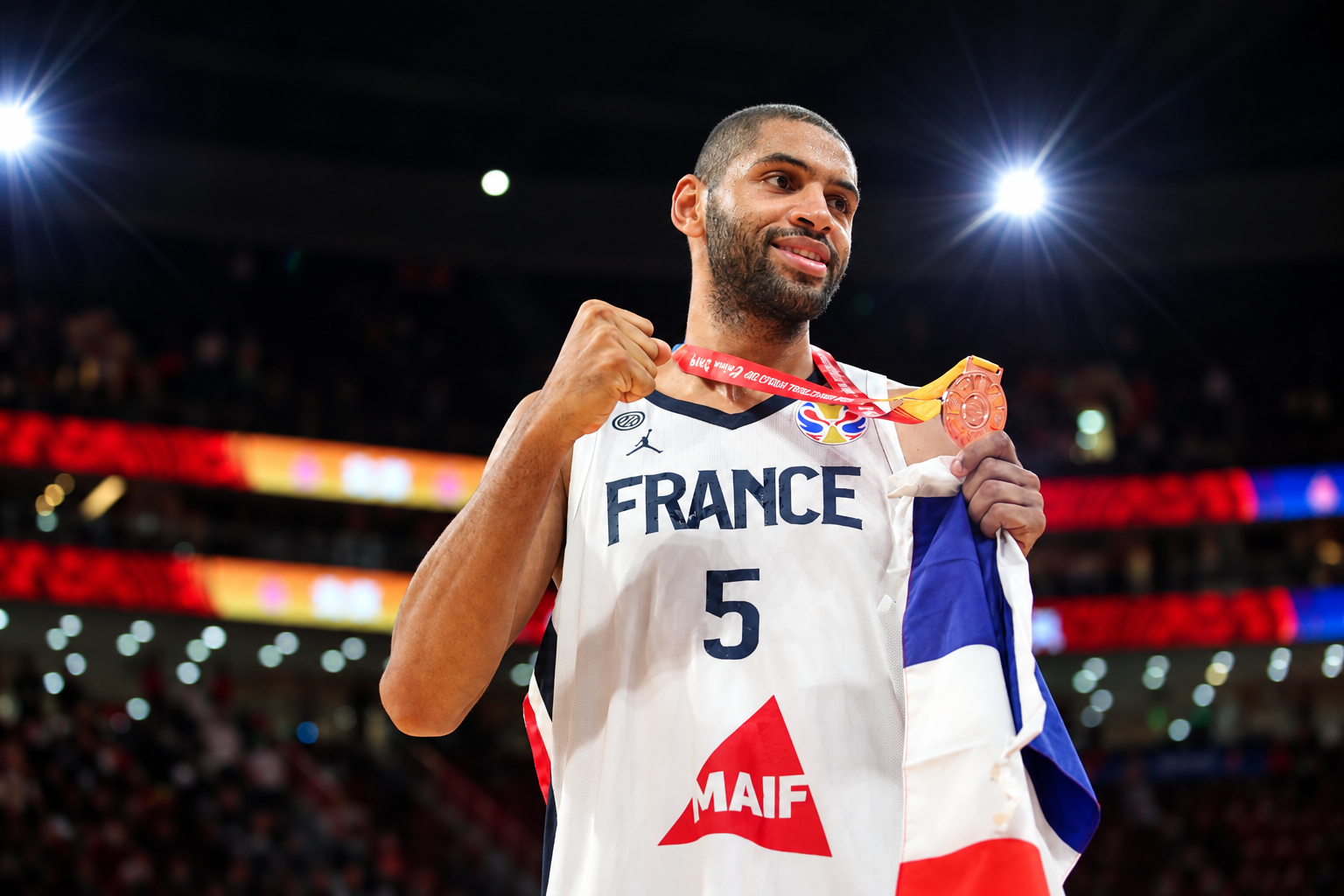
He made up for it with France.
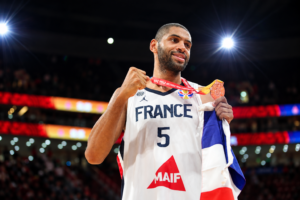
Batum won seven medals at major tournaments with the national team, including EuroBasket gold in 2013 and two Olympic silver medals.
Tony Parker, Boris Diaw, Mickaël Gelabale, Florent Piétrus…
For a long time, they chased that gold.
Before the 2013 final, Batum said:
“They’ve been showing up every summer for 10 years and giving everything to French basketball, even though some of them play 100-game seasons. Out of respect for them, Antoine [Diot], Nando [De Colo], Alexis [Ajinça] and I are here to help them win because they deserve it so much.”
Starting Over
No long journey comes without its difficult moments. Batum’s was no different.
By mid-October 2022, he weighed 122 kilograms during a period of depression.
“I was at rock bottom. Then I made a decision. I lost 18 kilograms and went back to work. I told myself, ‘We start again.’ My wife was incredible. We put together a team of trainers. Every day, from five in the morning until 11, six days a week – walking, nutrition, workouts… everything was about coming back.”
He came back and gave basketball a few more good years.
Now, after 20 years as a professional, it’s time, as he said, to go home.
You’ve earned it.