






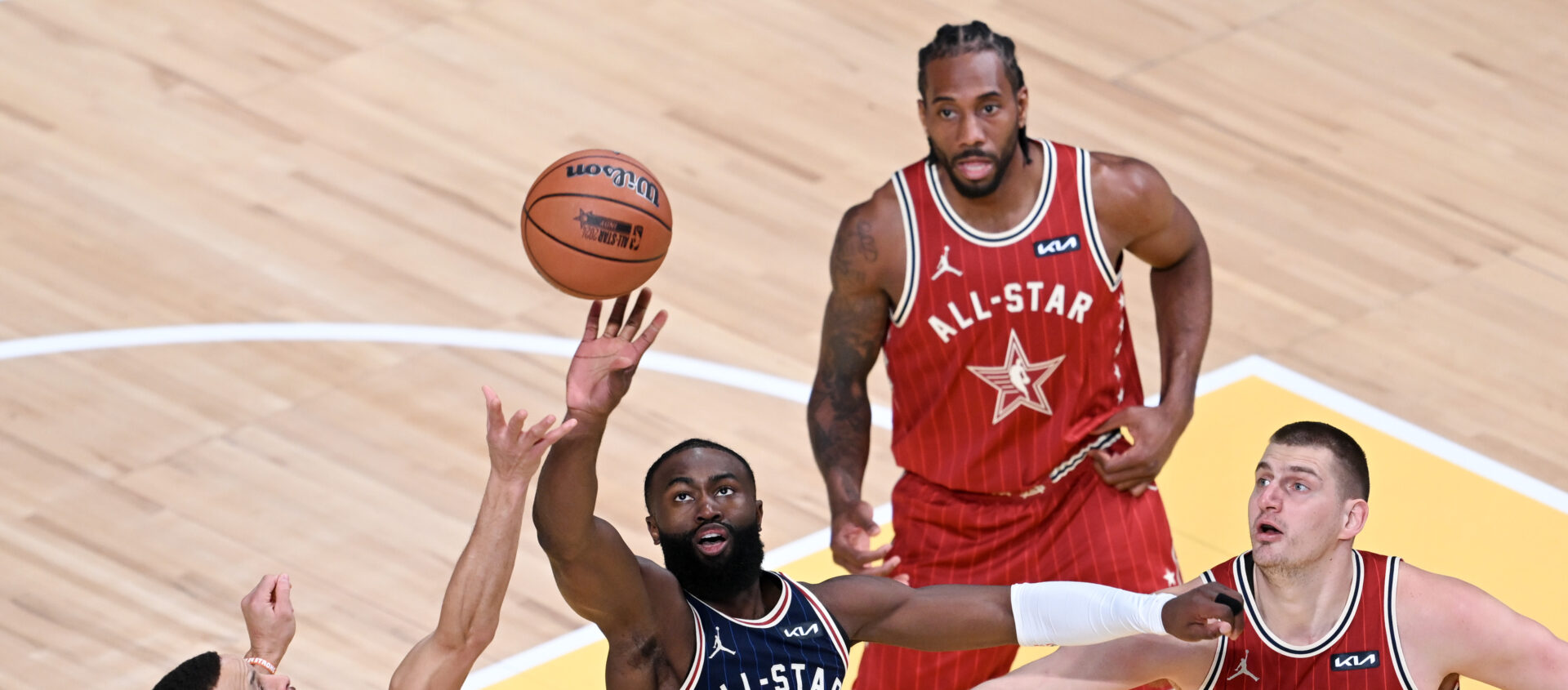

Stephen Curry will earn $62,587,158 in the 2026/27 season. Jimmy Butler, tenth on the list of the league’s highest-paid players, will make $56,832,773. The gap between first and tenth place is less than $6 million, while the top ten will cost their teams roughly $583.2 million combined.


Between them are Nikola Jokić at $59,033,114, followed by Jayson Tatum, Anthony Davis and Giannis Antetokounmpo at $58,456,566. Joel Embiid comes next at $58.1 million, with Jaylen Brown at $57,078,728. Phoenix star Devin Booker and Karl-Anthony Towns, who won the NBA championship with New York, will receive the same gross salary as Brown.
Stars such as Jalen Brunson, Victor Wembanyama, Luka Dončić, Anthony Edwards, Kawhi Leonard and Bam Adebayo are outside the top ten. There are several reasons for that, some individual, some tied to team circumstances and others to where each player is in his contract cycle. Still, the list of the ten highest-paid players in the NBA for 2026/27 probably would not match anyone’s ranking of the league’s ten best players.
Salary Is Not a Ranking of the League’s Best
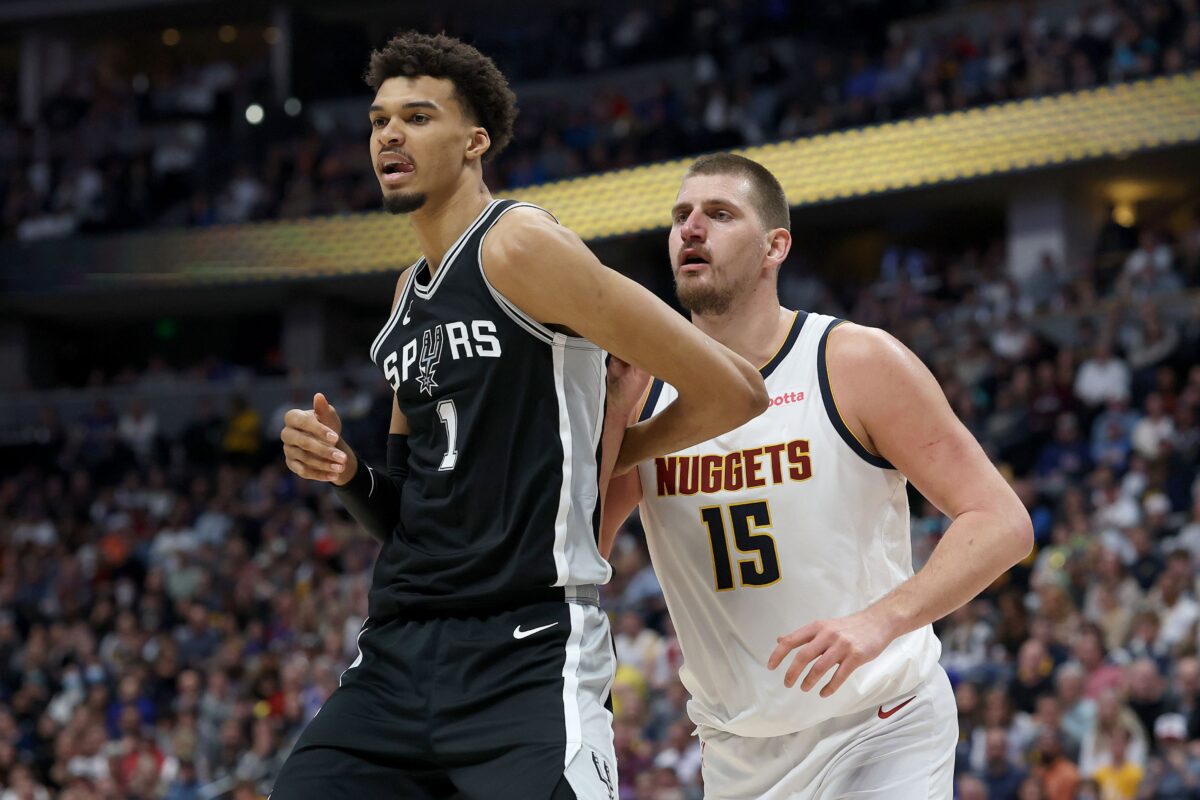
Just look at this year’s NBA Finals. Jalen Brunson, the reigning Finals MVP, will earn $37.7 million and ranks only 47th. His case is already well known. In 2024, Brunson accepted a four-year, $156.5 million extension, leaving $113 million in guaranteed money on the table compared with what he could have received by waiting another year. That gave the Knicks more flexibility to keep the core together and add to the team that eventually won the championship. Victor Wembanyama will make $16.9 million next season because he is still on his rookie-scale deal. The French star has since signed a five-year, $252 million extension with the San Antonio Spurs that begins in 2027/28.
Their current salaries do not tell us much about where they stand in the NBA hierarchy. They say far more about when they entered the league, when they became eligible for a new contract and which rules governed the deal they signed.
Contracts Measure Timing as Much as Talent
That distinction matters because a player’s salary in a given season is not a real-time evaluation of his ability. The number still carries the weight of previous results, years of service, individual honors, growth in the salary cap and the team’s belief that the player would remain worthy of its largest allowable investment several years later. The NBA has set the salary cap for 2026/27 at roughly $165 million. Curry’s salary takes up almost 38 percent of that figure, while the others near the top generally fall between 34.5 and 35.8 percent.
The starting value of a maximum contract, depending on experience and whether a player meets certain criteria, is tied to 25, 30 or 35 percent of the salary cap. Annual raises take effect after that, so the contract keeps growing even if the player’s place in the league changes along the way. The system can therefore put very different players in almost the same financial tier.
The Maximum Contract Compresses Value
Jokić is the clearest example. At just over $59 million, he will be the second-highest-paid player in the league, but that does not mean the number fully reflects his actual value to Denver. On a completely open market, it is difficult to believe that his price would be almost identical to that of some other players on the list, including those who require more adjustments from the system around them, miss more games or have less influence in the playoffs.
That gap could become even more obvious next summer. Jokić has indicated that he plans to wait until 2027 to sign his extension, when he is expected to become eligible for a five-year deal worth about $359.5 million. Under current projections, it would be the largest contract in NBA history. By waiting, he would be able to sign for one additional year and roughly $81.5 million more than the four-year extension available to him this summer.
The individual salary maximum prevents the difference in basketball value from being fully reflected in a contract. The league’s best players cannot be paid as much more as their performance may warrant compared with other max-contract stars. At the same time, teams often have little room to refuse a maximum offer to a player who may not be on Jokić’s level. The alternative could be losing him without an adequate replacement, which leaves most franchises in a worse position than signing an overpriced contract.
The Risk Behind Every Max Deal
The largest salaries are not handed out under ideal conditions. Negotiations are shaped by the market, ambition, public pressure and fear of what a franchise might become if it loses its star. A maximum contract should not be viewed only as confirmation of a player’s value. It also includes a projection of what might happen later.
Curry and Butler are moving deep into the veteran stages of their careers. With Davis and Embiid, health has long been impossible to separate from any discussion of their value. When available, both are capable of deciding playoff series. A team is not only paying for the best version of either player, though. It is also accepting the possibility that version may not be available when the season matters most.
Tatum, Brown and Booker are being paid with the expectation that their prime years will cover most of their contracts. Towns has been valued for a combination of size, shooting and offensive skill that is difficult to find on the market, something he confirmed during this year’s playoffs, when he helped Brunson and the rest of the Knicks bring New York its first NBA title in more than half a century. The salaries are similar, but the reasons teams agreed to them, and the risks they accepted, are not.
Another important detail with Davis, Antetokounmpo and Towns is that all three have player options for the 2027/28 season. Next summer, they can opt into the final year of their current contracts or decline the option and enter the market, either as free agents or as candidates for new long-term deals. Their 2026/27 salaries are therefore more than the result of earlier decisions. They also lead into a summer that could change the financial and basketball structure of several franchises.
When One Contract Shapes the Whole Roster
The NBA’s new financial framework has made a bad evaluation even more costly. The tax line for 2026/27 is set at $200 million, the first apron at $209 million and the second apron at $221.6 million. Two salaries from the top ten can consume between $115 million and $120 million before the rest of the starting lineup has been filled, let alone an entire rotation.
Crossing the second apron no longer means only that an owner will pay a larger tax bill. The team also loses flexibility in trades and access to some of the mechanisms normally used to improve a roster. It cannot aggregate contracts as easily in deals, chase reinforcements with the same freedom or correct mistakes from previous offseasons. In that environment, one player’s salary affects the quality of the sixth or seventh man, the depth at a weak position and the ability to react when a season begins moving in the wrong direction.
The value of Tatum’s or Embiid’s contract cannot be measured only through individual production. It also has to be judged by what the team is no longer able to do because of that contract. One injury, one poor season or one mistaken projection does not remain isolated in one spot on the roster. The consequences spread through the rest of the team.
Big Men Have Reclaimed the Financial Summit
The list of the league’s highest salaries also says something about what the NBA has become. Jokić, Davis, Antetokounmpo, Embiid and Towns will earn approximately $291.1 million combined, almost half of the money going to the top ten. It is an interesting picture of a league that, 15 years ago, seemed ready to push centers toward the margins.
The small-ball revolution opened the floor, increased the pace and exposed slower big men in space. The traditional center became a problem as soon as an opponent pulled him into pick-and-roll coverage or forced him to defend far from the paint. Big men did not disappear. They simply had to change.
Five Different Answers to the Same Evolution
The five on this list represent different directions in that evolution. Jokić runs an offense better than most point guards. Antetokounmpo leads the break, applies constant pressure at the rim and covers enormous ground defensively. Davis protects the paint, switches onto smaller players and finishes possessions without needing the offense to manufacture touches for him. Embiid has spent years combining the physical force of a traditional center with shooting and face-up play. Towns pulls opposing centers away from the rim and creates space in a way that was once reserved for guards and wings.
They are not proof that the old center has returned. Their salaries show how much the job description of a big man has expanded. A modern big has to take part in creation, space the floor, defend in space or attack the rim with enough force to make an entire defense adjust.
Curry still sits at the top of the list, and few players did more to accelerate that evolution. His shooting pulled defenses farther away from the basket and turned traditional centers into playoff targets. The league did not answer by giving up on size. It answered by producing more versatile big men. The best of them learned to pass, shoot, handle in transition and make decisions that once belonged almost exclusively to guards.
What the Salary List Really Tells Us
The salary list for 2026/27 therefore says much more about the rules limiting player earnings, contracts that often outlast a player’s peak and the effect one major investment can have on the rest of a roster. It also shows how big men, after a period when their future was being questioned, have reclaimed a large part of the league’s financial summit.
Every deal carries risk. This is no different. Once a franchise decides to hand one player a third of the salary cap, it also has to accept everything that comes with that decision.