







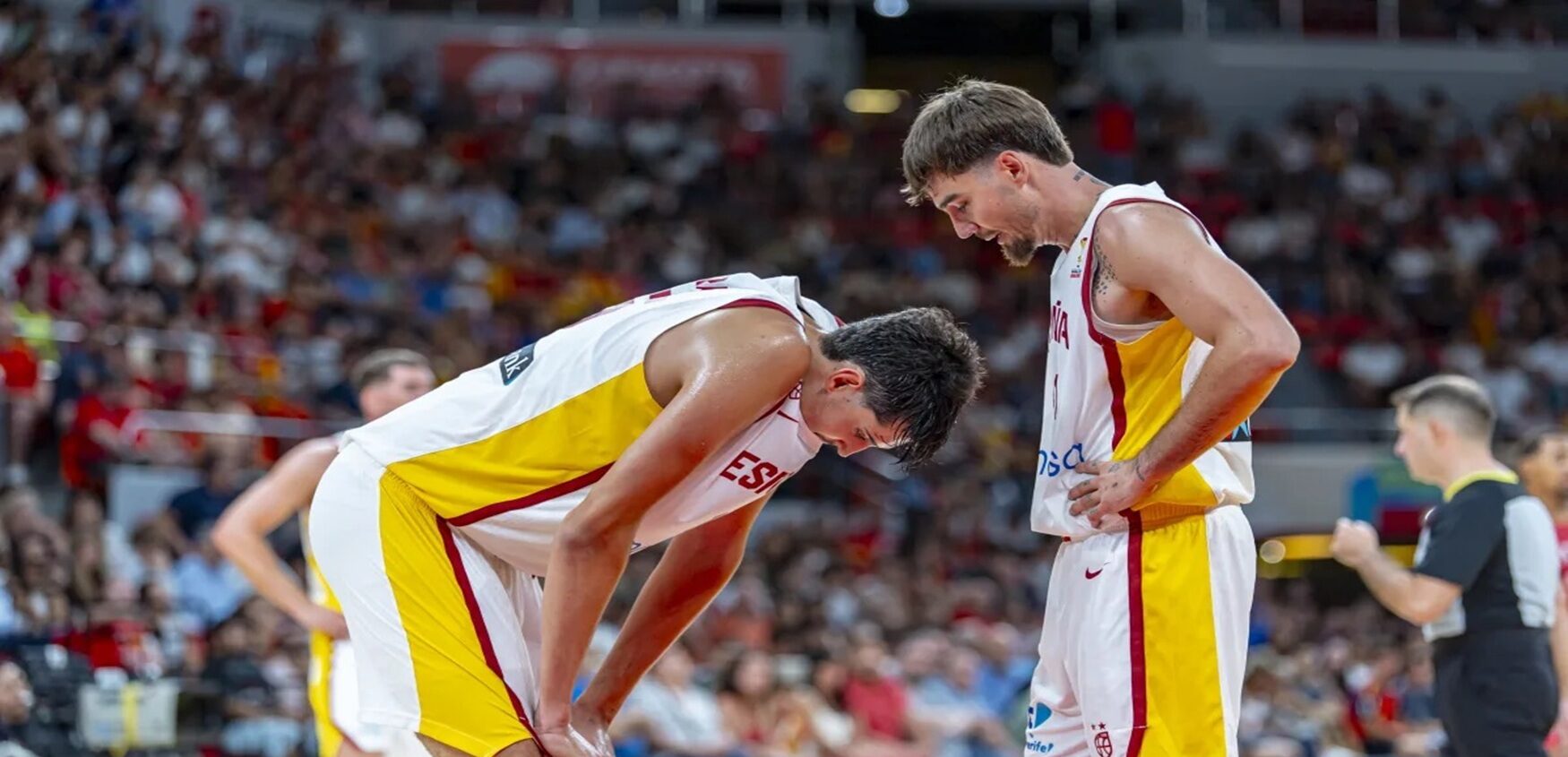

There is no escaping the fact that the Spanish national team is going through one of the toughest periods in its recent history. After more than a decade and a half of glory, during which Spain won two World Cups (2006 and 2019), four EuroBasket titles (2009, 2011, 2015 and 2022) and three Olympic medals (silver in 2008 and 2012, bronze in 2016), the national team’s performances at its most recent tournaments have taken it a long way from the dominant status it once enjoyed.


After winning gold at the 2022 EuroBasket, disappointment has followed disappointment for Spain, which failed to reach the quarterfinals at the 2023 World Cup and was eliminated in the group stage at both the 2024 Olympics and, even more surprisingly, last summer’s EuroBasket. Those results played a major role in bringing Sergio Scariolo’s era at the helm of Spain to an end. Chus Mateo, the former Real Madrid head coach, was chosen to replace him.
Mateo’s arrival certainly brought a breath of fresh air to a team in need of giving its fans something to cheer about after years in which success had become the norm. Five wins from five in the opening World Cup qualifying games were only the tip of the iceberg for a team that was enjoying itself on the court and comfortably beating Ukraine, Denmark —both of them twice— and Georgia. That said, in the final game of the first group stage, Spain let a seemingly under-control game slip away in Georgia, turning a 57-71 lead at the start of the fourth quarter into a 91-89 overtime loss. It was seen as evidence of a certain lack of experience from a team that struggled to contain an inspired Tornike Shengelia down the stretch. The Georgian forward finished with 37 points.

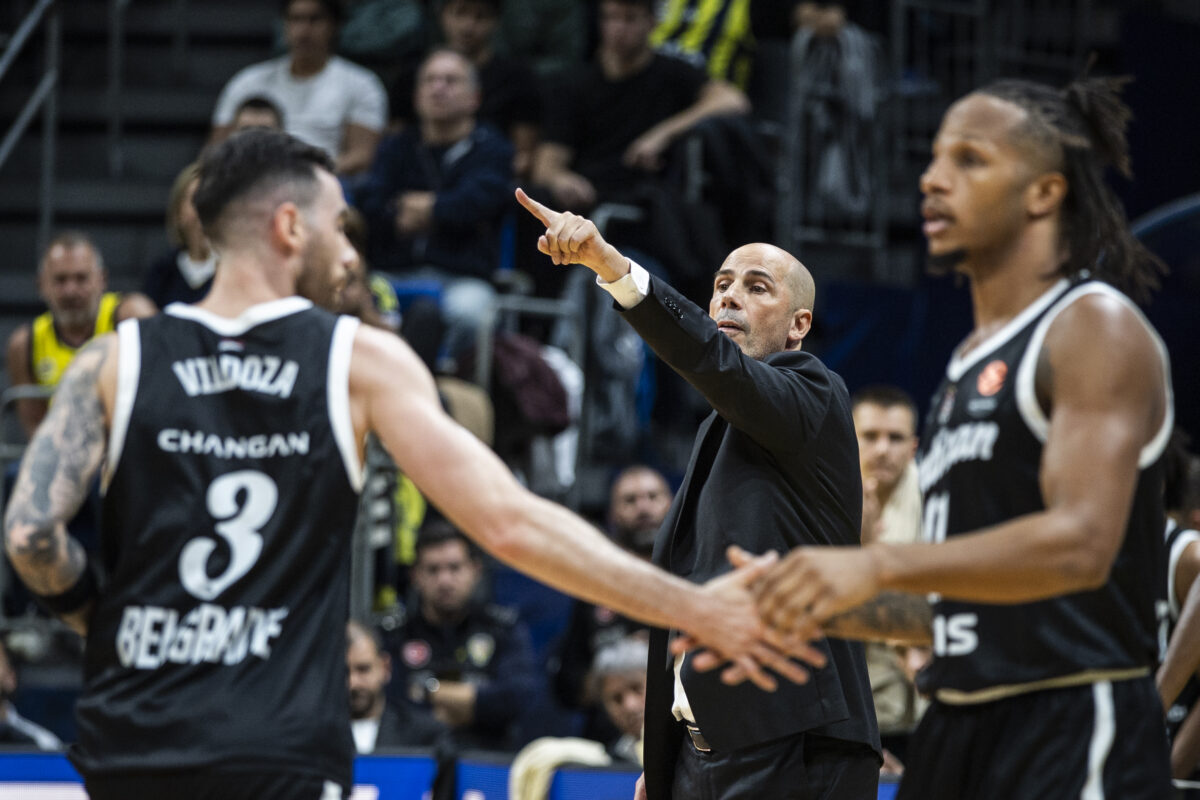
Even so, Spain advanced to the second phase with a favorable 5-1 record and entered the new group with a strong chance of qualifying for next year’s World Cup in Qatar.
Spain’s privileged position meant it could approach this late-August, early-September window with some margin for error. In fact, back-to-back wins against Portugal and Greece could have all but secured qualification for the World Cup. That, combined with Mateo having full access to his players at this point of the year —something that is not possible when the international windows overlap with the NBA, NCAA or EuroLeague seasons— led the coach to make what was arguably a necessary bet on the future.
Mateo handed the reins to a significant portion of a new generation that has generated plenty of excitement in Spain but still has limited experience at the highest level of competition.
Among the 15 players named by Mateo, several emerging talents were included at the expense of the veteran core that had led Spain through the first stage of World Cup qualifying. Mario Saint-Supery and Sergio de Larrea —both of whom had already made their senior debuts at the last EuroBasket— were joined by Hugo González, who had also featured in the previous qualifying window, as well as Aday Mara and Baba Miller. The latter two are set to make their NBA debuts this season but had yet to play for the Spanish senior national team.
There were also returns for veterans such as the Hernangómez brothers and Santi Aldama, who was initially called up but ultimately withdrew because of injury. Still, Mateo’s roster was clearly a statement of intent: Spain was beginning to prepare for the future with the group that, in theory, will be expected to lead the national team over the coming years.
However, the first game for this ‘new Spain,’ a 89-95 loss at home to Portugal, laid bare the problems this approach still faces when it comes to competing at the highest level. As Mateo himself acknowledged afterward, his team lacks cohesion.
“We need more miles under our belts,” he admitted after Spain suffered its first-ever competitive defeat against its neighbors. Spain’s first loss to Portugal in any game had come exactly one year earlier in a friendly, a sign of how the balance of power between the two countries has been shifting in recent times.
Against Portugal, Spain looked short of preparation. In fact, it had only begun practicing the previous Monday, while most European national teams had already been together for days and, in some cases, had even played friendlies before their official games. More importantly, Spain lacked the competitive experience that Portugal was able to showcase.
The visitors hung around during the stretches in which Spain found its offensive rhythm and, with Neemias Queta and Ruben Prey providing a significant presence in the paint, used their physicality to put themselves firmly in the race for one of the three qualification spots from Group I for the tournament in Qatar.
With Portugal grabbing 18 offensive rebounds and Spain committing 19 turnovers, the upset eventually became a reality.
Mateo’s decision to give the new generation bigger roles therefore failed to pay immediate dividends, although the Madrid native appeared to be looking beyond the short term. Statistically, Mara was the most effective player among the young Spaniards, finishing with 12 points and six rebounds, but the new Oklahoma City Thunder center struggled badly against the ‘Celtic’ Queta in what amounted to a “welcome to the NBA.”
There was little else to take away from Spain’s performance, other than the efforts of Álvaro Cárdenas, Joel Parra and Darío Brizuela. The rest of the team was, from a competitive standpoint, well below Portugal’s level.
With a second consecutive defeat now on the books, Spain’s situation has become considerably more complicated, making Monday’s game in Greece —where Vassilis Spanoulis’ team is arguably even more desperate for a win— a crucial test. The result could determine whether Spain can continue to put its faith in the young players who are expected to lay the foundations for the future, or whether it will have to turn back to veterans with less long-term upside in order to secure a place in Qatar.
Not long ago, qualification had seemed almost a given. Now, it is far from certain.
That is Spain’s crossroads: invest in the future, with the risk that the present may take a turn for the worse, or prioritize immediate results and accept a potentially lower ceiling in the years to come.
For now, Chus Mateo appears to be choosing the first path. But there is little doubt that what happens in Greece will have a major bearing on Spain’s next roster decisions.