

Predrag Savović’s basketball journey took him across three continents. It began in Belgrade, continued through college basketball in Hawaii, reached the NBA, found a home in Bilbao and eventually led him into sports management.


Basketball has a way of opening doors. For Predrag Savović, it opened more than most.
As a teenager, he trained with Partizan’s first team alongside the generation that followed the club’s famous European champions. A few years later, he found himself studying and playing college basketball in Hawaii before signing a contract with the Denver Nuggets and sharing the court with Michael Jordan, Tracy McGrady and Allen Iverson.
His playing career eventually brought him to Bilbao, where he found a second home and later transitioned into sports management, helping guide the club through one of the most successful periods in its history.
In this conversation with SK Week, Savović looks back on an unconventional basketball journey – from Belgrade to Hawaii, the NBA and the Basque Country – and explains why, looking back, the people he met mattered even more than the places he reached.
Learning the Partizan Way
You joined Partizan as a 17-year-old and immediately found yourself around players who had won the European title just two years earlier. What do you remember most from that experience?
“The roster was full of players who had won the European title two years earlier – Željko Rebrača, the late Brkić, Sretenović, Lončar, Drobnjak… They were all still very young, but that season represented a transition for the club.
I have wonderful memories from that year. More importantly, I learned lessons that stayed with me for life. Above all, I learned that nothing worthwhile comes without hard work and sacrifice.
We spent countless hours in the gym with Aleksandar Džikić and our individual coach, Nebojša – I still can’t remember his last name. Zoran Stevanović, whom everyone called Stragarac, looked after us younger players almost like a father. Rebrača and Drobnjak were always there too. Looking back, I realized that basketball was only part of what that group taught me.”
You often mention Beovuk as another place that shaped you. Why?
“That’s where I really matured, both as a player and as a person. I shared the locker room with people like Dejan Milojević, Radojičić, Vulović, Galovac, Slobodan Šljivančanin, Mića Radović and Igor Nikolić, who later became an engineer in the United States. We’re all still close friends today.
There are countless funny stories from those days. Whenever we walked into the weight room, it looked like a bodybuilding competition. Everyone wanted to lift more than the others – Milojević, Galovac, me… We pushed each other every single day.
Those were difficult times in the former Yugoslavia, both economically and socially, so we relied on one another. Basketball was our life, and in the end all of us managed to build something meaningful from it.”
Basketball Took Me to Paradise
The next stop was Šabac.
What made that Iva Zorka Farma team so special?
“It was a fantastic group. It was also the first time I played in European competition, which was a huge experience for me as a 20-year-old. Traveling around Europe and playing international games felt like a dream.
We were treated exceptionally well in Šabac, and that team became very popular because of Mijailo Grušanović. He was the reason we stayed so close as a group.”
What made Grušanović such a special leader?
“He was an outstanding professional and an even better person. Unfortunately, we lost touch after I left Serbia, but he was someone many younger players looked up to.
He could have played for bigger clubs, but that was his choice. Looking back, I think he had already found what most of us spend our lives searching for – happiness. Šabac was home, and he was completely at peace there.
He took care of everyone around him, and that’s why the whole team naturally gravitated toward him.”
Soon afterward, Savović made a decision that was highly unusual for a European professional at the time.
What made you leave Europe for college basketball in the United States?
“I started thinking long-term because I didn’t feel my career was progressing the way I had hoped. A friend of mine, who was already living in the United States, helped me get an opportunity at the University of Alabama at Birmingham.
Things didn’t work out the way I expected. I wasn’t playing enough, so after one year I decided to transfer.
I moved to Los Angeles, where I stayed with David and Dana Pump. At the time they were complete strangers, but they welcomed me into their home like family. I worked at David’s youth basketball camps while looking for another college where I could continue both my education and my basketball career.”
One pickup game ended up changing everything.
How did Hawaii enter the picture?
“Most of the people working at those camps were former players or coaches connected to college basketball. Every night after camp ended, we played pickup games from around ten until midnight.
One evening, a coach from the University of Hawaiʻi happened to be there. Fortunately, I played really well that night. He asked my friend about me, found out I was looking for a new school and simply asked whether I’d like to come to Hawaii.
They made me an offer, and I accepted.”
People often describe Hawaii as paradise. Was it really like that?
“It really is paradise on Earth.
Basketball and education gave me the opportunity to spend four incredible years there with amazing teammates, coaches and friends. Hawaii became my second family.
I didn’t return home for almost five years after leaving Yugoslavia.
Life there is exactly how people imagine it. Surfing, beautiful weather all year, no winter clothes, no cold. Whenever classes were over, we’d head straight to the beach.
The people are wonderful. They have a family culture they call ‘ohana.’ Everyone is welcoming and supportive. I made friendships that have lasted more than twenty years, and we still meet regularly.
It truly is a special place.”
Your team also transformed the basketball program at Hawaii…
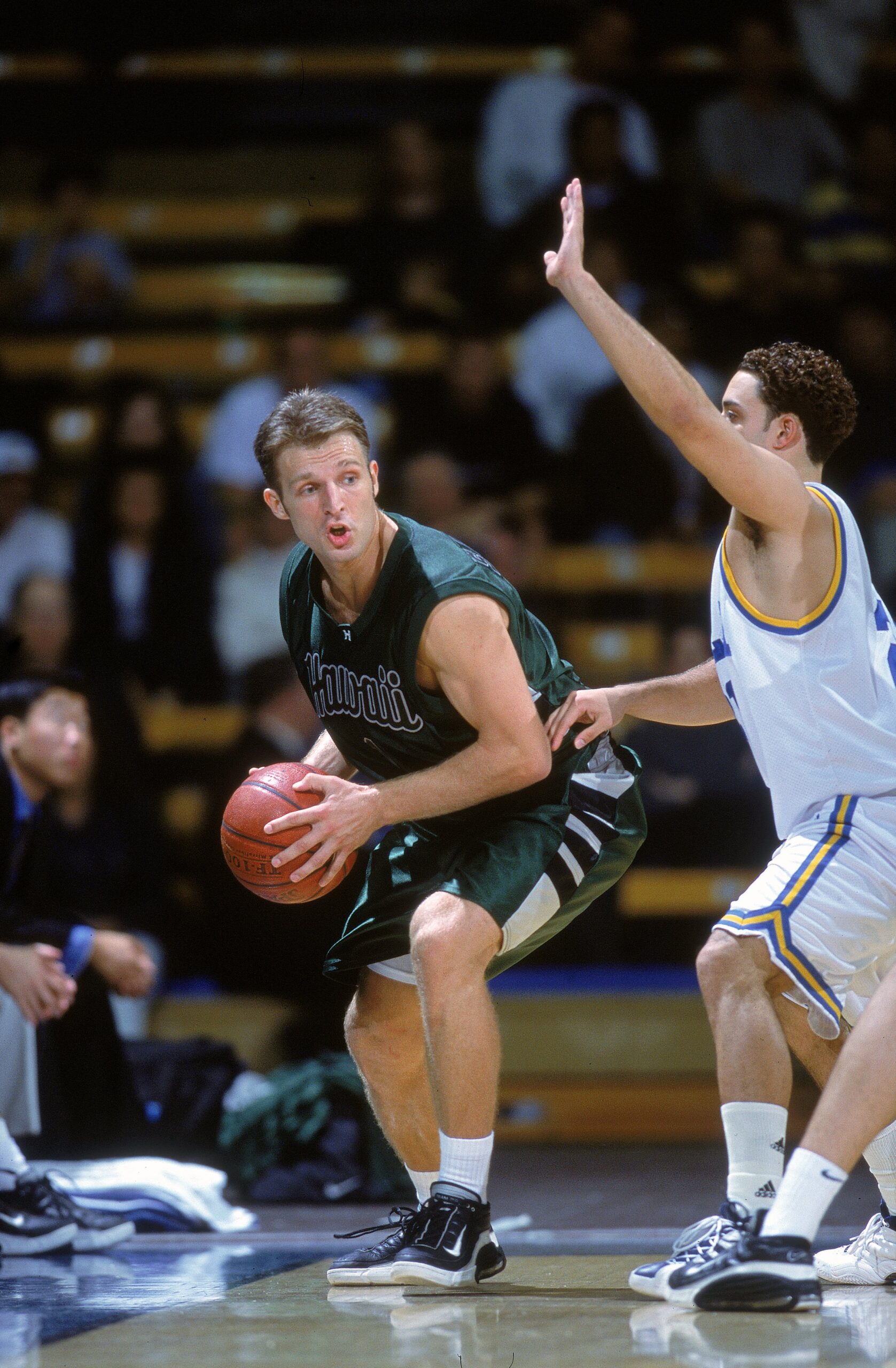
“Yes! Within three years, we became one of the top 25 college teams in the country, which was very unusual for a university like Hawaii.
Many players didn’t want to go there because they felt isolated – we were more than 5,000 kilometers from the U.S. mainland.
When visiting teams came for tournaments, they usually wanted to spend time at the beach. They’d stay in the sun too long, forget to hydrate… and then we’d simply outrun them.
That was more or less our strategy,” Savović says with a laugh.
The NBA Dream
Savović’s years in Hawaii eventually led him to the NBA.
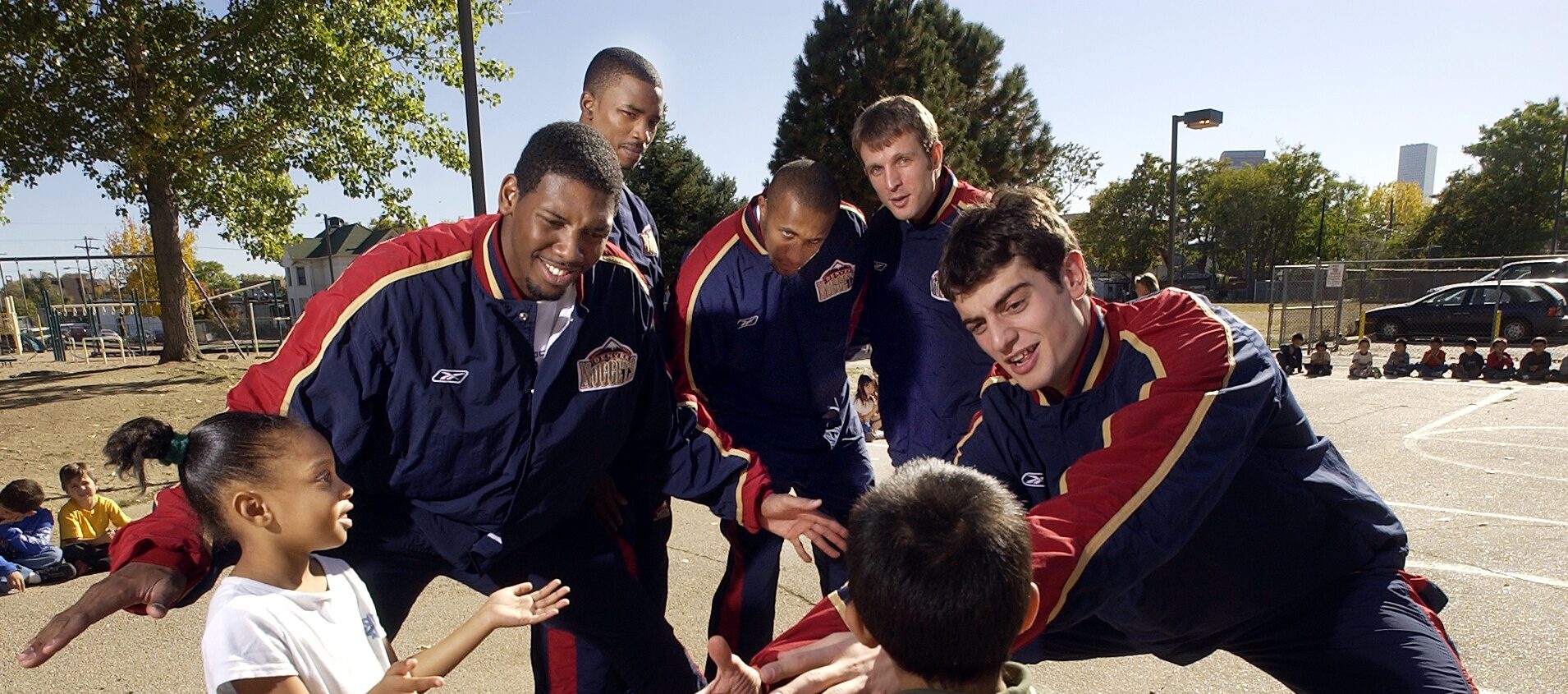
Although he was already 26 by the time he attended the 2002 NBA Draft, he earned a three-year contract with the Denver Nuggets.
You reached the NBA later than most players. What do you remember from that experience?
“I had already dealt with a few muscle injuries by then, and unfortunately they continued once I arrived in Denver.
My game relied a lot on speed, athleticism and explosiveness. First I injured my right hamstring, then my calf. At that point, the Nuggets decided to give younger players an opportunity instead. Vincent Yarbrough played the same position, and that was essentially the end of my NBA chapter.”
Even though injuries limited his opportunity, Savović still shared the floor with some of the greatest players of his generation.
You played against Michael Jordan, Tracy McGrady, Allen Iverson… Which opponent left the biggest impression on you?
“Even at 40 years old, Michael Jordan was incredible. One second he was standing in front of you, the next he was in the air finishing at the rim. It was unbelievable.
Tracy McGrady was another one. He scored 47 points against us. What could I do? Maybe commit three or four fouls immediately so he couldn’t score anymore,” Savović laughs.
“And then there was Allen Iverson. Playing against players like that is something you remember for the rest of your life. It’s a shame injuries didn’t allow me to stay in the league a little longer.”
What impressed you most about the NBA beyond the basketball itself?
“Our team wasn’t particularly strong, but we had outstanding professionals like Marcus Camby and Juwan Howard.
What impressed me most wasn’t just the players – it was the organization. Seeing how an NBA franchise operates, both on and off the court, completely changed my perspective.
That was the first time I realized I wanted to work in sports management after my playing career.”
After one season in Denver, Savović moved to Belgium before making the transfer that would ultimately define the next chapter of his life.
Finding a Second Home
After his NBA stint ended, Savović returned to Europe, first joining Spirou Charleroi in Belgium under head coach Savo Vučević, the father of longtime NBA center Nikola Vučević.
The injuries, however, did not stop there.
Then came the move that would shape the rest of his life.
Did you realize when you arrived in Bilbao that it would become your second home?
“Not at all.
I averaged 16 or 17 points per game in Belgium, but in Bilbao I accepted a different role. I became a role player, and that’s where I found my place.
I’ve been connected to Bilbao for more than 16 years. Apart from two years in Zaragoza, I’ve spent my entire post-playing career there. I was fortunate to serve as general manager at two different clubs, which doesn’t happen very often in professional basketball.”
What makes the Basque Country such a special place to live?
“It’s a very stable and highly developed region. People have a strong identity, their own language and a great sense of community.
At first they can seem reserved, but that’s only a first impression. In all the years I’ve lived there, I’ve never felt like a foreigner.
In many ways, they remind me of people from Serbia. They’re passionate, they like to be heard, they’re hardworking and very honest.
It’s a wonderful place to live. The weather can be challenging because it’s rainy and hilly, but summers are mild and beautiful. Whenever someone visits the Basque Country, I always recommend spending time in both Bilbao and San Sebastián.”
Life Beyond Basketball
Before we wrapped up, we asked Savović one final question.
Which teammate impressed you the most – someone who perhaps never became a global star?
“Karl English.
We played together at Hawaii, and I’ve rarely met someone so completely dedicated to basketball.
It’s a shame he never got the opportunity to play in the NBA because he had the talent for it. Still, he built an outstanding career in Europe.
We spent years training together in Hawaii, constantly pushing each other to improve. I learned a great deal from him.”
Basketball took Predrag Savović much farther than he could have imagined as a teenager arriving at Partizan.
It became his passport to three continents, lifelong friendships and, eventually, an entirely new career.
Editor’s note: Since this conversation originally took place, Predrag Savović has stepped away from basketball management. Today he is the founder of IBEXMONT Advisory and serves as Director of Business Development at Kai Capital Markets, a Santander-based single-family office focused on ethical investment and innovative technology ventures.