







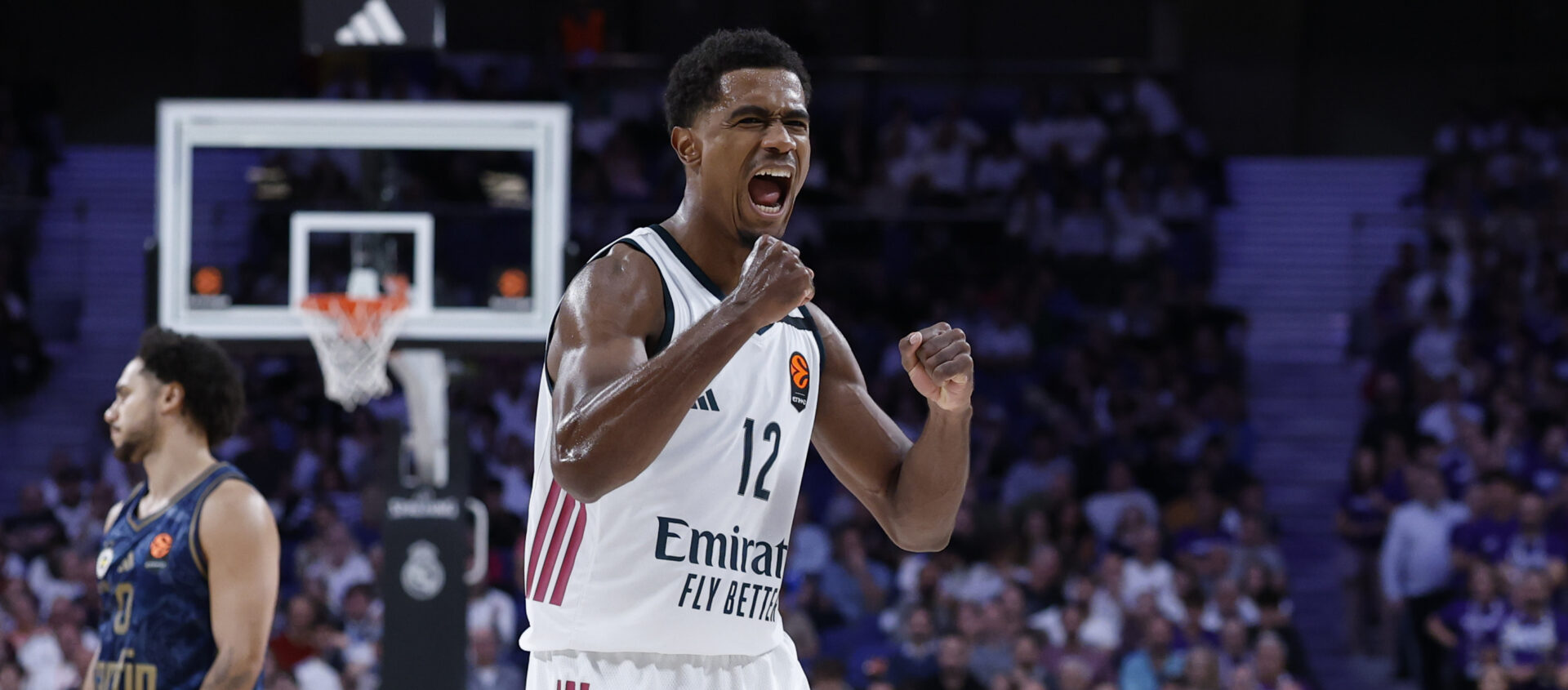

Real Madrid entered October with a trophy and a losing record. Winning the EuroLeague SuperCup had offered an encouraging first look at Pedro Martínez’s team, but three consecutive defeats left Madrid at the bottom of the EuroLeague standings. Four weeks later, the club was 6-3 and riding a ten-game winning streak across all competitions. The recovery has been built on a far more effective offense, with Théo Maledon playing a leading role. Yet the French guard was already one of Madrid’s best performers when the team was losing.


On October 1, Maledon scored 26 points, handed out seven assists and finished with a performance index rating (PIR) of 40 against Hapoel. Madrid still lost, falling to 0-3 in the EuroLeague. Twenty-eight days later, he scored 26 points again, this time against Fenerbahçe. Madrid won 95-76 for its sixth straight EuroLeague victory.
Maledon had already shown the quality that prompted Madrid to sign him from ASVEL. The team around him, however, was still adjusting to Martínez’s demands and struggling to turn his strong individual performances into wins.

Madrid’s 0-3 Start Did Not Tell the Whole Story
On September 19, Real Madrid won the inaugural EuroLeague SuperCup in Abu Dhabi, beating Olympiacos 93-89. Defeats to Dubai (77-78), Anadolu Efes (84-94) and Hapoel (98-102) followed. All three came on the road, an important factor to consider, but Madrid had never opened a European season with three consecutive losses.
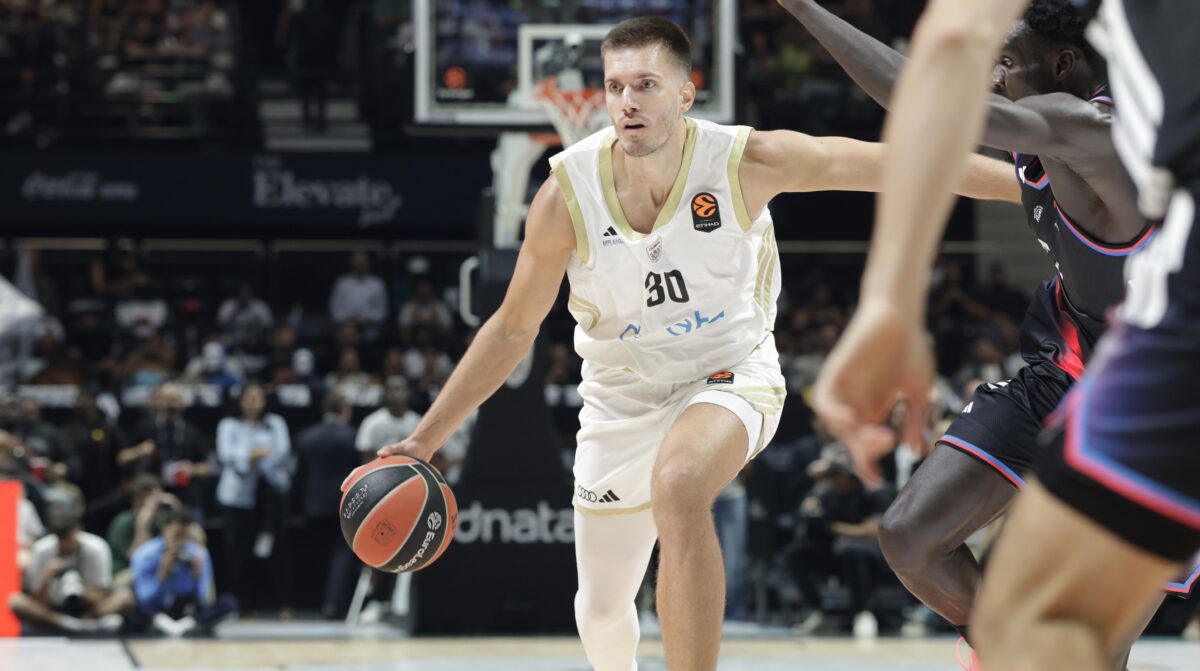
Down 63-43 at halftime against Hapoel, Real erased a 22-point deficit in the third quarter and briefly took the lead. Maledon drove the comeback, but Madrid lost control again down the stretch. Madrid showed flashes of Martínez’s preferred offense, but its defense couldn’t sustain the comeback.
The turnaround began with an 86-76 win over Partizan and continued against Olimpia Milano (98-89), ASVEL (111-92), Maccabi (113-99), Baskonia (104-86) and Fenerbahçe (95-76).
Through its first three EuroLeague games, Madrid averaged 86.3 points while allowing 91.3. Over the next six, its scoring average jumped to 101.2, while points allowed dropped to 86.3. Its average scoring margin went from minus five to nearly plus 15 points per game. Starting with the road win over Olimpia Milano, Madrid scored at least 95 points in five consecutive EuroLeague games, setting a competition record.
Martínez Wants the Advantage Before the Defense Gets Set
Martínez wants his team to create an advantage early in the possession, before the opposing defense can get organized. The change has been even more pronounced in Spain’s domestic league, where Madrid averaged just 14 seconds per possession through the first five rounds. The team also averaged 112.8 points and 15 made 3-pointers per game.
A similar approach produced a club EuroLeague record against Maccabi, when Madrid knocked down 21 shots from beyond the arc.
Maledon can beat the initial defender quickly, often before the opposition has time to close off the paint. He uses the high pick-and-roll early in possessions, when there is more room around the basket. If the opposing center steps up to stop his drive, Maledon can find a big man rolling to the rim or an open shooter on the perimeter.
Martínez explained the importance of that approach after the win over ASVEL. The French team’s zone defense had slowed Madrid and allowed the visitors to get back into the game, but Maledon’s return late in the third quarter changed the offense. His ability to get into the paint helped Madrid generate better looks inside and, eventually, open 3-pointers. Maledon finished that game with 16 points, nine assists and a PIR of 26.
Last season, the French guard averaged 9.4 points, 2.9 assists and an 11.2 PIR in the EuroLeague. His ability was clear, but his performances in Madrid lacked consistency. He also dealt with an adductor injury during the season and was unable to regain the form he had shown during his best stretch.
Through nine EuroLeague rounds this season, Maledon is averaging 16.3 points, four rebounds, 5.2 assists and a 20.4 PIR. He has approached the level he reached with ASVEL in 2024-25, when he averaged 17 points and a 20.6 PIR, earning All-EuroLeague Second Team honors. He is now carrying that responsibility on a team with considerably more players capable of creating their own offense.
Free Throws Have Become One of His Most Reliable Weapons
Maledon is averaging 7.1 free-throw attempts per game in the EuroLeague, converting 92.2 percent of them. He is producing those numbers in just over 23 minutes per game. Even when his shot isn’t falling, he finds ways to put pressure on the opposing defense.
He has been just as productive in the Spanish league, where he was named October MVP. Through the first five ACB games, he averaged 18.4 points, 5.2 assists and a 25.8 PIR. He scored 25 points with a PIR of 38 against Obradoiro, then put up 27 against Lleida, making seven of eight 3-pointers in less than 20 minutes. Against Baskonia, Maledon scored 19 points, grabbed four rebounds and handed out six assists in 22 minutes and 44 seconds. He committed just one turnover, and Madrid outscored Baskonia by 24 points while he was on the floor. His partnership with Edy Tavares was particularly effective: Madrid was plus-21 in just over 15 minutes with both players on the court.
Interestingly, Maledon made only three of his 12 two-point attempts. Despite those struggles, he continued to organize the offense and create opportunities for his teammates. He also made three of four shots from beyond the arc.
Fenerbahçe Needed Him to Become a Scorer Again
Two days later, against Fenerbahçe, he took on a more prominent scoring role. Maledon finished with 26 points, seven rebounds and a PIR of 35 in just 24 minutes and 13 seconds. He made three of four 3-pointers and, more impressively, 11 of 12 free throws. He drew nine fouls against a team that had established itself as one of the EuroLeague’s toughest defensive opponents.
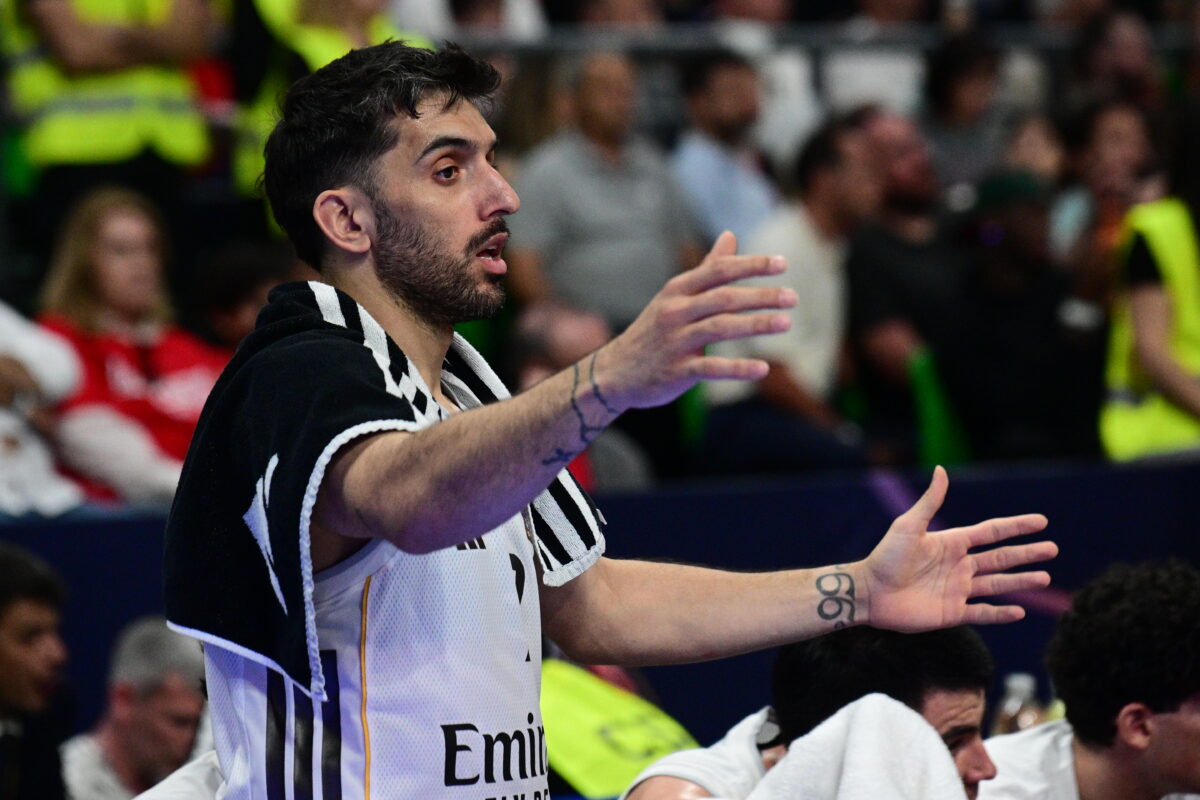
He also committed five turnovers. Still, his constant attacks on the rim caused problems for Fenerbahçe’s defense, even when the Turkish team managed to keep Madrid from playing at its preferred pace. Fenerbahçe initially disrupted Madrid’s transition game, and the hosts committed eight turnovers in the first quarter. Campazzo’s introduction brought a change in defensive intensity. The Argentine finished with ten points, ten assists and a PIR of 25, while Tavares added 14 points.
Campazzo brings experience and a different level of control over the tempo, Andrés Feliz can share the playmaking duties while also playing shooting guard, and Maledon consistently puts pressure on defenses with his drives. Against Maccabi, for example, Maledon shot just 1-for-13 from the field, yet Madrid still scored 113 points. The French guard made all nine of his free throws, while his teammates carried most of the scoring load.
Madrid No Longer Needs Maledon to Be Perfect
After the win over Fenerbahçe, Martínez said Maledon had matured and become much more comfortable at the club than during his first season. The coach also stressed that Madrid still has areas to improve, including defensive rebounding. Against the Turkish champions, the team allowed 20 offensive rebounds.
The day after the Fenerbahçe victory, Madrid announced that Maledon had been diagnosed with a sprained right knee. No timetable for his return has been announced. Madrid hosts Panathinaikos on November 4, and Maledon’s availability remains uncertain.