


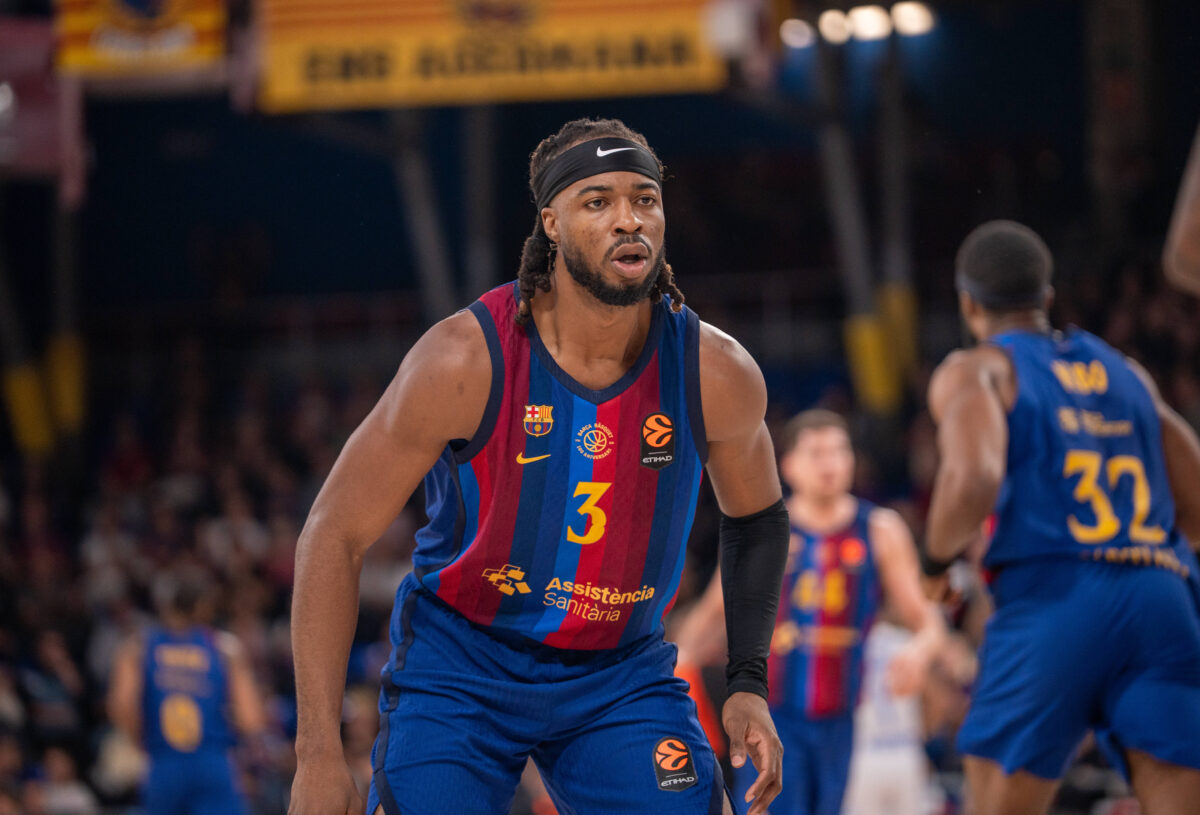


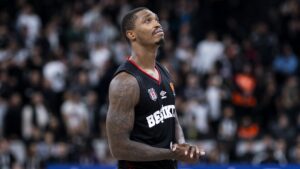
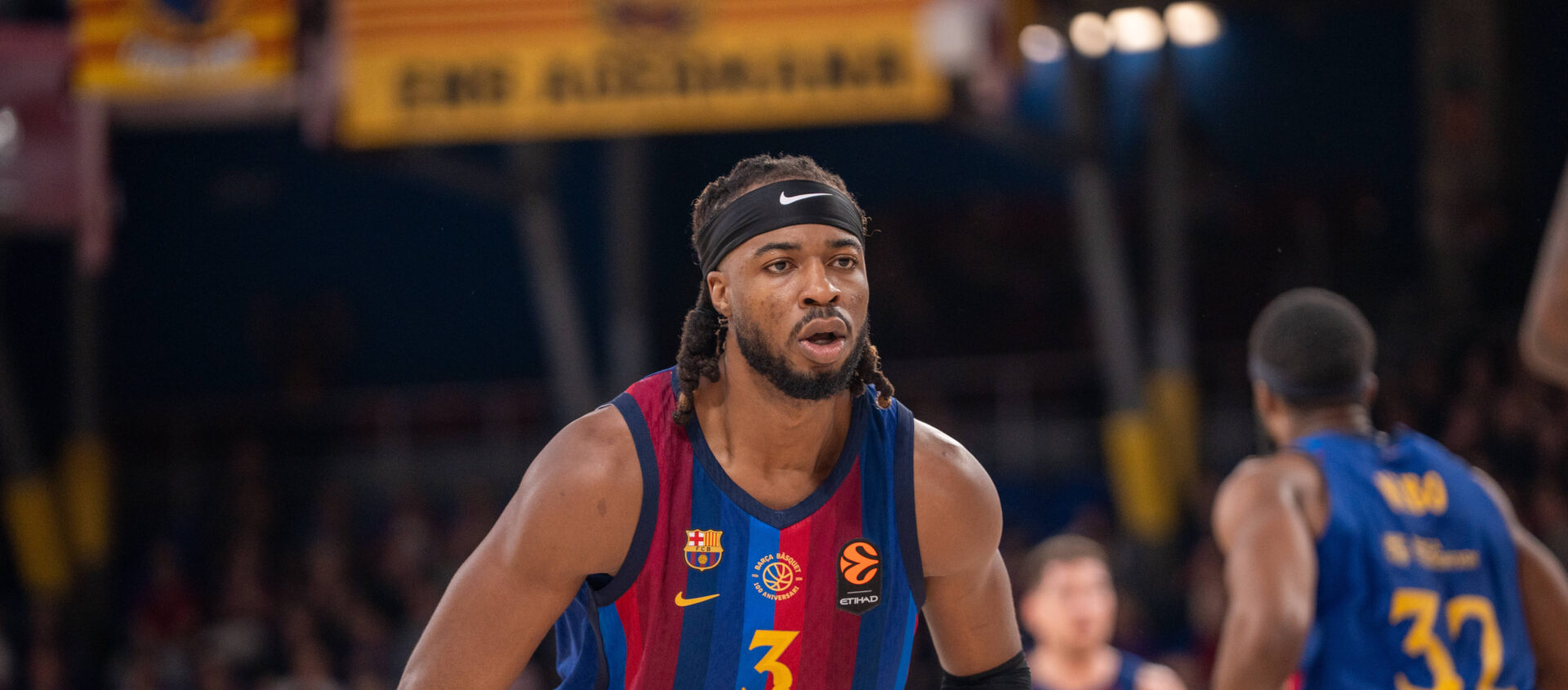
Stanley Umude has shared NBA locker rooms with some of basketball’s biggest names, but his journey has been defined less by star power than by the ability to adapt. From learning alongside Giannis Antetokounmpo and Damian Lillard in Milwaukee to observing Evan Fournier and Cory Joseph during difficult seasons in Detroit, the 27-year-old guard has experienced professional basketball from a perspective that rarely attracts headlines.


Now, in his first season overseas, Umude is trying to establish himself at FC Barcelona, where an almost completely rebuilt roster is beginning to find its rhythm under Aleksander Sekulic.
Born in Portland, Oregon, and raised in San Antonio, Texas, Umude developed into a prolific scorer at South Dakota, averaging more than 21 points during his final college season. His subsequent move to Arkansas required a different approach: less on-ball creation, greater defensive responsibility and a willingness to contribute without dominating possessions.
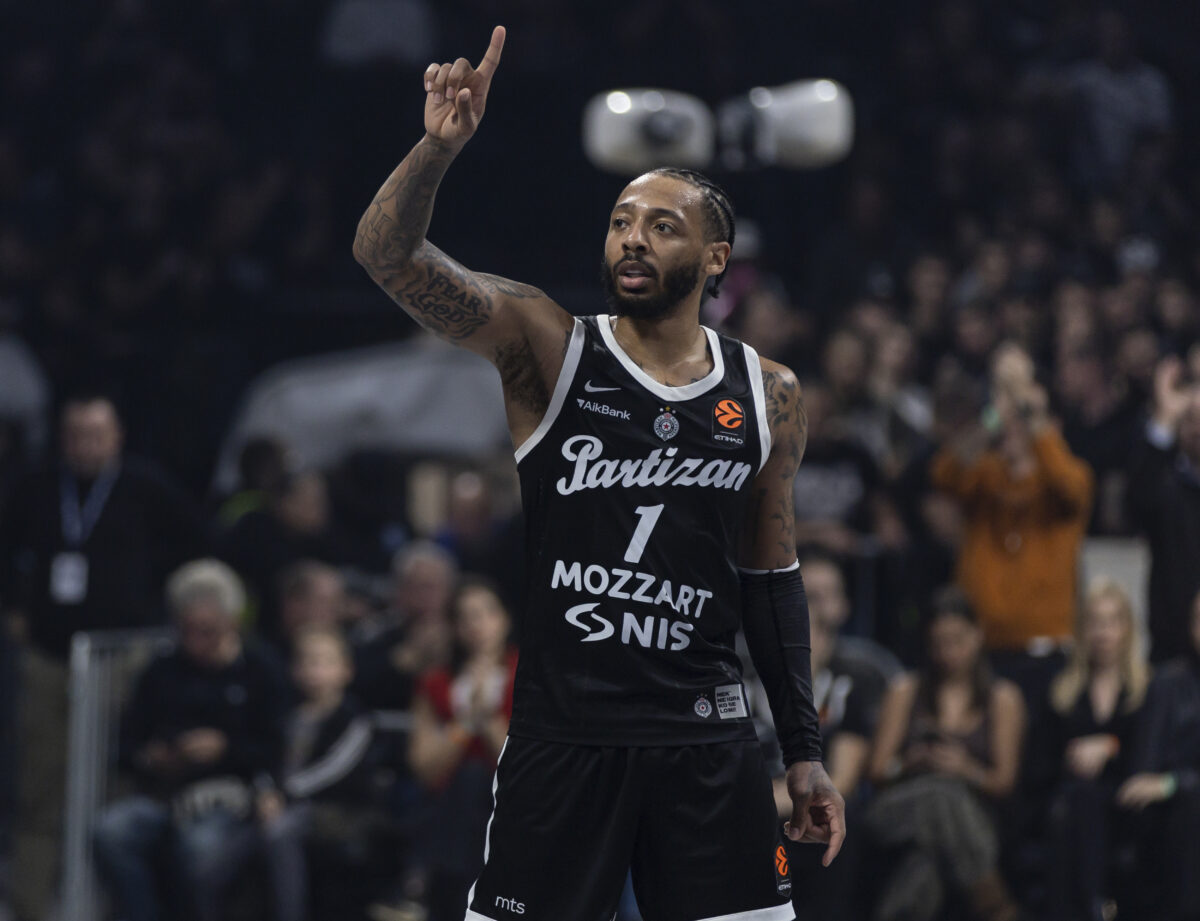
That versatility helped him reach the NBA despite going undrafted in 2022. Stints with the Detroit Pistons, Milwaukee Bucks and San Antonio Spurs followed, alongside extensive experience in the G League. He also belonged to Milwaukee’s NBA Cup-winning team in 2024, gaining firsthand exposure to the habits of established superstars.
Barcelona offered a new challenge in the summer of 2026, signing him to a two-year contract. The Catalan club has since assembled seven consecutive victories and holds a 7-3 EuroLeague record. Through ten European appearances, Umude is averaging 4.7 points, 2.2 rebounds and 1.0 steals in 14.3 minutes, shooting 43.5% from three-point range. His Spanish league averages stand at 6.0 points and 3.6 rebounds across five games.
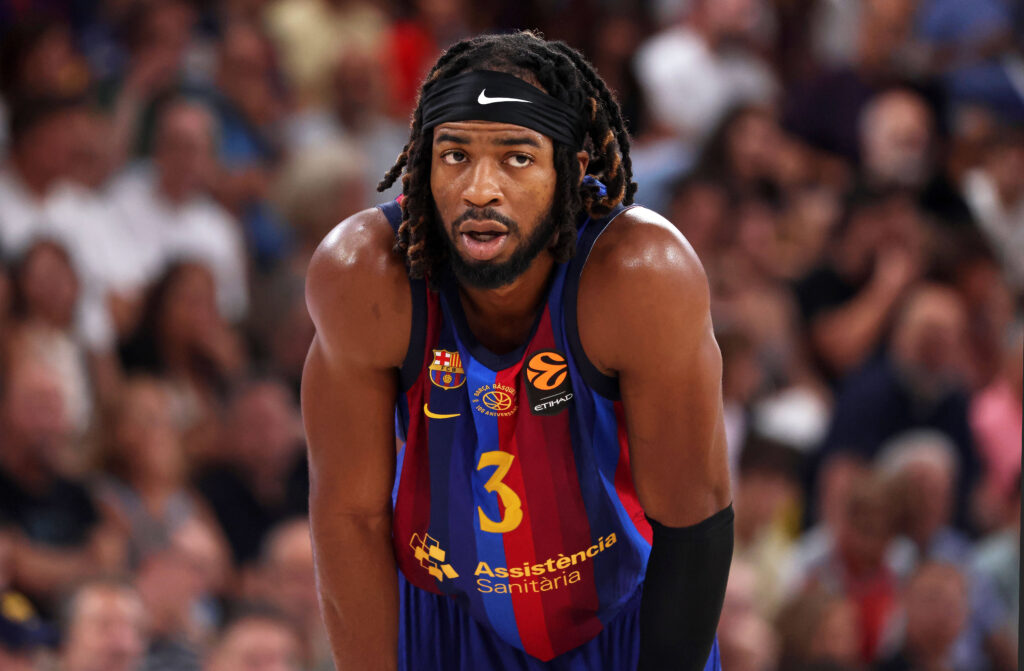
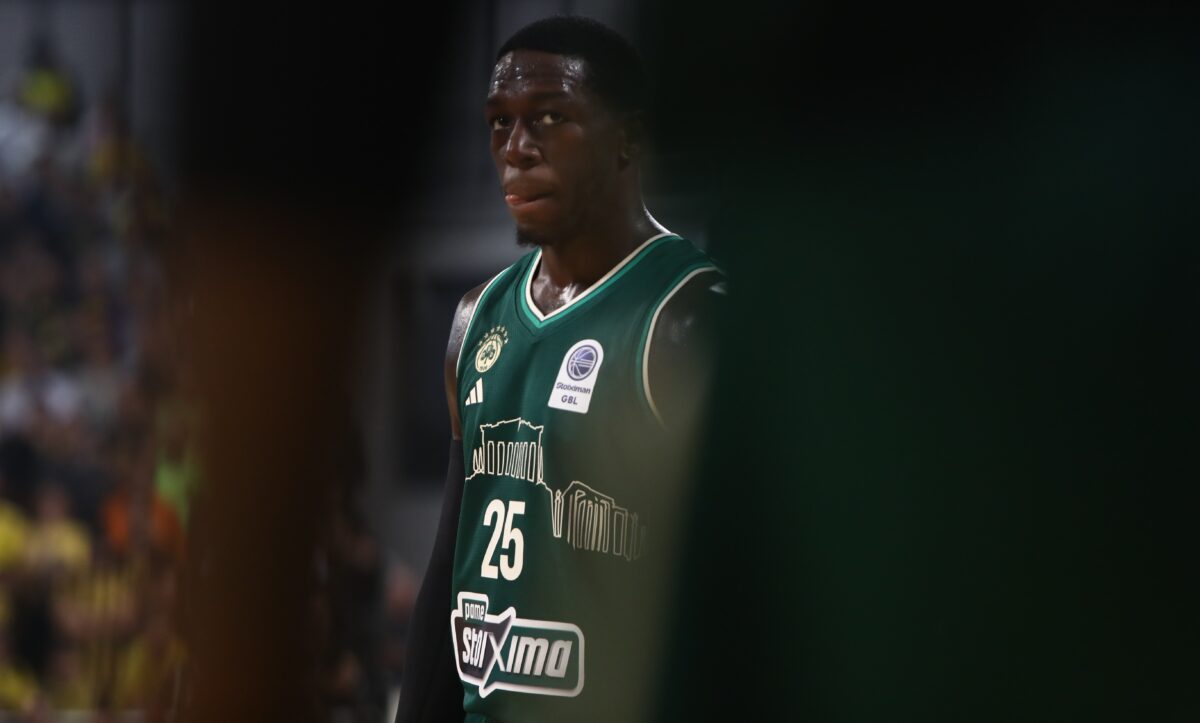
With Kevin Punter and Tosan Evbuomwan sidelined, Barcelona now face an important test against Panathinaikos in Athens on November 13. The injuries could create additional offensive opportunities for Umude, although containing Kendrick Nunn and the Greek club’s considerable individual talent will require a collective defensive effort.
In this interview with SKWEEK, Umude discusses Barcelona’s growing chemistry, his changing offensive responsibilities and the differences between the NBA, G League and European basketball. He also recalls an unexpected encounter with Antetokounmpo at Milwaukee’s training facility, explains what he learned from Fournier and Joseph, reflects on Victor Wembanyama’s dedication to conditioning and addresses whether returning to the NBA remains a priority.
Barcelona’s transformation and growing chemistry
Barcelona have improved considerably after rebuilding almost the entire roster. What has changed the most since the beginning of the season?
“I think, for the most part, we’re just getting to know each other a lot more and figuring out what each other likes to do. One thing that has been consistent with us all year is that we’ve been working hard every day in practice and trying to bring great energy. I think that translates to us playing better together as a team.”
Aleksander Sekulic wants an athletic, physical team that plays fast and defends aggressively. Which part of that identity has been the hardest to establish?
“I wouldn’t say it’s been too hard. We’ve been working on it a lot in practice. I think it’s just time. Spending more time on it makes us better. Obviously, we’ve been getting better, and our offense helps our defense as well. As our offense continues to grow, it’s going to be easier to get stops.”
Adjusting from a leading scorer to a role player
You were a major scoring option in college and the G League, but Barcelona are asking you to contribute in a more specialized role. How difficult is that adjustment?
“It can be hard at times, but I play my role. I’m here to win games. That’s the most important thing for us. Some days I might get five, six or seven shots. Some days I might shoot one or two. But we feel like we have a great team from top to bottom.
It’s not like I come in discouraged about the amount of shots I’m getting or the amount of points I’m scoring. As long as we’re winning and I’m contributing, I’m happy.”
Is there another dimension of your game you’d like to show as the season progresses?
“For sure. Just keep bringing great energy, providing good spacing, scoring more in transition and doing a little bit more off the dribble.”
Replacing Kevin Punter
With Kevin Punter and Tosan Evbuomwan injured, do you see an opportunity to take on more responsibility, particularly offensively?
“For sure. We’re all going to have to step up. Kevin and Tosan are big offensive pieces for us. It’s going to be important for everyone to keep playing with confidence, maybe even more confidence. Everyone has confidence in each other. We all feel like we can make plays, and we’re going to step up.”
How do you replace what Punter provides without asking one player to become Kevin Punter?
“That’s a great question. I would say it’s a collective effort. It’s a team effort. We have a lot of offensive threats. We have a lot of guys who have taken a step back offensively but are capable of doing things on offense. We’re going to need a collective team effort to replace what he brings.”
Facing Panathinaikos and containing Kendrick Nunn
Barcelona’s winning streak now faces a major test against Panathinaikos. What makes playing a team with that much talent, physicality and experience different?
“We know they’re a great team, and we know playing on their home court is going to be difficult. But we’re a team that likes to stay together. We feel like whenever things aren’t going our way, we come together the strongest.
We’re going to keep hanging our hat on our defense, our energy and trusting each other to go in there and hopefully come out with a win.”
Against a player like Kendrick Nunn, how much of the challenge is physical and how much is about anticipating what he’ll do next?
“Anticipating is a big thing. We’ve got to be locked in on our scouting and our game plan. Obviously, I can guard multiple positions, but I’m only as good as the team behind me, with the help in the gaps and all of that.
It’s important for all of us to be locked in. When he has the ball, we have to make sure we’re doing what we need to do.”
Would you say Nunn is Barcelona’s main concern in this game?
“They’ve got a lot of great players. We’re going to try to play team defense, and obviously we don’t want him to go off. But they have a lot of great players, so we’re going to have to be locked in on our scouting and make sure we take care of what we need to.”
What Evan Fournier and Cory Joseph taught him in Detroit
You shared a locker room with Evan Fournier and Cory Joseph in Detroit. Now you’re facing them in the EuroLeague with Olympiacos. What did you learn from those two veterans?
“I would say the professionalism they brought every day. I remember we were struggling that year in Detroit with Evan, and the year before, I think, with Cory. But they still brought the same energy.
They were great teammates, took care of their bodies and were always early. Those professional, day-to-day habits are the things I took from them. They were great veterans for me early in my career.”
Did you have a chance to catch up with them when you played against Olympiacos?
“For sure. I talked to Cory a lot after the game, and I spoke with Evan too. It was good to see them, playing against them now and seeing them here. Knowing that they can still look out for me if I have any questions about the EuroLeague or things like that feels good.”
Did either of them give you advice about making the move to Europe? Did they tell you anything about the expectations surrounding Olympiacos?
“No specific advice. When I spoke to them, they said I’m going to be all right here and that they can see me being a good player. I didn’t hear anything about expectations. It was just a regular catch-up.”
When you see Fournier playing such an important role in European basketball, does it change your perception of what an established NBA player can achieve here?
“I know that whether you’re coming from the NBA or even if you haven’t played in the NBA, a lot of times it comes down to situation and opportunity. Also, the work you put in every day. You can start off wherever, and if you put in enough work, you can get to that level.
It’s definitely inspiring to see the way he’s made a career for himself out here. It’s a testament to the hard work you have to put in every day.”
Giannis Antetokounmpo: The side fans rarely see
You spent a season in Milwaukee alongside Giannis Antetokounmpo and Damian Lillard. What did you learn about Giannis that you couldn’t possibly understand just by watching him play?
“Just how funny he is as a person. Obviously, he’s really intense on the court, but he’s a really good guy, really funny and family-oriented. He’s a character off the court and on the court. That’s one thing people wouldn’t be able to see.”
Was there a particular practice, conversation or moment that showed you what separates him from other NBA superstars?
“I wouldn’t say there was one specific moment, but I remember one time we had a conditioning test for the team. I did it with a lot of the younger guys. I don’t think Giannis was there.
But I came in on an off day to get some work in, and I saw him doing the conditioning test by himself. That was inspiring to me. It was before training camp started, so it was a big moment for me going into the season.
It showed me that he doesn’t think he’s above anything the team has to do.”
How did he treat players like you who were fighting for a permanent place in the NBA?
“He treated us all with the same amount of respect. That was important for me. Damian Lillard as well. That was a great team for me because there were a lot of veterans, and we were a really good, family-type team. It was fun.”
You’ve spent time alongside both Giannis and Victor Wembanyama. How would you compare their approach to improving their game?
“For Victor, when I was doing training camp with the Spurs, I saw him doing a lot of extra conditioning. Taking pride in being in the best shape you can be and taking care of his body were the biggest things that stood out to me when I was around him.”
Why G League production doesn’t guarantee an NBA career
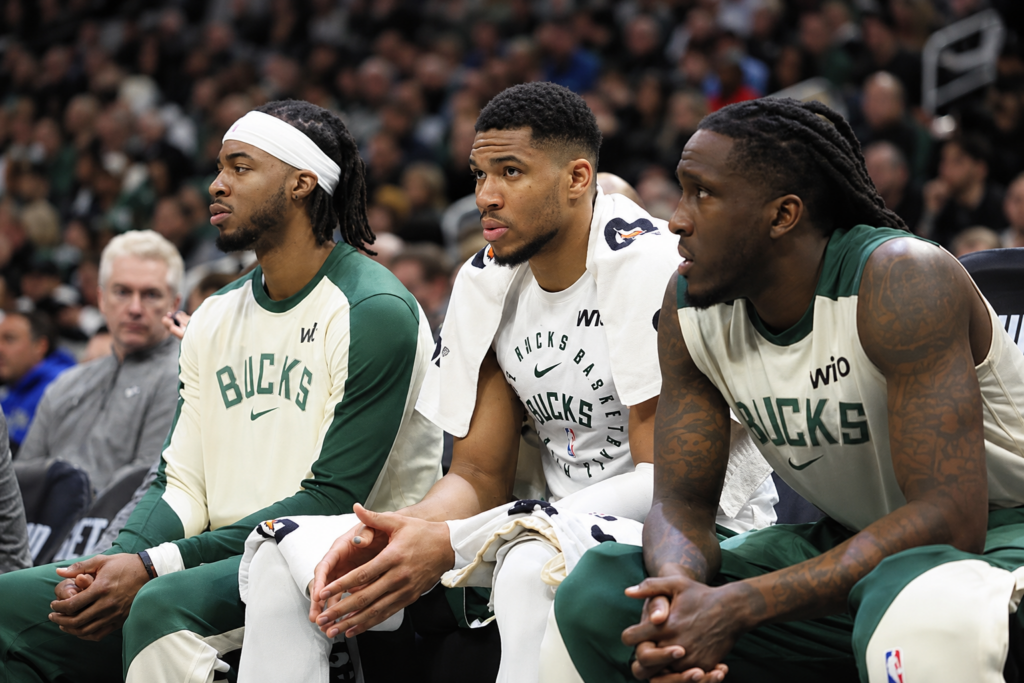
You won the NBA Cup with Milwaukee in 2024, but weren’t getting consistent playing time. How do you stay mentally engaged when you might not even step on the court?
“For me, it was doing things I felt were helping the team, even if I wasn’t playing. Maybe that’s me being the loudest guy on the bench or going super hard in practice when I know I’m not going to get into the game.
I feel like that makes a difference. It keeps people on their toes and helps keep people in shape. We played five-on-five in practice. Just staying locked in, going hard and being a good teammate. All that stuff matters.”
You had a productive G League season and earned another NBA opportunity with San Antonio. What does it actually take to convince an NBA franchise that your game can translate?
“It’s really not about scoring a lot of points. It’s about what you can do to help the team. Most of the time, it’s about what the team needs more than what you’re doing. In the G League, you have to stay locked in and control what you can control. I truly believe that eventually you’ll get your opportunity.”
Can dominating in the G League eventually stop helping a player’s career because NBA teams already have a fixed idea of what he can offer?
“For sure. I definitely think that’s the case with a lot of players who dominate in the G League. But a lot of times those guys do get opportunities toward the end of the season, when teams have injuries and might need what they can bring.
So I think it goes both ways.”
The physicality and intensity of European basketball
Beyond the obvious differences in spacing and playing time, what has surprised you most about European basketball?
“I’d probably say the ACB League. I knew it was one of the better leagues in Europe, if not the best league in Europe. The speed of the game, the physicality and the intensity are the biggest differences I’ve noticed.”
You’ve said every possession feels more intense here. Is European basketball harder than you expected, and do you sometimes have less freedom on the court than you did in the NBA?
“That happens. It happens in the NBA, and it happens over here. Sometimes you just might not be involved as much. But I wouldn’t say it’s harder than I expected. I knew it was going to be hard. I had a lot of friends and people I knew who played in Europe, and they let me know that playing here is no joke.
The intensity from the fans, the intensity from the coaches, all of that is a lot more. But it’s definitely not harder than I expected, and I feel like I’m adjusting well.”
Who helped prepare you for that adjustment?
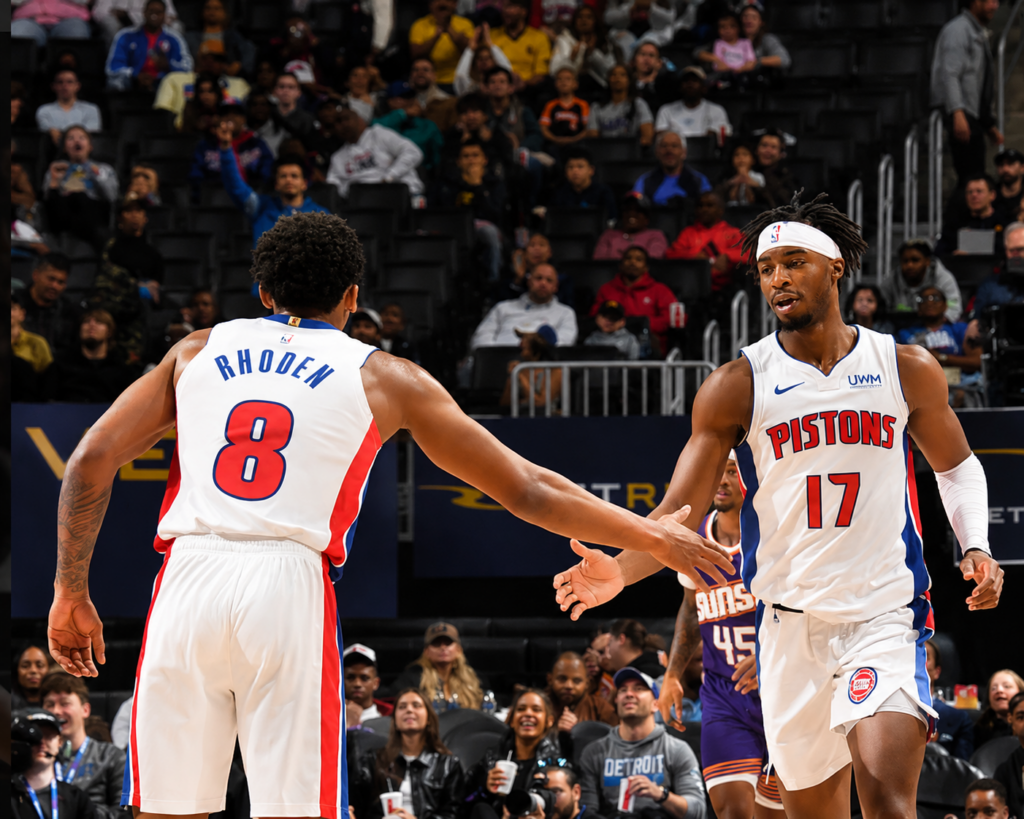
“Jared Rhoden is one of my former teammates from Detroit. He plays for Paris now, and he was letting me know that he had to adjust. He’s playing well now and having a good season.
Just talking to players who have played here helped me understand what to expect.”
From South Dakota’s leading scorer to a versatile professional
At South Dakota, you averaged over 21 points in your final season. At Arkansas, you became more of an off-ball scorer and defender. Has constantly adapting prevented you from fully developing your offensive identity?
“No. I actually take pride in my basketball journey and how I’ve had to adapt. I tell people all the time that if you look at my South Dakota film, it’s going to look like a completely different player.
But it’s not like I can’t do those things anymore. I’m just going to adapt to what the team needs and adapt to the sport as well. That year at Arkansas was big for me.
It helped me get to the NBA because I showed teams I wasn’t just an on-ball scorer. I can score off the ball. I can guard one through four. I take a lot of pride in my ability to adapt to literally any situation on the basketball court.”
Does that adaptability extend to your surroundings away from basketball?
“Yes, my surroundings as well. I played in South Dakota, Arkansas, a lot of different states, and now I’m in Barcelona. My ability to adapt has been really good.”
Barcelona, the NBA and fans in Europe
You’ve signed a two-year deal with Barcelona. Would becoming an important player on a EuroLeague contender mean more to you than returning to the NBA in a limited role?
“We’ll see. I wouldn’t say it would mean more to me. Whatever opportunity is best for me is where I would be. It’s not like I came here thinking I want to get back to the NBA.
I came here to play for Barcelona and be part of a good, historic franchise. That’s the most important thing for me.”
If you eventually had to choose between a significant role in Europe and another chance to fight for an NBA roster spot, what would matter most?
“That’s not really a decision I think about. Right now, I’m just focused on what I’m doing here, being where my feet are. That’s the most important thing for me.”
Looking at the bigger picture, has anything about the EuroLeague exceeded your expectations?
“I heard the fans are really engaged here, and that’s the biggest thing for me. I’ve really appreciated how the fans have embraced us, how they show up every night and the energy they bring to the arenas. That’s the biggest thing I’ve been excited about.”