

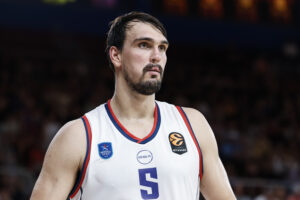


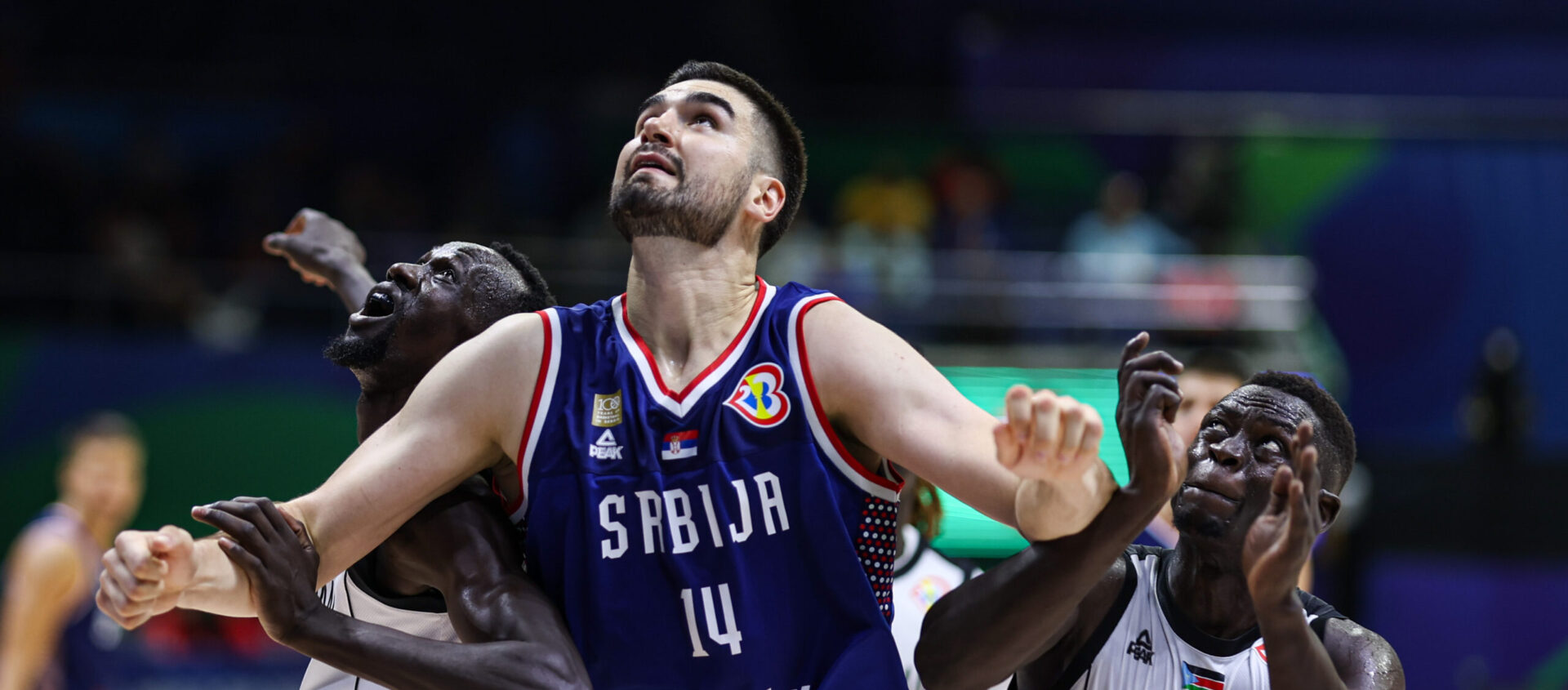

FIBA qualification windows are far from a perfect solution for basketball. Few fans would argue otherwise.


Still, those same windows have produced heroes who might never have had the opportunity to shine without them.
Some players define their national-team careers through medals and highlights. Others do it by always showing up.
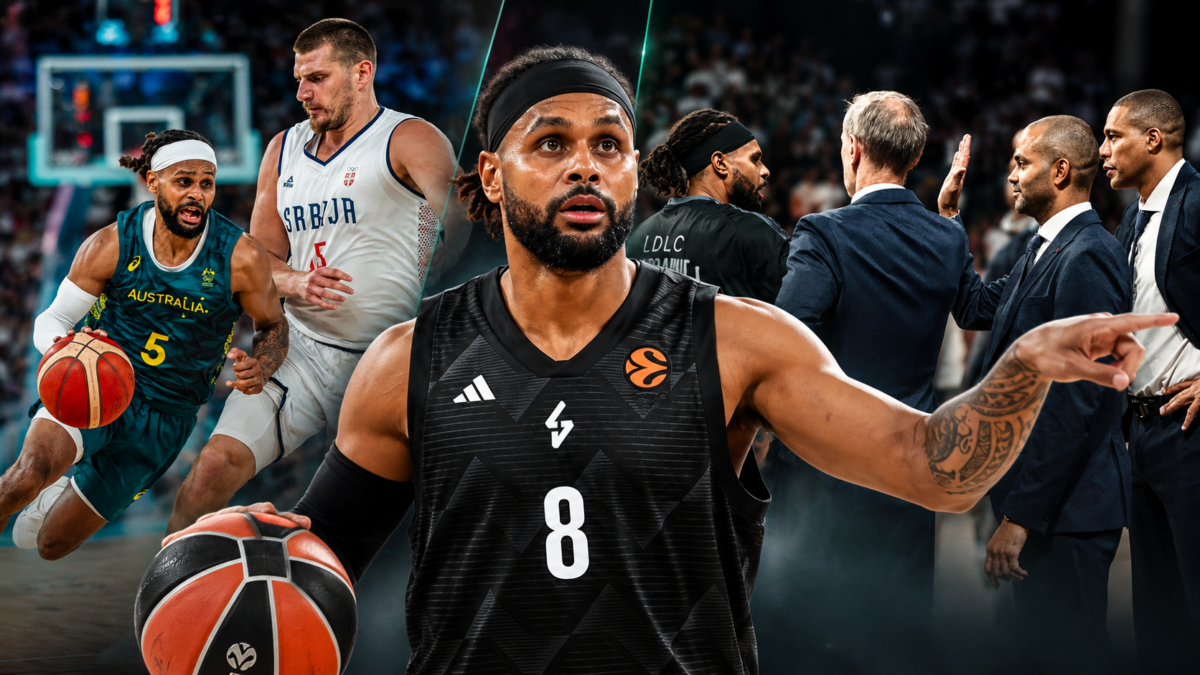

Dušan Ristić belongs firmly in the second group.
Among Serbian basketball fans, he has earned a fitting nickname along the way: “FIBA Q GOAT.”
The Novi Sad native has become one of the faces of Serbia’s FIBA qualification campaigns – always ready and always comfortable with whatever role the team requires.
Last November, that commitment meant leaving Japan while his wife was pregnant and crossing more than 10,000 kilometers to answer Serbia’s call once again.
One date Ristić will never forget is November 14, 2022.
In a crucial World Cup qualifying game, Serbia defeated Turkey 77-76, and Ristić finished with 16 points and four rebounds, including three massive three-pointers in the fourth quarter.
Serbia qualified for the World Cup.
The rest is history.
In the current qualification cycle, Ristić poured in 24 points in a 23-point victory over Switzerland.
Now he has once again been named to Dušan Alimpijević’s roster for the upcoming games against Switzerland on July 2 and Bosnia and Herzegovina four days later.
That made it the perfect opportunity to catch up with the 30-year-old center, who spent last season playing in Japan.
Silent Hero
How much have these FIBA windows shaped your career, and how do you look back on everything you’ve accomplished in them?
They have played a huge role in my career so far. I believe there is no greater honor for a basketball player than representing his country, whether it’s in qualification games or major tournaments.
The qualifiers are required for competing at the biggest events, which makes them extremely important for Serbian basketball, especially when our best players are unavailable.
My role in those situations is to help the team and be a “silent hero.” I’m proud of what I’ve contributed to the national team and I’ll continue doing my best for as long as the team needs me.
What are your memories of that famous game against Turkey at Pionir?
It’s one of the most memorable games of my career, primarily because of how important it proved to be for our national team later on.
At the time, I wasn’t fully aware of how significant that game would become, but I’m very happy that I managed to help the team in key moments with those three-pointers and contribute to the win.
I Keep the Medal in the Nightstand Next to My Bed
Is Manila (winning silver at the World Cup) the peak of your career?
At this point, I would say it is.
Everything about that team and that summer holds a special place in the hearts of everyone who was part of it. We weren’t given many chances and expectations weren’t particularly high, yet we managed to achieve something historic, largely thanks to the incredible chemistry within the group, which later translated onto the court.
What does that World Cup silver medal mean to you today?
It’s in my bedroom, in the nightstand next to my bed.
It often reminds me that all the sacrifices and effort you put into the national team eventually pay off. Whether it’s flying more than 10,000 kilometers from Japan or traveling from Spain after an exhausting stretch of games while carrying enormous fatigue, those moments make everything worthwhile.
Missing Paris, Flying 10,000 Kilometers From Japan
Do you still feel any regret about not being part of the Olympic team in Paris?
Of course there’s some regret because the Olympics are the biggest sporting event in the world.
At the same time, I don’t have a single negative emotion when I think back on that period.
I accepted coach Pešić’s decision stoically and never spent much time dwelling on it afterward.
You’re back again, as always. What’s your relationship with head coach Dušan Alimpijević like?
Excellent.
When he called me last November, I honestly wasn’t sure whether the team still needed me. After the European Championship, it seemed logical that some younger players would get an opportunity.
When he told me he still counted on me, I organized the entire trip within a matter of hours and arranged for my sister to travel to Japan so she could stay with my pregnant wife.
The trip was not easy at all.
But the faith the coach showed in me, along with giving me the captain’s armband and the performances I had during that window, helped me overcome all the fatigue.
After that, I made it clear to him that I will always be available for the national team, for as long as I still have something to offer.