







There are cities where basketball is a sport. And then there’s Bologna, where it’s deeply rooted in the city’s identity and culture.


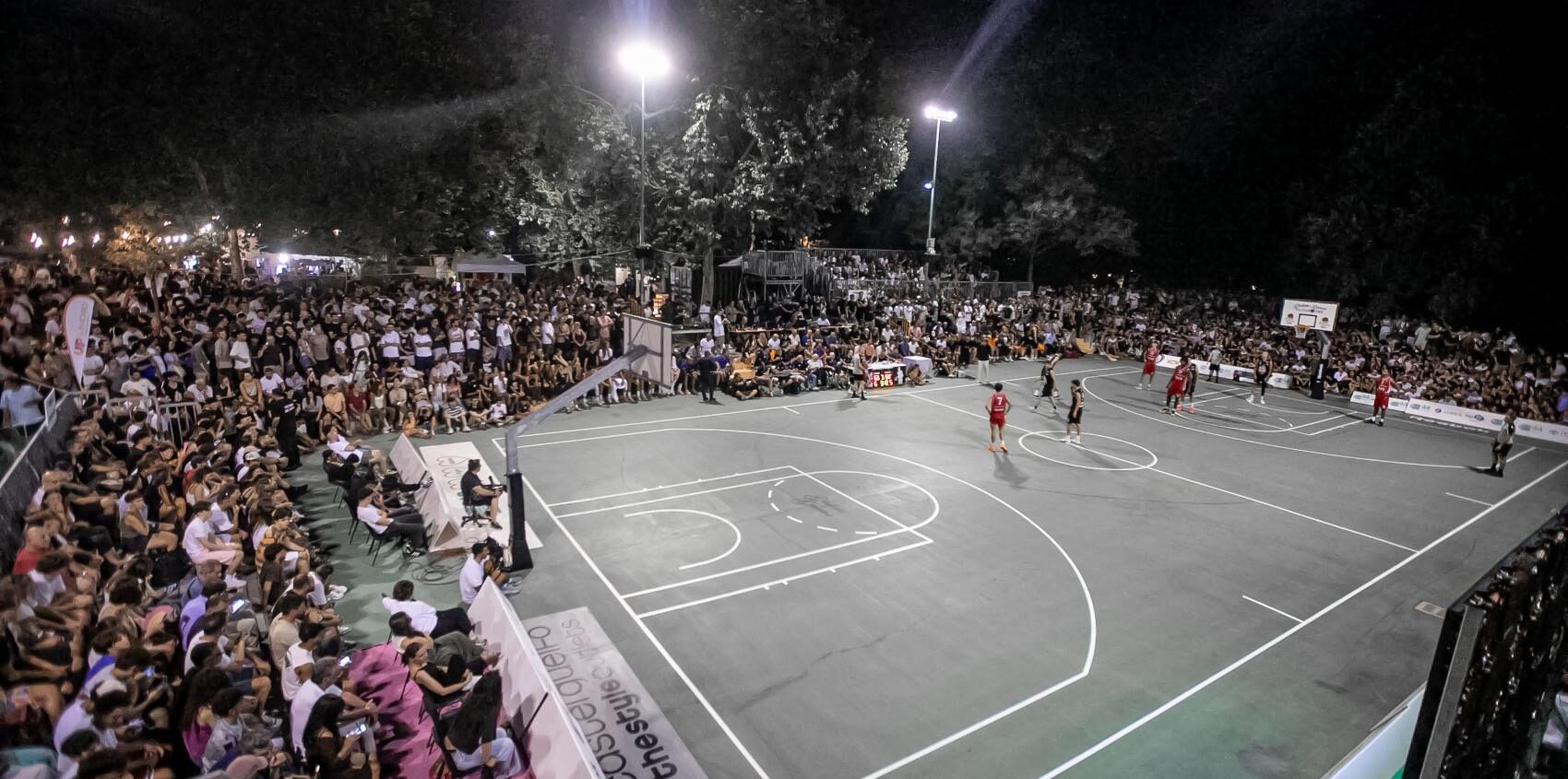
And yet, one of its greatest basketball stories was not born under the lights of PalaMalaguti or PalaDozza. It took shape on a basketball court hidden among the trees of a public park — a humble court that became a legend and a place where the story continues to unfold every summer.
In the heart of July, SKWEEK travelled to northern Italy to experience that story firsthand, arriving in Bologna for the final of the Giardini Margherita tournament that transformed a playground into one of the most iconic basketball spots in Europe.


To get a feel for the story, play this.
Ver esta publicación en Instagram
Known around the world as Basket City, the capital of Emilia-Romagna has always lived the game in a way few places can match. A city where the game is not simply watched, but lived, shared, and carried from one generation to the next.
During the 1990s, that identity was shaped by two historic clubs — Virtus and Fortitudo — and a rivalry that went far beyond the court. The battles between Sasa Danilović and Carlton Myers, the packed arenas, and the unforgettable nights turned Bologna into one of the true capitals of European basketball.
But the story of Bologna’s basketball culture was never written only inside arenas.
On the southern side of Bologna’s historic center lies Giardini Margherita, the city’s largest public park. Opened in 1879 and stretching across around 26 hectares, it was named after Queen Margherita of Savoy and has become one of Bologna’s most cherished spaces.
And somewhere among those trees, in a city where basketball is part of everyday life, there is a basketball court.
A simple outdoor playground, surrounded by nature and shaped by decades of games, friendships, and stories. It may look like just another court, but for generations of players, it has become something much more.
“Sugar-mania” takes over the Gardens
This is the magic of Giardini Margherita: a place where strangers arrive to play and leave as part of a shared story — where even Michael “Sugar” Ray Richardson once joined the players on the court!
The former NBA star, after a career marked by greatness and personal struggles, found a second basketball life in northern Italy. After receiving a lifetime suspension from the NBA, he arrived in Bologna and became one of the defining figures of Virtus during the 1988-91 period — an era forever remembered as “Sugar-mania”.
Years later, at the age of 43, “Sugar” returned to Giardini Margherita to prove that he still belonged on a basketball court. Around 5,000 people gathered around the playground to see him again, reconnect with memories, and relive the moments that made him a Bologna icon.
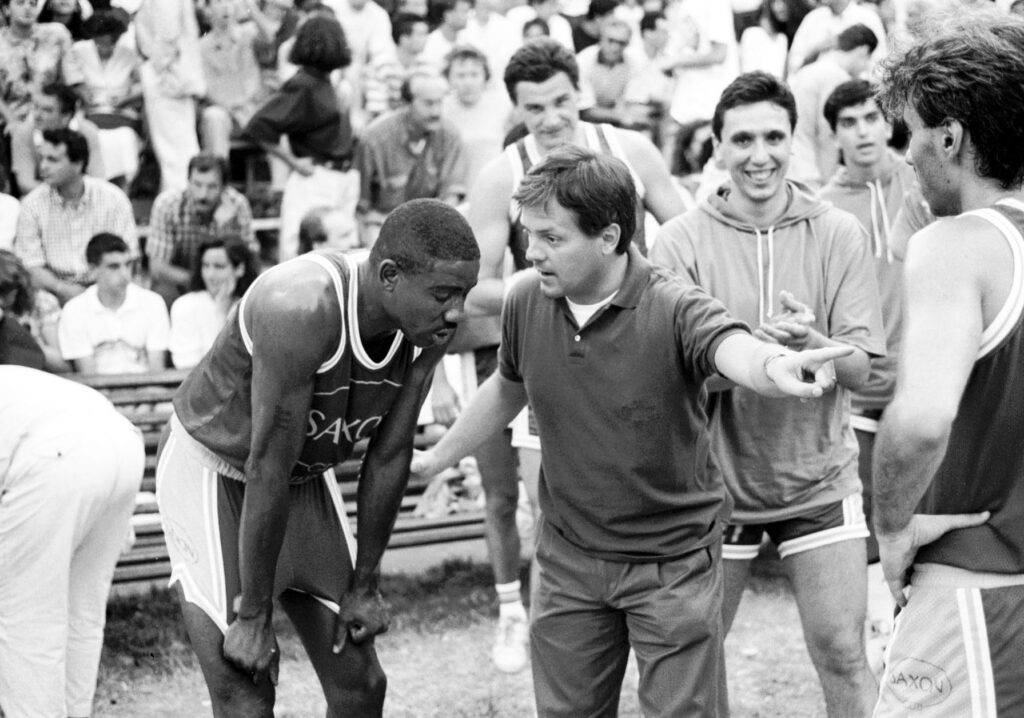
For more than four decades, Giardini Margherita has been the summer meeting point of Bologna’s basketball community.
From June until mid-July, an entire city repeats the same phrase:
“Andiamo ai Giardini.” – “Let’s go to the Gardens.”
It is not just an invitation.
It is a ritual.
A meeting point, which became a tradition. A playground that transformed into a landmark. A place where professional players, local heroes, unknown competitors, coaches, and fans have shared the same concrete.
Because Giardini Margherita is not just a tournament.
It is a piece of Bologna’s basketball soul.
More than a playground: a place full of stories
During our visit to Bologna for the tournament final, we sat down with Simone Motola, the main figure behind the organization of Giardini Margherita, to understand how a simple outdoor court became the most iconic playground in Italy.
There are iconic arenas that host legendary teams. But there are also small courts that hold great stories. Why do you think the Giardini Margherita playground has become one of them?
I think a big part of the answer lies in Bologna — a city where basketball has always been part of its identity. The tradition never stopped, except in 2020 when COVID-19 brought everything to a halt. And between the late 1980s and the late 1990s, many prominent Italian players came here to play at least one game, helping the tournament grow and become one of the most recognized basketball events in Italy.
If someone who had never been to Bologna asked you to describe the Giardini Margherita experience without using the word “tournament”, what would you tell them?
It is all about the celebration of outdoor basketball, where the love of the game goes hand in hand with the desire to win. It is a place where a coach running a team with a beer in his hand is not an exception — it is simply part of the experience.
How is it possible that a playground in a public park has built a legacy greater than many indoor arenas that are home to professional teams in Basket City?
It starts with Bologna — a city where football has never overshadowed basketball the way it has in places like Rome or Milan. It also comes down to people like Alessandro Gallo and Raffaele Ferraro, who, across different eras, told the story of a tournament that kept growing, while Italy’s great summer basketball tournaments were slowly disappearing, one after another.
Bologna lives through a unique basketball identity, with two historic worlds: Virtus and Fortitudo. How has that basketball culture influenced the DNA of Giardini Margherita?
I think the influence was there only in the very early days, when the junior teams from Virtus, Fortitudo, and many other important but smaller clubs helped create the tournament. After that, the influence became more indirect. When Virtus and Fortitudo were dominating European basketball, fans would arrive in June already satisfied, and perhaps less interested in the tournament — except when the finals came around.
The playground is a place where fans from different teams can come together. Is it perhaps the only corner of Bologna where basketball can rise above rivalry?
I hope so. It has to remain a celebration of basketball, a place where rivalries take a back seat and the love of the game comes first.
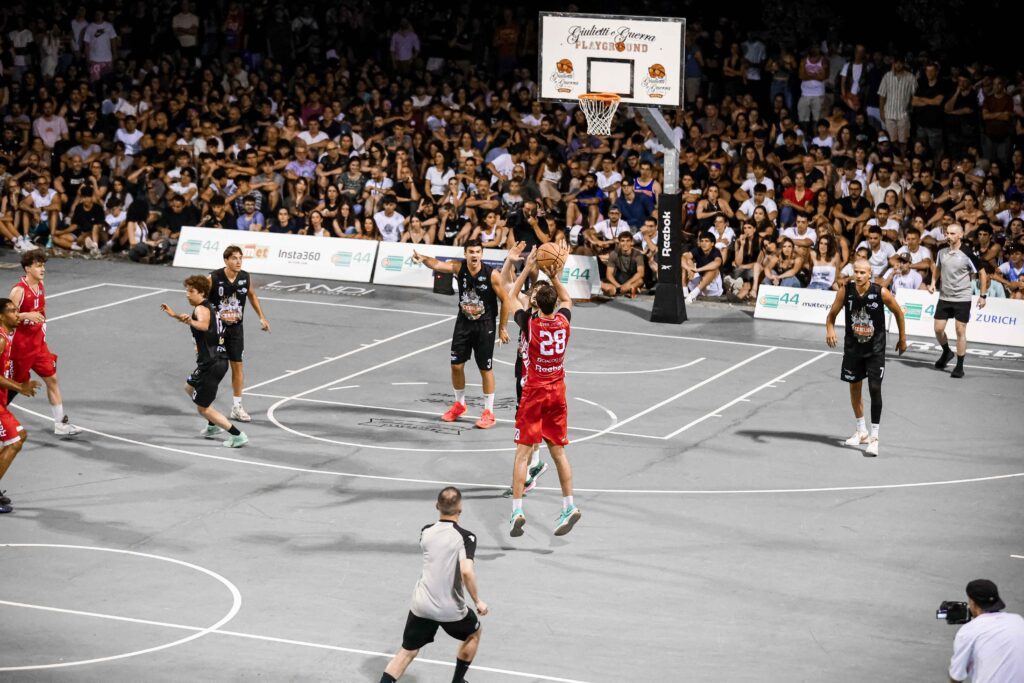
Do you think that, without Bologna’s basketball culture, a phenomenon like Giardini Margherita could have existed? Or was it the playground itself that helped create that culture?
I think that if Giardini Margherita had been born in another city, it probably would have already disappeared, like many other tournaments, or remained a small 5-on-5 competition like the ones held across Italy every summer. What we have here is different: it is more than a tournament; it is a small championship that lasts five weeks. A unique example in Italy.
More than four decades of history mean thousands of players, stories, and unforgettable nights. What is the first and most powerful moment that comes to mind when you look back on more than four decades of history?
The night in 2022 when the Drew League players came to play here. It felt like the end of a story — the story of the kids who, back in 1982, wanted to imitate the Americans and created a tournament on one of the countless playgrounds scattered across Bologna.
What was the moment when you realized that this was no longer just a summer tournament, but a true institution?
There was no single moment. Over the years, the tournament became more and more important for our city. The 2021 edition, however, without Walter Bussolari and with all the challenges brought by COVID-19, was a turning point. It made us realize that Giardini Margherita was not just a tournament anymore — it had become part of Bologna’s identity.
Was there ever a moment when you feared that the magic of Giardini Margherita could be lost?
After the 2007 edition, which ended with the only brawl in the tournament’s 44-year history. Those next two or three years were, I believe, the most difficult period we ever faced. But Giardini found its way back, and in 2017 we expanded the story by adding the women’s tournament.
How do you protect the authenticity of an event that continues to grow without turning it into just another “product”?
It is a difficult question to answer. I believe it comes down to the people involved: myself, the tournament staff, and most of the people who organize the teams. They are the ones who protect what makes it special — the imperfections, the jokes, and the human side of the tournament. Those are the things that make Giardini Margherita an environment unlike anything else, probably unique in Europe.
The Playground has changed over the years. What about the people? What has remained the same since the early days?
The location is the one thing that has remained the same. The Playground has never moved, even though it has been rebuilt several times. Unfortunately, none of the original 1982 staff members — Massimo Romeo, Stefano Muratori, Stefano Dall’Ara, and others — are still involved today. Walter Bussolari joined in 1984 and is no longer with us. I joined in 1990, and I guess I am the last link to that original generation.
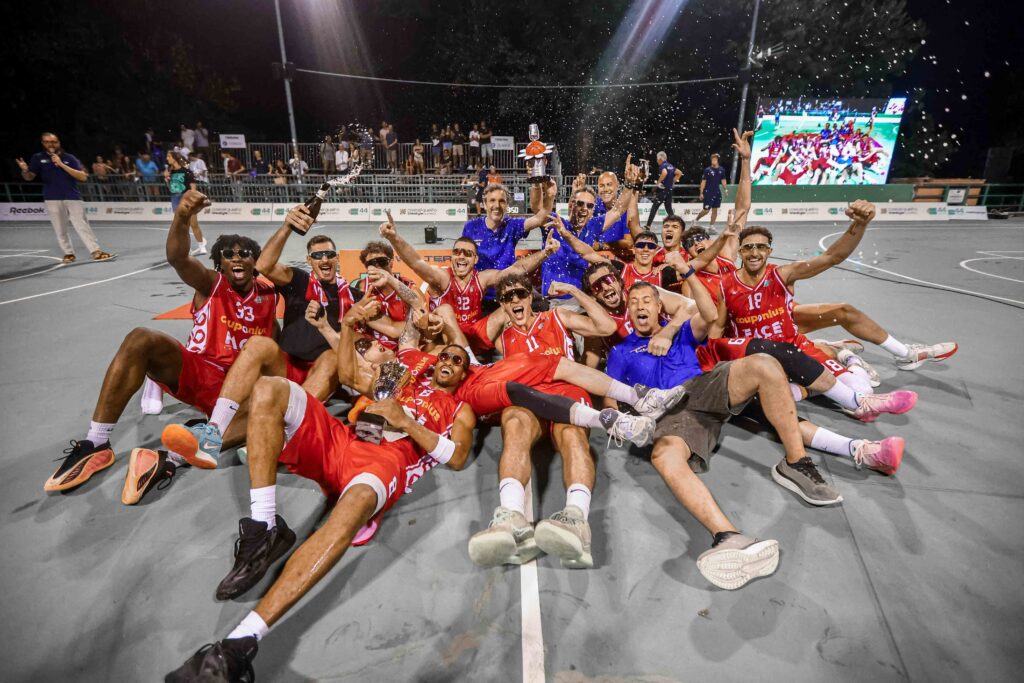
Is there a story from a night at Giardini that has never been told?
My own post-tournament nights were usually spent having dinner at Mulino Bruciato, so I am more of a witness — not a direct one — to the stories of nights spent in clubs and elsewhere, especially after a victory in the final. There are certainly other people who lived those moments firsthand, like, for example, the journalist and tournament coach Jack Bonora.
Which great player who came through Giardini surprised you the most as a person?
I have wonderful memories of so many famous players. Honestly, I wouldn’t say there is one player who surprised me more than the others.
Who is the “hero of Giardini” who may never appear in history books, but deserves to be remembered?
The hero of Giardini, the Achilles of the Iliad, does not exist. But there are many unknown players who have written the history of the Playground — first as the most famous outdoor court in Bologna, and later as part of the tournament’s story.
“Macho” Forni, the undersized center who left more sweat on the court than anyone else. Gabriele “La Tenebra” Filippi, who, while working in the United States, knew many American coaches and players — P.J. Carlesimo, for example, came to watch the tournament one evening after being invited by him. “Manzo”, the son of the park’s caretaker. And then there were those who played at a good level and left their mark without ever becoming stars: Paolo Zanardi, for example, the man who blocked Michael Ray “Sugar” Richardson and who, at the peak of his career, played in Italy’s fourth division.
Has there ever been a moment when you thought: “What is happening here cannot happen anywhere else”?
Yes, the night of the Drew League game against Ciaccio Casa. I believe it will always be remembered as “the game” in the history of the tournament.
How does a tournament with 44 years of history adapt as society, basketball, and the way we experience sport continue to change?
We try to combine tradition and innovation. For example, the LED wall allows people to follow the game statistics even if they are at the bar and only watching casually. Technology should help bring the tournament into the homes of as many people as possible. We have had our app for around 10 years.
Today, the tournament costs ten times more than it did 20 or 25 years ago. That is why we created a service company, Bussolair Srl, to support the technical side and make sure the tournament can continue to exist without losing its independence.
What is the biggest challenge for the next 44 years of Giardini?
To reach 12 teams in the women’s tournament and, if possible, to have a foreign team taking part every year on a rotating basis — for example, women’s in 2027, men’s in 2028, and so on.
The ultimate goal is to reach a point where we are no longer searching for teams abroad — they are the ones looking to be part of Giardini, as I believe already happens with Quai54.
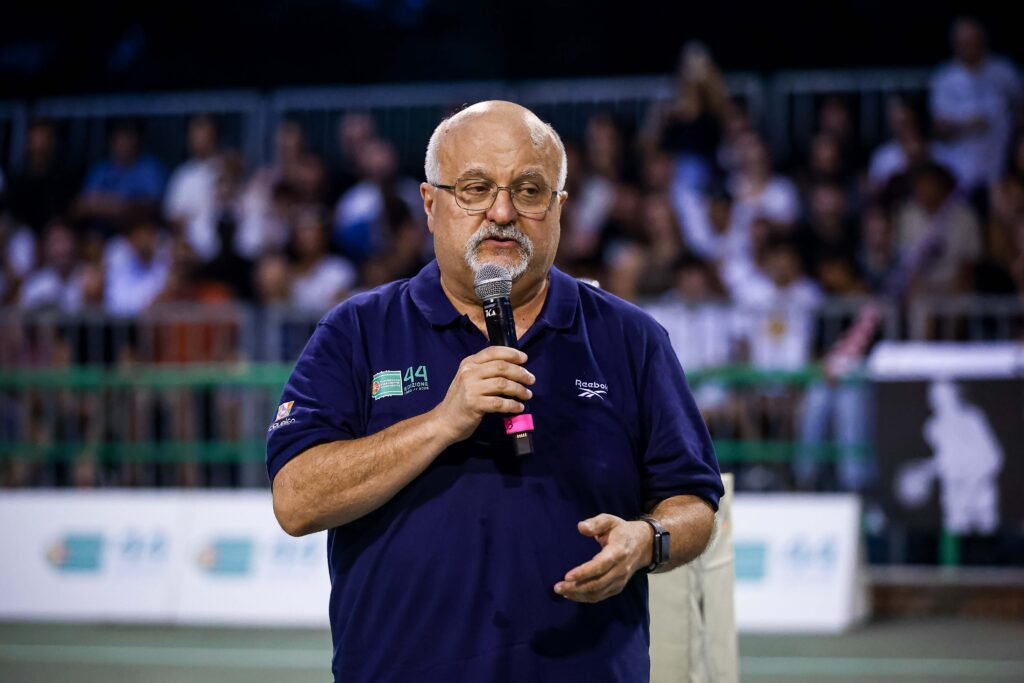
Would you like Giardini to keep growing, or do you fear that too much growth could take away some of its magic?
The tournament takes place inside a public park, and we cannot think about going beyond a certain limit. The trees, for example, already limit how much we can expand the stands. The Food & Beverage area cannot grow much beyond what it is today.
Where we can grow is through the activities around it — other events that can bring more attention to the area through Gardens Sport Village, rather than trying to make the tournament itself bigger.
If a child stepped onto the Giardini court for the first time today, what would you like them to feel?
To experience the joy of making a basket, even when they know that the hoop at 3.05 meters feels impossibly high. Seeing a 6- or 7-year-old child achieve that small miracle is something that always moves me.
Which person would you like to see sitting courtside again, enjoying a game at this court?
Definitely the people who are no longer with us: Walter Bussolari and Claudio Cavana, two important figures behind the organization. Then there are famous names like Lucio Dalla and Marco Pantani, and tournament legends such as Riccardone Di Cesare, Claudio “Moses” Gambini, and many others.
Photo credits: Bianca Costantini, Vincenzo Delnegro, Matteo Bergami.
Special thanks to our good friend and colleague, Raffaele Ferraro, for his invaluable support.