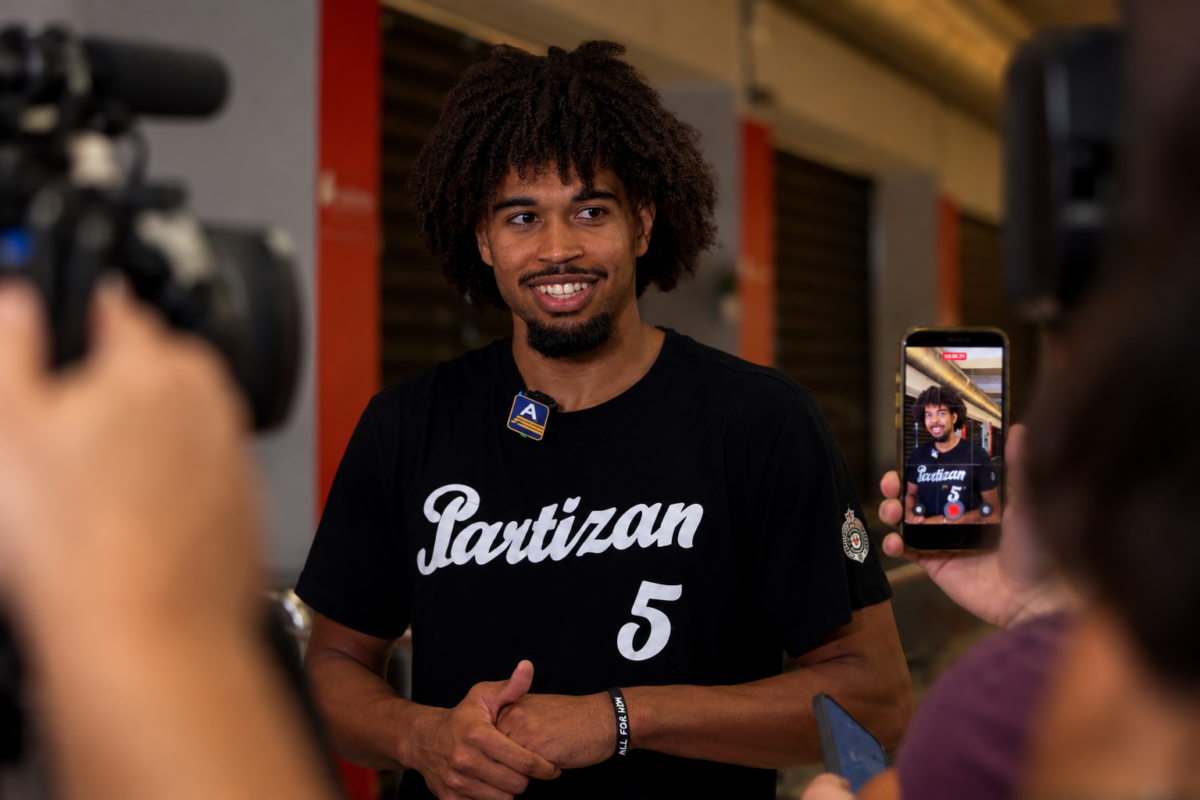

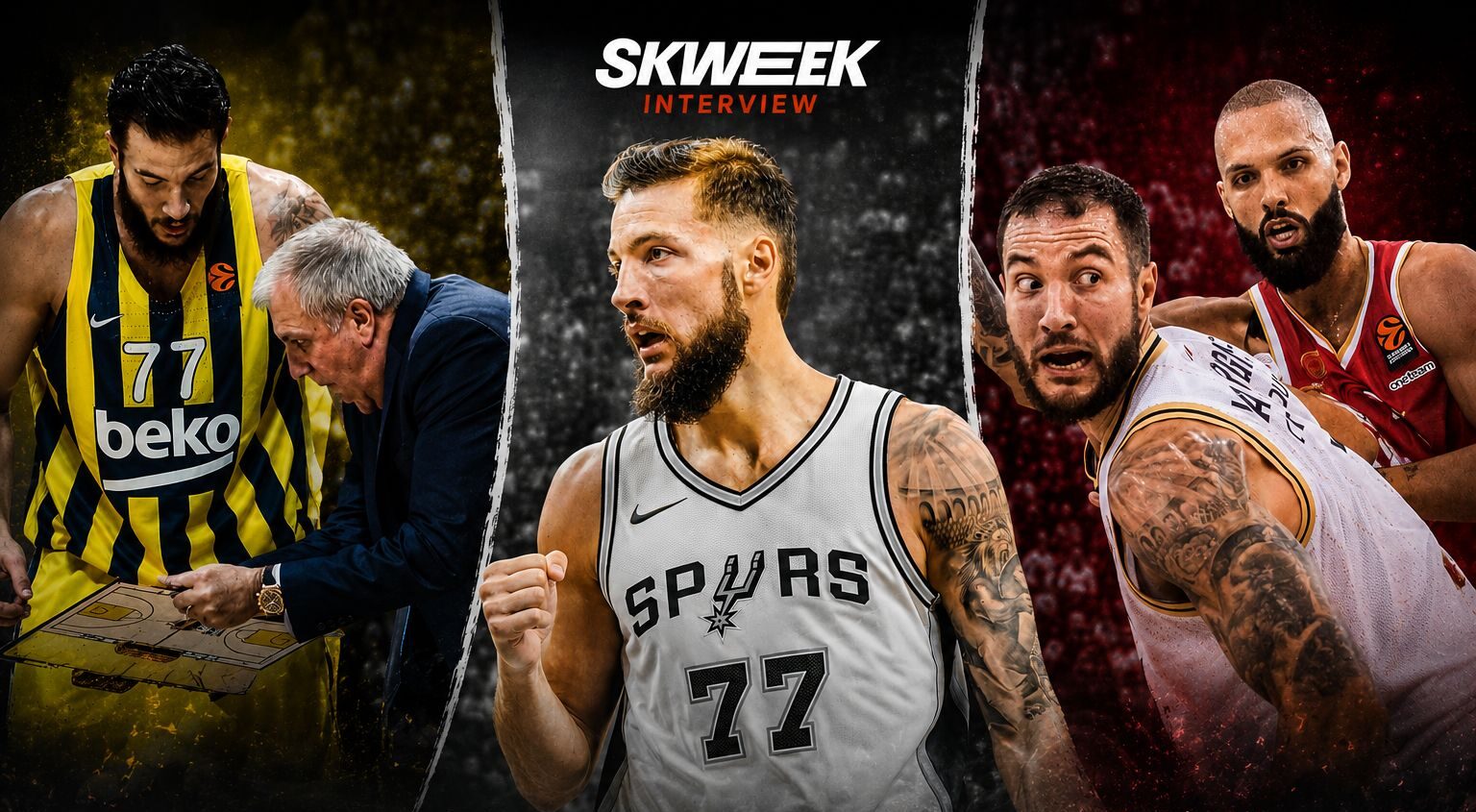

Joffrey Lauvergne’s career has rarely followed the safest or most predictable route.


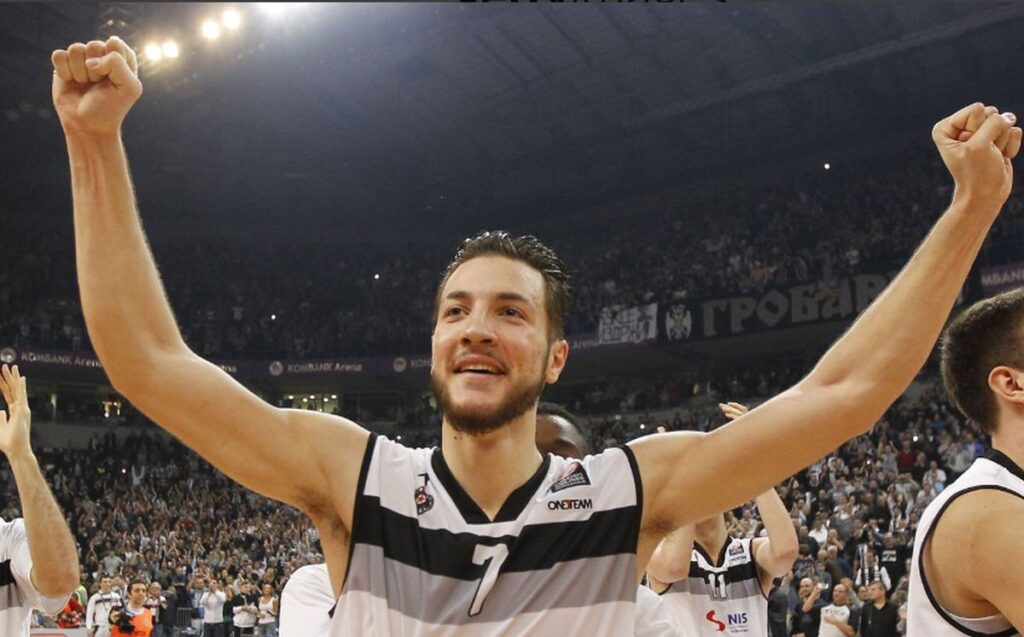
From leaving France as a young player searching for an opportunity, to becoming the first foreign captain in Partizan history, reaching the NBA, voluntarily walking away from San Antonio to chase the EuroLeague with Fenerbahce, battling major injuries and eventually returning to the club he had spent more than a decade promising to represent again, his journey has been shaped as much by choices and timing as by basketball itself.
Now approaching the final stretch of that journey, Lauvergne can look back at those decisions from a very different perspective. Some he would make again without hesitation. Others, he readily admits, were mistakes.
That self-assessment becomes one of the central threads of the second part of his extensive conversation with SKWEEK. If Part One was largely about belonging — Partizan, Dusko Vujosevic, Belgrade, family and the places and people that shaped him — Part Two is more about perspective. What changes when a player who spent much of his career worrying about what might happen next suddenly realizes that he has lasted considerably longer than he once imagined?
The French big man joined Fenerbahce in 2018 after choosing to leave the San Antonio Spurs despite having the option to remain in the NBA.
On paper, the logic was compelling. Lauvergne wanted desperately to win the EuroLeague, Fenerbahce were among Europe’s dominant forces and Obradovic offered him the opportunity to work under the continent’s most decorated coach.
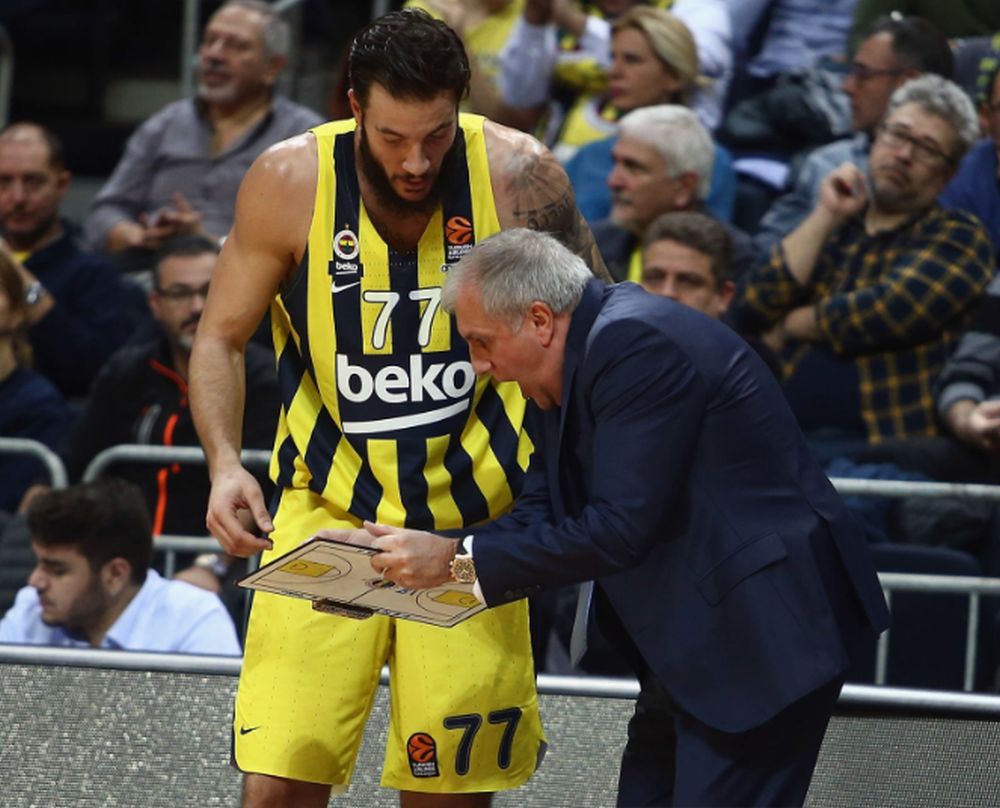
Reality proved considerably more complicated. Lauvergne played only a few months before an injury sidelined him for eight months; shortly after he returned, the COVID-19 pandemic brought the 2019-20 season to an abrupt halt. What could have become one of the defining stops of his career instead became an experience he now views through the uncomfortable prism of what might have been.
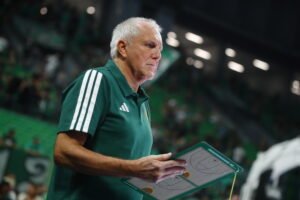
That makes Obradovic’s own latest homecoming particularly interesting to him. 14 years after leaving Panathinaikos, the Serbian coach has returned to Athens, creating an obvious parallel with Lauvergne’s return to Partizan after 12 years. Having worked with Obradovic and heard him speak about the two clubs closest to him, Lauvergne isn’t particularly surprised. As he recalls it, Obradovic always regarded Panathinaikos and Partizan as his teams. More importantly, Lauvergne explains what separated Obradovic from coaches interested in cultivating easy relationships with players and the ways in which he tried to make his teams successful.
Greece, however, appears in Lauvergne’s story in another, previously unexplored way.
In 2022, when he returned to France to join ASVEL, Panathinaikos was another possibility. Lauvergne says he chose Villeurbanne instead — a decision he now prefaces with the word “unfortunately.” An even more intriguing opportunity appeared two years later. On December 19, 2024, Mathias Lessort suffered a fractured left fibula during Panathinaikos’ EuroLeague game against Baskonia, an injury that required surgery and created an immediate need in the Greek club’s frontcourt.
Lauvergne reveals that Panathinaikos subsequently tried to bring him to Athens before the EuroLeague transfer deadline, but ASVEL refused to release him because the French club still believed it could challenge for the domestic championship.
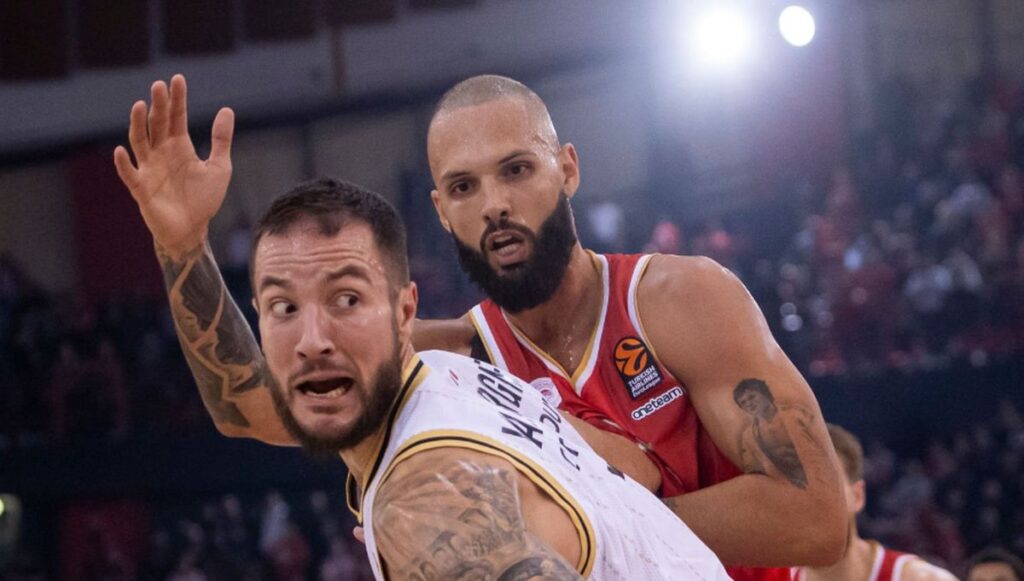
The conversation then travels much further back — to Paris in 2010 and one of those coincidences that only become remarkable with hindsight. Lauvergne and Leo Westermann watched Partizan at the EuroLeague Final Four, became fascinated by the Serbian club and joked about someday playing there. At the very same Final Four, another young Frenchman, Evan Fournier, was developing his own attachment to Olympiacos.
Years later, Lauvergne became a Partizan captain, Westermann followed the same path to Belgrade, and Fournier eventually fulfilled his own teenage basketball fascination in Piraeus. For Lauvergne, it opens a window into an era when European clubs possessed identities strong enough to captivate young players from another country before contracts, salaries or career calculations entered the equation.
And that leads naturally into perhaps the broadest discussion of the interview: what European basketball is becoming.
Lauvergne sees a EuroLeague moving steadily toward the basketball he experienced in the NBA roughly a decade ago — faster, smaller, more guard-oriented and increasingly detached from the traditional identities of its clubs. College basketball is pulling young Europeans across the Atlantic, Japan can lure established EuroLeague players with salaries Europe struggles to match, the Middle East is investing aggressively, new projects continue to emerge and NBA Europe hangs over the entire landscape as a potentially transformative unknown. The money, meanwhile, is accelerating at a rate that surprises even someone who returned from the NBA when €2-3 million represented the very top of the European market.
However, the most revealing passages arrive when the conversation stops being about European basketball altogether and turns back toward Lauvergne himself. He openly calls his 2018 departure from San Antonio a mistake. He admits he probably should never have left Zalgiris either. And rather than rationalizing those decisions years later, he traces them to something much simpler: impatience, fear of injury and an inability at the time to imagine that his body might allow him to play at a high level well into his 30s.
At 34, with another two or three seasons firmly in his plans and 40 no longer sounding quite as ridiculous as it once did, Lauvergne can finally identify the quality he wishes his younger self had possessed.
Obradovic, Panathinaikos and what Zeljko taught him
Q: This summer, we had a major comeback in European basketball since Zeljko Obradovic returned to Panathinaikos after 14 years. Your own return to Partizan came after a 12-year separation. Did you see any parallels between those two stories or is the emotional bond between a coach and a club fundamentally different from that of a player?
A: No, I don’t think so. Zeljko is also really emotional about his choice. I’ve always heard from him that basically his two teams are Panathinaikos and Partizan. So I’m not really surprised about the fact that he came back to Panathinaikos.
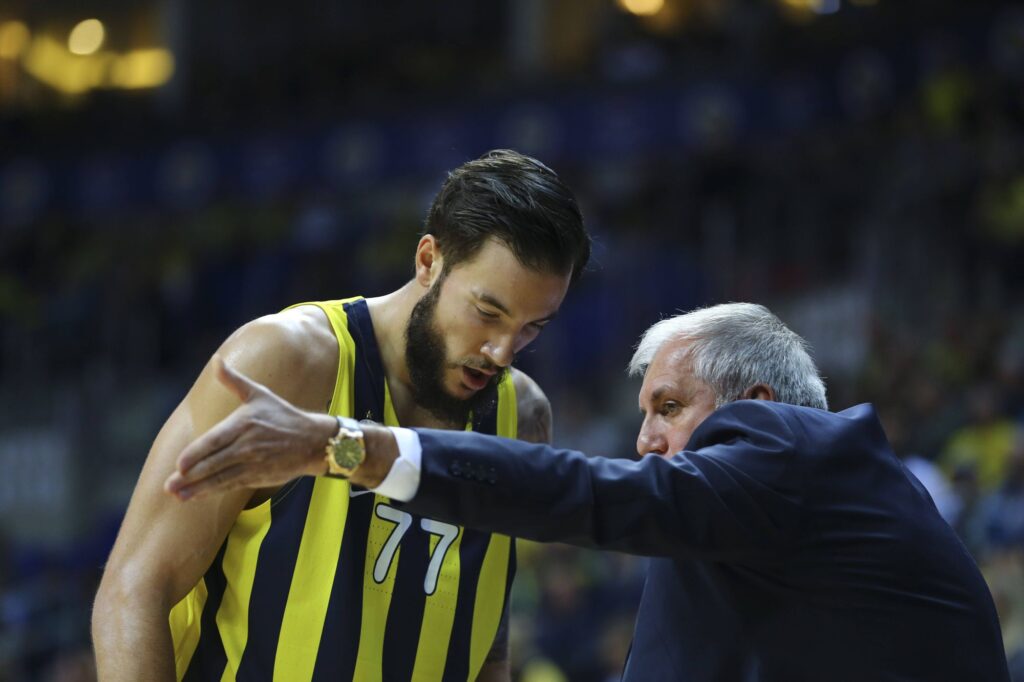
Q: Is there a funny, unusual or little-known Zeljko Obradovic story that perfectly captures what it was like behind closed doors during your time at Fenerbahce?
A: Not really, to be honest. My time in Fenerbahçe was long and short at the same time. I got there, I played 3-4 months, and then I got injured for 8 months. I got back from injury, and two months after COVID hit.
Zeljko has a really different way of coaching. He made me understand that you’re not doing stuff for the club or for the coach, but for yourself. This is probably what I’ve learned from him. Many coaches try to be cool and be friends with you. Zeljko, he doesn’t care so much. He’s doing what he thinks he has to do to make the team successful. He has his own way. You like it or not, but this is his way. And fake friendship is not his style.
The Panathinaikos moves that never happened
Q: Today, French basketball has a remarkable presence in Greece. Panathinaikos alone have four players: Mathias Lessort, Guerschon Yabusele, Moustapha Fall, and Sylvain Francisco. Did you have any talks with Greek clubs during your career?
A: Yes. Unfortunately, I chose to go to ASVEL instead of going to Panathinaikos [in 2022]. And unfortunately, when Lessort broke his leg [in December 2024], ASVEL didn’t let me go to Panathinaikos.
Q: Did ASVEL ask for a buyout?
A: I don’t know. They told me they wouldn’t release me. If I remember correctly, it was right before the EuroLeague transfer window closed. I don’t know the full story exactly, but I ended up staying because they believed we still had a chance to win the French league.
Q: How does the growing French connection in Greece make the idea more attractive to you?
A: First of all, I really believe Greece is one of the coolest places to play in Europe in terms of lifestyle.
There are more and more competitive teams since last season. Before, from my understanding, Panathinaikos and Olympiacos were so much stronger than any other team.
But now there is PAOK, there is Aris, so it’s getting more and more competitive. Greece has the strongest rivalry and the strongest budgets. So obviously the best European players are going there. The Greek league is getting more and more interesting every year.
Paris 2010: Partizan, Olympiacos and teenage dreams
Q: Back in 2010, you and Leo Westermann were in Paris watching Partizan at the Final Four and dreaming about playing for the club one day. At exactly the same time, a young Evan Fournier was falling in love with Olympiacos. How funny is that to look back now and see how did those teenage basketball crushes end up shaping your careers?
A: Yes, it’s true. I never thought about it.
I knew that Evan said a few years ago that if he had to get back to Europe, he would like to play for Olympiacos. But I didn’t remember that it was because of the same Final Four in Paris in 2010.
Si un jour je devais retourner en Europe et que j’avais le choix daller ou je veux, je pense que j’irais a l’Olympiacos. Cest quand meme un sacré club #F4GLORY
— Evan Fournier (@EvanFourmizz) May 21, 2022
In France at the time, there were not many EuroLeague games on TV. It was once a week. Obviously, we had more teams and a different schedule and format. I remember that Leo and I watched one Partizan game during that season. And we were like, “Wow, what the f– is going on in the gym? Everybody’s jumping.”
So we started to check some videos on YouTube and we were impressed. And then, when we went to the Final Four, there were a lot of Serbian fans in the gym. We started to joke about it, saying, “Those guys are almost our age, so who knows, maybe next year or in two seasons we will be there.”
At that time, some French players were starting to leave France, but not at such an early age. And especially never for Serbia.
So it was an unexpected move. And it ended up the way everybody knows.
Q: Have you talked to Evan Fournier since he joined Olympiacos?
A: Yes, we talked once when we played against each other, when I was in ASVEL. We also talked a few months ago.
He really likes it there. His family is feeling comfortable and he will finish there for sure. When you have something, you always want more. But he also won the EuroLeague, which is definitely a huge thing in his career and in any player’s career. So that’s super cool.
Q: Back in 2010, did you guys have any conversations about Partizan and Olympiacos? About Evan wanting to play for Olympiacos one day?
A: To be honest, I don’t remember about Evan. But me and Leo, I remember we talked about it.
But there’s also a story with Axel Toupane. We were living in France in the same village. We were together all day and playing basketball together every day. And then we ended up playing together.
I was in Denver and he was in the G League. He had a 10-day contract and the team that picked him up was Denver. So we ended up playing together in the NBA. From a really small village in France, playing basketball on the outside court at school, to be on the same team in the NBA was also crazy, when you think about it.
A changing EuroLeague and an increasingly American game
Q: What’s your take on this upcoming EuroLeague season in general? What’s the most striking fact for you?
A: I believe the game has changed. Two seasons ago when Evan had just gone to Olympiacos, he told me, “Hey, you know what? I think I expected much more game difference between the NBA and Europe.”
He told me the EuroLeague is looking like the NBA and then he corrected himself and said, “NBA of 6-7-8 years ago,” and I think exactly the same.
There’s still some difference between the NBA and Europe, but the way we play now in Europe looks like the way they were playing in the NBA 8-10 years ago. The game is faster, the players are smaller, the bigs don’t play with the ball anymore at all, and the guards are more and more crafty.
I also believe that we have more games every year, so you need more and more players on the roster, more and more guys who are able to play because you cannot play anymore with 8-10 guys for the entire season.
The most challenging part is to be able to play sometimes 10-15 minutes, sometimes to come back from an injury basically without practice, straight into the game.
Q: Since European basketball is changing rapidly, with ambitious clubs and new investors entering the game, what do you think the landscape will look like in 2-3 years from now?
A: It’s a really good question. I think everybody can try to predict, but nobody knows.
If there’s one guy who has a really clear picture, it’s Misko [Raznatovic].
Some of the best players in Europe will not even play in EuroLeague. All the young guys, the young Europeans, they’re going to college. Then you’ve got Japan. Every year you’ve got one or two or three very good EuroLeague players who can go there to have much more money, and also some Americans decide to go there instead of coming to Europe.
Then, you’ve still got China. The Middle East is growing, but there is more and more money in Europe. You’ve got so many projects, so many things and money is increasing everywhere.
Everybody is also dreaming about the NBA Europe. I have played in both leagues but as a European, I want EuroLeague basketball. If I want to play in the NBA or to watch the NBA, I’m watching the NBA. Our basketball is already gone, by the way we are playing and the direction European teams are taking. It’s really American-oriented.
I don’t know if it’s more competitive now. When I was a kid and I watched Panathinaikos, I was watching Spanoulis, [Antonis] Fotsis and [Dimitris] Diamantidis. I was watching those guys and of course there were Americans as well. But those teams had the best players in Europe.
When I watch Zalgiris, I want to see Lithuanian players. When I watch Partizan, I want to see Serbian players. I don’t want all the teams to look the same.
Some guys may say I’m old school. But this is my opinion. One thing is certain, basketball is somehow growing. The money is also growing everywhere. I mean, at least for business, right now it’s amazing.
When we were coming back to Europe from the NBA, two or three million were the highest contracts. Now, there are €2Μ players almost on every team.
I guess the money is increasing all the time. But I feel like now it’s going even faster than before.
Cedi Osman, the transfer market and EuroLeague’s new order
Q: Looking at all of EuroLeague this offseason, what was the biggest signing or the biggest surprise for you? For one, I didn’t expect Cedi Osman to sign with PAOK.
A: For sure. To me, that’s quite hard to understand. He’s Turkish, there are three EuroLeague teams in Turkey; and he’s going to Greece and he doesn’t play EuroLeague?
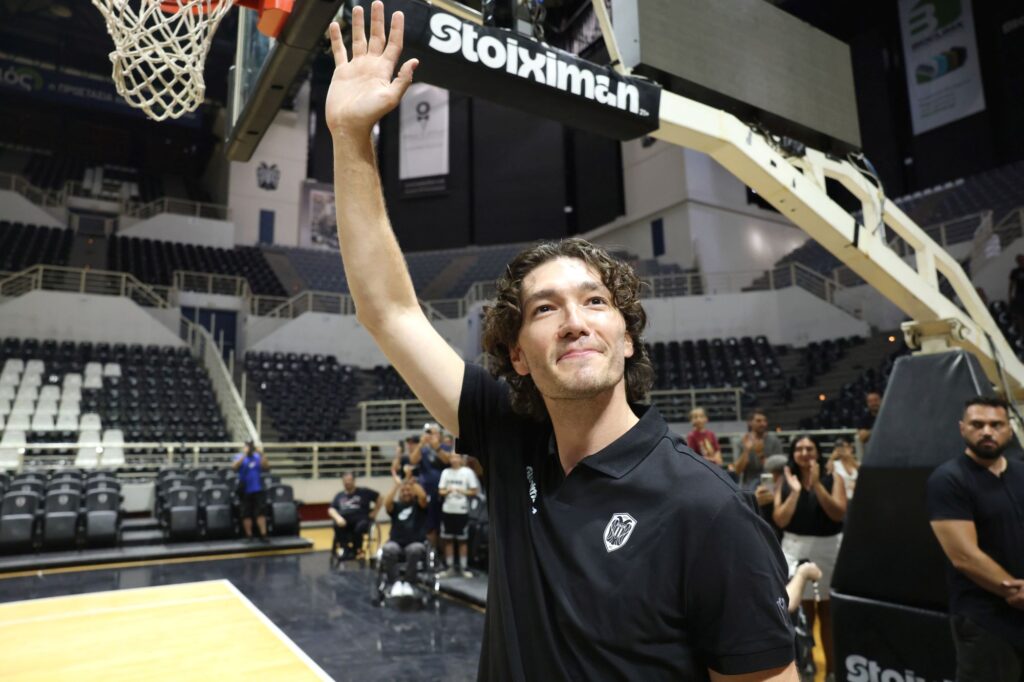
But everybody is expecting different things from their career at a different stage. So if he made it happen, it’s because, I guess, he wants to stay in Greece or, I don’t know, he wants to play for [Andrea] Trinchieri. That was really surprising.
But also the [Sylvain] Francisco deal was unexpected. Moses Wright, who was supposed to go to Barcelona and ended up going to Milan, was also crazy. It will be a really interesting season.
Of course, there is Olympiacos, who’ve played amazing for many years. There is Panathinaikos, who create crazy teams and bring back Zeljko. But when the Russians come back, there will be two or three really competitive teams also who can spend a lot of money.
I’m also wondering if and when some teams will play only in the EuroLeague, which is also a possibility in the future.
The hardest thing is to get to the Final Four and lose one game. It’s so unfair. In one game, everything can happen.
“Leaving the NBA was a mistake”
Q: In 2018, you joined Fenerbahce, coming from the NBA. Years later, do you still think leaving San Antonio back then was the right decision?
A: No, I think it was a mistake. I had one more year on my contract and the player’s option. All my career and all my life, I have been impatient about everything. Maybe it’s because I’m afraid of the future.
Who knows about the NBA? The hardest thing is to sign the second contract, which I did. Then everything’s possible. Sometimes you need more time than others, but everything’s possible. I should have stayed there, definitely.
I have made many mistakes in my life, inside and outside of basketball. I guess smart people just look at the past and try to learn from it. I also believe that I am more patient now than I was when I was younger.
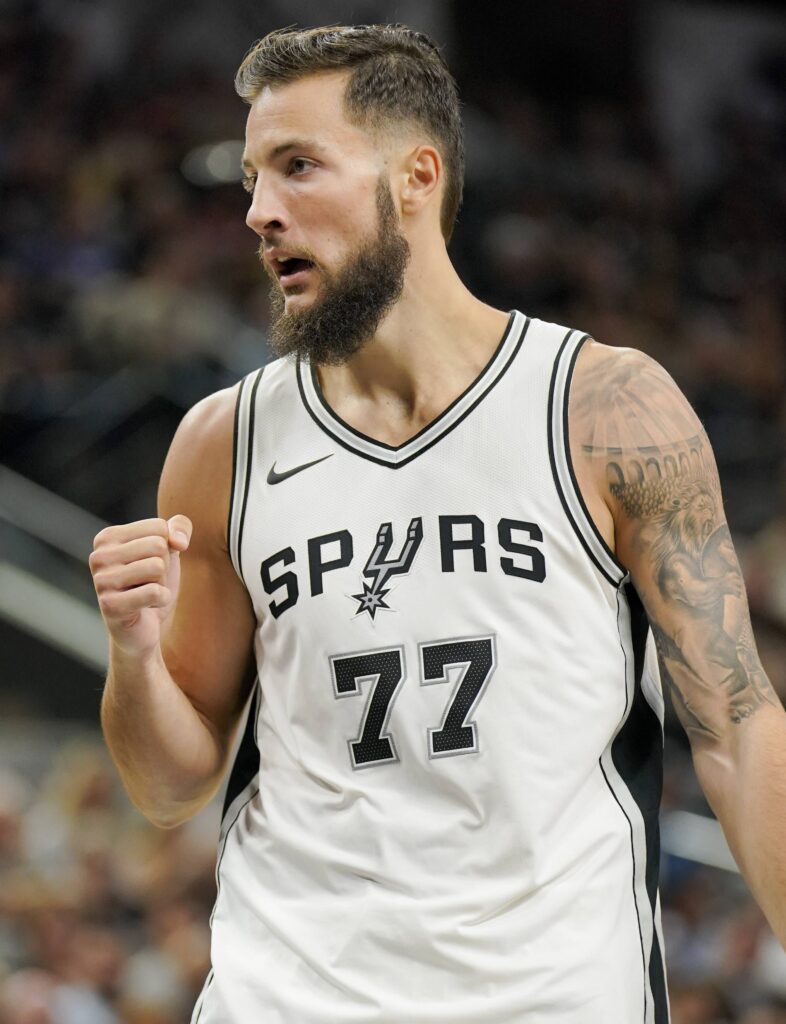
But definitely, if I had to talk to my younger self, I would tell him to be more patient and to stay there. My biggest wish when I was a kid was to play for the national team and to win some stuff, which I had the chance to do. Then, it was to experience the NBA, which I did.
I wanted so bad to win the EuroLeague. Everything in Europe is very quick. It didn’t end up well in Fenerbahce with the injury I had.
After that, I played in Zalgiris, who has been my favorite team after Partizan. It was amazing, to be honest. I had a contract there, and I should never have left. It was the best experience of my career. I loved so much my time there. It was really cool. Overall, 95% of the players who play for Zalgiris talk highly of the organization and of the people there. I’m one of them.
Insecurity, mistakes and the lesson of patience
Q: Have you finally processed what made you feel so insecure back then and make wrong decisions? What was the pattern, if there was one?
A: I have always been afraid of being injured because I’ve had a lot of setbacks since a very early age. I also understand some things because my dad was a professional basketball player. Back then, the money was not the same, definitely.
When I got to Fenerbahce, I had one of the biggest contracts in Europe. I’m a guy whose dream is and will always be to win the EuroLeague. There were a lot of things that made me decide to leave the NBA.
But also, when I was 25, I never thought that I would be able to play until 35. And now, I want to play 2-3 more years. So, I may end up playing until 38, which I never expected.
Also, especially being around my dad, who was from a different generation, I was thinking that at 32 I would be exhausted and not able to perform at the highest level. Because back in the day, players were retiring much earlier. Now, we know much more about how to practice, and about how to take care of our body.
I didn’t have all that in mind and I was very impatient. If I had stayed more years in the NBA, I would have gotten back to Europe in the same condition. But that’s life. You make mistakes – and you have to be okay with it. You need to be patient with yourself and with people. When I didn’t like something or someone, I didn’t want to deal with them.
Then you realize that there are other things in life besides basketball, and that you have a family.
You also realize that there is no other Dusko Vujosevic. He’d convince you that this was the way things should be done—the way teammates should behave, the way coaches should coach, and the way people on the staff should interact with you. For a long time, you expect everywhere to be the same. But it isn’t. Every environment is different, and every person is different.
So my biggest lesson in life has been patience—especially with people I didn’t like, or with those who didn’t share the same work ethic or philosophy as me.
Sometimes, I don’t realize that I’m turning 35 and that I’m unfortunately much closer to the end than I am to the beginning. When I see myself in Partizan jerseys 13-14 years ago, I feel like it was 3-4 years ago, you know? It all goes so fast. There’s not much room for mistakes, for sure.
Q: I remember that for years you joked that you would play until you were 40. Is that statement still valid or will it be less than that?
A: Yes. I’m not against it. I’ve still got 2-3 years left, for sure. Then, it will depend on my status and the quality of life.
If you know how to practice, if you know how to take care of your body, if you’re a little bit curious about all those questions, I really believe you can play until anywhere between 36 and 40 without having major drops compared to what you had when you were 25.