




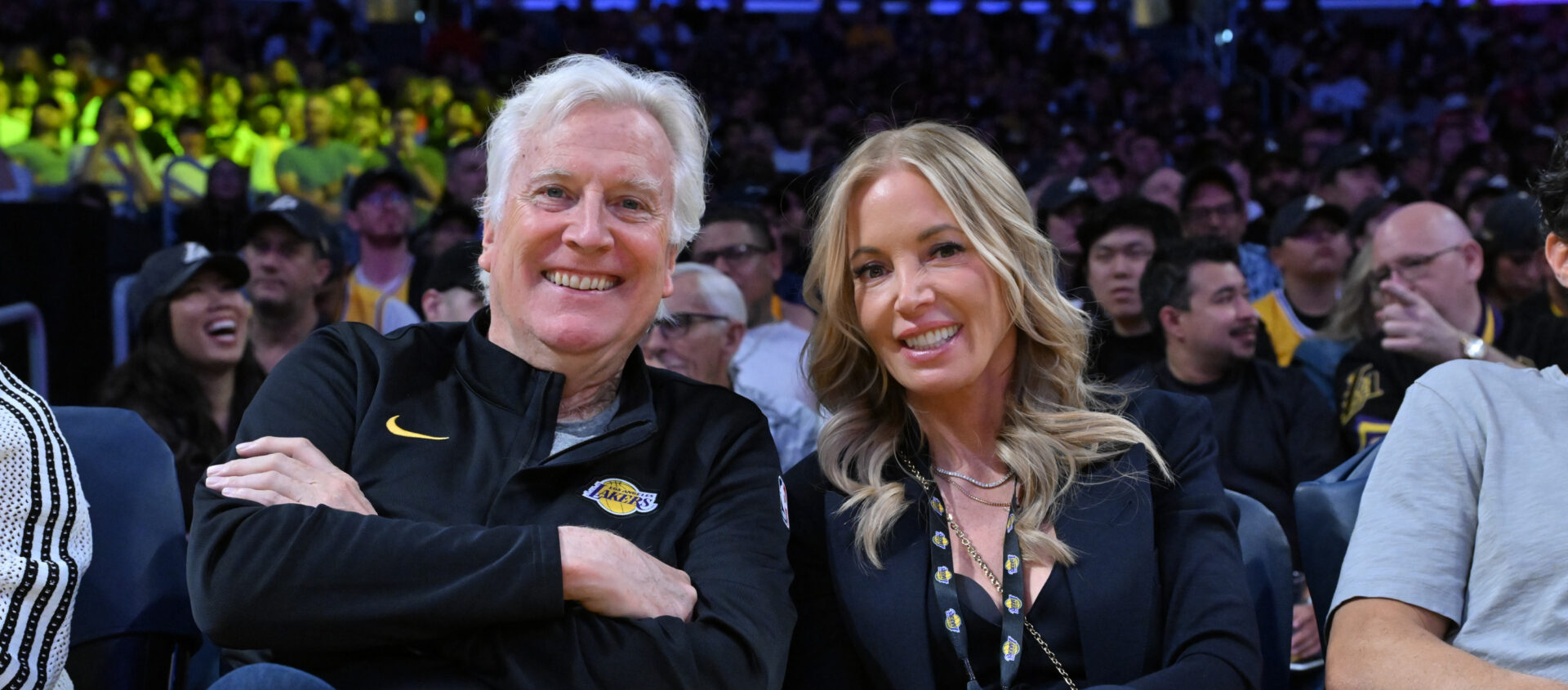

Nine years after going to court to stop her own brothers from taking control of the Los Angeles Lakers away from her, Jeanie Buss is back before the Los Angeles Superior Court. The circumstances are different, but the family conflict is almost the same. Jerry Buss’ other five children want to sell the family’s remaining 17.82 percent stake, while Jeanie is trying to block a move that would effectively bring the Buss family’s era with the Lakers, which began in 1979, to an end.


At first glance, her decision may seem contradictory. Jeanie herself was one of the key figures in last year’s deal in which the family sold its controlling stake to billionaire Mark Walter at a $10 billion franchise valuation. At the time, she explained that her father would have supported the decision because, if the Lakers wanted to remain at the top of the NBA, they needed financial resources the Buss family could no longer easily match in an era of owners whose wealth is measured in the tens of billions.
“What mattered to him was that the Lakers stayed at the top of the NBA”, she said in February, explaining why she did not view the sale as a betrayal of her father’s legacy.
Last Year’s Sale Was Supposed to Keep the Busses Involved
Last year’s deal, however, was structured so that the Busses would not leave the franchise completely. The family retained just under 18 percent, enough for Jeanie to remain the Lakers’ governor, a position that requires at least a 15 percent ownership stake under NBA rules. Walter also agreed that she would remain in that role for at least five years. According to ESPN, each of the six heirs received approximately half a billion dollars after taxes from the initial sale.
Everything changed in only 14 months. This August, Walter agreed to sell his majority stake to Bob Iger and Josh Kushner, this time at a record $12.5 billion valuation for the Lakers. The deal still needs final NBA approval, but five of Jeanie’s siblings quickly decided to exercise their right to sell the family’s 17.82 percent stake under the same terms. Johnny, Jim, Janie, Joey and Jesse Buss announced that they were united in wanting to sell. Jeanie is the only one opposed.
Selling the Final Stake Would Cost Jeanie Her Position
If their plan goes through, the consequence for her would be immediate. The family would no longer hold a large enough ownership stake for Jeanie to remain the Lakers’ representative on the NBA Board of Governors. She responded by filing a 97-page petition asking the court to invalidate the vote. She is also seeking the removal of Janie and Joey as trustees of the family trust for alleged breaches of fiduciary duty, while accusing the other siblings of helping them. In the filing, she says she was neither consulted nor even informed about the plan to sell the shares. A hearing is scheduled for November 5.
Her legal argument is rooted in a 2017 ruling. Jeanie had removed her brother Jim from the Lakers’ basketball operations, after which Jim and Johnny attempted to change the composition of the board and threaten her position. The dispute ended with the trustees being required to take reasonable steps to keep Jeanie as the Lakers’ controlling owner. Jeanie now argues that selling the family’s entire remaining stake would directly contradict that obligation.
What Did Jerry Buss Actually Want?
Behind the legal language is a question that has followed the Buss family since Jerry’s death in 2013: what did he actually want his children to do with the Lakers?
Earlier this year, ESPN detailed the way Buss prepared his estate. The idea was not simply for his six children to inherit a valuable asset, but for the franchise to remain a family business after his death. Johnny Buss has said his father’s plan was for the Lakers to remain in the family “generation after generation.” When the possibility of a sale came up in the 1990s, Jerry had a simple response: if he received an enormous amount of money for the Lakers, the first thing he would want to do with it would be to buy the team back. In the early 2000s, he turned down a $1 billion offer.
The problem is that the ownership structure he left behind was supposed to preserve both the franchise and the family, and over the past 13 years it has not managed to preserve their relationships with one another.
Two Years Ago, the Family Was Looking for a Different Compromise
What makes the current situation even more interesting is that the family’s positions were different only two years ago. In late 2024, Joey and Jesse Buss explored the possibility of selling only five, 10 or 15 percent of the family’s stake at the time. The idea was to give the older members of the family a significant financial payout while still allowing the Busses to retain control of the Lakers. According to ESPN, they estimated that such a deal could have brought each heir between $50 million and $150 million without giving up majority ownership.
Then Walter’s offer arrived. Jeanie supported the sale of the majority stake. Joey and Jesse ultimately voted for it as well, making the decision unanimous, even though they had previously tried to find a way for the family to retain more control. After the deal closed, another split followed. Five members of the Buss family lost their roles within the organization, leaving Jeanie as the only member of the family still employed by the Lakers.
Joey and Jesse have already moved in another direction. They founded Buss Sports Capital and this month joined the San Diego Padres’ new ownership group with a stake of approximately five percent. They have already begun redirecting some of the capital from their exit from the Lakers into other sports investments.
Jeanie’s Case Is Also Financial
Jeanie’s position, however, cannot be explained only by her desire to remain in charge. Her court filing also contains a straightforward financial argument. The Lakers were valued at $10 billion last year, while the new deal values them at $12.5 billion. A 25 percent increase in a little more than a year gives her grounds to argue that selling the family’s final stake is not necessarily the best decision for the trust. Her position is that the family can retain an asset whose value continues to rise rapidly while also keeping a large enough stake for her to remain in charge. According to the filing, she also has the support of minority owners Patrick Soon-Shiong, who owns four percent, and investor Ed Roski Jr.
On the other side, the financial logic of the other five siblings is difficult to dismiss. They have an opportunity to sell their remaining stake at a record valuation and completely leave an ownership arrangement that has been one of the main sources of family conflict for years. Earlier this year, Johnny Buss said he hoped ending their shared ownership might eventually allow the siblings to have a relationship in which the Lakers were no longer a constant source of disagreement.
Walter’s Exit Comes With Questions of Its Own
Meanwhile, the other side of the ownership picture is changing as well. Walter’s era is ending almost before it really began. His holding company, TWG Global, has come under regulatory and federal scrutiny involving the insurance companies Delaware Life and Clear Spring Life and the way certain private credit investments were presented in their financial statements.
Federal prosecutors and the Securities and Exchange Commission are examining whether some investments were presented as holdings in unrelated companies even though there were ties to Walter’s broader business network. Delaware Life later revised its financial statements, after which owner-related investments accounted for 42 percent of the company’s total assets at the end of 2025. TWG presented regulators with a plan under which as much as $6.5 billion of those investments would be replaced by independent assets. The company strongly denies that any fraud took place and is cooperating with authorities, while Walter has not been charged with any crime. It has also not been established that the investigation is the reason for the Lakers sale, although his exit from the franchise is taking place at a time of increased scrutiny of his business empire.
The Lakers Sale Came Together in 72 Hours
The buyers emerged quickly. Josh Kushner and Bob Iger had already been working on a potential NBA expansion franchise in Las Vegas, but the opportunity to acquire the Lakers changed those plans. After information about the problems involving Walter’s companies emerged, Kushner called Iger and then contacted Walter. According to the Los Angeles Times, the basic framework of the deal was completed in just 72 hours, before the sale could turn into a broader bidding process.
Kushner is not entering the deal simply as another billionaire interested in sports. He is the founder of Thrive Capital, an investment firm that now manages around $65 billion and has invested in companies including Instagram, Open AI, Stripe and Spotify. Kushner also has experience in sports ownership, because he previously held a stake in the Memphis Grizzlies and currently owns part of the Miami Heat, a stake he will have to sell because of NBA rules, while his wife, Karlie Kloss, has an ownership interest in the WNBA’s New York Liberty. Thrive has also participated in other major sports-related investments.
Iger Brings a Different Kind of Experience
Iger brings a very different kind of experience. He spent nearly two decades leading Disney and was one of the central figures behind the acquisitions of Pixar, Marvel, Lucasfilm and 21st Century Fox, deals that expanded the company’s control over some of the world’s most valuable entertainment brands. Since 2024, he and his wife, Willow Bay, have held a controlling stake in the women’s soccer club Angel City. Unlike Kushner, who is expected to remain focused on Thrive, Iger is expected to be more directly involved in the Lakers’ business operations.
Their plans have not yet been presented in the form of a detailed basketball strategy, but people familiar with the deal say they view the Lakers as a long-term investment rather than an asset intended for a quick resale. The combination of Kushner’s investment capital and Iger’s experience managing global brands also shows how much the ownership model of the Lakers has changed from the Jerry Buss era. Iger has also indicated that he intends to honor the previous agreement under which Jeanie would continue to run the Lakers.
Her Own Family Could Remove Her Before the New Owners Do
That may be the most unusual part of the entire dispute, because the new owners are not the ones trying to remove Jeanie Buss from the top of the Lakers and a decision by her own family could do that. For that reason, her decision to go to court should not be reduced either to sentimental attachment to her father’s legacy or simply to an attempt to preserve her position. Both motives are part of the story, along with a third that is very concrete, because the Lakers’ remaining 17.82 percent family stake is worth more than $2 billion at the valuation of the new deal and represents an asset whose value has risen significantly in just one year.
The Family No Longer Has to Sell. Five of Them Simply Want To
Jerry Buss once created a structure designed to prevent his children from being forced to sell the franchise he bought in 1979. More than four decades later, the issue is not that the family has to sell. Five of his heirs now want to, only Jeanie no longer wants to sell what remains…