








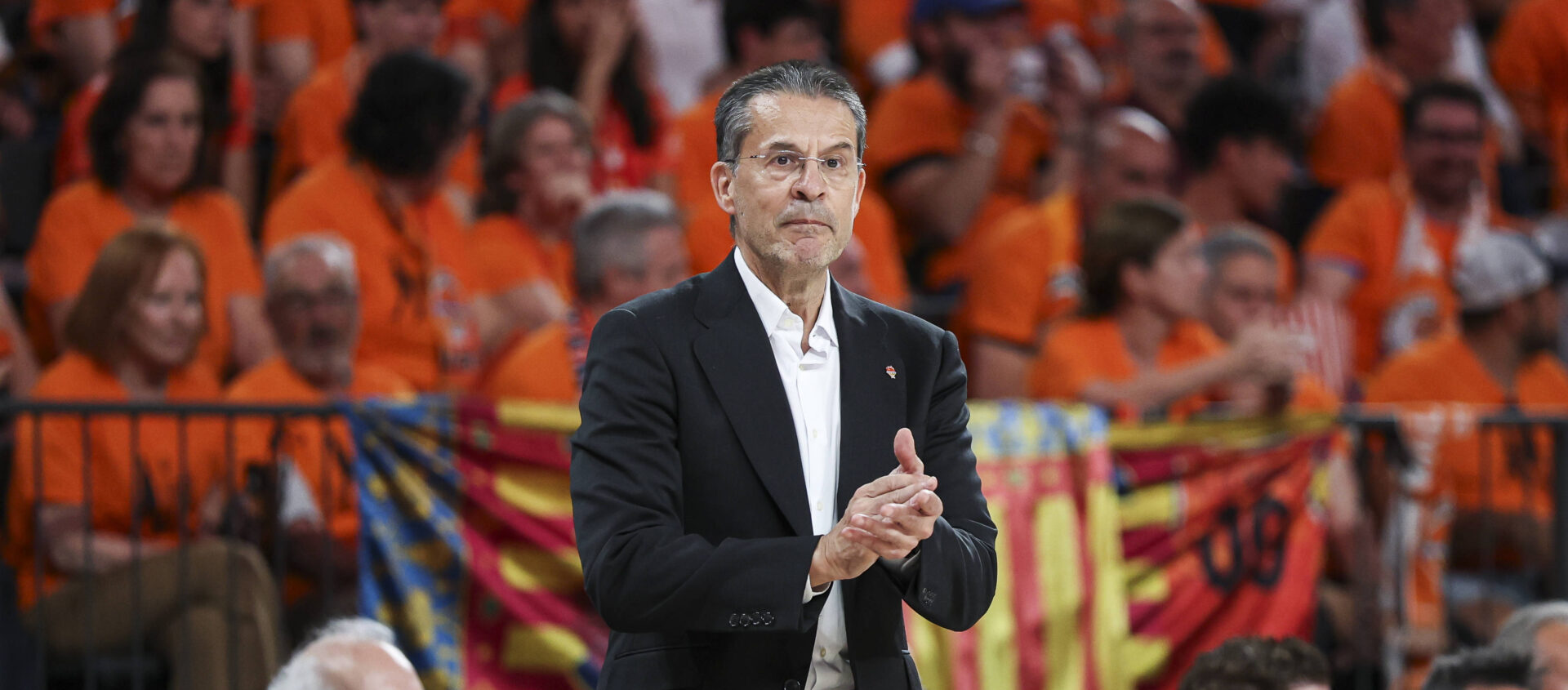

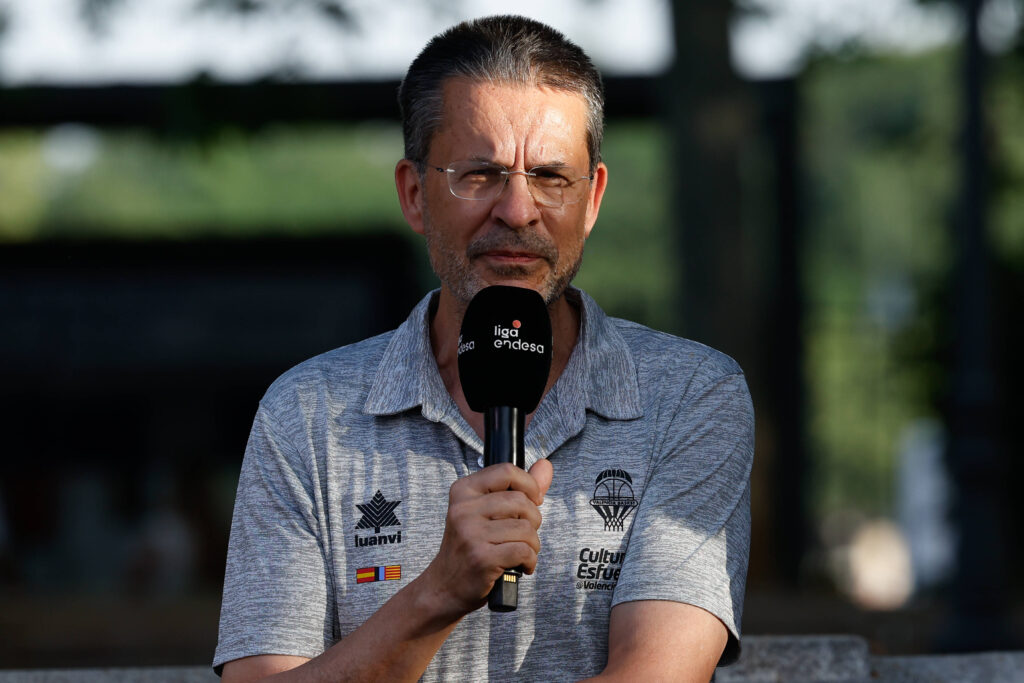
The debate around Pedro Martinez’s arrival in Madrid says far more about old narratives, identity politics, and basketball tribalism than it does about the coach himself.


Real Madrid are taking a gamble, but probably not the one most people think.
When the Spanish powerhouse decided to replace Sergio Scariolo with Pedro Martinez, the reaction was immediate, emotional, and in many corners of Spanish basketball, surprisingly ideological.


On one side stood those who viewed the appointment as one of the boldest and most intelligent coaching hires the club has made in years. On the other stood a section of Madrid supporters who focused less on basketball and more on old tweets, political sympathies, criticism of referees, and the perception that Martinez was somehow “anti-Madridista.”
The result was a debate that quickly moved away from basketball and into territory that felt oddly disconnected from modern professional sport.
The irony is that the most interesting question surrounding Pedro Martinez is not whether he is anti-Madridista, but rather why Barcelona never hired him.
And the second most interesting question is why Real Madrid, a club that traditionally prefers stability, hierarchy, and institutional continuity, has chosen to entrust its basketball section to perhaps the most unconventional coaching appointment of the Florentino Perez era.
Because make no mistake: this is a risk. But it is a basketball risk, not a political one.
Real Madrid’s summer of trauma
To understand the significance of Pedro Martinez’s arrival, one must first understand the atmosphere inside Real Madrid’s basketball department during the final months of the season.
The club reached the EuroLeague Final despite circumstances that bordered on the absurd. Injuries had gutted the frontcourt. The roster had become increasingly imbalanced. Key veterans were carrying enormous workloads. Yet somehow Madrid arrived one game away from lifting another European title.
They lost, and then came the collapse against Tenerife in the ACB playoffs. Within weeks the entire structure of the section began to shake.
Sergio Rodriguez left, Juan Carlos Sanchez returned to power, while Sergio Scariolo was dismissed despite having two years remaining on his contract.
Millions of euros were committed to severance payments, buyouts, and restructuring. The message from Florentino Perez was unmistakable: second place was not enough. Not after a season that exposed structural weaknesses in the roster and in the overall sporting project.
And that is where Pedro Martinez entered the story.

The coach Barcelona never chose
One of the most remarkable aspects of Martinez’s career is that despite decades of excellence, despite winning the ACB with Valencia in 2017, despite repeatedly overachieving with modest budgets, despite building one of the most attractive offensive systems in Europe, he never coached Barcelona.
For years that felt almost impossible to explain. Barcelona repeatedly cycled through foreign coaches, former players, experimental projects, and institutional favorites.
Meanwhile, Martinez continued producing results: Valencia became champions; Manresa reached levels nobody thought possible.His teams consistently played modern basketball, emphasizing pace, spacing, ball movement, offensive creativity, and tactical adaptability.
Yet Barcelona never truly made him a priority. Some observers argue that the club always viewed him as an outsider. Others suggest that institutional politics and internal preferences prevented serious discussions. Whatever the explanation, the fact remains that one of the most accomplished Spanish coaches of his generation never received the opportunity many believed he had earned.
That absence becomes even more striking today because while Barcelona never fully embraced him, Real Madrid did just that at the exact moment when he was arguably at the peak of his professional reputation.
The “Anti-Madridista” debate
This is where the discussion becomes more complicated, and also where much of the public conversation begins to lose perspective.
Pedro Martinez has undoubtedly made comments over the years that irritated sections of Madrid’s fanbase.
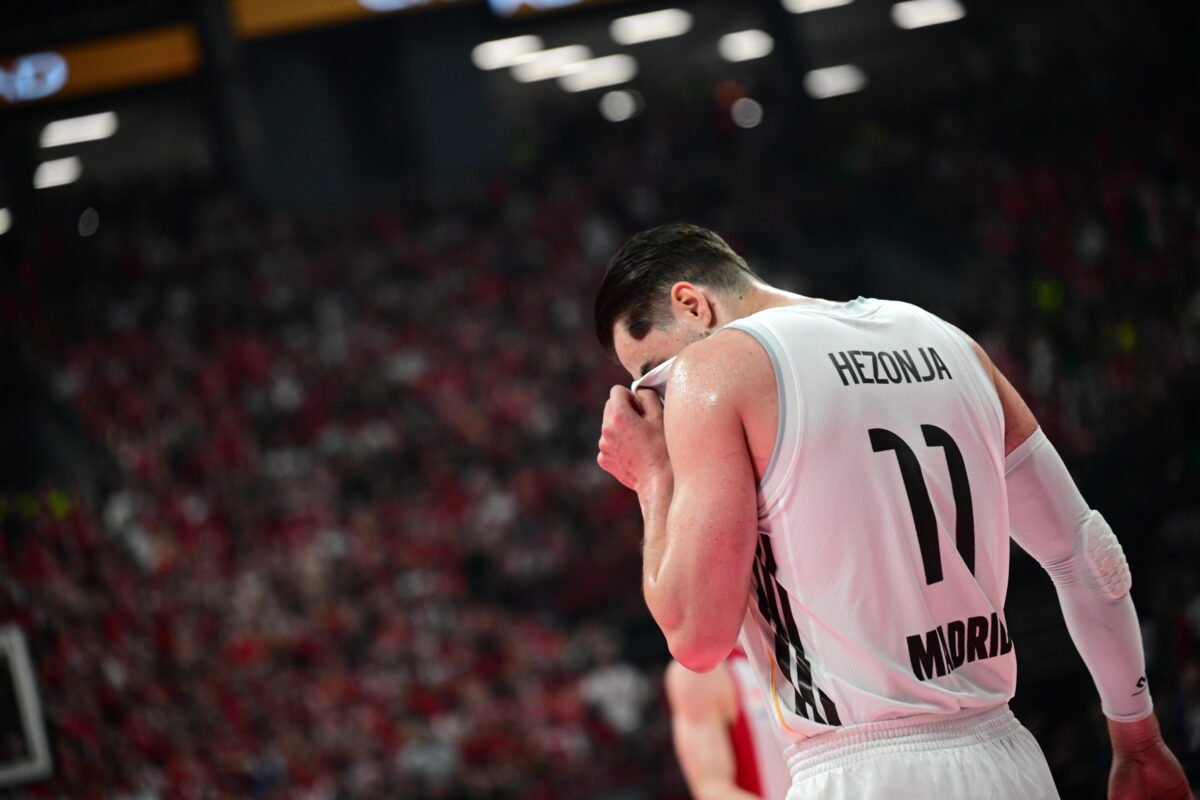
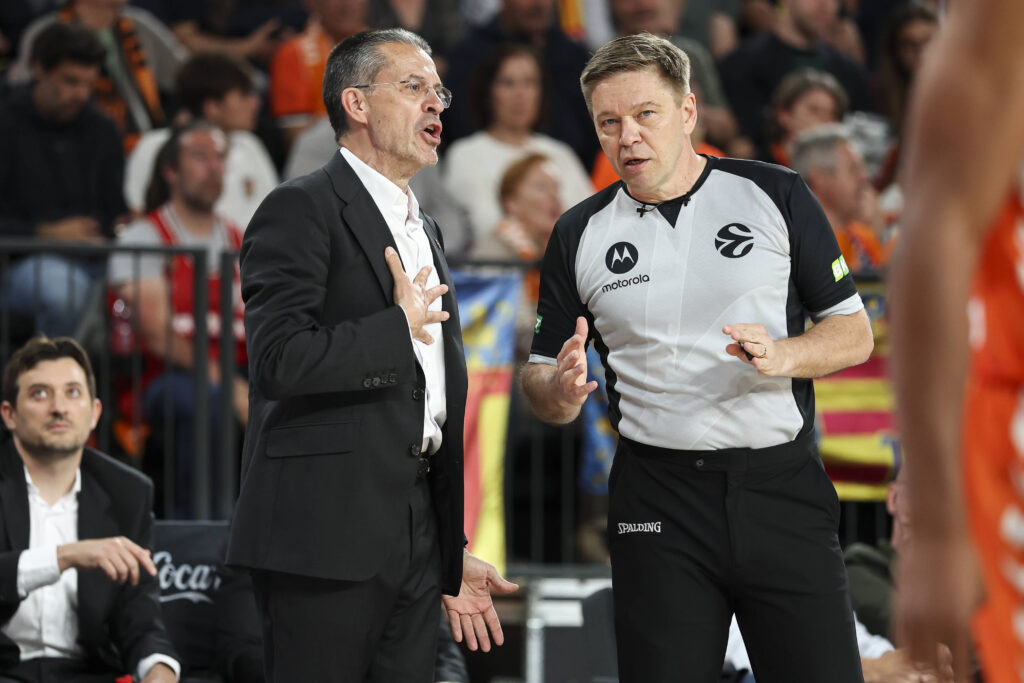
He has criticized officiating. He has mocked complaints coming from Real Madrid TV. On top of that, he famously responded to one controversy involving Mario Hezonja and Baskonia with the sarcastic remark:
“And outside the area they give a penalty too. Incomprehensible.”
Y fuera del área y dan penalti. Incomprensible
— . (@pedroma2014) April 4, 2026
The joke was obvious, as he was comparing basketball officiating complaints to the constant football discussions surrounding Real Madrid.
However, the comment circulated widely. Madrid supporters did not forget previous complaints regarding officiating in games involving Valencia and Real.
Nor did they forget old social media activity connected to broader political issues.
Francoism & a debate that belongs to another era
The more controversial aspect concerns Martinez’s political comments.
In 2019, he publicly celebrated the exhumation of Francisco Franco, posting: “Out with the bug.” The veteran play-caller also referenced family history connected to the consequences of the Civil War.
Afuera el bicho
— . (@pedroma2014) October 24, 2019
For some Madrid supporters, these comments became evidence that Martinez was fundamentally incompatible with Real Madrid.
However, that conclusion is both intellectually lazy and historically questionable. It relies on a vision of Real Madrid that belongs to another century.
The idea that Real Madrid remains some symbolic extension of Francoism is one of the oldest and most oversimplified narratives in Spanish sport. It survives because it is politically useful, not because it accurately reflects contemporary reality.
Criticizing Franco does not make someone anti-Real Madrid in the same way that condemning a dictatorship does not place an individual in opposition to a basketball club. Supporting historical memory initiatives does not automatically transform a coach into an enemy of the institution.
Those connections require logical leaps that simply do not withstand serious examination.
Even if one strongly disagrees with Martinez’s political positions, the notion that those views should disqualify him from coaching Real Madrid implies something even more problematic: that Real Madrid itself possesses a fixed political ideology.
But coaching appointments are still being evaluated on competence, leadership, and results, rather than on ideological purity tests.
At least, that is not how modern elite sports function.
Professionalism isn’t tribalism
Perhaps the strongest argument against the entire anti-Madridista narrative is also the most obvious one, although it is frequently overlooked amid the noise generated by social media, old quotes, and long-standing basketball rivalries.
If Pedro Martinez genuinely viewed Real Madrid as an institution whose values he fundamentally opposed, or as a club he could never see himself representing, there is little reason to believe he would be sitting on the Madrid bench today.
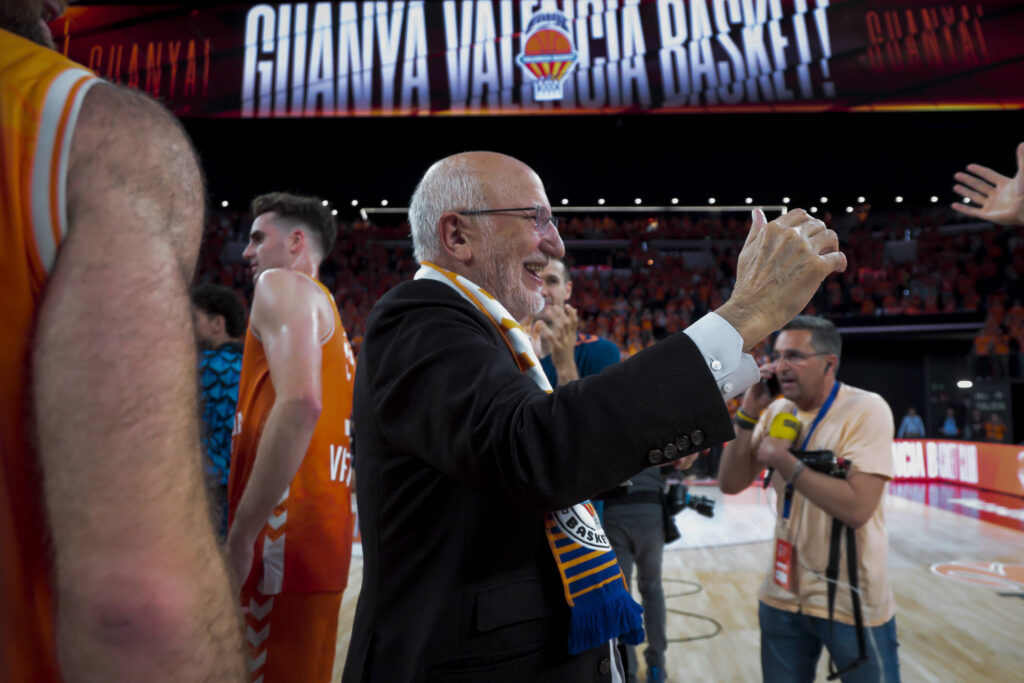
The reality is that Martinez was not backed into a corner, nor was he facing a situation in which this was his only viable professional option. Valencia Basket wanted him to remain at the club, Juan Roig’s organization reportedly matched the financial conditions offered by Real Madrid, and by every available account the decision was not primarily driven by money.
What ultimately appears to have convinced Martinez was the belief that Real Madrid provides a greater opportunity to compete for the EuroLeague title on a consistent basis, and for a coach who has spent decades building his reputation and waiting for an opportunity at the very highest level of European basketball, that argument is difficult to dismiss or criticize.
Coaching careers are finite, elite opportunities are rare, and the chance to lead one of the two most successful and prestigious basketball organizations in Europe is rarer still.
At 65 years old, Martinez understood that this was likely his final opportunity to take charge of a club whose ambitions are measured exclusively in championships and Final Fours.
Accepting such a proposal does not necessarily signify affection, identification, or ideological alignment with Real Madrid. It signifies professional ambition, and those are two fundamentally different things that too many observers have chosen to conflate.
The real risk
The genuine risk surrounding Pedro Martinez has very little to do with old tweets, political sympathies, Catalonia, Franco, or sarcastic comments about refereeing decisions involving Real Madrid. Those subjects may dominate social media discussions and sports radio debates, but they are ultimately peripheral to the question that will determine whether this appointment succeeds or fails.
Throughout his career, Martinez has built his reputation in environments where his influence was substantial, where his basketball philosophy permeated every aspect of the project, and where the structure of the organization largely revolved around the implementation of his ideas. His best teams reflected his personality, his tactical principles, and his vision of how modern basketball should be played, while his players generally embraced clearly defined roles within systems that demanded discipline, movement, collective responsibility, and a significant degree of tactical commitment.
Real Madrid, however, is a completely different ecosystem. It is not merely another elite club, but an institution where the margin for error is microscopic, where expectations are relentless, and where every setback acquires dimensions that would be unimaginable almost anywhere else in Europe.
A defeat is rarely treated as an isolated sporting event. It becomes a crisis. A rotation adjustment becomes a topic of national discussion. A tactical experiment becomes a source of controversy. Every decision is scrutinized, every result magnified, and every perceived weakness amplified by an environment that constantly operates under championship-or-bust expectations.
Managing a roster led by players such as Facundo Campazzo and other established stars is fundamentally different from developing a project over several years, just as inheriting a locker room filled with accomplished veterans differs enormously from building one according to your own specifications. History repeatedly shows that coaches who excel in one context do not automatically succeed in the other, and some highly respected tacticians have discovered that commanding Real Madrid requires a different skill set than simply teaching basketball.
Pablo Laso eventually mastered that challenge because he gradually established authority and credibility while building a culture that players, executives, and supporters ultimately embraced. Others have not been nearly as successful, despite possessing impressive track records and unquestionable basketball knowledge.
Martinez now faces the most demanding environment of his professional life, one in which tactical excellence alone will not be sufficient and where leadership, communication, and political management may prove just as important as playbooks and game plans.
That challenge is real, tangible, and immediate. It is certainly far more relevant to his future than anything he may have written on social media years ago.
Why Real Madrid chose him anyway
Ultimately, Real Madrid’s decision to appoint Pedro Martinez suggests a potentially meaningful shift in the club’s basketball philosophy and in the criteria used to identify leadership at one of Europe’s most demanding institutions.
For many years, Real Madrid often gravitated toward established brands, high-profile names, institutional figures, or personalities whose reputations fit comfortably within the club’s traditional image. Even when those appointments carried risks, they tended to be risks that felt familiar, predictable, and culturally aligned with Madrid’s historical approach to leadership.
Pedro Martinez represents something entirely different.
He arrives not because of symbolism, institutional loyalty, or a carefully cultivated Madrid identity, but because of basketball. He represents tactical innovation, offensive creativity, adaptability, and a style of basketball that many observers consider more modern, dynamic, and progressive than what Real Madrid often displayed during recent seasons.
His appointment suggests that Juan Carlos Sanchez and Florentino Perez may have reached the conclusion that methodology matters more than symbolism, that basketball competence matters more than cultural comfort, and that the next phase of Real Madrid’s evolution requires fresh ideas rather than familiar narratives.
In that sense, the club appears to be prioritizing substance over image, coaching philosophy over institutional convenience, and basketball solutions over political calculations.
The verdict
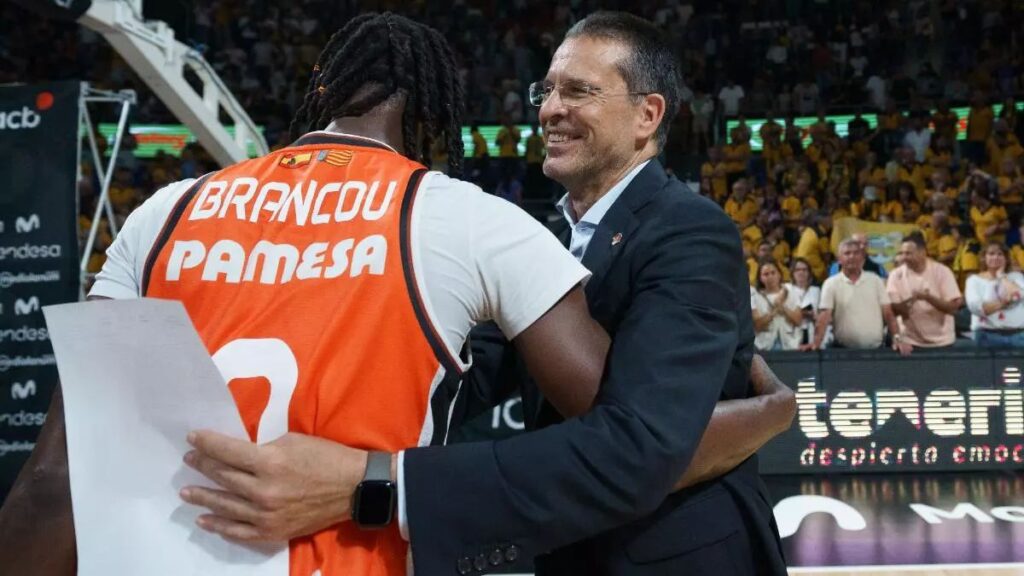
Much of the criticism surrounding Pedro Martinez’s arrival in Madrid ultimately revolves around questions that, while emotionally compelling for some supporters, fail to address the issues that will actually determine the success or failure of this project.
The central question is not whether he condemned Franco, supported historical memory initiatives, or expressed opinions regarding Catalan politics. It’s whether he can restore Real Madrid to the summit of European basketball and guide the club back to EuroLeague glory.
The decisive issue is whether his basketball philosophy, his leadership style, and his tactical principles can survive and thrive within the pressure cooker that is arguably the most demanding coaching position in Spanish basketball.
Reasonable people can certainly disagree on that point. There are legitimate doubts and understandable concerns about his ability to manage elite personalities, navigate institutional politics, and maintain authority inside a dressing room filled with accomplished veterans who are accustomed to competing for the biggest trophies every season.
Yet if Pedro Martinez ultimately fails at Real Madrid, it will not be because of an old tweet, a sarcastic refereeing comment, a political opinion, or a social media post about Franco. It will be because coaching Real Madrid remains one of the most difficult assignments in world basketball, where excellence is expected, patience is limited, and success is measured by standards that few organizations can match.
And if history teaches anything, it is that even exceptional coaches occasionally discover that being a great coach and being the right coach for Real Madrid are not necessarily the same thing.
And unlike the ideological noise that has accompanied his appointment, the real gamble facing the club deserves serious discussion.