
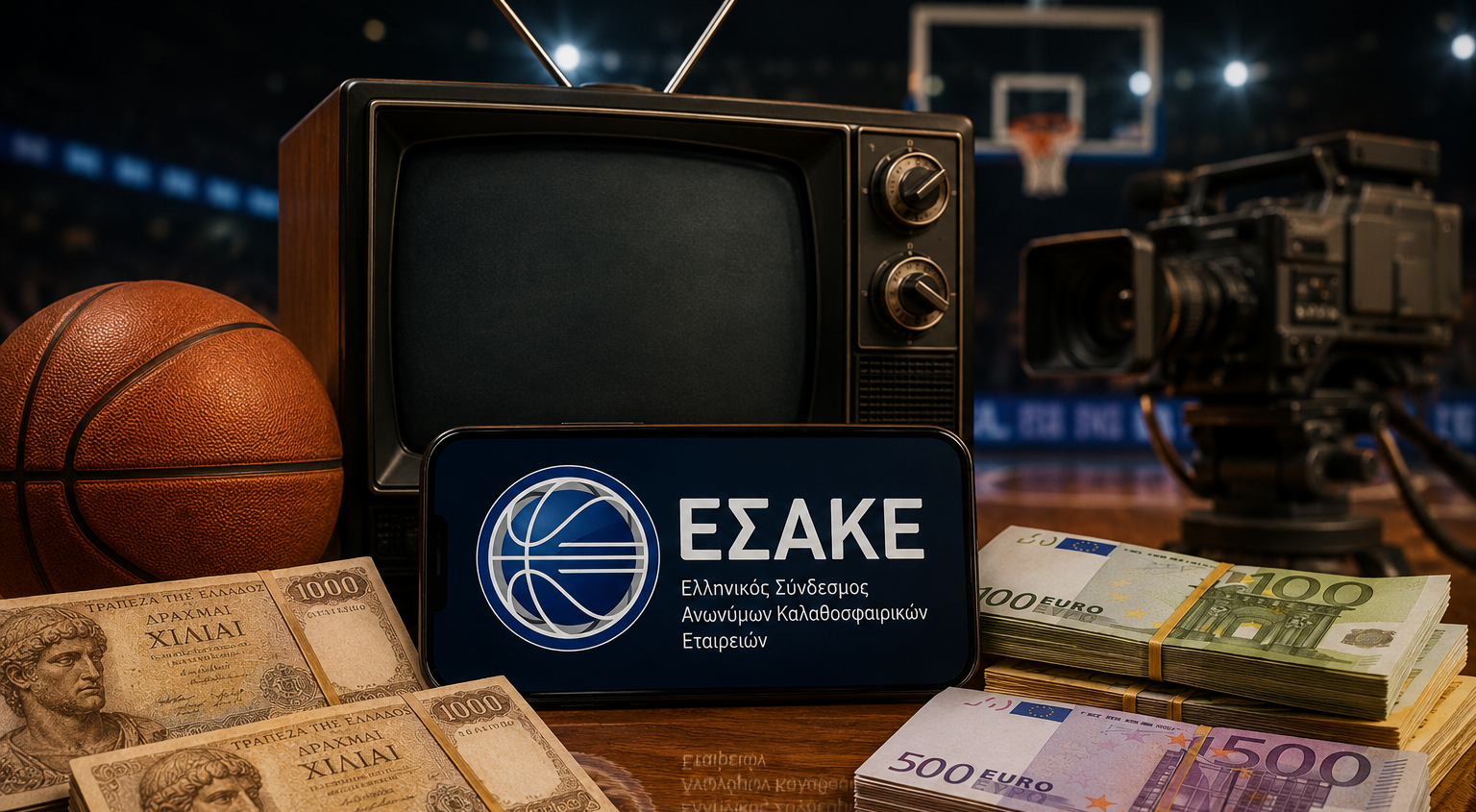

When Greece’s public broadcaster ERT began televising first-division basketball games on Saturday afternoons in the early 1980s, nobody imagined they were witnessing the birth of one of Europe’s most valuable domestic sports properties.


There were no media rights auctions, no streaming platforms, no billion-euro sports businesses. Clubs received nothing for their television rights. Their only direct income from televised games came from the advertising boards placed around the court whenever cameras visited their arena.
Television wasn’t viewed as a commercial partner. It was simply a way of bringing basketball into Greek homes.
Within less than twenty years, however, television would become the financial engine of Greek basketball, transforming the country’s domestic championship into arguably Europe’s richest league outside the NBA.
Today’s three-year television agreement between the Greek Basketball League (GBL) and SKAI Group is nowhere near the dizzying excesses of the 1990s. Yet it represents something equally important: proof that the league has once again become a property broadcasters are willing to compete for.
To understand why that matters, you have to go back four decades.
Before basketball became big business
In its early television years, basketball occupied a modest place in Greek sports culture.
The sport’s greatest television evangelist was legendary commentator Filippos Syrigos, who tirelessly argued on public television that basketball possessed enormous untapped commercial potential—even when many club executives remained unconvinced.
Neither the Greek Basketball Federation nor the clubs possessed the commercial infrastructure to monetize the growing audience. Television exposure created popularity, but not yet revenue.
Everything changed in 1987.
The EuroBasket that transformed an entire industry
Greece’s unforgettable EuroBasket triumph on home soil did far more than produce one of European basketball’s greatest fairy tales.
It fundamentally altered the country’s sporting economy.
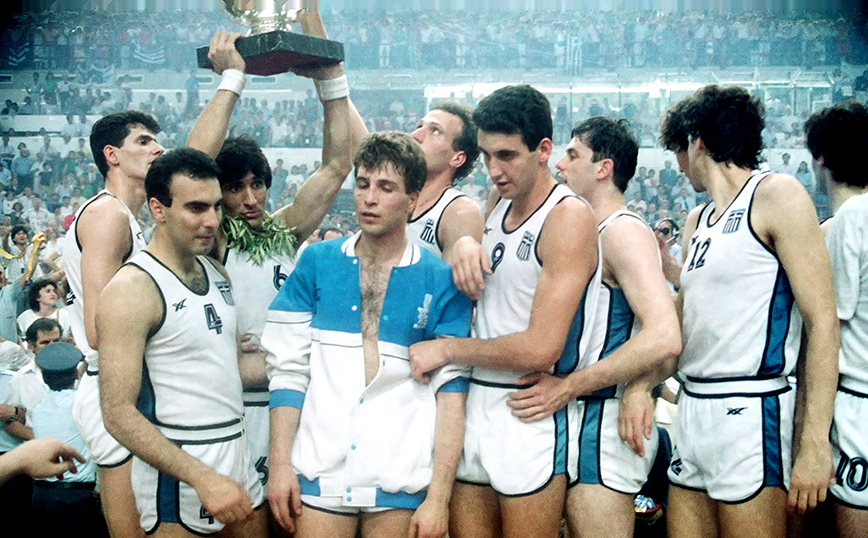
Packed arenas became the norm. Sponsors suddenly wanted space on jerseys and courtside signage. Most importantly, newly established private television networks recognized that basketball could deliver massive audiences.
When private initiative entered the market in the form of then newly-formed Mega Channel TV station, it became obvious that a broadcaster was finally willing to pay serious money for domestic basketball.
For the first time, clubs realized they weren’t simply selling games. They were selling content, viewers, and advertising inventory.
The balance of power had shifted.
The executive who sold a league before it knew its own value
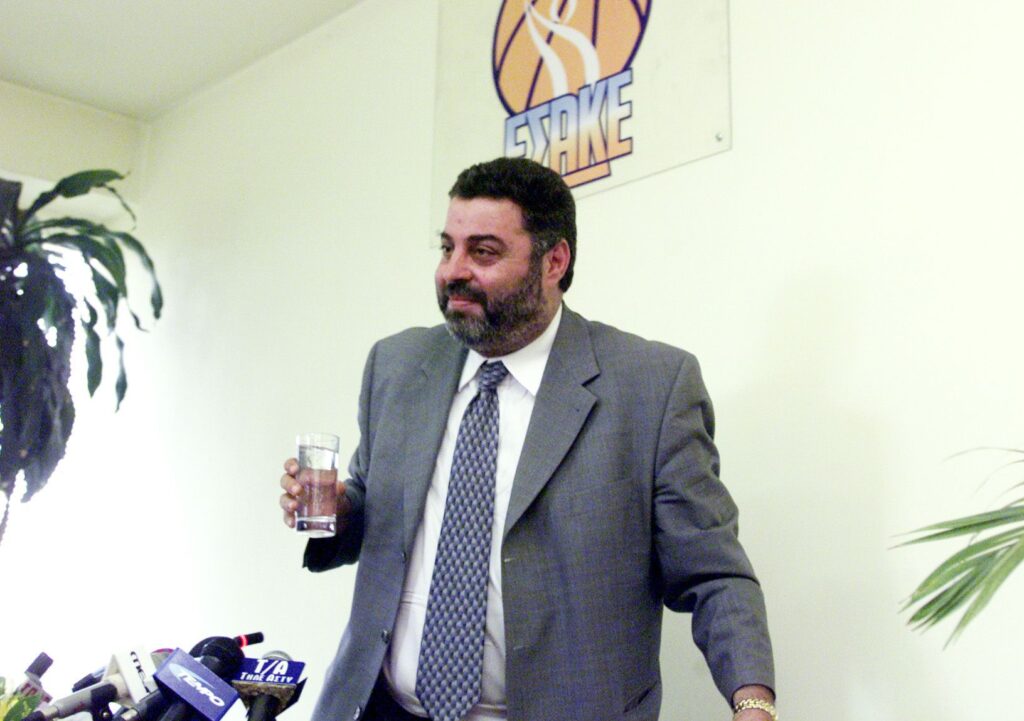
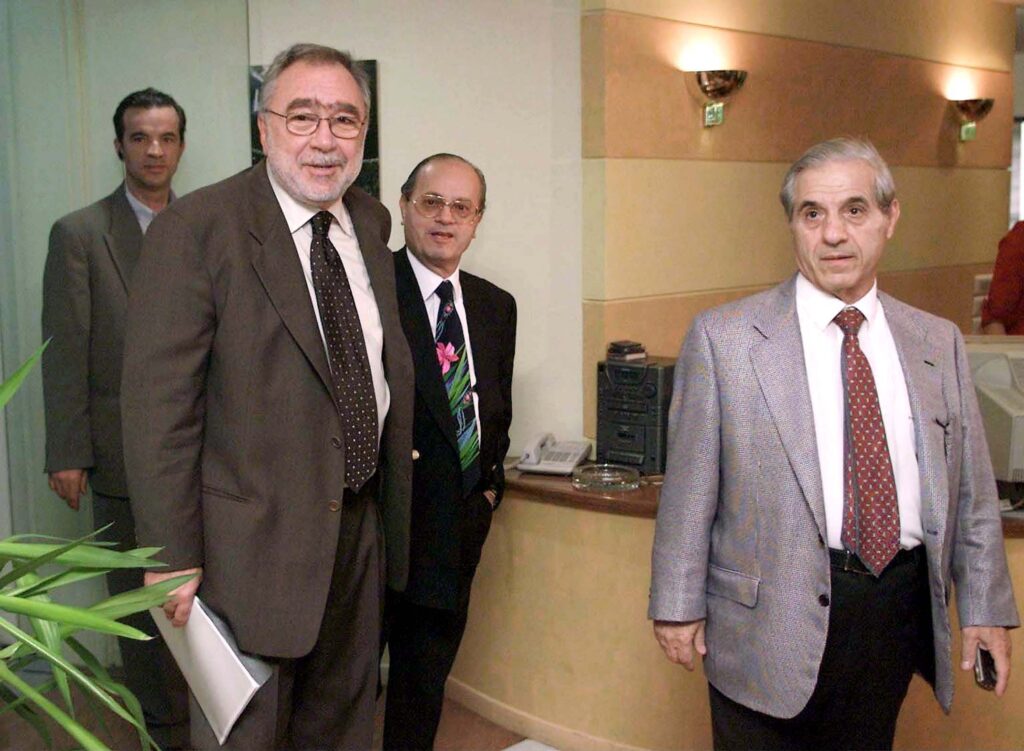
No individual shaped Greek basketball’s commercial revolution more than Theodoros Karatzas.
An entrepreneur who had already built a successful technology company and guided Papagou from the lower divisions to the top flight, Karatzas became the first president of the newly established HEBA (later ESAKE) in 1992.
He approached basketball differently.
While many still viewed the league primarily as a sporting competition, Karatzas treated it as a media product whose perceived value had to increase before its financial value could.
His mantra became famous.
He repeatedly insisted that the Greek league was Europe’s best domestic championship.
Many journalists challenged the claim, pointing to organizational shortcomings and competitive imbalances.
But Karatzas understood something more important, as he was trying to convince broadcasters, advertisers and sponsors that they were buying premium content.
The strategy worked since television negotiations became increasingly competitive, and every new agreement pushed rights fees higher.
When television paid for Europe’s best league
By the mid-1990s Greek basketball had become much more than Europe’s strongest league on the court.
It had become one of the continent’s most valuable sports media properties.
Private broadcasters competed aggressively for rights. Television income overtook ticket sales as the primary revenue source for many clubs.
Budgets expanded dramatically. Foreign stars arrived in unprecedented numbers.
According to financial reporting from the 1996-97 season, the Greek basketball economy generated an estimated 20-25 billion drachmas in annual activity—roughly €60-75 million in today’s nominal terms before inflation adjustments, an extraordinary figure for Greek sport.
Club budgets (1996-97)
| Club | Budget |
|---|---|
| Olympiacos | ~€8.8 million |
| Panathinaikos | ~€8.8 million |
| PAOK | €4.4+ million |
| Aris | €2.9-4.4 million |
| AEK | €2.9-4.4 million |
| Iraklis | €2.9-4.4 million |
| Panionios | €2.9-4.4 million |
| Peristeri | €2.9-4.4 million |
| Smaller clubs | Under €1.5 million |
Adjusted for inflation and purchasing power, Olympiacos’ and Panathinaikos’ budgets would roughly correspond to €16-18 million today—remarkable figures considering the European basketball market of the time.
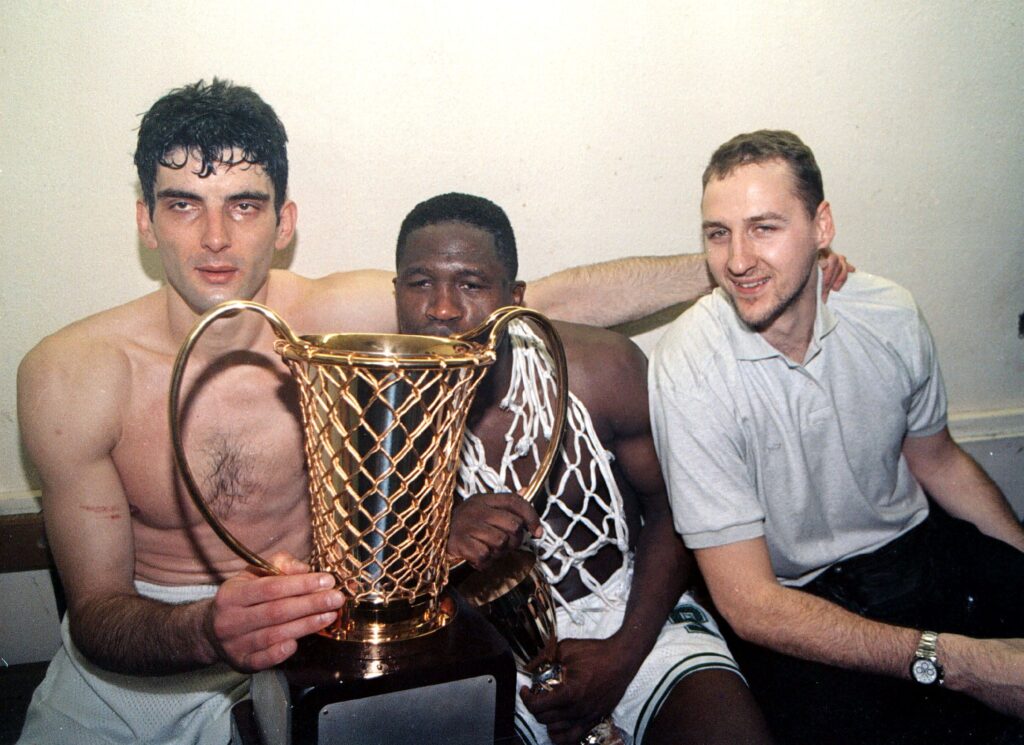
Those resources helped attract elite international talent: Dominique Wilkins, Dino Radja, Roy Tarpley, Byron Scott, Eddie Johnson, Thurl Bailey, Scott Skyles, and Jeff Malone were some of the names featured in the Greek league in the ’90s.
It had become abundantly clear that television money was underwriting one of the highest-quality leagues in Europe.
The television deal that changed everything
The defining agreement arrived in 1996.
HEBA signed a central television contract with ANT1 worth 2.5 billion drachmas, approximately €7.3 million at the official euro conversion rate.
Just five years earlier, television rights had generated roughly 75 million drachmas.
The increase was extraordinary.
Every one of the league’s fourteen clubs received approximately 170 million drachmas, regardless of market size.
For smaller organizations, television suddenly financed between 35% and 40% of their annual budget.
In clubs like Papagou, media revenue effectively guaranteed survival.
European competitions made the richest clubs even richer
The domestic agreement told only part of the story.
Greek clubs competing in Europe negotiated separate broadcasting contracts for continental competitions.
Olympiacos partnered with ANT1, while Panathinaikos reached agreements with FilmNet.
Combined domestic and European television revenues approached 1.2 billion drachmas (€3.6 million annually for each club—nearly 40% of their total budgets.
Television wasn’t simply supporting operations; it was paying for championship-caliber rosters.
When TV became more valuable than fans in the arena
Perhaps the most striking illustration of television’s influence comes from comparing media income with gate receipts.
Even Olympiacos, the league’s biggest attendance draw, earned significantly more from television than from ticket sales.
For smaller clubs, the contrast was even sharper.
Papagou generated approximately 10 million drachmas from ticket sales during the entire season.
Its share of the central television contract was nearly seventeen times larger.
The financial future of many organizations no longer depended on filling arenas.
It depended on selling television rights.
The bubble eventually burst
Like every rapidly expanding media market, Greek basketball’s television boom had limits.
The arrival of subscription television fundamentally changed the business.
Broadcasters increasingly prioritized subscriber acquisition over mass audiences. Advertising growth slowed. The aggressive bidding wars of the 1990s disappeared.
Then came the Greek financial crisis.
After 2009, sponsorship declined sharply, advertising budgets contracted and many historic clubs entered severe financial distress. While Panathinaikos and Olympiacos continued winning EuroLeague titles, the domestic commercial ecosystem weakened considerably.
Television remained important, but it simply stopped being a growth engine.
Instead, it became a survival mechanism.
ERT restored stability
Public broadcaster ERT eventually returned as the league’s principal television partner.
The financial terms were far smaller than during the golden era, but stability became more valuable than spectacular contracts.
The 2022-23 agreement totaled €6.5 million, with approximately €5.3 million distributed among clubs.
For Olympiacos and Panathinaikos, television represented only a small fraction of increasingly diversified revenues built around EuroLeague participation, sponsorship and commercial activities.
For many smaller clubs, however, television still accounted for 50-70% of annual budgets.
The league had entered a fundamentally different economic reality.
The SKAI agreement opens a new chapter
That explains why the newly approved three-year agreement with SKAI Group has generated such optimism.
Approved unanimously by all fourteen clubs, the contract will distribute more than €21 million between 2026 and 2029.
GBL — SKAI Agreement
| Season | Distribution |
|---|---|
| 2026-27 | €6.35 million |
| 2027-28 | €7.35 million |
| 2028-29 | €7.35 million |
Perhaps the most interesting feature isn’t the headline number.
The agreement includes a modern market mechanism allowing the league to test competing offers before the final season, while giving SKAI matching rights.
Instead of locking both sides into outdated market values, the deal allows television rights to evolve alongside demand.
For SKAI, the investment extends well beyond basketball itself.
Launching a subscription platform requires premium live programming capable of retaining viewers throughout the year.
The GBL delivers more than 180 live games annually, two of Europe’s strongest basketball brands in Olympiacos and Panathinaikos, and consistent weekly content—exactly the type of programming subscription services seek.
The Evolution of Greek Basketball’s Television Rights
| Period | Broadcaster | Total Contract | Value (Drachmas) | Nominal Euro Value | Estimated 2026 Value | Notes |
|---|---|---|---|---|---|---|
| 1982–1988 | ERT | No television rights market | — | — | — | Clubs retained only courtside advertising revenue from televised games. |
| 1989 | ERT | First compensation paid to clubs | Not disclosed | — | — | First organized payment for television rights. |
| 1990–91 | Mega Channel | Approx. 300 million drachmas | 300,000,000 | ≈ €880,000 | ≈ €1.9 million | First major private television agreement. |
| 1991–92 | ANT1 | 75 million drachmas | 75,000,000 | ≈ €220,000 | ≈ €460,000 | First contract signed under the newly established HEBA (ESAK). |
| 1992–94 | ERT | Approx. 100 million drachmas | ≈100,000,000 | ≈ €293,000 | ≈ €600,000 | Roughly a 35% increase over the previous agreement. |
| 1994–96 | ANT1 | Undisclosed | — | — | — | Rights value rose significantly amid growing competition between private broadcasters. |
| 1996–97 | ANT1 | 2.5 billion drachmas | 2,500,000,000 | ≈ €7.34 million | ≈ €14.5–15 million | Historic leap in value according to HEBA financial data. |
| 1998–2001 | FilmNet / Nova (subscription TV) | 11.5 billion drachmas (three years) | 11,500,000,000 | ≈ €33.75 million (≈ €11.25m/year) | ≈ €60–62 million total (≈ €20–21m/year) | Largest television agreement of the Karatzas era. |
| 2001–04 | Nova (subscription TV) | Not disclosed | — | — | — | Subscription television becomes the league’s primary partner. |
| 2004–07 | Nova (subscription TV) | Not disclosed | — | — | — | Individual club agreements continue. |
| 2007–08 | SKAI | Not disclosed | — | — | — | SKAI acquires league rights for one season. |
| 2008–09 | ERT | Not disclosed | — | — | — | Return to public television. |
| 2009–10 | SKAI / ANT1 / CONNX TV / ERT | Not disclosed | — | — | — | Fragmented broadcasting model with different networks sharing rights. |
| 2010–12 | Nova / ERT | Mixed agreements | — | — | — | No stable centralized television package. |
| 2012–13 | ERT / SKAI | Not disclosed | — | — | — | ERT held league rights; SKAI also broadcast Game 3 of the Finals. |
| 2013–17 | Nova / ERT | Mixed agreements | — | — | — | Continuation of the hybrid model with club-specific deals. |
| 2017–20 | ERT | €4–5 million annually | — | €4–5 million | ≈ €4.8–5.9 million | Return to centralized rights management. |
| 2020–21 | COSMOTE TV / ERT | Not disclosed | — | — | — | Clubs split between COSMOTE TV and ERT. |
| 2022–23 | ERT | €6.5 million | — | €6.5 million | ≈ €7.3 million | Largest domestic TV agreement of the previous decade. |
| 2023–24 | ERT | Approx. €6.5 million | — | €6.5 million | ≈ €7.0 million | Continuation of the same financial framework. |
| 2024–25 | ERT | Approx. €6.5 million | — | €6.5 million | ≈ €6.8 million | Centralized television rights remain in place. |
| 2025–26 | ERT | Approx. €6.5 million | — | €6.5 million | ≈ €6.6 million | Final season of the ERT agreement. |
| 2026–29 | SKAI Group (new streaming platform) | Approx. €21 million (three years) | — | ≈ €7 million per season | ≈ €7 million per season | Largest centralized television agreement of the modern era. |
Growth versus sustainability
The comparison with the 1990s reveals an important shift.
Some 30 years ago, television revenues financed rapid expansion. Today, they primarily ensure financial stability.
Ironically, the overall value of the league’s television package has returned to historic levels, yet its distribution is considerably more balanced.
Rather than concentrating wealth among a handful of clubs, the current model directs a larger share toward the rest of the league, strengthening competitive balance and improving long-term sustainability.
That may ultimately prove more valuable than another television boom.
Greek basketball has already experienced what happens when explosive media growth fuels unprecedented spending.
The lesson of the last 40 years is not that television can make a league rich because it already did.
The real challenge is ensuring television continues making the league sustainable.