
One of the aspects that has evolved the most in sports in general —and basketball in particular— over recent years is longevity. Careers are being stretched to lengths that seemed unimaginable not so long ago, and what once felt like an exception, even with an evident physical decline, as in Kareem Abdul-Jabbar’s case, is now becoming increasingly common. Staying active beyond 40 remains an achievement, but it is slowly becoming less of a headline.


Still, only a select few can claim to do it while remaining close to their peak. And just as LeBron James continues to defy time on the other side of the Atlantic, Marcelinho Huertas’ case deserves enormous admiration in Europe.
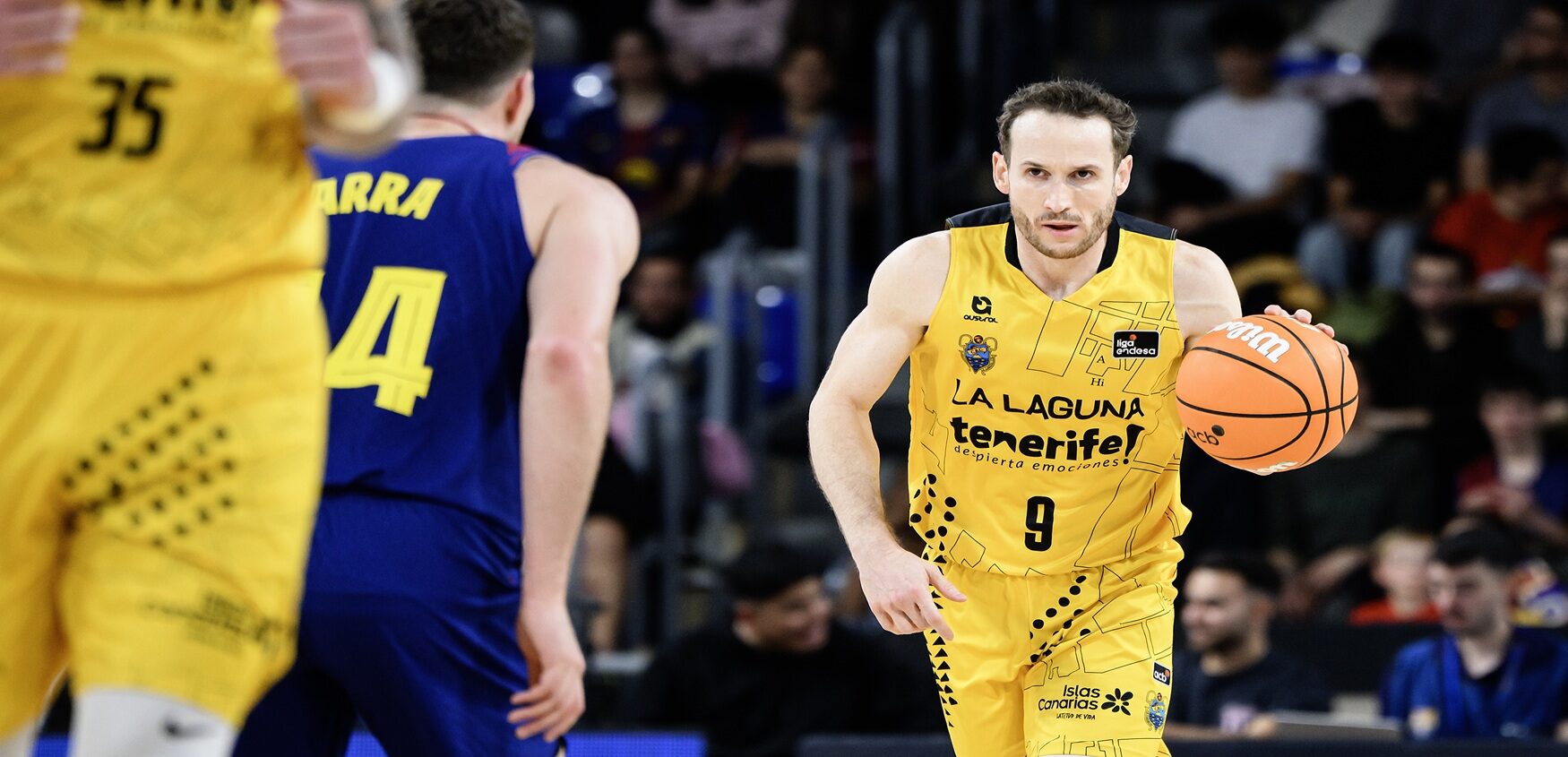
At 43 years old, the Brazilian has just signed a one-year extension with La Laguna Tenerife, a team he will once again lead in the Liga Endesa and in the Canarian club’s debut EuroCup campaign after securing a five-year license, following a decade as one of the most dominant teams in the Basketball Champions League. Despite dealing with physical setbacks during the final stretch of the season —plantar fasciitis that forced him to miss the Copa del Rey and a hamstring injury that left him racing against the clock ahead of the title playoffs — Huertas still put together another outstanding campaign: 14.9 points, 5.5 assists and a 15.3 efficiency rating.


But his impact goes far beyond the cold numbers.
‘Marce’ is challenging one of the unwritten laws of modern basketball. In an era dominated by fresh legs, constant defensive switching and an increasingly relentless pace, the veteran point guard still controls games as if the clock moved at a different speed for him. And perhaps that is exactly the secret: Huertas understood a long time ago that longevity is not simply about surviving. It is about evolving.
Just a year ago, the former Kobe Bryant teammate with the Los Angeles Lakers won the Liga Endesa MVP award… at 42 years old.
His partnership with Georgian big man Gio Shermadini —much like his chemistry with Ante Tomic during his Barcelona days— has become an ode to the pick-and-roll game, dismantling opposing defenses night after night while leading one of the oldest rosters in Spanish basketball.
This past season, Tenerife reached the Liga Endesa semifinals after stunning Real Madrid in the quarterfinals. In the decisive game of that series, with Shermadini sidelined through a health issue, the partnership between Huertas and Australian guard Patty Mills —23 points from the former, 29 from the latter— tore apart the Spanish giants and triggered an unprecedented crisis inside the Madrid powerhouse, one that eventually led to Sergio Scariolo’s dismissal and the surprise appointment of Pedro Martínez despite the Italian still having two years left on his contract.
But let’s go back to Huertas.
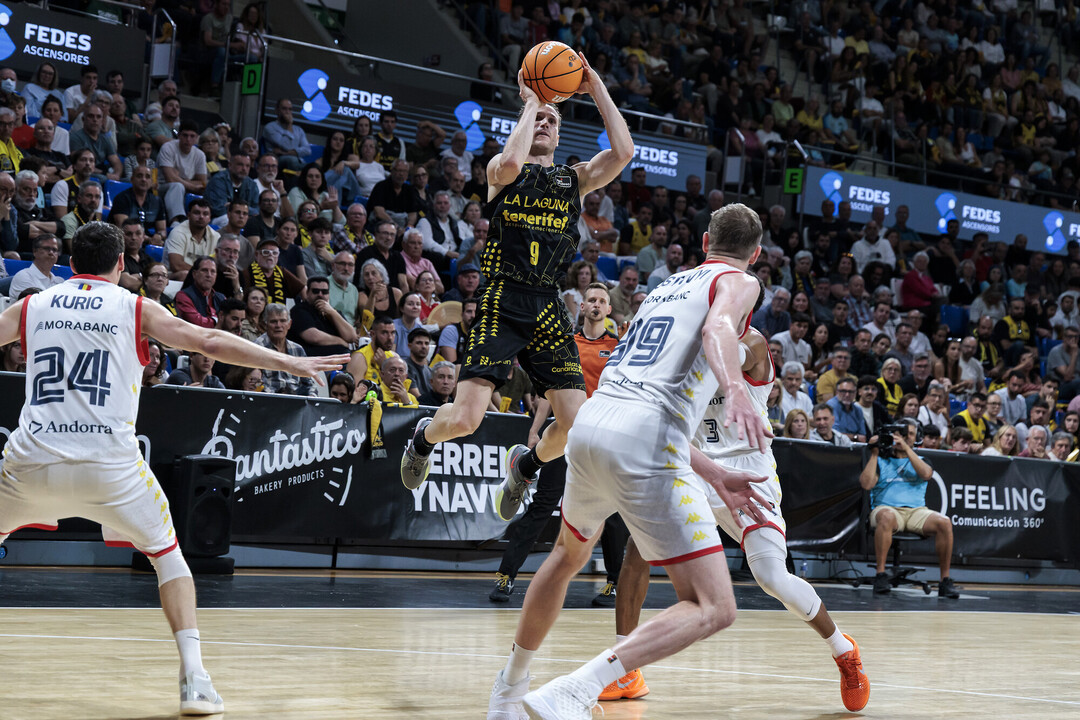
Behind the player who continues to break defenses with a high post screen, his signature one-legged floater and pinpoint feeds to the rolling big man or the shooter spotted up in the corner, there is silent work. Almost handcrafted work. A craft.
Because Marcelinho has spent years building a second career within his own career.
The Brazilian does not belong to the generation of players raised with recovery culture embedded from youth levels. He has openly admitted that there was a turning point. Up until his thirties, his body forgave excesses… even some late-night ones. Then, after returning to Europe following his NBA stint, it stopped doing so.
That was when the transformation began, a process that today explains much of his ability to remain among the elite.
His diet changed, recovery became a priority and the invisible work started carrying the same weight as shooting sessions or tactical practices. Tailored nutrition, injury prevention, rest, individualized physical preparation, yoga, meditation and mental coaching all became part of a daily routine designed around arriving at the next game in peak condition.
Many players simply train. Huertas seems to operate like a precision machine. He may not spend a million dollars a year taking care of his body like LeBron James reportedly does, but he is probably not far behind in terms of the hours invested.
Yet reducing his longevity to purely a physical matter would miss the bigger picture. Because the real fuel still comes from somewhere else: his mind.
Marcelinho admits that he goes home and keeps demanding more of himself, regardless of how the previous game unfolded. That level of dissatisfaction explains why he still plays with the curiosity of a rookie and the tactical understanding of a veteran.
There is no comfort zone. There is no autopilot.
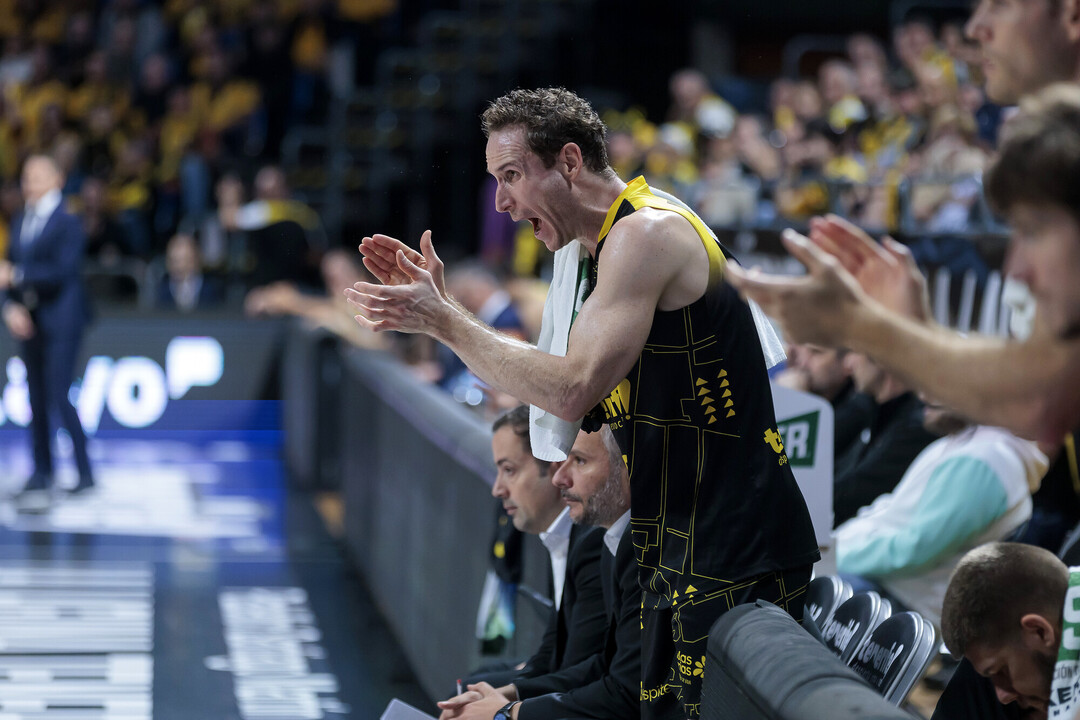
His obsession is not preserving what he already has. It is adding new layers to his game. That is where the purest version of Marcelinho emerges: an old-school floor general obsessed with details. A playmaker who lives to dictate tempo, exploit mismatches and find passing angles nobody else saw developing.
As his body slowly loses fractions of a second, his basketball IQ keeps buying him extra time. In fact, uncertainty surrounded his contract extension for a reason: Paris Basketball had serious interest in bringing him in as head coach. Transitioning from the court to a EuroLeague bench demands immense preparation, but it would not be unreasonable to think the Brazilian is already ready for that leap.
There is also a competitive personality within Huertas that avoids empty clichés. He talks about enjoying the journey, appreciating the career and refusing to define a legacy solely through trophies. He certainly does not obsess over what his birth certificate says in this ongoing battle against time. One that, year after year, he continues to win.
But that mentality does not come from comfort. It comes from someone who is still hungry. Recognition, in his eyes, should never become complacency. It should create greater ambition. Perhaps that is why he remains a difference-maker at 43.
Because Marcelinho understood before many others that longevity is not built only on the court. It is built in the hours without cameras, without packed arenas and without box scores. It is built through the work nobody sees.
And while his legs may have gradually lost explosiveness, his basketball has continued to gain something far more valuable: control over time.
Given his level of performance and his impact on Tenerife’s game, his extension should not come as a surprise. Yet there was one factor that increased uncertainty: head coach Txus Vidorreta’s departure to Unicaja Málaga.
Huertas has never hidden that much of his longevity is tied to his understanding with the Basque coach, a shared reading of the game that at times made Tenerife seem capable of playing with their eyes closed. Over the last years, they have consistently fielded veteran teams that struggled physically against younger opponents, but few sides in Europe play so instinctively, with Marcelinho pulling the strings, as Tenerife.
Huertas had never played for another coach at Tenerife since arriving in 2019, making the choice of Vidorreta’s successor crucial to his decision.
And the answer turned out to be Jaka Lakovic. The Slovenian’s presence and tactical playbook convinced the veteran floor general to stay for one more season… and perhaps more.
After all, the slogan chosen by the club to announce the Brazilian international’s return was: ‘Another Dance’. Everyone understands the dance could eventually become The Last Dance.
𝑨𝒏𝒐𝒕𝒉𝒆𝒓 𝒅𝒂𝒏𝒄𝒆 ? 💛🖤 pic.twitter.com/VazrXaA8Vy
— La Laguna Tenerife (@CB1939Canarias) June 30, 2026
But at 43 years old, Marcelinho Huertas has earned the right to decide for himself how much longer his remarkable career will continue.
Meanwhile, it’s just time yo keep enjoying the master of time.