




Real Madrid are not accustomed to ending a season without silverware. In fact, it had not happened since 2011, just before Pablo Laso took charge of the club and ushered in one of the most successful eras in European basketball history.


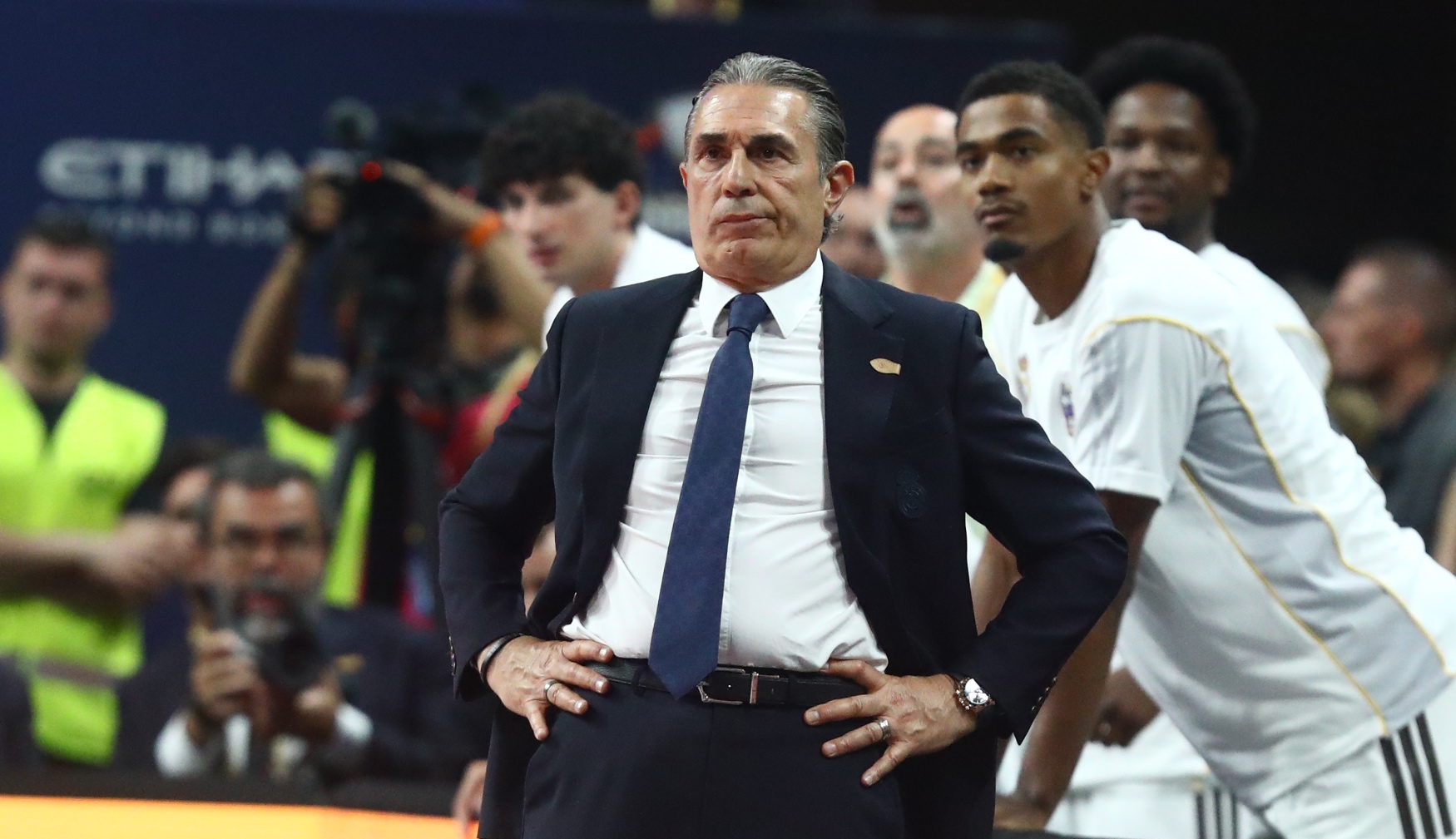
Likewise, it feels unusual not to see the Spanish giants in the Liga Endesa Finals. Madrid had reached every championship series since 2012, with the sole exception of 2020, when the COVID-affected season concluded in a special bubble format, played behind closed doors and decided through single-elimination games. The last time Madrid were knocked out in the league quarterfinals dates back even further, to 2008. Back then, Joan Plaza’s side had finished atop the regular-season standings, only to be upset in the opening playoff round by Unicaja, coached by none other than Sergio Scariolo. The same Scariolo who has now experienced a crushing setback of his own. One that may difficult to overcome without significant consequences.
So how did Madrid find themselves in a situation where La Laguna Tenerife, severely depleted in the frontcourt and missing both Giorgi Shermadini and Fran Guerra, managed to eliminate them in the Liga Endesa quarterfinals and trigger a crisis unlike anything the club has experienced in recent years?
First and foremost, it must be acknowledged that Madrid’s frontcourt arrived at the end of the season in tatters. Shortly before the EuroLeague Final Four, Edy Tavares suffered a knee injury that ended his campaign. And, frankly, everything changes for Madrid when Tavares is unavailable. The Cape Verdean remains the most dominant player in European basketball. At the same time, Alex Len was sidelined by plantar fasciitis, while Usman Garuba suffered what may be the most devastating injury a basketball player can endure: a torn Achilles tendon, sustained during the EuroLeague semifinal against Valencia Basket.
Despite those setbacks, Madrid produced a highly competitive performance in the EuroLeague Final in Athens against Olympiacos. With Chuma Okeke and Trey Lyles forced to play minutes at center, the lack of size ultimately tipped the balance in favor of the Piraeus club. Yet even in defeat, Scariolo’s project appeared strengthened by what transpired at OAKA.
Now, however, the storm clouds have gathered.
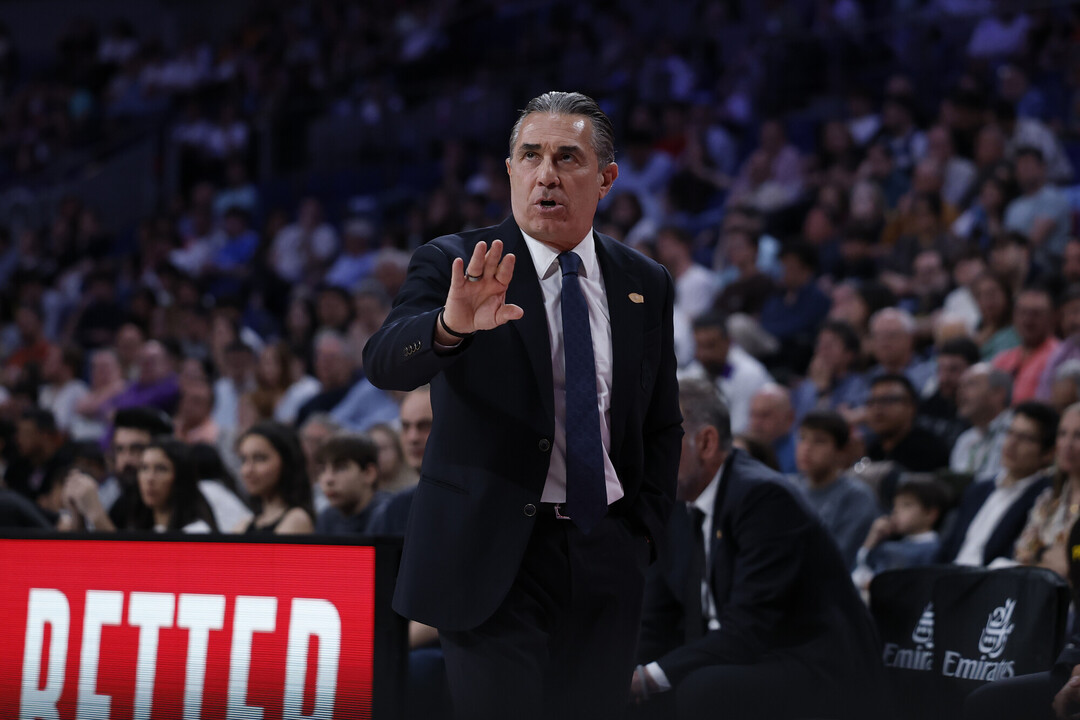
Madrid lost three finals this season. In two of those defeats —as in the opening round of the Liga Endesa playoffs against Tenerife— their defensive performances were alarmingly poor. They conceded 98 points to Valencia Basket in the Spanish Super Cup Final and 100 to Baskonia in the Copa del Rey Final. Against Tenerife, both losses came at home: 97-98 in Game 1 and 95-107 in the decisive Game 3, after Madrid had levelled the series with a road win in the Canary Islands. Even in an era where offensive firepower increasingly dominates the game, those are numbers that make it extremely difficult to win high-level contests.
Olympiacos scored 92 points in the EuroLeague Final, although Madrid can hardly be faulted for their tactical approach on either end of the floor that night. Playing without true centers, they competed at an elite level, entered the fourth quarter with the lead, and ultimately fell just short against one of Europe’s most powerful teams.
Yet losing in the domestic quarterfinals and finishing the season empty-handed brings Madrid back to territory they have not visited in a very long time.
Emergency signings Omer Yurtseven and Mady Sissoko failed to compensate for the damage caused by injuries in the paint. And what had begun to unveil during the closing stretch of the regular season —Madrid lost their final five games, something unprecedented for the club— was confirmed immediately in the playoffs.
Scariolo’s team ended up at the mercy of La Laguna Tenerife, inspired by a masterclass from Marcelinho Huertas and Patty Mills. The 43-year-old Brazilian and the 37-year-old Australian dismantled Madrid’s defense, scoring 23 and 29 points respectively. They were joined by the surprising Kevin Yebo, who added 22 points and seven rebounds.
By the way, Yebo had only been signed days earlier to help Tenerife cope with their own frontcourt problems, which weakens Madrid’s injury-related excuses. One statistic perfectly illustrates the scale of the collapse: over the final eight minutes of Game 3, Tenerife—who scored 37 points in the fourth quarter alone—had 19 offensive possessions and converted 14 of them into baskets. Quite simply, Madrid failed to meet the demands of the moment.
💥💣 ¡@CB1939Canarias 𝗖𝗢𝗠𝗣𝗟𝗘𝗧𝗔 𝗟𝗔 𝗚𝗘𝗦𝗧𝗔!
¡Los de Txus Vidorreta eliminan al Real Madrid y se plantan en semis tras otra actuación memorable!#LigaEndesaxDAZN 🏀 pic.twitter.com/LLVUNSkCiU
— DAZN España (@DAZN_ES) June 6, 2026
Looking back, the situation becomes even more delicate. Just a year ago, Madrid decided not to continue with Chus Mateo as a head coach despite winning the Liga Endesa title. He departed after three seasons and six trophies: two Spanish league championships (2024 and 2025), one Copa del Rey (2024), two Spanish Super Cups (2022 and 2023), and the EuroLeague title of 2023 —the club’s most recent continental crown—.
At the time, Mario Hezonja famously described the season as “shit.” Now, Madrid already know that next season they will not even participate in the Spanish Super Cup, having failed to qualify through sporting merit.
This was supposed to be the beginning of a new cycle. Sergio Scariolo took over on the bench, while Sergio Rodríguez moved into the front office alongside other former club legends such as Martynas Pocius, Felipe Reyes and Rudy Fernández. Together, they oversaw the largest budget in the history of Madrid’s basketball section, pushing annual spending beyond €50 million. At a club where expectations are relentlessly high, a season without trophies can only be graded as a failure, regardless of the encouraging EuroLeague campaign or the mitigating circumstances created by injuries in the frontcourt.
The immediate future now raises a host of questions: Is Scariolo’s position under threat, despite having two years remaining on his contract? Should Madrid seriously reconsider Trey Lyles’ future, given that flashes of elite talent and scoring ability were too often offset by underwhelming performances in crucial moments? Is Mario Hezonja —the Liga Endesa MVP— the right locker-room leader for this team? Has Facundo Campazzo already passed his physical peak after struggling to impose himself during the closing stages of the season? And how can Madrid protect Edy Tavares next year, knowing that Usman Garuba is expected to miss almost the entire campaign?
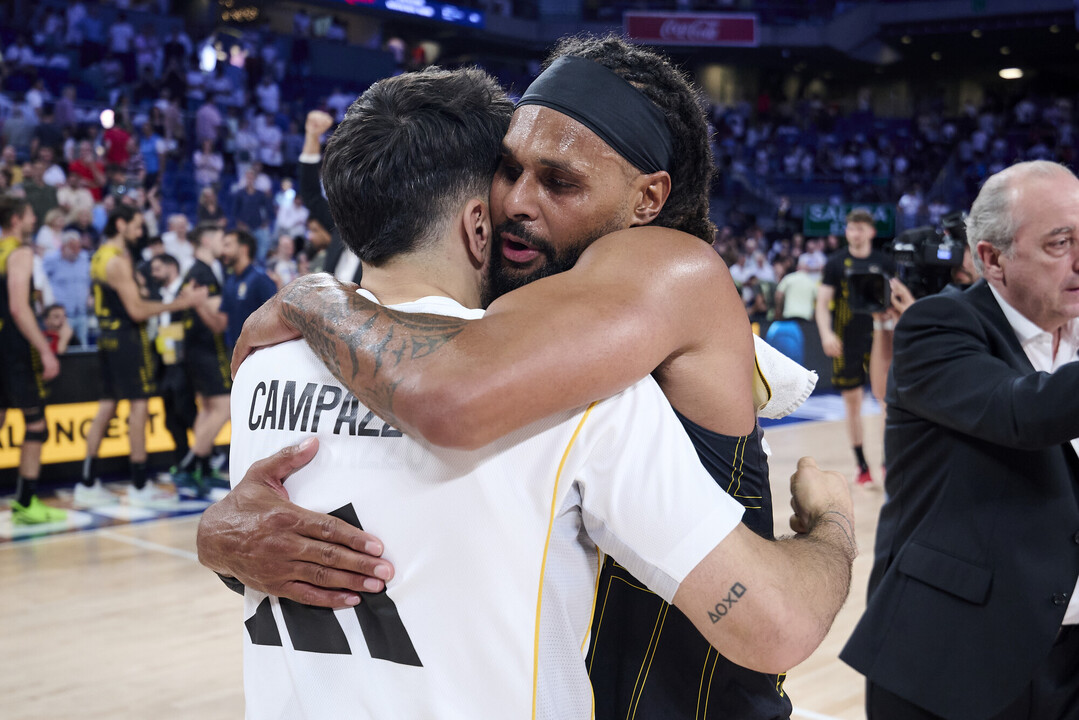
There is also the long-standing issue of perimeter creation. Throughout the season, Madrid lacked a genuine scoring guard capable of handling the ball and generating offense consistently. Addressing that weakness will undoubtedly be one of the club’s priorities during the summer market.
The questions are numerous, and Madrid must begin answering them in the coming weeks. For now, one thing is already certain: it is now well known that there is a trophy they will not be able to win next season.
And at Real Madrid, that hurts.