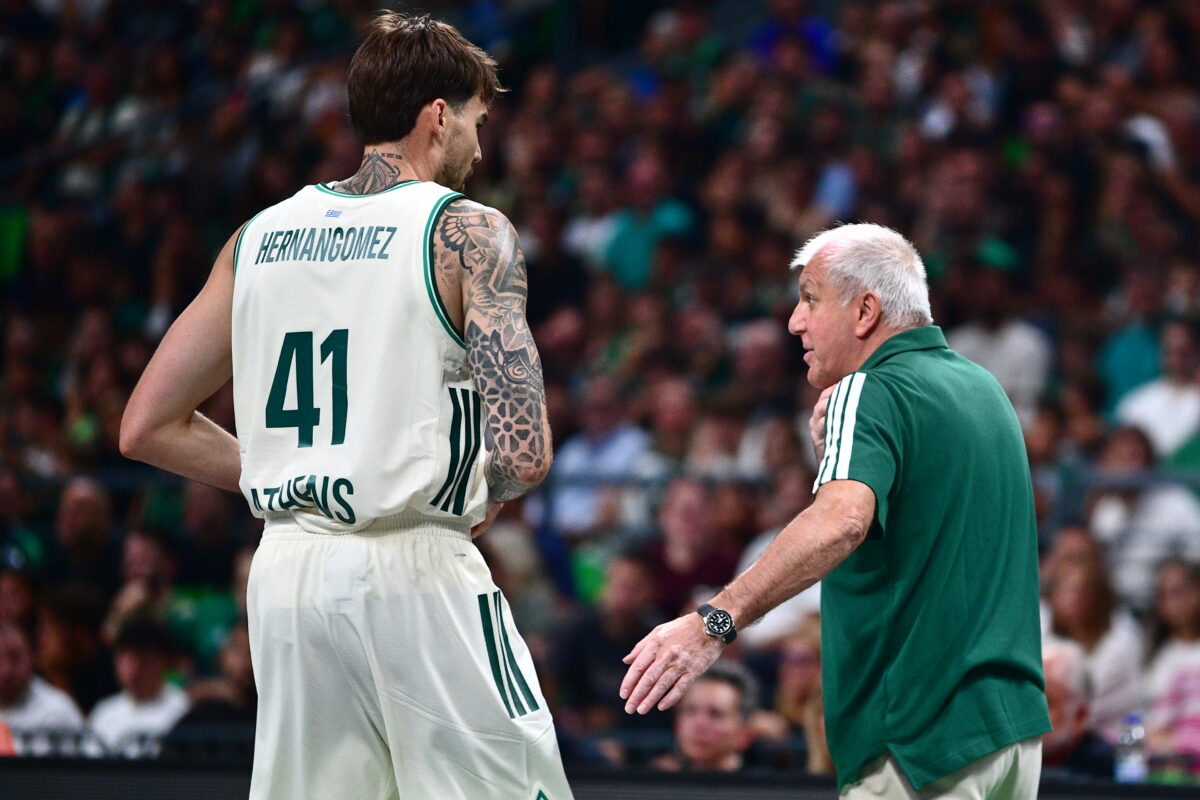











Willy Hernangómez’s move to Unicaja Málaga came as something of a surprise. At 32, the Spanish international and MVP of EuroBasket 2022 is stepping away from the EuroLeague after three hugely disappointing seasons with Barcelona to join an Andalusian club entering a new era. Following the departure of Ibon Navarro —by far the most successful coach in the club’s history— to Crvena Zvezda Belgrade, Unicaja is looking to rebuild and re-establish themselves among Spain’s elite.


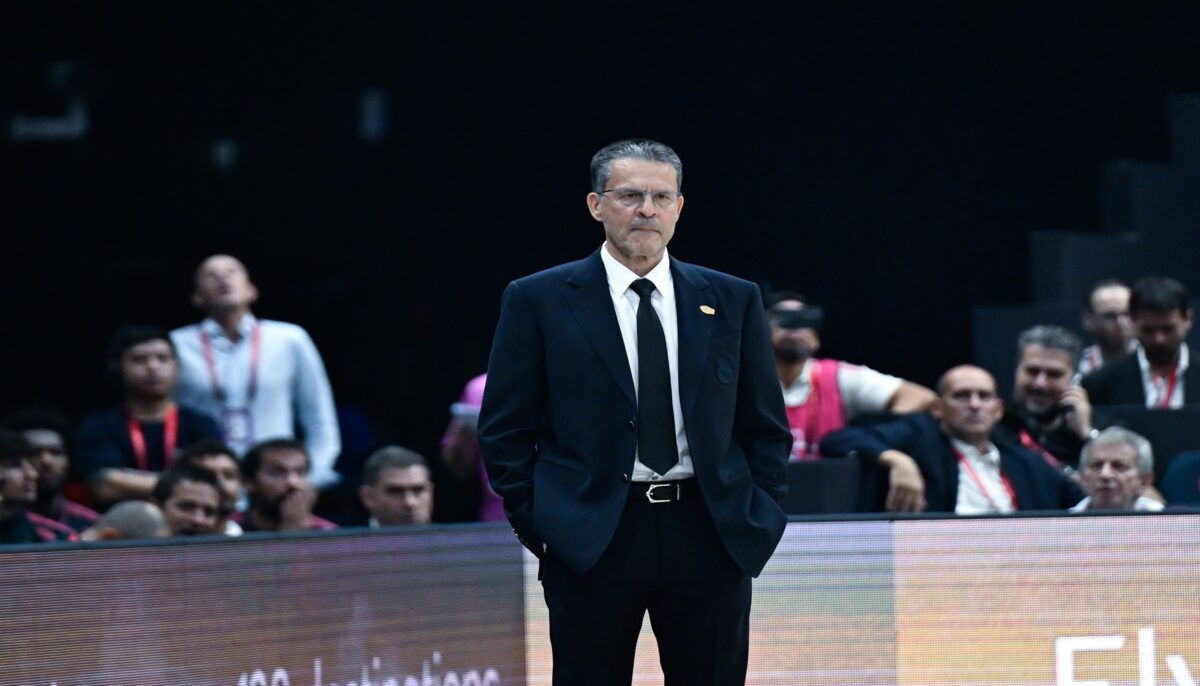
The man entrusted with that task is veteran coach Txus Vidorreta, who spent nearly a decade maximizing the potential of Tenerife’s experienced roster. That appointment is one of the main reasons for optimism among Unicaja supporters following Hernangómez’s one-year signing. Vidorreta built one of Europe’s most efficient offenses around Giorgi Shermadini, another traditional center blessed with exceptional low-post scoring ability but limited defensive versatility and mobility. Qualities that also define Hernangómez’s game.
Because, in many ways, Málaga feels like the last opportunity for Willy Hernangómez to re-establish himself as an elite player.

Ever since leaving for the NBA —and later returning to Europe— his defensive shortcomings have overshadowed everything else he brings to the floor. Few big men in Europe are as polished offensively once they receive the ball in the paint. His footwork, soft touch around the rim and scoring instincts have never been in doubt. Yet his struggles on the defensive end have consistently limited his role, leaving him to play far fewer minutes than his offensive talent alone would seem to warrant throughout the last decade.
When Hernangómez arrived in the NBA in 2016, most observers believed he possessed enough talent to carve out a long career in the world’s best league, even though questions about his defensive consistency had already surfaced during his time at Real Madrid.
His rookie season with the New York Knicks appeared to confirm those expectations. He played 72 games, making 22 starts, while averaging 8.2 points and 7.0 rebounds in just 18.4 minutes per game, earning a place on the NBA All-Rookie Second Team.
Across seven NBA seasons with the Knicks, Hornets and Pelicans, he appeared in 344 games, averaging 7.3 points and 5.8 rebounds while shooting better than 53 percent from the field.
Yet those numbers never translated into long-term security. The reason was almost always the same: defense.
As the NBA increasingly prioritized mobility, switching defenses and centers capable of guarding away from the basket, Hernangómez struggled to fit that evolving profile.
Jeff Hornacek, his coach in New York, was among the first to publicly identify the issue. During a period in which the Spaniard’s role was shrinking, Hornacek remarked that he needed to “pay much more attention to what we’re doing” if he wanted to earn more playing time, adding that, because he was not an exceptionally mobile player, he especially needed to improve “on the defensive end.”
Those comments effectively established the reputation that would follow Hernangómez throughout his NBA career. And one that still defines him today.
His move to Charlotte did little to change that perception. Steve Clifford appreciated his offensive skills in the post but believed that archetype had become increasingly difficult to accommodate in the modern NBA.
“To play every night he has to improve his shooting,” Clifford said, describing him as a big man whose offense relied too heavily on back-to-the-basket play. The challenge was twofold: not only were his defensive limitations apparent, but his offensive profile also fell short of the floor-spacing, versatile center increasingly demanded by the league’s tactical evolution.
Ironically, whenever he received extended minutes, he usually produced… in offense.
In New Orleans he delivered several outstanding performances, including a 29-point outing against Philadelphia in January 2022, once again showcasing his refined offensive skill set, soft touch around the basket and outstanding rebounding instincts.

But in today’s NBA, offensive production rarely outweighs defensive deficiencies for a center.
Hernangómez became a victim of that reality: an efficient, productive scorer who simply could not provide the defensive reliability required in a league built around pace, versatility and maximizing every possession.
Ironically, the finest basketball of his career came just one year before he left the NBA.
At EuroBasket 2022, Hernangómez teamed up with Lorenzo Brown to lead Spain to an unexpected surprise, capturing the European title despite entering the competition with modest expectations. Averaging 17.2 points and 6.9 rebounds per game, he was deservedly named the tournament’s Most Valuable Player.
Spain head coach Sergio Scariolo successfully designed a defensive system capable of masking Hernangómez’s weaknesses while maximizing his offensive strengths.
That performance, as expected, generated huge expectations when Barcelona, the eternal rival of Real Madrid, the club where he starte his career, signed him in the summer of 2023.
The intrigue went well beyond seeing him wear Barça colors. The real question was whether, back in Europe, he could reproduce anything close to the level he had shown during EuroBasket one year before.
But the answer turned out to be a resounding no. Throughout three disappointing seasons in Barcelona, Hernangómez never came close to living up to expectations.
Neither Roger Grimau, Joan Peñarroya nor Xavi Pascual consistently trusted him with a meaningful role. Once again, his defensive issues —particularly in pick-and-roll defense— proved impossible to overlook, preventing him from fully exploiting his offensive talent.
Instead of becoming one of Barcelona’s cornerstone players after the club invested heavily to bring him back from the NBA, he gradually slipped into a marginal role, far removed from what both the club and the player had envisioned.

That is why his move to Unicaja should almost be viewed as a career ultimatum.
The one-year contract suggests Hernangómez himself is determined not to settle and hopes to work his way back to the highest level. However, he still has plenty to prove with a team attempting to remain competitive in the ACB while once again competing in the Basketball Champions League, a competition whose level of demand is considerably lower than that of the EuroLeague.
If his spell on the Costa del Sol proves successful, it is easy to imagine EuroLeague clubs taking another serious look at him next summer. After all, Europe has very few centers of his size who possess such refined offensive ability.
But if Hernangómez disappoints again, his career at the elite level may well reach the point of no return.
There is no question that a great deal is riding on this next chapter in Málaga.