








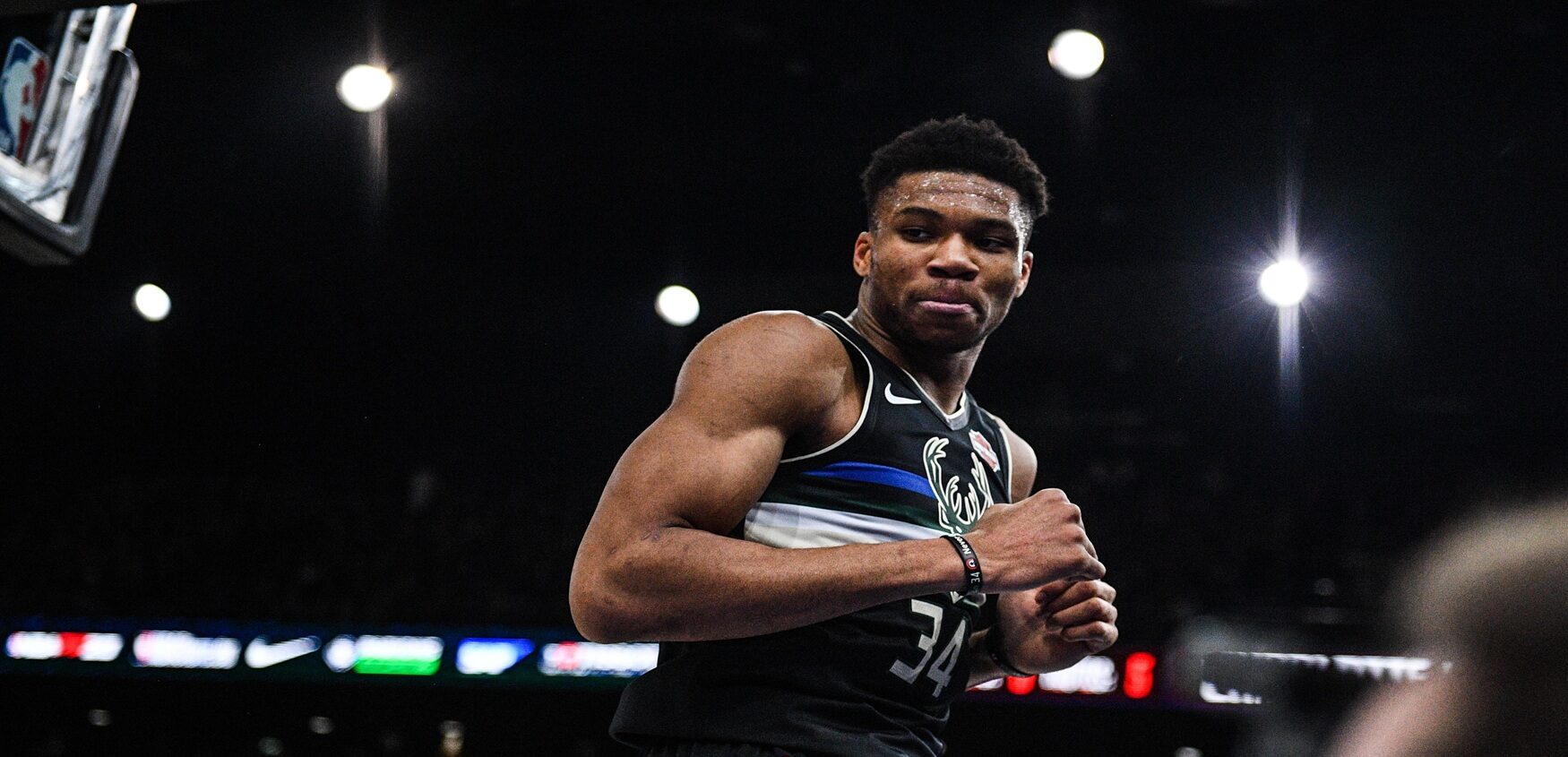

The NBA landscape is shaking: Giannis Antetokounmpo is joining the Miami Heat in one of the biggest blockbuster trades in league history. It is extremely rare for a two-time MVP, ten-time All-Star and Defensive Player of the Year to be traded while still firmly in his prime. That is why Miami’s gamble had to be enormous. Essentially an all-in move for the Greek superstar: Tyler Herro, Kasparas Jakucionis, Jaime Jaquez Jr., Kel’el Ware and multiple draft assets, ranging from the No. 13 pick in the 2026 Draft to unprotected first-rounders in 2031 and 2033, a 2030 pick swap and a second-round selection in 2033. A massive price tag by any standard.
But within that enormous bet lies something that feels almost certain: Giannis Antetokounmpo fits perfectly into a way of understanding both basketball and life that not everybody can adapt to. The former Milwaukee Bucks superstar is not arriving in South Florida as someone who needs to learn what Heat Culture means. Indeed, he arrives as someone who has spent years living by many of the principles that have historically defined Pat Riley’s organization. The question isn’t whether Giannis fits into that culture. It almost feels as if he was built for it.
For years, Heat Culture has been described from the outside as a blend of competitive obsession, work ethic, physical discipline and collective accountability. The city’s own cult of body image and fitness has naturally blended with a highly competitive mindset, one that the franchise has embraced under Riley’s leadership and through iconic figures such as Udonis Haslem, Jimmy Butler and Alonzo Mourning. Miami has always had a fascination with players who genuinely enjoy the grind. The Heat turned effort into an identity and professionalism into something close to a basketball religion.



And Giannis may actually take it one step further: there have been times when teams practically had to force him to rest.
The first obvious connection between Giannis and Miami is his almost unhealthy relationship with work. Some players train hard; others seem to organize their entire lives around training. Giannis clearly belongs in the second category. For years, stories have surfaced about him returning to the practice facility after bad games to recreate every mistake he made —missed shots, poor passes, bad decisions— repeating them deep into the night.
He was never doing it for cameras or trying to build an image. He was doing it because he felt an almost compulsive need to correct himself.
Another fundamental pillar of Heat Culture is continuous improvement. Miami doesn’t simply reward production; it rewards growth. Udonis Haslem may be the perfect example of that philosophy. Few could have imagined that an overweight rookie playing from French team Chalon would go on to spend two decades in the NBA, and with his hometown team, no less. He did it through elite work habits and relentless physical commitment.

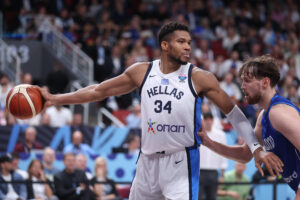
And perhaps the most obvious trait in Antetokounmpo’s personality is precisely his inability to settle.
Even after becoming NBA MVP, he openly talked about the need to step outside his comfort zone. Many players reach a certain status and begin protecting it; Giannis has always operated in the opposite way. Even though he consistently tied his career ambitions to Milwaukee, he has always looked like someone who becomes uncomfortable standing still for too long. He needs new challenges. He needs to keep growing.
Giannis’ story has always been one of constant transformation: from an extremely skinny teenager in the streets of Sepolia, a modest suburb of Athens, to NBA champion, double MVP and one of the most dominant forces in modern basketball. And at every stage the same pattern kept emerging: hours in the gym, extra shooting sessions, endless questions for coaches and an obsession with details.
That leads to another obvious connection with Miami: the willingness to learn.
Heat Culture is not simply about training harder. It also means studying the game and understanding it, something Erik Spoelstra himself inherited and refined under Riley’s influence. Giannis has built a reputation as an obsessive student of the game. He takes notes during meetings, watches film on team flights and even spotted an error in Milwaukee’s playbook as a rookie.
Some stars believe their talent allows them to simplify the process. Antetokounmpo has always seemed to think the exact opposite.
There is also a human element supporting this fit.
As fierce as his competitiveness is, Giannis has never projected an oversized ego. Teammates and coaches consistently highlight his humility, his approachability and his ability to stay connected to his roots. Even after becoming one of the world’s biggest sports figures, he has largely stayed away from many of the behaviors typically associated with superstardom.
And in Miami, that matters.
The Heat have built much of their identity around the idea that nobody stands above the group. The message has always been clear: individual talent should strengthen the collective structure, not replace it. Giannis seems to understand that naturally. His leadership has never relied solely on words or hierarchy. More often than not, he leads simply by setting the daily standard.
Mike Budenholzer once admitted that Giannis’ competitiveness set the tone not only for players, but for the entire organization. His teammates understand that if the best player in the building is also the hardest worker, excuses disappear. That is probably the most Heat thing of all.
Still, there may also be a subtle paradigm shift happening here.
In a city with an enormous international community —including more than 4,000 Greek-Americans and roughly 20,000 across Southwest Florida— the Heat have never had a non-American superstar of this magnitude. Looking back at franchise history means thinking of Dwyane Wade, LeBron James, Alonzo Mourning, Jimmy Butler, Shaquille O’Neal, Tim Hardaway and Glen Rice. Goran Dragic may have been the most impactful international player in franchise history, but the Slovenian functioned more as a high-level sidekick than as the face of the organization.
In fact, despite recently bringing in names such as Jakucionis or Nikola Jovic, Miami has not traditionally been among the franchises most invested in international talent through the draft. Perhaps this trade signals a shift in that approach.
The basketball fit itself remains to be seen. As things currently stand, Miami’s roster appears to have significantly more talent in the frontcourt than in the backcourt. Still, the arguments supporting Giannis as the next great embodiment of Heat Culture are substantial.
Because Heat Culture was never simply about running harder or lifting heavier weights in the gym. It has always been about habits, standards and mentality. About competing every day as if there were still something left to prove.
And Giannis Antetokounmpo has spent his entire career living exactly that way.