
Modern basketball branding is being transformed into a form of cultural expression, as the creator behind the most viral T-shirts explains to SKWEEK how he managed to translate the “language” of the game into art that transcends borders, teams, and generations.


Basketball has always been more than just a game—it is culture, identity, and storytelling expressed through moments that travel far beyond the court. From the elite arenas of the EuroLeague, where stars like Evan Fournier and Mathias Lessort dominate headlines with their performances, to the passionate streets of Thessaloniki, where Aris fans have turned basketball into a way of life, a unique thread connects them all: the power of personality and symbolism in the modern basketball era.
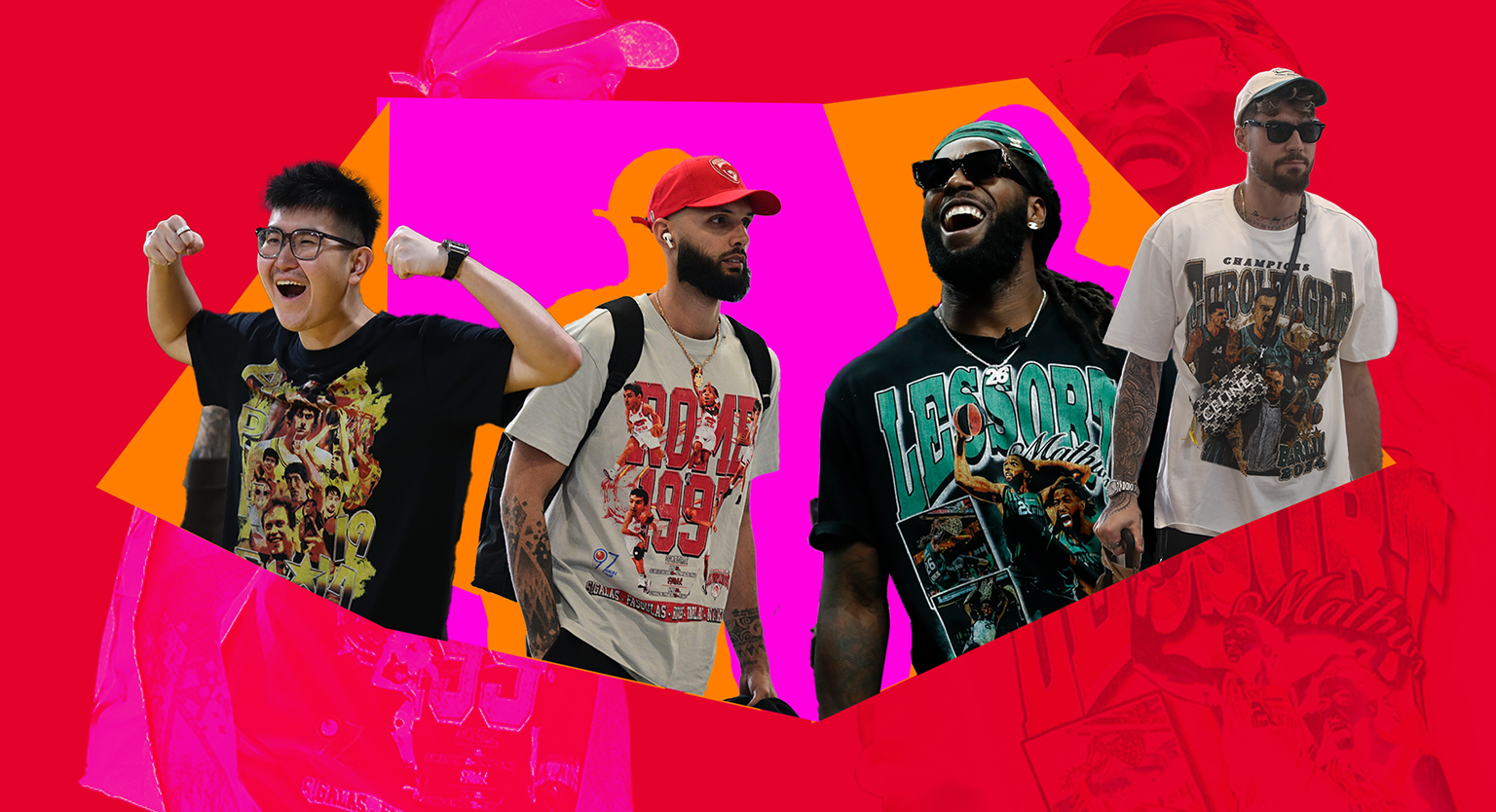
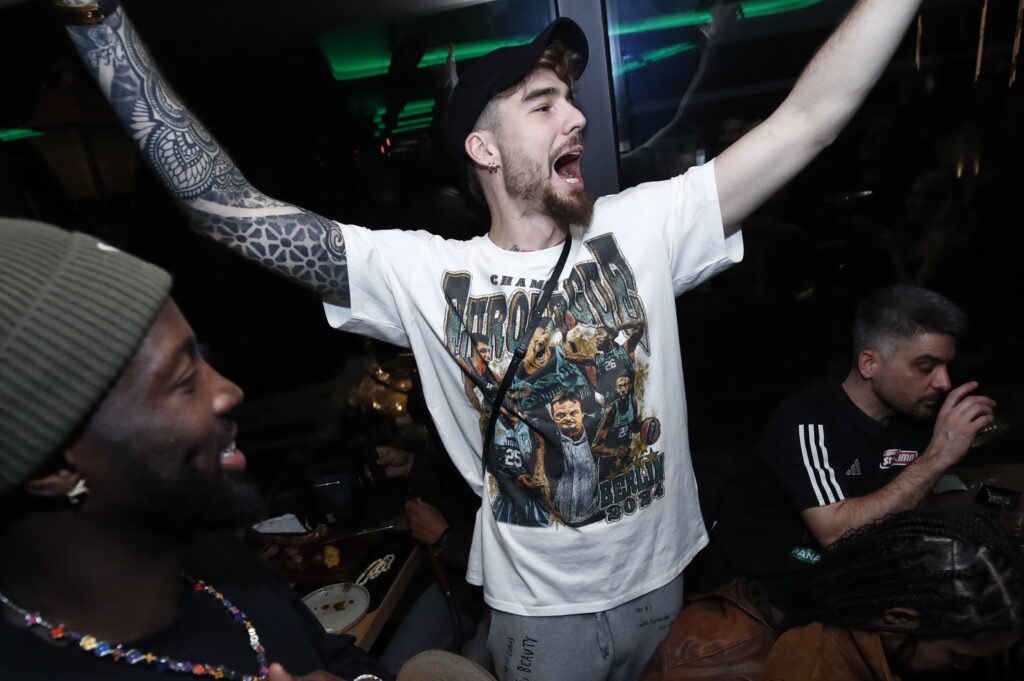
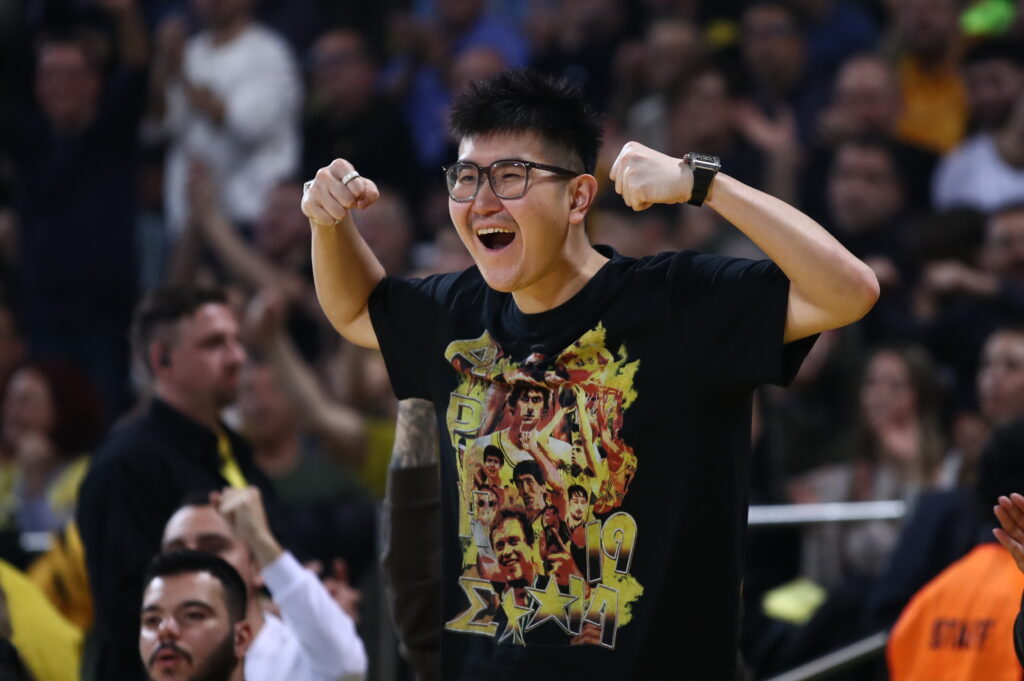
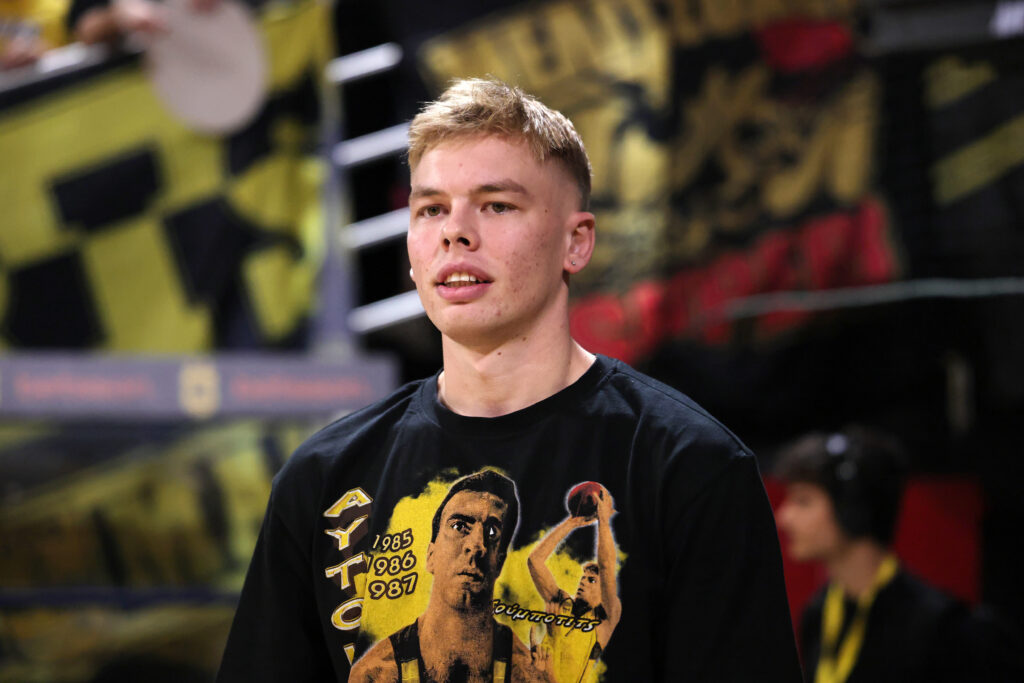
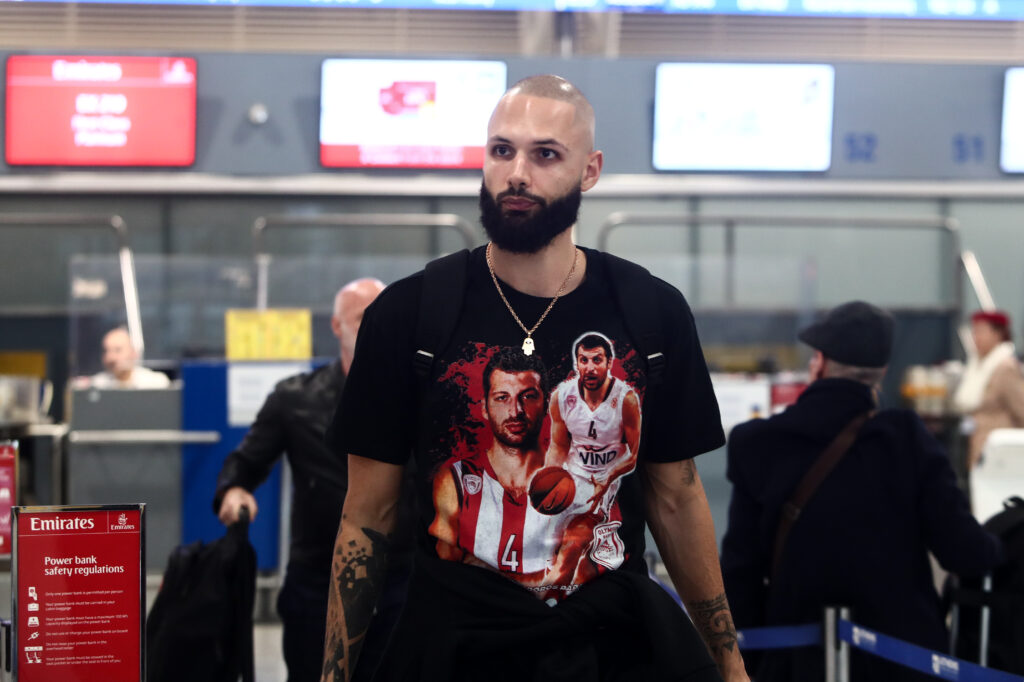
At the center of this movement is the creative force behind basketball’s most viral T-shirt designs—pieces that merge passion and sporting identity into wearable storytelling. Moments such as Evan Fournier appearing in a T-shirt referencing Olympiacos’ EuroLeague legacy in Rome (1997), or the new Aris owner, Richard Hsiao, honoring legends like Nikos Galis and Panagiotis Giannakis, instantly going viral, highlighting how deeply basketball imagery can resonate beyond the court.
This is the story of how modern basketball branding has evolved into a form of cultural expression, and how the creator, sniffyournails, has managed to turn the language of the game into viral art that resonates across borders, fanbases, and generations.
When did you first feel that your work had truly become part of basketball culture?
It was in September 2024, during the “Pavlos Giannakopoulos” Tournament at the Panathenaic Stadium in Athens. The whole thing happened in the most cinematic way imaginable!
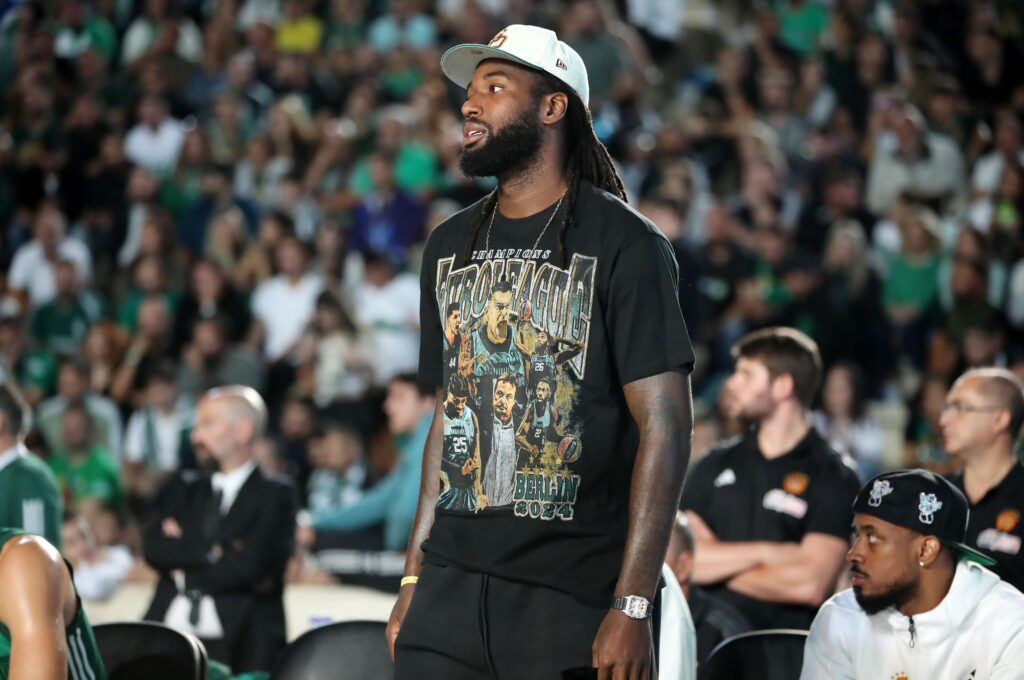
I was at home with a group of friends, watching the game on TV. I had no idea—and certainly wasn’t expecting—that any player would be wearing one of my designs that night. Then, out of nowhere, the cameras showed Mathias Lessort walking into the Stadium wearing my “The King Is Back” t-shirt.
My friends and everyone familiar with my aesthetic immediately recognized it as my work. It was one of those surreal moments where everything suddenly feels real.
Was there a moment when you thought, “Okay, this is no longer just a design project”?
To be completely honest, there wasn’t one specific moment, because I never viewed it as just a design project in the first place.
Ever since I started designing in 2021, every time I opened Photoshop, I already had the bigger picture in mind: how the t-shirt would look on a player, how he would represent it, and what kind of impact it could have on the audience.
In fact, very few people know that during my very first year, one of my designs had already made its way into an official NBA tunnel walk. It was worn by Armoni Brooks—then with the Houston Rockets and now playing for Armani Milano—during a pre-game arrival.
From day one, I made deliberate moves because I wanted to have a real impact on EuroLeague culture. I was watching what was happening in the NBA, where players’ pre-game fashion choices help shape global pop culture, and I felt that Europe was missing that element. I wanted to help bridge that gap.
When you see superstars like Mathias Lessort or Evan Fournier wearing your pieces, what’s the first thought that comes to mind?
Whenever a player chooses to wear a throwback design—something that pays tribute to a team’s legends—the first thing I think about is how that legend must feel when they see today’s stars honoring them in that way.
It’s a unique connection between generations.
What excites me most is thinking about the memories a t-shirt like that can bring back for fans who lived through those eras, as well as the sense of respect or nostalgia it might evoke even among former rivals.
My goal was always to see EuroLeague players presented as cool, influential figures—true pop culture icons—not simply athletes wearing an official uniform.
So, when you see the past and the present of basketball coming together through a single streetwear piece, that’s when you know you’ve achieved what you set out to do.
Is it validation, responsibility, or simply the natural continuation of your work?
I’d say it’s a bit of all three, but in my own way.
It’s definitely validation, but not in the sense that I needed other people’s approval to feel confident about what I’m doing. The real validation comes from seeing that street culture, ’90s aesthetics, and the bootleg—inspired designs we grew up loving actually have a place at the highest level of the game. When players like Lessort, Fournier, or even the president of Aris are wearing your work, you realize that culture won over corporate.
As for responsibility, yes, there’s a certain kind of responsibility—an enjoyable one. It’s a responsibility toward the people who are waiting for the next drop, but even more so toward the stories I’m choosing to preserve. When you’re designing around moments that will live forever in fans’ memories, you can’t afford to be careless. You have to give it your best every single time.
But above all, it’s simply the continuation of my creativity. I don’t see it as “work” in the traditional sense, because if it was just work, it would become routine. For me, it’s a constant challenge. Every time a big game ends or something historic happens, my mind immediately locks onto the next concept.
Does the meaning of a design change when it’s worn by a player within the basketball ecosystem itself?
Absolutely.
The design becomes an extension of that player’s personality and the moment itself. There’s a huge difference between seeing a t-shirt hanging in a store and seeing Mathias Lessort walk into the Panathenaic Stadium wearing “The King Is Back,” or Evan Fournier showing up in a Championship tee.
At that point, the player validates the story behind the design. The artwork becomes permanently attached to that particular moment in time. It locks into the snapshot of their success.
Have players ever approached you directly to create custom pieces for them? How do those conversations usually start?
Yes, it happens all the time now.
Most of the connections start either through Instagram DMs or, even better, through word of mouth. There are no managers, PR agencies, or corporate email chains involved. That’s probably what I love most about it.
When a player shows up at practice or an airport wearing an exclusive t-shirt, the first thing the other players ask is, “Where did you get that?” From there, the conversation starts naturally.
That direct line of communication is what keeps everything authentic. Players appreciate being able to speak directly with the creator, without any filters. But they also appreciate something else: none of their designs are ever sold. Every piece is 100% exclusive, created specifically for the player who receives it.
That said, bringing those exclusive pieces to life wouldn’t be possible without the support of @thejailblazers.co. Beyond helping with production, they often contribute ideas and creative input, since we share a very similar aesthetic vision.
I’m the mind behind the concepts and the design direction, but their contribution is invaluable. They handle the practical side of the process—from printing the t-shirts to making sure they reach the players themselves.
Do players usually ask for something specific, or do they give you complete creative freedom?
In the vast majority of cases, they give me complete creative freedom.
They usually just say, “Do your thing,” because they already know my style. But behind that freedom, there’s a huge amount of personal research to make sure the design actually means something.
For example, when I worked on a piece for Evan Fournier, I came across an old tweet where he said his favorite European player growing up was Theo Papaloukas. That immediately became part of the concept.
For Mathias Lessort, the design was connected to Dominique Wilkins, the man who helped bring Panathinaikos its first European title.
Of course, there are exceptions. Giorgos Tanoulis was one of them. His request was incredibly specific and full of detail. He wanted to create a meaningful tribute to the history of Aris, so we had to carefully incorporate particular figures, legends, and moments that shaped the club’s identity.
How much of this process is truly “inside the game”? Do you feel like you’re designing for the basketball community itself rather than just for fans?
Absolutely.
Designing for the community means understanding the history, respecting the people who built it, and speaking its language.
The fans support what I do precisely because they can tell it isn’t just another piece of commercial merchandise. What they’re seeing is basketball culture itself, filtered through people who genuinely live and breathe the game.
Take the Aris project, for example. It didn’t begin as a commercial product intended for fans to buy. It started as a deeply personal gesture from Giorgos Tanoulis—a way of saying thank you to the entire Aris organization for supporting him through his injury.
The piece was originally created for the people inside the club. When fans see something like that, they immediately recognize the authenticity behind it.
Is there a t-shirt or project that represents you more than any other?
Every project holds a special place in my heart.
I honestly can’t single one out because they all share the exact same DNA. From the very first second, they communicate my aesthetic and the way I approach design.
I don’t change my creative direction depending on who’s wearing the piece. The identity remains the same.
If you had to choose just one design that captures the essence of the “VTG language,” which one would it be?
If I had to pick one, it would be my very first design, back in 2021.
It was a piece I created for Kendrick Ray when he was playing for Promitheas Patras. Kendrick reached out to me through Instagram because he saw the vision long before most people did—back when sniffyournails was still in its earliest stages.
That design taught me two incredibly important lessons.
First, it showed me how quickly something you create on your own, sitting alone in your room, can become a real, tangible thing in the world.
And second, it showed me the power of word of mouth.
Everything that came afterward was built on those two realizations.
Is there a piece that exceeded your expectations, either in terms of reaction or significance? For example, the one Richard Hsiao wore at Alexandreio?
Definitely the Richard Hsiao one.
Mainly because it’s something you almost never see team owners do. We’re used to seeing them in suits or wearing official sponsor apparel. For a club president to break that protocol and show up wearing a bootleg-inspired t-shirt sent a powerful message.
It showed how approachable and genuine he is, but more importantly, it showed that he immediately understood the vibe and the respect for the club’s history that the design was meant to convey.
What’s the most meaningful compliment you’ve received from a player or someone within basketball culture?
If I had to pick a specific moment, it would probably be a comment from Kendrick Nunn right after winning the EuroLeague.
But honestly, the strongest compliment I can receive isn’t verbal at all—it’s when someone chooses to wear the design.
That’s the ultimate validation.
Do you feel that basketball today communicates through designers like you, not just through highlights and statistics?
Absolutely.
Basketball has always been much bigger than the game itself. It’s attitude, it’s music, it’s the way you express yourself beyond the lines of the court.
The NBA understood that decades ago. You can see how players’ pre-game style choices help shape global pop culture.
In Europe, though, there was a huge gap. Clubs and organizations were often stuck in a very flat, corporate way of presenting themselves.
I think that’s starting to change.
Has seeing players wear your work changed the way you watch basketball?
Not really.
At my core, I’m still just a basketball fan. I watch games because I love the sport and enjoy the competition.
What has changed is that my creative brain never really switches off anymore.
While I’m watching a game, I’m constantly thinking: “How could this become a t-shirt? How could I connect this moment to the story of the player or the team?”
So, the way I enjoy basketball hasn’t changed, but now every game is also a source of inspiration.
Where does design end and culture-shaping begin?
For me, culture-shaping begins when you influence the way the people inside the game choose to express themselves away from the court.
When a bootleg-inspired design can compete with the official merchandise of Europe’s biggest clubs and become a talking point without spending a single euro on advertising—relying solely on word of mouth—that’s when something bigger is happening.
If you think about it, just a few years ago it wasn’t really part of European basketball culture for players to arrive at arenas or airports wearing anything other than official team gear.
Now fans actively wait to see what their favorite player is going to wear next.
That’s the important part.
That’s when you realize you’re not just creating images in Photoshop anymore—you’re helping shape the culture surrounding the sport itself.
If you had to describe the moment you’re living through right now in one sentence, are you still a creator, have you become part of the culture, or are you somewhere in between?
Definitely somewhere in between.
On one hand, I’m still 100% a creator. I’m the same person spending countless hours in Photoshop, constantly experimenting and searching for new ideas. That’s my foundation and it always will be.
But on the other hand, when you see the impact these exclusive designs are having on basketball culture, you realize the work has grown beyond the boundaries of design alone.
It has taken on a cultural footprint of its own.
And finally, what does it mean to you when basketball starts “wearing” its own history—whether it’s an Eddie Johnson tribute shirt or a EuroLeague-in-Rome design—through your work?
It’s the ultimate full-circle moment.
For me, there’s nothing more powerful than seeing the history of the sport come alive in the present and connect two different generations.
The best part is watching the legends themselves feel honored by those moments, almost as if they’re passing the torch to today’s players.
We’ve already seen that happen. Eddie Johnson showed his appreciation when he saw Evan Fournier wearing a design inspired by him. The same thing happened more recently with Theo Papaloukas, whose legacy was celebrated through another tribute piece.
That’s when you truly understand the power of visual storytelling.
You’re not just creating a design. You’re building a bridge between the past and the present.