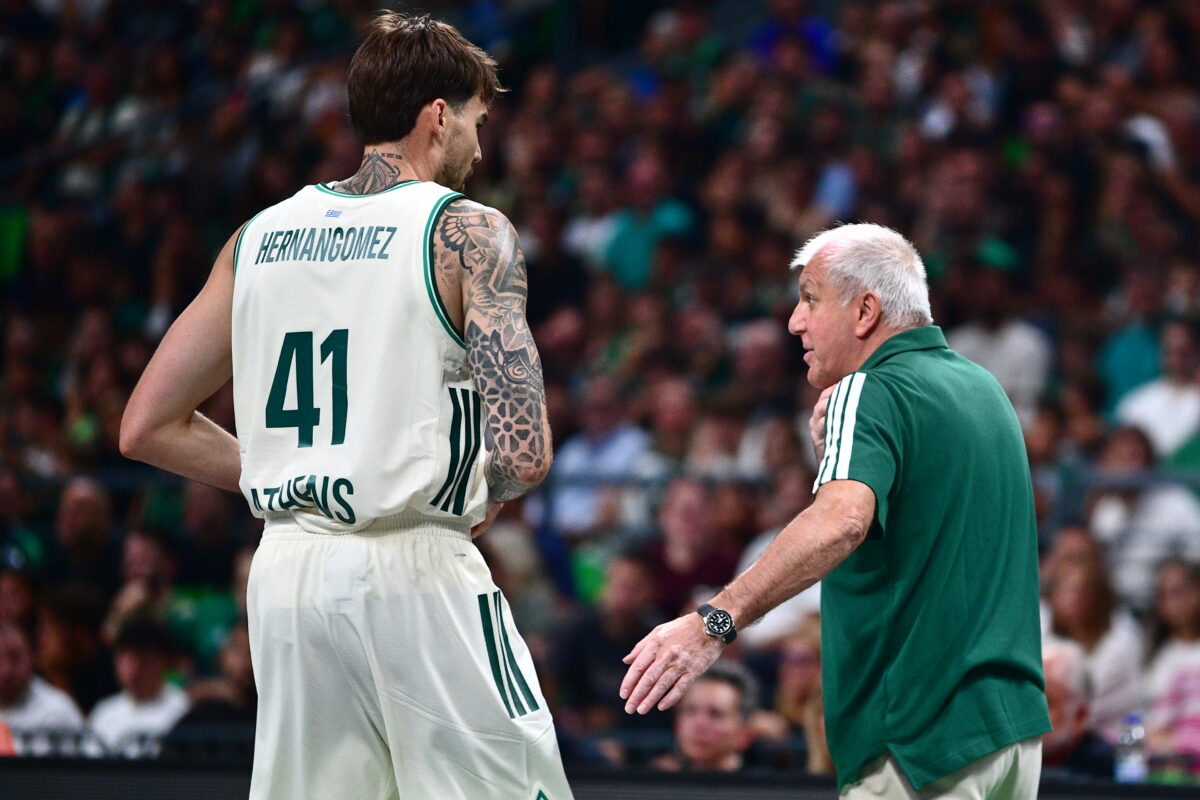





For obvious reasons, every conversation about Greek basketball eventually circles back to Panathinaikos and Olympiacos.


The astronomical budgets. The EuroLeague arms race. The NBA-caliber names arriving every summer. The endless transfer battles. The return of Zeljko Obradovic. The rivalry that dominates television ratings, social media engagement and headlines throughout Europe.
Yet there is another side to the Greek league, officially called Stoiximan GBL.
Away from the spotlight generated by the country’s two basketball giants, several clubs have quietly assembled rosters filled with legitimate high-level talent. Some of these players arrive with NBA experience. Others have established themselves in Europe’s strongest domestic leagues. Some are former college legends, while others have overcome extraordinary personal circumstances simply to reach the professional ranks.
What unites them is the possibility that they could become some of the most impactful players in Greece this season.
Before diving into the list, one notable omission deserves mention. The biggest name currently playing outside Panathinaikos and Olympiacos is undoubtedly Cedi Osman. His stunning move to PAOK sent shockwaves through European basketball, with the overall financial package reportedly reaching €11 million once buyouts and salary commitments are included. However, Osman hardly needs an introduction.
Instead, this list focuses on five players who may not command the same headlines but possess the résume, talent and personal background to become defining figures of the 2026-27 season.
Jeremiah Robinson-Earl (Aris): The role player who learned how to win
Most fans will immediately notice the obvious numbers on Jeremiah Robinson-Earl’s track record.
219 NBA appearances. Stints with Oklahoma City, New Orleans, Indiana and Dallas. A second-round selection in the 2021 NBA Draft. Years spent surviving in the world’s most competitive basketball environment.
The real story, however, goes much deeper than the statistics.
Robinson-Earl belongs to a rare category of players beloved by coaches and often underappreciated by box scores. His basketball identity was forged at Villanova under legendary coach Jay Wright, one of the most demanding culture-builders in American college basketball. Villanova’s philosophy was simple: team success came before individual recognition.
Arriving as one of the most highly regarded high school prospects in the country, Robinson-Earl quickly learned that standing out required mastering the details most fans never notice: setting screens, rotating defensively, boxing out, making the extra pass, and doing the unglamorous work that wins games.
Wright frequently referred to him as an “old soul,” a player whose understanding of basketball seemed years ahead of his age.
His development was rapid. He won Big East Freshman of the Year after averaging 10.5 points and 9.4 rebounds. One season later he improved to 15.7 points and 8.5 rebounds while sharing Big East Player of the Year honors.
Many scouts expected him to become a long-term NBA contributor. For a time, that projection looked accurate.
As a rookie with Oklahoma City, Robinson-Earl averaged 7.5 points and 5.9 rebounds while starting regularly. Injuries disrupted his momentum, but organizations continued to value his versatility. Coaches believed he possessed the basketball IQ and skill set to evolve into the modern connective big man capable of switching defensively, passing from the high post, initiating offense after rebounds and fitting alongside virtually any lineup.
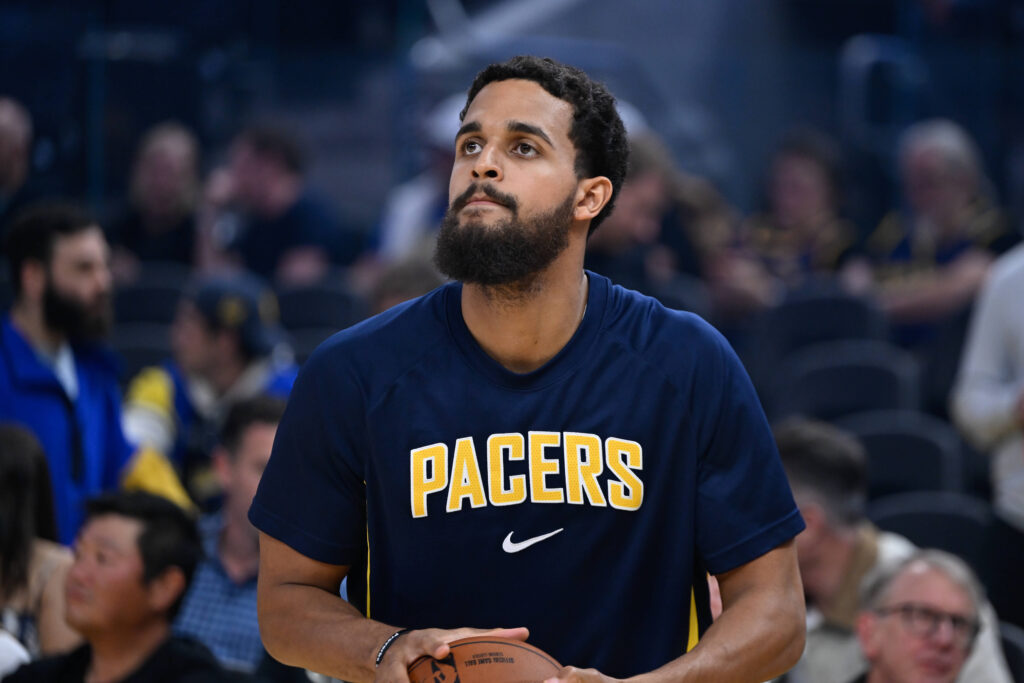
He never fully reached that ceiling. Yet perhaps the most telling achievement is that he remained in the NBA until 2026.
Aris made an extraordinary financial commitment to bring him to Thessaloniki, reportedly investing nearly $4 million over two seasons. For a club operating outside the financial realities of the EuroLeague elite, that figure represents a statement of intent.
What makes the signing even more intriguing is that Robinson-Earl never truly wanted to leave the NBA. He waited until the final stages of free agency searching for a guaranteed contract. When one failed to materialize, Aris seized a rare opportunity.
His background also suggests he may adapt well to European basketball. His father, Lester Earl, enjoyed a lengthy professional career overseas, exposing Robinson-Earl to the realities of international basketball from an early age.
Aris is adding a professional who understands roles, values winning possessions and has spent his entire career learning how to make teammates better.
Those qualities often become priceless once the biggest games arrive.
Trevor Hudgins (PAOK): The player who became an award while still active
In American basketball, thousands of players dream about reaching the NBA. However, very few become so influential that an award is named after them before their professional careers truly begin.
Trevor Hudgins, the new PAOK floor general, owns one of the most unusual stories in modern basketball. Nothing about his early journey suggested he would eventually become one of the most decorated players in NCAA Division II history.
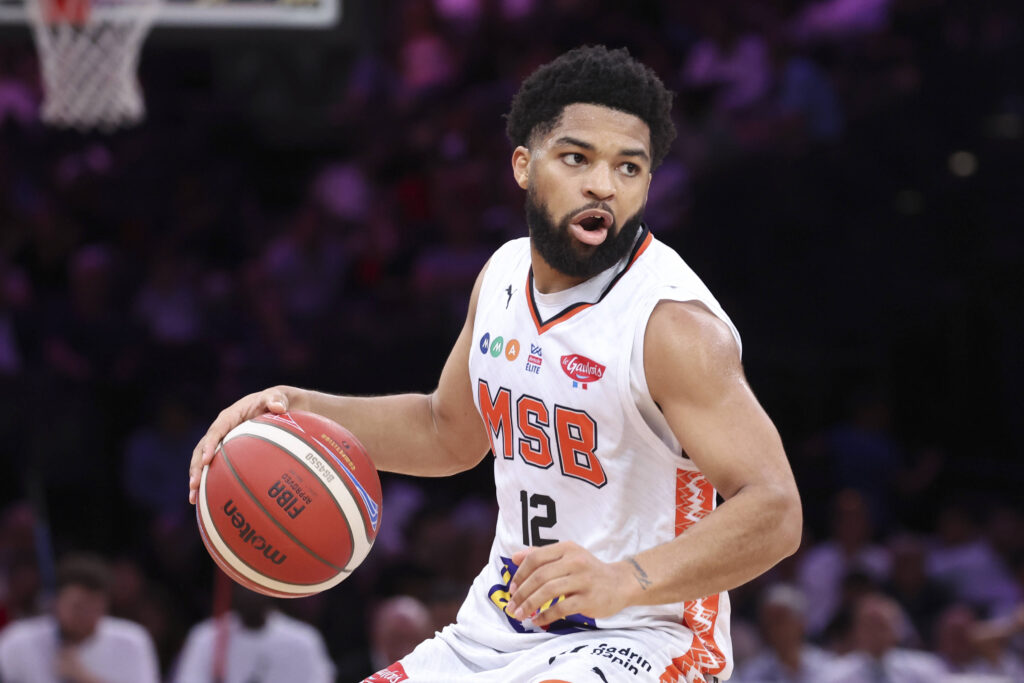
Born in Manhattan, Kansas, Hudgins was overlooked by most major Division I programs. Opportunities were limited. Rather than chasing prestige, he trusted Northwest Missouri State and coach Ben McCollum.
Over four years, Hudgins transformed into the face of a dynasty. He started all 139 games of his collegiate career and led the Bearcats to three national championships. By the time he graduated, he had averaged 20.4 points and five assists while shooting an astonishing 46.5% from three-point range and nearly 88% from the free-throw line.
McCollum eventually called him the greatest player in Division II history.
Perhaps even more remarkable was Hudgins’ loyalty. In the transfer portal era, players routinely move in search of bigger stages. Hudgins had opportunities to leave. He refused.
“I couldn’t leave the place that made me who I was becoming,” he famously explained.
His impact became so significant that in 2023 the Trevor Hudgins Award was created, honoring the nation’s top senior player outside Division I. Most athletes receive such recognition after retirement. Hudgins received it at 24.
Although he went undrafted, he signed a two-way contract with Houston and became the first player in Northwest Missouri State history to reach the NBA.
His NBA experience was brief, but his G League production was substantial. With Rio Grande Valley, he averaged over 18 points and five assists while proving his game could translate against elite competition.
His true breakthrough came in France. At Le Mans, Hudgins developed into one of the country’s best guards, averaging 15.6 points in the LNB Pro A and 15 points plus 5.3 assists in the Basketball Champions League.
The defining moment arrived during the 2025 Leaders Cup final. Facing Monaco, one of Europe’s wealthiest clubs, Hudgins exploded for 25 points and captured MVP honors while leading Le Mans to the trophy.
For PAOK, the attraction is obvious.
Hudgins can score, organize, shoot off the dribble, operate in pick-and-roll situations and deliver in clutch moments. And now he arrives in Thessaloniki carrying one of the most unique legacies in American college basketball history.
Shannon Evans (Promitheas Patras): The relentless scorer who wants to make a comeback
If there is one player in the Stoiximan GBL outside the EuroLeague giants who arrives in Greece with a résume built entirely through perseverance, it is Shannon Evans.
The new floor general of Promitheas Patras has spent the better part of a decade proving people wrong. He was never a highly touted NBA prospect. He never benefited from elite draft status or overwhelming athletic tools. Every significant opportunity in his career was earned through production, consistency, and an unwavering belief in his abilities.
Today, at 32 years old, Evans arrives in Patras as one of the most accomplished guards in the Spanish Liga Endesa over the last several years, bringing with him a combination of leadership, shot creation, experience, and competitive toughness that few players in Europe can match.
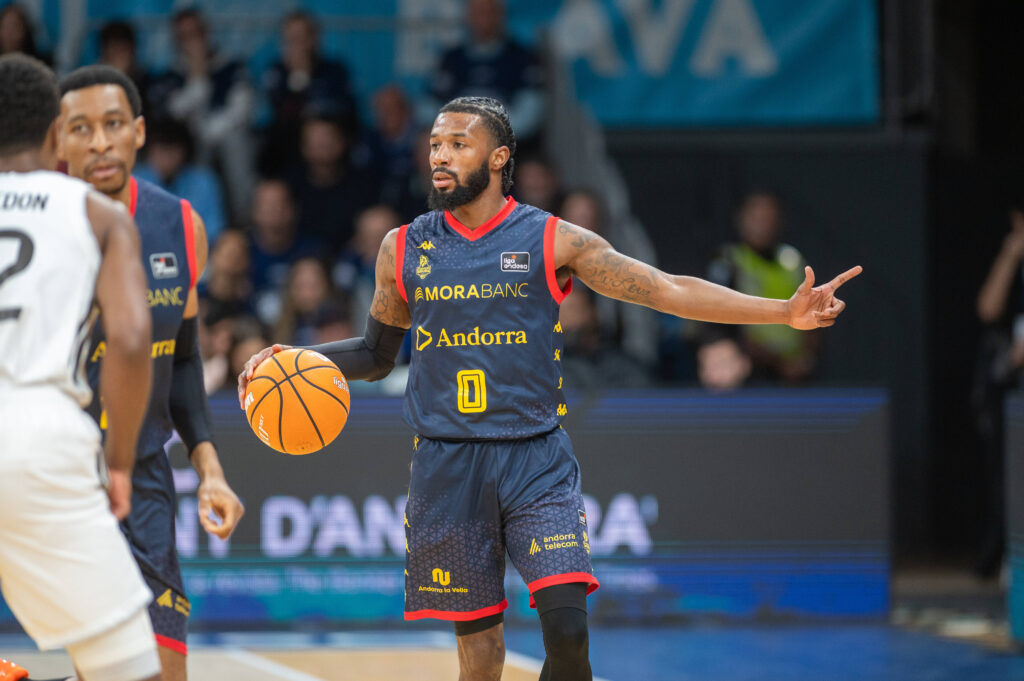
His journey began in Suffolk, Virginia, where basketball was not even his primary sporting passion as a child. Baseball and rugby occupied much of his attention growing up, and his eventual rise through basketball was anything but straightforward.
At Nansemond River High School, coach Ed Young constantly challenged him. Young believed Evans relied too heavily on his perimeter shooting and needed to become a more complete, aggressive player. Those lessons were not always welcomed at the time, but they would eventually become foundational to the player Evans became.
After high school, financial challenges nearly complicated his basketball ambitions. He attended Hargrave Military Academy, a prestigious prep school that was only possible thanks to support from friends and family members who believed in his talent.
His performances attracted the attention of the University at Buffalo, where he met one of the most influential figures of his career: Bobby Hurley.
The former Duke legend immediately recognized Evans’ potential and entrusted him with a significant role. Under Hurley’s guidance, Evans blossomed into one of the most productive guards in the Mid-American Conference, helping Buffalo reach its first-ever NCAA Tournament appearance.
When Hurley accepted the head coaching position at Arizona State, Evans made a controversial decision. Despite resistance from some members of his family, he followed his coach to Arizona State, where he developed into a complete offensive guard. He averaged 15 points per game in his junior season and 16.5 points as a senior, demonstrating not only his scoring ability but also his growth as a decision-maker and leader.
Yet even after four productive collegiate years, the NBA did not come calling. Undrafted in 2018, Evans joined the Houston Rockets for Summer League but failed to secure a contract.
For many players, that moment represents disappointment. For Evans, it simply marked the beginning of a different path. Europe became his proving ground.
His first professional stop was Hungary with Atomeromu, where he immediately showcased his offensive arsenal, averaging roughly 17 points and over five assists per game across two seasons.
From there, his rise accelerated. A brief stint with Pau-Orthez in France was enough to attract attention from Bahcesehir in Turkey, where Evans exploded statistically, averaging over 21 points and eight assists. But it was in Spain where he truly established himself.
At Real Betis, Evans transformed into one of the most dangerous offensive players in the entire Liga Endesa. During the 2022-23 season, he led the league in scoring with more than 21 points per game while simultaneously functioning as his team’s primary creator.
That performance earned him a move to Valencia Basket and his first EuroLeague opportunity.
While his role was limited, subsequent stops in China, Joventut Badalona, and Andorra further cemented his reputation as one of the most reliable veteran guards outside the EuroLeague elite.
His 2025-26 campaign with Andorra may have been one of his most complete seasons. Evans averaged 13.4 points and 5.5 assists, guiding the club to safety and once again proving his value as both scorer and organizer.
From a scouting perspective, Evans remains one of Europe’s most dangerous pick-and-roll guards. His greatest strength is his ability to create advantages off the dribble. He possesses an excellent first step, outstanding ball control, and a deep understanding of how to manipulate defensive coverages. He reads help defenders exceptionally well and consistently generates quality looks for teammates.
As a scorer, he remains highly versatile. He can create his own shot late in possessions, pull up from mid-range, attack the basket, and convert difficult attempts under pressure. Few guards in the Greek league will possess his combination of shot-making and playmaking ability.
Defensively, he relies more on anticipation and experience than physical tools. While not an elite defender, he understands positioning and uses active hands to disrupt passing lanes.
Now, he arrives in Patras as the potential centerpiece of a new era.
Nelly Joseph (AEK): From the streets of Lagos to the bright lights of Europe
Basketball has produced countless inspiring stories over the years. Few are as powerful as Nelly Joseph’s.
The new AEK center arrives in Athens carrying one of the most extraordinary personal journeys in European basketball, a story that extends far beyond rebounds, blocks, and statistics.
Born in Lagos, Nigeria, in 2001, Joseph faced hardships long before basketball entered his life. He lost his father as an infant, grew up separated from his mother, who left in search of work, and eventually found himself largely alone following the death of his grandmother.
By the age of 11, Joseph was searching for odd jobs simply to secure food for the day. Basketball was not part of his plans. Football was his first love.
Everything changed when a former basketball player turned pastor, Kingsley Omeonu, approached him and asked a simple question: “Why are you playing football?” That conversation altered the course of his life.
From outdoor courts in Lagos, Joseph progressed to Basketball Without Borders, then the NBA Africa Academy, eventually earning an opportunity to continue his development in the United States. His story quickly became one of basketball’s most remarkable examples of social mobility.
The next major chapter arrived under the guidance of Hall of Fame coach Rick Pitino at Iona. Pitino immediately saw something special.
“He is one of the best players to come out of Africa and one of the most fantastic young men I have ever coached,” Pitino once said.
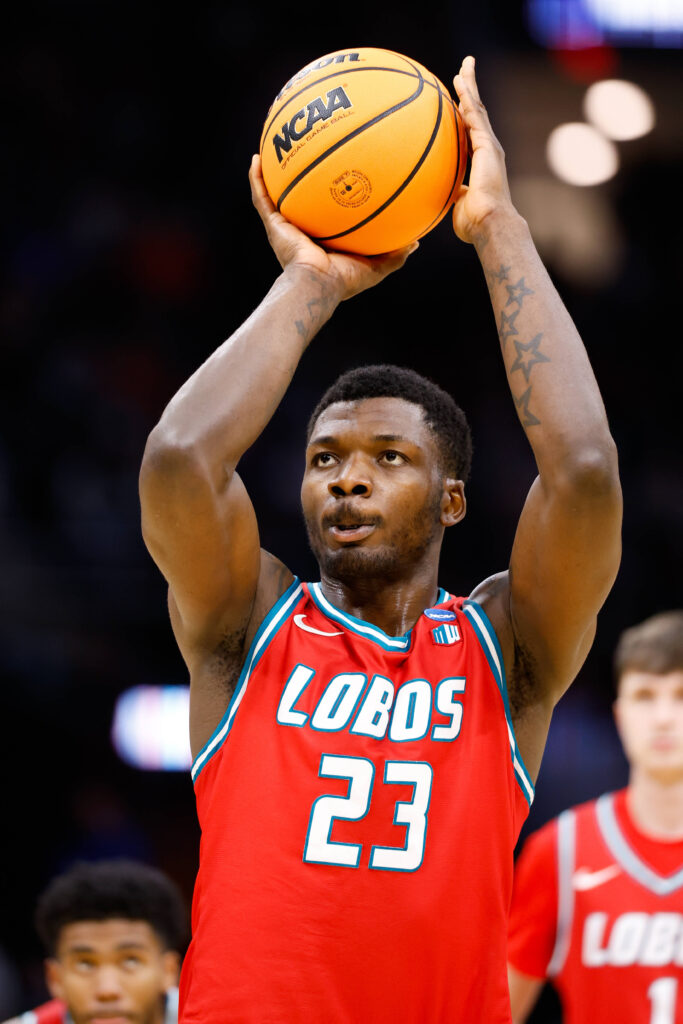
Such praise from one of basketball’s most accomplished coaches speaks volumes. Joseph rewarded that faith almost immediately.
He earned MAAC Rookie of the Year honors and steadily developed into one of the conference’s premier big men. His motor, physicality, and relentless energy separated him from opponents long before his skill level fully matured.
When Rick Pitino left for St. John’s, Joseph transferred to New Mexico, where he continued his development under Richard Pitino. His final NCAA season represented a breakthrough. Joseph averaged 14.2 points, 11 rebounds, 1.5 blocks, and 1.3 steals per game while earning multiple all-conference honors and establishing himself as one of the most productive defensive big men in college basketball.
Joseph completed college at 24 years old in a basketball ecosystem increasingly obsessed with teenage prospects and developmental upside.
Europe became the beneficiary. French club Strasbourg offered him his first professional opportunity, and Joseph immediately validated their decision.
During his debut season in the LNB Pro A, he averaged 12.4 points, 8.4 rebounds, and nearly one block per game while leading the entire league in rebounding. His playoff qualification performance against Chalon was particularly dominant, as he posted 24 points and nine rebounds to propel Strasbourg into the postseason.
That season ultimately served as his gateway to AEK and the Basketball Champions League.
From a scouting perspective, Joseph projects as one of the most intriguing defensive centers in the Greek league.
Standing 2.06 meters tall with an extraordinary 2.18-meter wingspan, he possesses physical tools that immediately stand out even among professional big men. His game revolves around three primary pillars: athleticism, rebounding, and defense.
Joseph runs the floor exceptionally well, finishes above the rim with authority, and excels as a roll man in pick-and-roll situations. His ability to cover ground quickly makes him particularly dangerous in transition and early offense.
As a rebounder, he demonstrates outstanding instincts. He tracks the ball naturally, attacks both offensive and defensive rebounds aggressively, and consistently creates extra possessions.
Defensively, he offers versatility that modern coaches covet. He protects the rim effectively, can survive switches against smaller players, and provides the type of mobility required for aggressive defensive systems.
However, his game remains a work in progress offensively. He is not a stretch-five. He does not possess a polished post-up package. His free-throw shooting remains inconsistent, and his offensive creation is limited almost exclusively to finishes around the basket.
Alongside Greg Brown, Joseph gives AEK one of the most athletic frontcourts in the Basketball Champions League and perhaps the highest defensive ceiling among non-EuroLeague teams in Greece.
More importantly, he arrives with a life story that reminds everyone what basketball can mean beyond the court.
Kyle Alexander (PAOK): The late bloomer built for modern basketball
Few players in the Stoiximan GBL embody modern basketball’s evolution quite like Kyle Alexander.
The new PAOK center enters Thessaloniki with NBA experience, EuroCup pedigree, years of high-level European competition, and a skill set perfectly suited to contemporary basketball.
What makes Alexander particularly fascinating, however, is how unlikely his journey once appeared. Today, he is widely recognized as one of the most reliable defensive centers outside the EuroLeague.
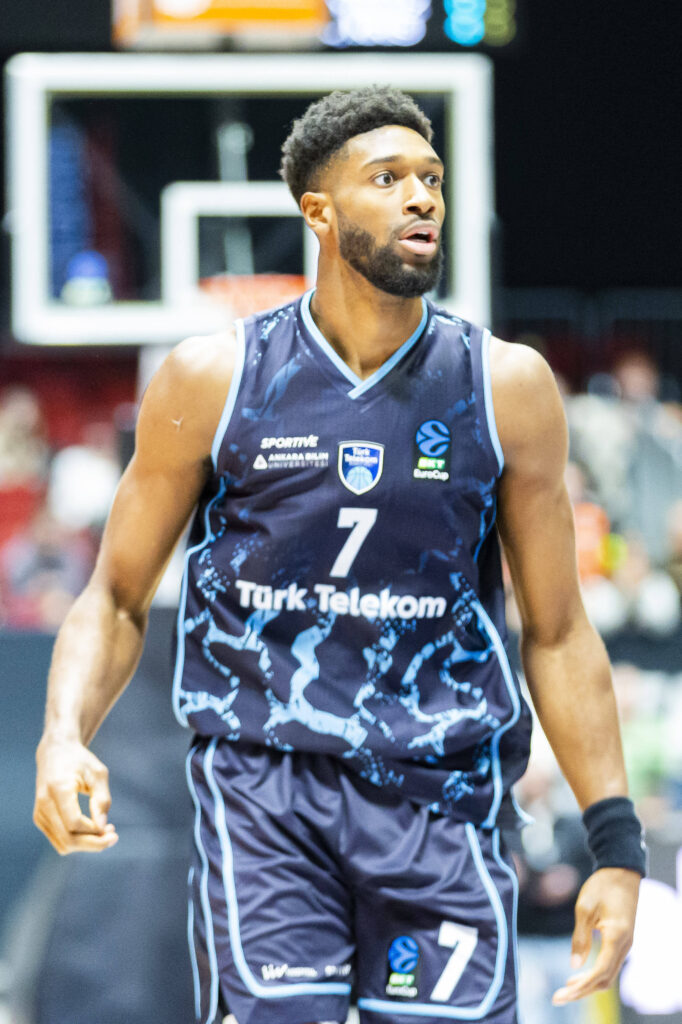
However, growing up, basketball was not even his primary focus. Despite coming from a deeply basketball-oriented family, Alexander spent much of his youth playing video games and showing greater interest in volleyball than basketball.
His father, Joseph Alexander, enjoyed a successful collegiate career at Niagara University. His sister, Kayla Alexander, reached the WNBA and became one of Canada’s most accomplished female players.
Yet Kyle was comparatively late to the sport. That delay created significant developmental challenges. When he eventually committed fully to basketball, he found himself competing against peers who had accumulated years of technical training and experience.
What he lacked in experience, however, he compensated for with work ethic. His transfer to Orangeville Prep proved pivotal.
There he became friends and roommates with future NBA star Jamal Murray, while simultaneously emerging as one of Canada’s most promising prospects. His rapid improvement attracted numerous Division I programs before he ultimately chose Tennessee.
The college years reflected his entire basketball journey: gradual but constant growth. Every season brought noticeable improvement. He evolved from a reserve center into one of the pillars of a highly successful Tennessee program, steadily refining his defensive instincts, mobility, and understanding of the game.
Despite his progress, Alexander went undrafted in 2019. Once again, the NBA path appeared uncertain. The Miami Heat nevertheless recognized his potential. He joined Summer League, spent time with the Sioux Falls Skyforce, and eventually made his NBA debut.
Pat Riley and Miami’s development staff consistently emphasized the traits that made Alexander attractive to modern organizations: size, mobility, versatility, and defensive flexibility.
Europe ultimately became the place where his career flourished.
Fuenlabrada provided his first major opportunity, followed by increasingly ambitious stops at Valencia, Hapoel Tel Aviv, and Turk Telekom. Each season elevated his standing within the European market. His final years in Ankara established him among the continent’s most respected defensive centers outside the EuroLeague.
The 2024-25 season was particularly impressive. Alexander led the EuroCup in blocked shots at 2.2 per game, reinforcing his reputation as one of Europe’s premier rim protectors. Even during the following season, he remained highly productive, averaging 9.7 points, 5.7 rebounds, and over one block per game across competitions.
His international spell also includes participation with Canada at the 2023 FIBA World Cup, another significant achievement in an increasingly competitive national program.
From a scouting standpoint, Alexander possesses nearly every physical characteristic coaches seek in a modern center. Standing 2.08 meters tall with a wingspan exceeding 2.23 meters, he combines length, athleticism, and mobility at an elite level.
Offensively, he thrives as a roll man. He sets solid screens, dives quickly toward the basket, and finishes efficiently above the rim. His hands are reliable, making him a consistent lob threat and an ideal target in pick-and-roll situations.
He also excels without the ball. Alexander understands spacing, identifies passing windows, and relentlessly attacks offensive rebounds. His second jump is particularly impressive, allowing him to generate extra possessions consistently.
Defensively, his value becomes even more apparent. He can switch onto smaller players, recover effectively, and cover large portions of the floor. His timing as a shot blocker remains exceptional, while his mobility allows coaches to deploy multiple defensive schemes.
Naturally, limitations exist. He has never developed into a reliable three-point shooter despite decent mechanics. His post-up game remains relatively basic, and he is most effective when finishing plays rather than creating them.
Still, PAOK have acquired a proven veteran who understands winning basketball, accepts his role, protects the rim, rebounds at a high level, and fits seamlessly into modern systems.
Most importantly, they have acquired a player whose best basketball arrived only after overcoming years of delayed development.
In many ways, Kyle Alexander’s career serves as proof that talent is important. But persistence can be equally powerful.