







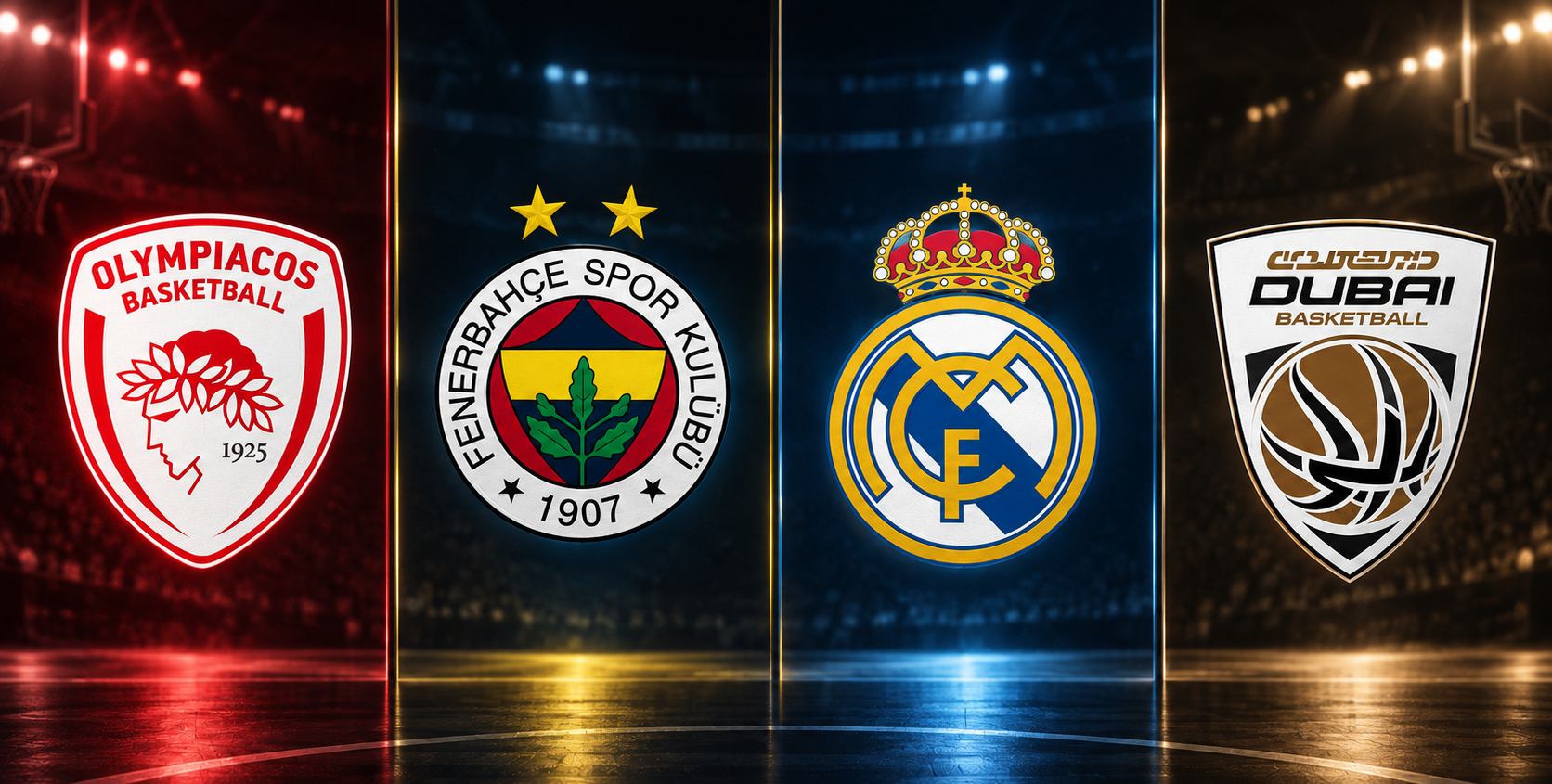

It is time for something completely different in European basketball, as the first edition of the EuroLeague SuperCup is about to make its debut. The competition tips off Friday and Saturday at Etihad Arena in Abu Dhabi, with the idea of giving the entire basketball community a proper introduction to the new season. And after all these months, that is exactly what we have been missing.


The last two EuroLeague champions, Olympiacos and Fenerbahce, will play the first game in SuperCup history at 4 p.m. CET, while Real Madrid and Dubai will meet in the second semifinal at 7 p.m., with both teams having changed much more than a few names on their rosters over the summer. The third-place game and the final will be played at the same times one day later. The format is identical to previous editions of the Final Four, only even more compact because there is no day in between for rest or any serious preparation. If anyone thought we had already had enough basketball, we are fully behind the new competition, while hoping the EuroCup champion will be included next year.
Abu Dhabi Is Part of a Much Broader EuroLeague Strategy
This year, for example, Bourg was initially supposed to be part of the SuperCup as the EuroCup champion, something later confirmed by club director François Lamy, but the field was changed during the summer and the place went to Dubai. Perhaps the next edition should feature the two EuroLeague finalists, the EuroCup winner and the host.
Still, Dubai’s inclusion says enough about how EuroLeague views its new product and how, from the very beginning, it is trying to fit it into a broader market strategy, without taking anything away from the sporting quality of the tournament.
Olympiacos and Fenerbahce Immediately Reopen Old Accounts
Choosing Abu Dhabi as the host is part of a far more serious marketing strategy. Etihad Arena hosted the first EuroLeague Final Four played outside Europe in 2025, and the competition’s partnership with Abu Dhabi has expanded since then. The organizers’ official explanation points toward opening new markets and growing the competition globally, so the SuperCup has had a clear business dimension from the start. Dubai earned its place as the representative of the United Arab Emirates, alongside reigning champion Olympiacos, previous champion Fenerbahce and last season’s runner-up Real Madrid.
The quality of the first semifinal could hardly be higher. Olympiacos and Fenerbahce are the last two EuroLeague champions, and less than four months ago they met in the Final Four semifinal in Athens, where Georgios Bartzokas’ team controlled the game almost from the start and won 79-61. A few days later, Olympiacos beat Real Madrid 92-85 in the final to win its fourth European title, its first in 13 years. Fener, meanwhile, returns to Abu Dhabi, where it became European champion a year earlier.
The giants from Piraeus and Istanbul did not have to wait long for their next meeting. Olympiacos beat Fenerbahce 82-77 in a preseason tournament in Crete on September 4 despite playing without Sasha Vezenkov, Nikola Milutinov, Kostas Papanikolaou, Juan Núñez Montero and Giannoulis Larentzakis. Evan Fournier scored 19 points, Donta Hall added 16 with eight rebounds, while Tyler Dorsey finished with 15 and played a key role in the closing stretch. A preseason result does not carry the same weight as Friday’s game will, but the intensity of the final minutes showed that there is always some fire when these two teams share the floor.
Fenerbahce Wants Payback, Olympiacos Wants Another Trophy
Talen Horton-Tucker said during Fenerbahce’s Media Day that the team has “unfinished business” with Olympiacos after the loss that ended its European title defense. Sarunas Jasikevicius was a little more reserved when discussing the SuperCup itself. He admitted that this is a new competition and that even the teams involved have not yet developed a clear relationship with it, but he immediately added that the opponent changes the approach. Olympiacos is on the other side, and Fenerbahce wants to beat them regardless of the name of the competition.
Jasikevicius will make a decision on Shane Larkin shortly before the game. His status remains questionable, while the rest of the team should largely be available. Olympiacos is also waiting on Nikola Milutinov, who left the final preseason game against Maccabi early because of tendinitis in his left rectus femoris and then missed practice. Bartzokas stressed that the issue is not considered serious and that he expects the Serbian center back soon.
Both coaches have built systems that rank among the most recognizable in European basketball. Bartzokas’ Olympiacos has operated on the same principles for years, while Jasikevicius has established strong foundations at Fenerbahce that have already produced a EuroLeague title and another Final Four appearance. The rosters have changed and been upgraded, but the core ideas have remained intact. That is why their game will have a different character from the second semifinal. There will be less interest in discovering what these teams are trying to play and more in seeing how ready they are to execute those ideas on the court right now.
Bartzokas himself does not expect a fully synchronized team. Before traveling to Abu Dhabi, he said the tournament would probably produce situations that are less common during the season because none of the teams has had enough time to develop full chemistry. At the same time, he clearly rejected the idea that Olympiacos will treat the SuperCup as just another stage of preseason, stressing that every trophy is a target for the club.
Dubai and Real Are Only Beginning to Reveal Their New Identities
The matchup between Dubai and Real carries a different kind of uncertainty. Xavi Pascual and Pedro Martinez will coach their new teams in an official game for the first time, while both clubs made major roster changes during the summer. Dubai brought in Thomas Walkup, Elie Okobo, Jaron Blossomgame, Tornike Shengelia and Mamadi Diakite for Pascual, adding them to an existing core that includes McKinley Wright, Dwayne Bacon, Filip Petrusev and Mfiondu Kabengele. Dzanan Musa will not get the chance to immediately face his former club because he is still not ready after injury.
The number of quality players is simultaneously Dubai’s biggest strength and the first challenge Pascual has to solve. The Spanish coach revealed ahead of the SuperCup that the full team only began working together on September 4. In less than two weeks, he had to establish the basic structure of the offense, make the first decisions on minutes and fit together players who were used to significant roles at their previous clubs. A lot will be expected from this roster during the season, but it would be unrealistic to expect it to already look perfectly synchronized in mid-September.
Pascual’s arrival only increased expectations. Dubai showed last season that it had no intention of remaining the charming newcomer for long, and this summer it added even more quality and depth. Walkup’s transfer created plenty of noise after years with Olympiacos, where he was the defensive commander and one of the players responsible for controlling the team’s game. Okobo brings individual creation, Shengelia experience and the ability to play multiple positions, while Blossomgame and Diakite add another athletic dimension. Pascual now has to find the right balance on the fly and distribute responsibility in a team that has multiple players at almost every position who are accustomed to major minutes.
Real Changes Its Pace Under Pedro Martinez
Real is going through a similar process, although in a completely different club environment. Sergio Scariolo was dismissed after a trophyless season, and Pedro Martinez is trying to introduce the faster, more dynamic basketball he previously played in Valencia. Timothe Luwawu-Cabarrot arrived after a season in which he was the Spanish league’s leading scorer and one of Baskonia’s key players. Martinez also brought in Jaime Pradilla, a player he knows and trusts, while just two days before the SuperCup Real signed 22-year-old guard Nick Smith Jr., who has played 147 NBA games for Charlotte and the Los Angeles Lakers.
Martinez admits there was not enough reliable information available to prepare for the tournament, and before practice in Abu Dhabi he said teams enter competitions like this “somewhat blind.” Rather than relying on detailed scouting of an opponent that is also still taking shape, he built his preparation around the basics: rebounding, shot selection, turnovers and finishing defensive possessions with rebounds. Pascual, on the other hand, has already noticed the outlines of the new Real Madrid, with more transition play, more three-point shooting, offensive rebounding and off-ball movement.
The Second Semifinal Says More About the Future Than the Present
That is why the Real Madrid-Dubai matchup will probably be more interesting to the wider public, because it offers the first look at two new projects in action. Real will naturally lean on Facundo Campazzo, Edy Tavares and Sergio Llull, players who understand the weight of the club’s jersey, but the style of play and a large part of the rotation around them are changing again. Dubai has built a roster that, on paper, can match up with almost any type of opponent, but Pascual has not yet had enough practice time to explore all of its possibilities.
One detail gives this semifinal additional weight. Six days later, the same teams will meet again, this time in the opening round of the EuroLeague at Coca-Cola Arena in Dubai. Whatever Pascual and Martinez try in Abu Dhabi will provide useful material for preparing the next meeting.
The SuperCup Will Also Be the First Major Test of the New Rules
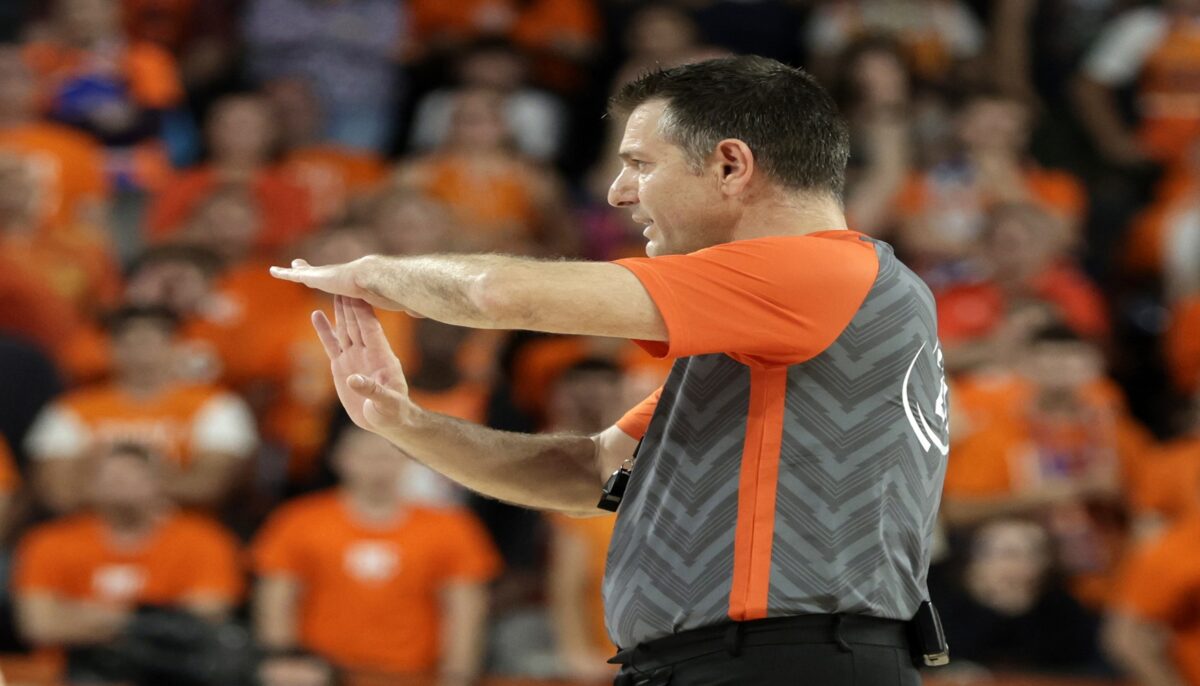
The tournament debut will also mark the debut of several new officiating rules. EuroLeague has changed the definition of when the act of shooting begins, while the former unsportsmanlike foul has been split into two categories. A “disruptive foul” will include, among other things, contact used to stop a fast break or deliberately stop the clock, while a “flagrant foul” will cover actions that are not legitimate basketball plays or are judged to be dangerous, violent or reckless. The penalty in the immediate situation remains similar to the old unsportsmanlike foul, but only a flagrant foul will count toward disqualification. Referees will also no longer issue a warning for flopping before assessing a technical foul. All of the changes will be applied for the first time at the Supercup.
In short, EuroLeague will use Abu Dhabi to test a new tournament, new rules and another step in its expansion beyond the traditional European basketball market, all at the same time. From a sporting perspective, Olympiacos begins the season as European champion and wants to become the first winner of the new trophy. Fenerbahce gets its first chance to answer the team that stopped it in May at the Final Four. Real, the biggest club in the world, wants to add another trophy at the beginning of the Pedro Martinez era, while Dubai can immediately show everyone how much of its summer investment has already translated into a functioning team.
The SuperCup does not yet have the history that would give the trophy prestige on its own, but its first edition will show us how seriously clubs are likely to take it in the future.