





There are moments that, in hindsight, seem fateful. As if they were destined to happen.


Ζeljko Obradovic’s first presentation at Panathinaikos in June 1999 did not seem like one of them at the time. The second, on June 22, 2026, already carried the weight of history.
Between these two dates, 27 years have gone by, during which the two sides won five European trophies and dozens of titles. Panathinaikos created an entire dynasty, saw the loss of Pavlos and Thanasis Giannakopoulos, the rise of Dimitris Itoudis to a top coach, and the transition of Fragiskos Alvertis from team captain to a man who may collaborate with ‘Zoc’ again, this time from a different position.

And yet, through it all, the legendary coach himself seemed to repeat, in different words, the exact same principles.
The story that almost never was
History has a tendency to present everything as inevitable, but in the summer of 1999, the biggest name on the market was not Zeljko Obradovic.
It was Giannis Ioannidis.
The Giannakopoulos brothers considered the deal almost certain, but reactions from Panathinaikos fans and Ioannidis’ own desire to leave the door open for a return to Olympiacos overturned everything.
“I don’t want to divide Panathinaikos’ fans, nor do I wish to create a problem for the Giannakopoulos brothers. I thank those who wanted me, and I respect the opinion of those who did not”, the late tactician explained at the time.
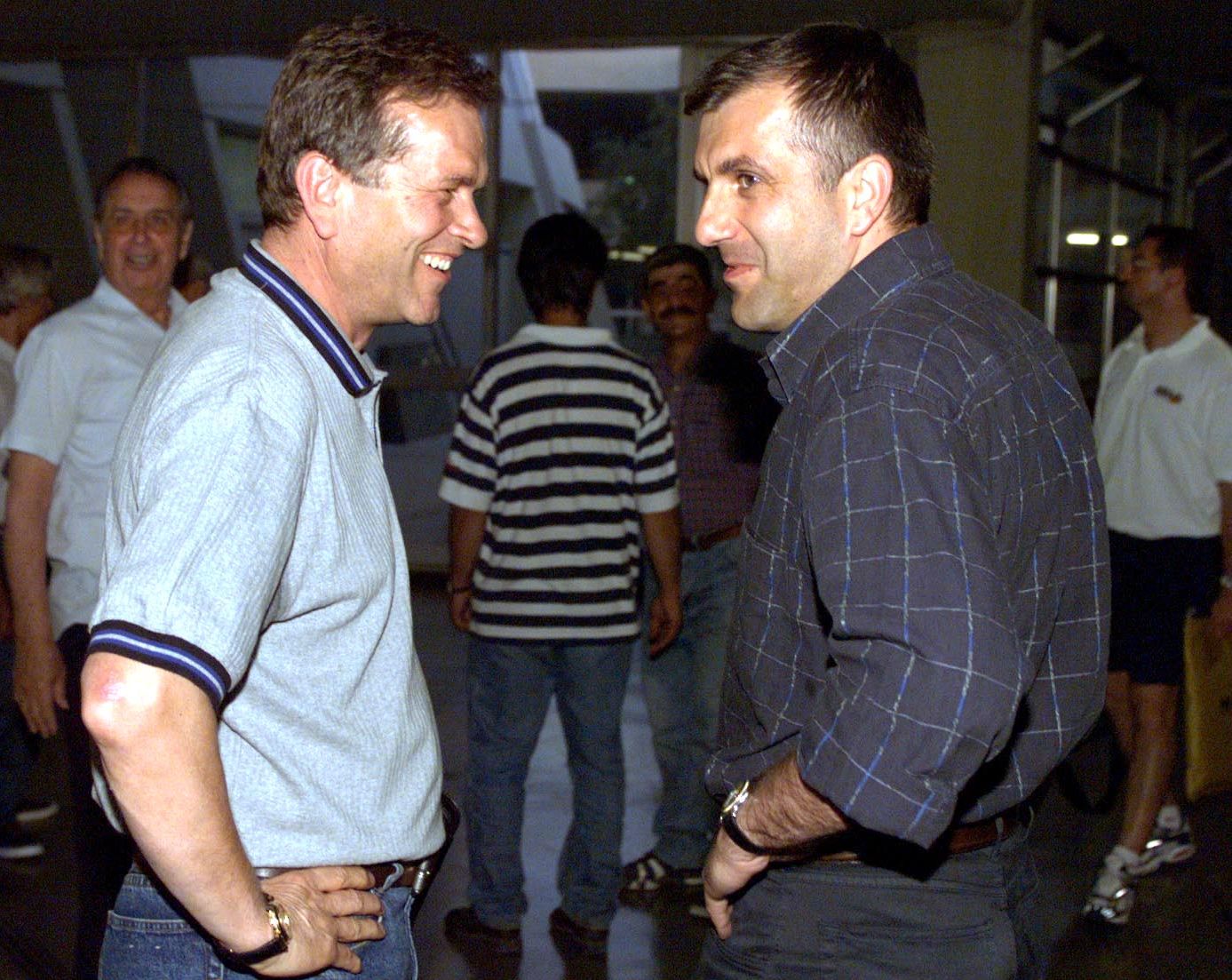
A week later, Ioannidis returned to Piraeus, and Zeljko Obradovic sent his signed contract to Athens.
The story was just beginning.
‘Europe’s best coach’ and the first promises
Pavlos Giannakopoulos then introduced the 39-year-old coach who had already won three EuroLeagues with Partizan (1992), Joventut Badalona (1994), and Real Madrid (1995).
“The recommendations for the man sitting next to me, who will be with us for the next three years, are excellent. The greatest reflection of his value is his titles. The results he has achieved in these eight years of coaching simply indicate that Panathinaikos has the honor of having Europe’s best coach in its ranks today.”
Back then, Panathinaikos had one star. Today they have six. Five of them bear the name of Zeljko Obradovic.
“I want to thank the president [Pavlos Giannakopoulos] and his brother [Thanasis] for the great opportunity they gave me to lead such a great club as Panathinaikos”, he said.
He continued:
“What I can promise is that I will do everything to ensure that the Panathinaikos fans are happy with both the way the team plays and the results.”
The phrase that essentially heralded the entire next era was another one.
“The most important thing is to create trust and to know that work is the most important thing.”
In 1999, Obradovic did not talk about trophies, something he also repeated in 2026.
“It will be very important if Panathinaikos wins their 8th trophy,” he simply said when asked if he would become the first coach to reach 10 EuroLeagues.
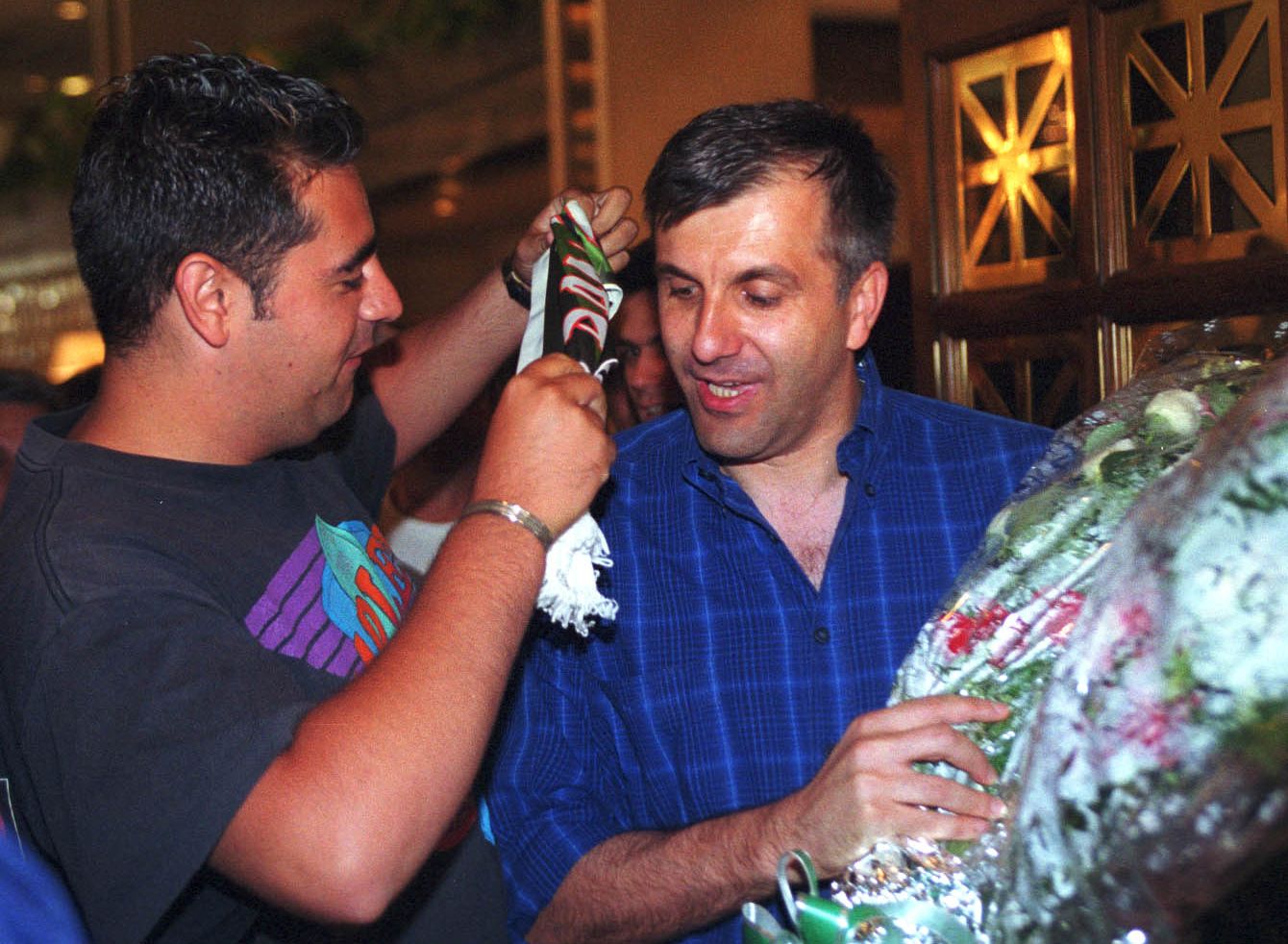
At the first presentation, Pavlos Giannakopoulos called him “Europe’s best coach.”
On June 22, 2026, another Giannakopoulos stood before the same man. Pavlos and Thanasis were no longer alive, but the family’s faith in the Serb remained unchanged.
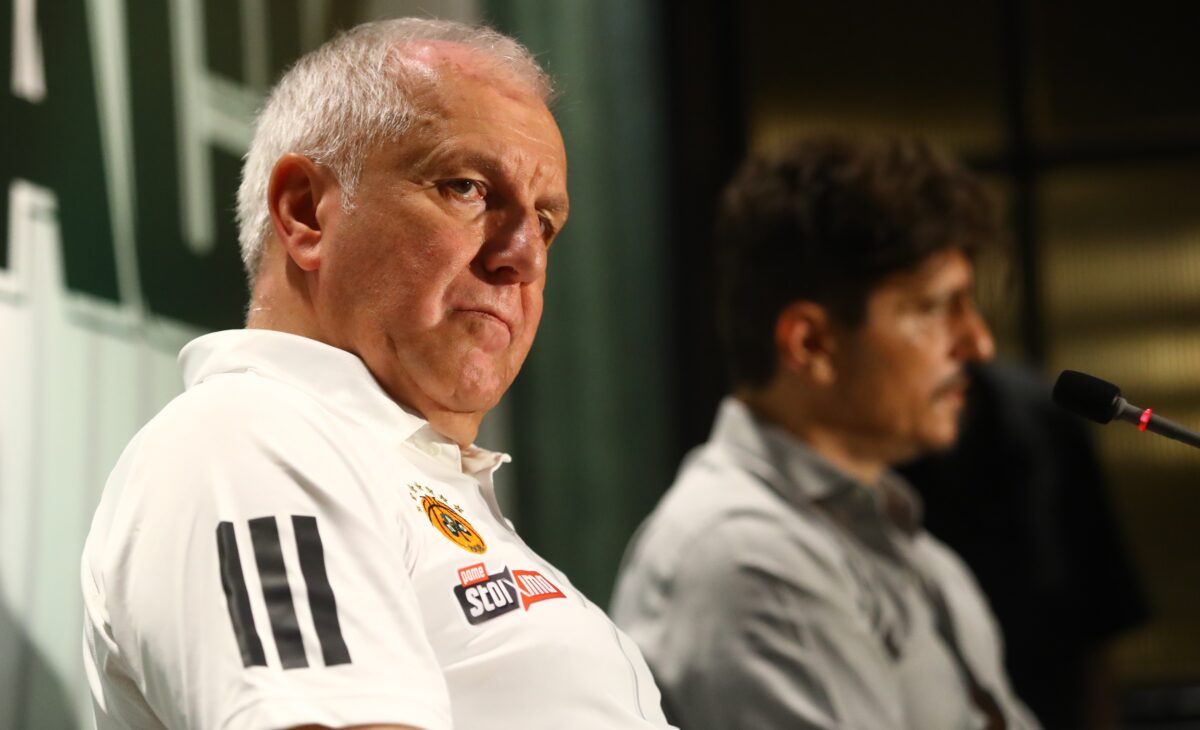
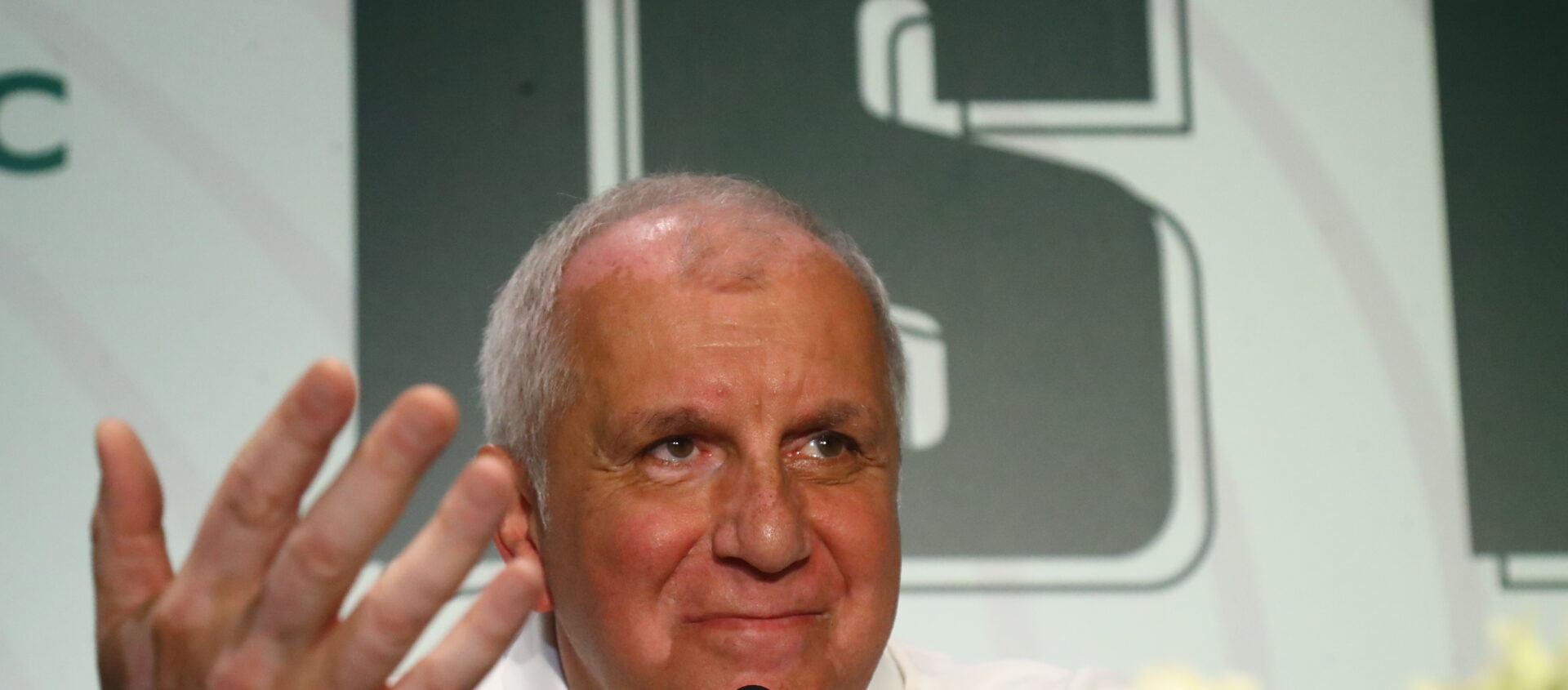
Dimitris Giannakopoulos began the presentation by highlighting the scene in the press room of the Telekom Center Athens, with hundreds of journalists and about 5,000 fans creating a festive atmosphere.
“Today is a very special day. In 2024, I told my friend that I would try to make Panathinaikos the best team I can. We won the European title, we have the best arena in Europe, and we brought back the best of the best. He has written most, if not all, of Panathinaikos’s greatest moments. Thank you for everything.”
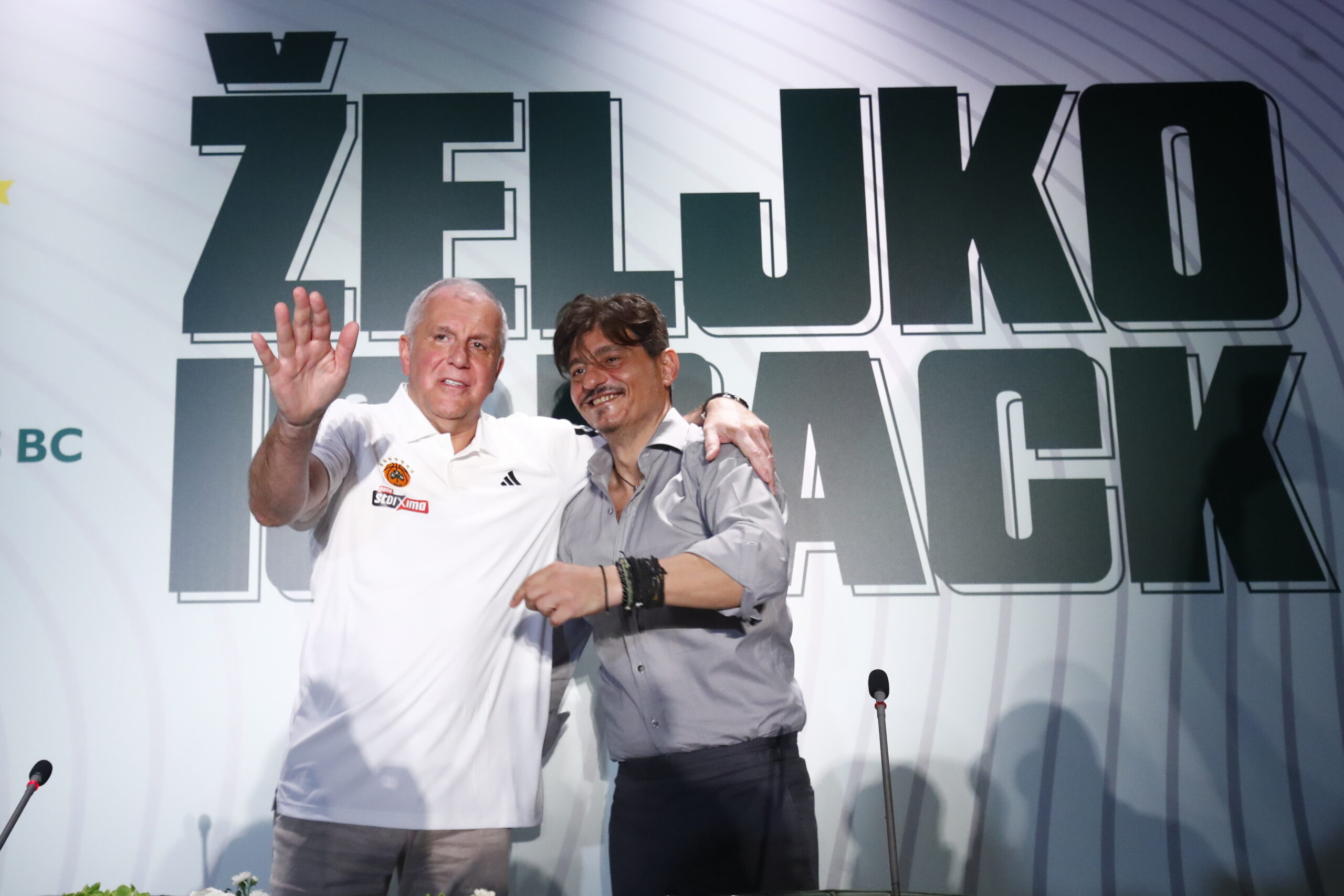
In 1999, Pavlos spoke of Europe’s best coach. In 2026, Dimitris spoke of “the best of the best.” In between, there were five European trophies, decades of triumphs, and a relationship that never truly broke.
Obradovic himself appeared emotional, almost in tears, and revealed that communication with the organization was never lost.
“First of all, I want to thank Dimitris for giving me this opportunity. It was very easy to understand each other. I never lost contact with Mr. Giannakopoulos and the Panathinaikos organization. Every time I come here, it is something special for me. I have a connection with the city of Athens.”
A little later, he revealed that even when he left Partizan, he had this moment in mind.
“When I left Partizan, I had told my friend, who is more of a friend than a manager, that we would talk during this period. We spoke on June 20. Simple things are simple.”
In one of the most characteristic moments of the press conference, when asked about comparisons with his first tenure, he replied:
“I cannot avoid the comparison, but we must live in the present. Everything we achieved here was because we worked as a family. I am the happiest person in the world. It is my turn to do my job.”
The transfers, Itoudis as a translator, and Obradovic’s consistent mindset
If the two presentations reveal anything, beyond the passage of time, it is that Zeljko Obradovic remained impressively consistent in his approach to building a team.
In 1999, a young assistant, Dimitris Itoudis, sat beside him. He had not yet embarked on his current career path and often acted as the Serbian coach’s translator. Obradovic spoke in Serbian, something he continued to do in many subsequent Panathinaikos press conferences, leaving Itoudis with the role of conveying his thoughts in Greek.
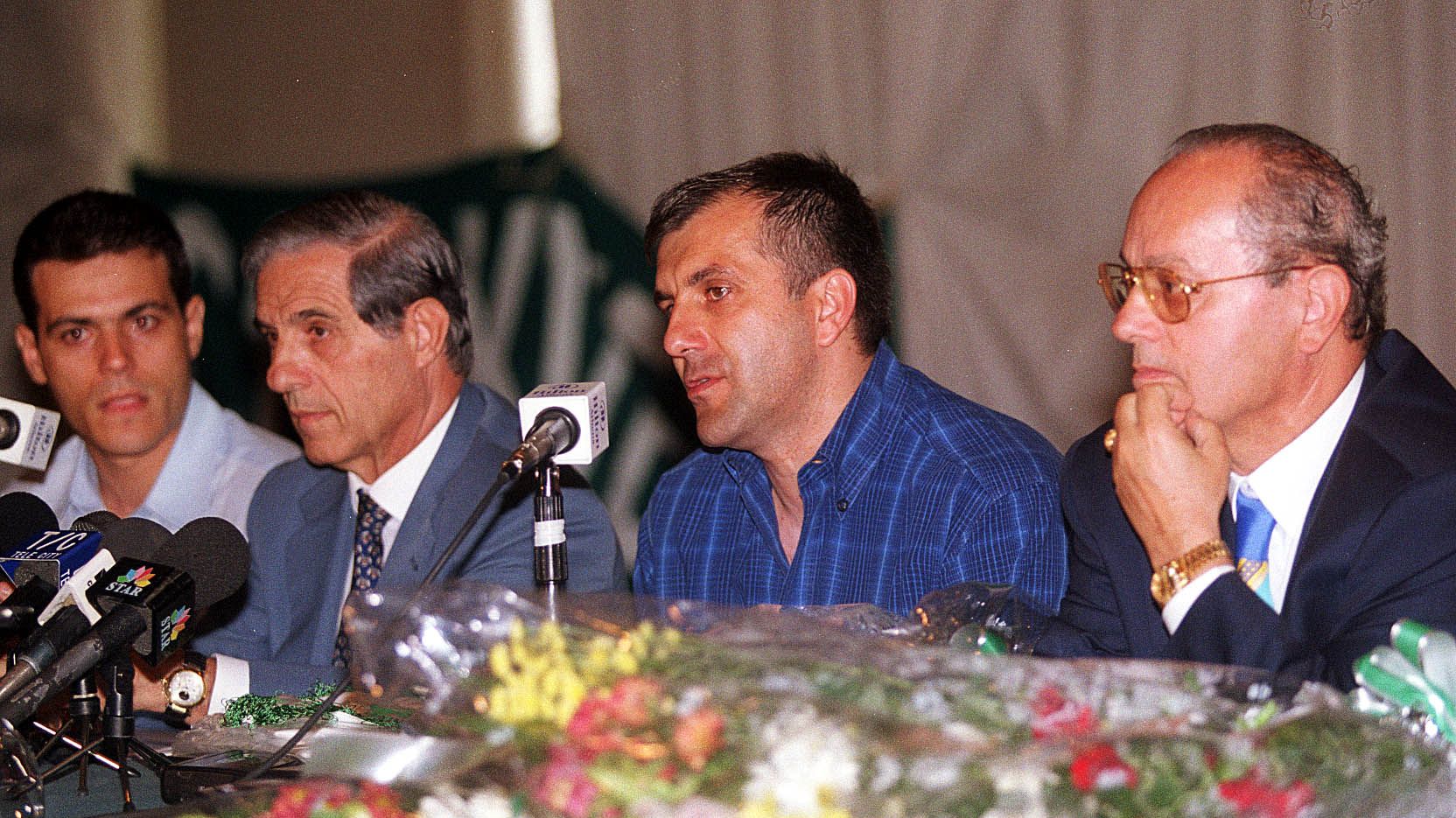
That first presentation had a strong transfer focus. The name Zeljko Rebraca was at the center of attention, with the new coach trying to keep a low profile, even though everyone knew that Panathinaikos was preparing for a new era.
“We have already said that Panathinaikos is a great team, and such a great team needs great players. All great players are interested in Panathinaikos,” he had stressed.
When the journalists insisted, Pavlos Giannakopoulos’s answer was crystal clear:
“We have agreed that when we acquire a player, we will announce it officially. Everything else is not official. History shows that we always do what is best for Panathinaikos. If we believe a player is within the club’s capabilities, then it will happen.”
Indeed, Pavlos Giannakopoulos also clarified something else that would come to define the entire Obradovic era:
“Outside the arena door, the presidents are in charge. Inside the arena door, the coach is the boss.”
Almost three decades later, Obradović was not asked about the players he intends to bring to Panathinaikos, but about those already on the team.
“I spoke with Kostas Sloukas yesterday,” he revealed. “I have a plan to speak with all the players I can now. I know Kostas very well. I haven’t spoken with Mathias (Lessort). I’ve only been here for one day, I need time,” he said.
The man who never left
In 1999, Zeljko Obradovic arrived in Athens with three European cups in his luggage, with the reputation of being Europe’s top coach, but without anyone being able to imagine that this collaboration would turn into the most successful relationship European basketball has ever known.
In the presentation room were a few journalists, team officials, and some Panathinaikos fans.
In 2026, nearly 5,000 people waited patiently at the Telekom Center Athens, not to hear what Obradovic would say, but to see him come out before them again. They gathered to shake his hand and have the familiar sensation that he had returned home once again.
From the moment he set foot in the T-Center, he met old acquaintances, hugged people with whom he had shared a lifetime, and was cheered on by a crowd that never forgot him.
👏 Η αποθεωτική είσοδος του Ζέλικο Ομπράντοβιτς στο «T-Center» μαζί με τον Δημήτρη Γιαννακόπουλο ☘️#PAOBC pic.twitter.com/A2d5fzoPpd
— Sportal (@SportalgrG) June 22, 2026
Even before the press conference began, Dimitris Giannakopoulos stood beside him with visible pride, commenting on the unique sight of the packed room, filled with journalists, for a man who continues to generate the same interest as he did decades ago.
Somewhere between these two images lies everything that has happened in between. The five European cups won with Zoc on the bench, the countless titles, the generations of players that passed through, the people who passed away, the collaborators who followed their own paths, and the thousands of nights that made Panathinaikos one of the most recognizable teams in Europe.
In 1999, Zeljko Obradovic was the future. In 2026, he is now the past, the present, and perhaps the most exciting promise for the future.
And perhaps this explains better than anything else why, after a 14-year absence, the return and reception of the winningest coach in European basketball history holds such great symbolic power and meaning.
This time, Obradovic is not just the best coach available on the market, but a mythical figure in the team’s history who never truly left.