


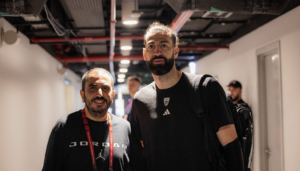


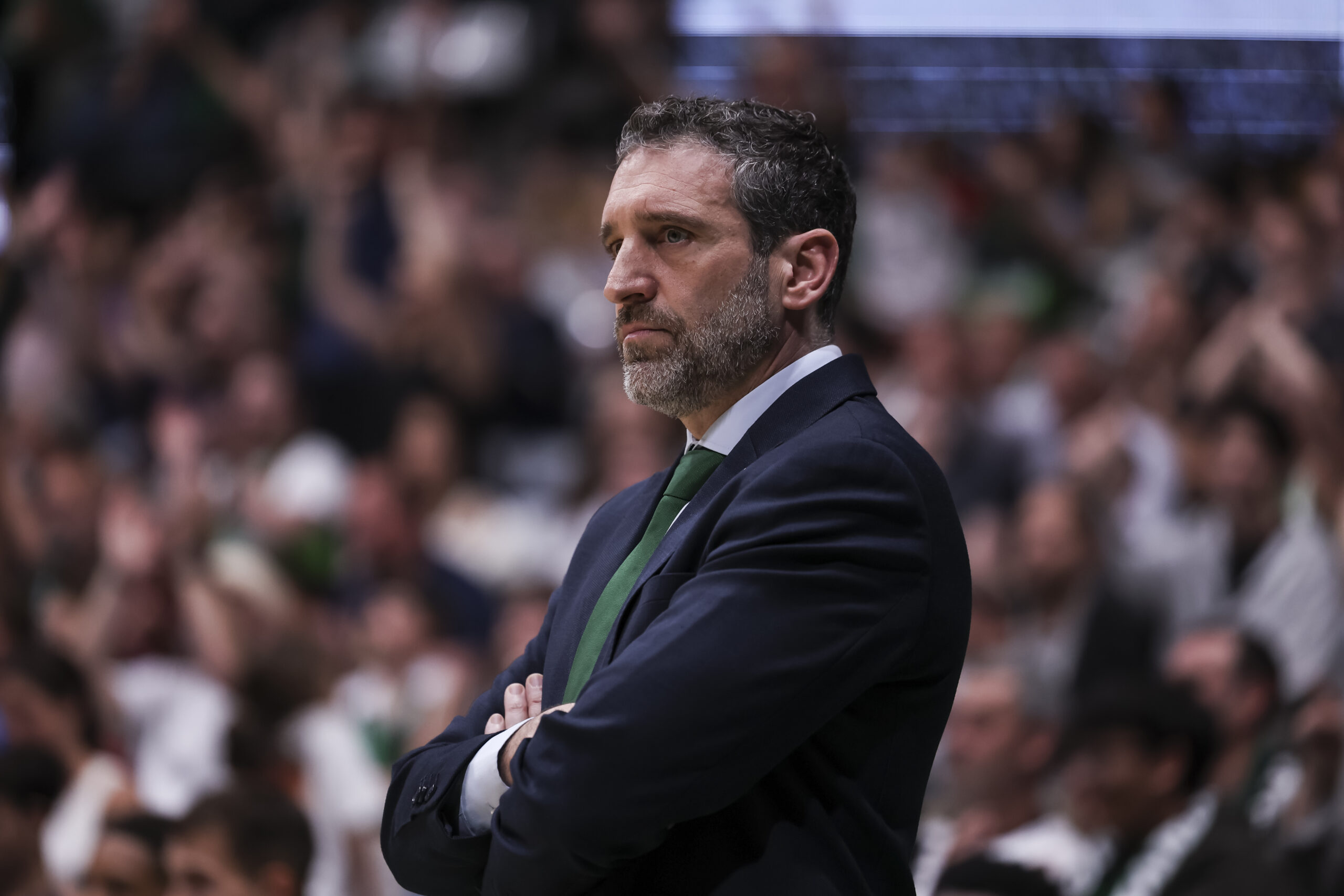

“At first glance, if you saw Ibon Navarro and Crvena zvezda together, a lot of people would probably scratch their heads. But when you look at what Navarro has done over the last four years in Málaga… it’s been nothing short of remarkable.”


Those were the words of Nihad Đedović, a player who has been part of Navarro’s Unicaja since 2022, when asked to comment on the Spaniard’s move to the Red-and-Whites.
Since Dejan Radonjić’s stint from 2013 to 2017, no coach has lasted more than two seasons on Crvena zvezda’s bench. Implementing Navarro’s system takes time.
Will the 50-year-old Spaniard – who has spent his entire coaching career in his homeland – be able to elevate Zvezda and guide the club to just its second EuroLeague playoff appearance in history?
Running… and More Running
Navarro’s favorite play?
Running.
That’s how players who have worked under him often describe his system in the simplest possible terms. Roughly half of Unicaja’s possessions ended either in transition or within the first eight seconds of the shot clock.
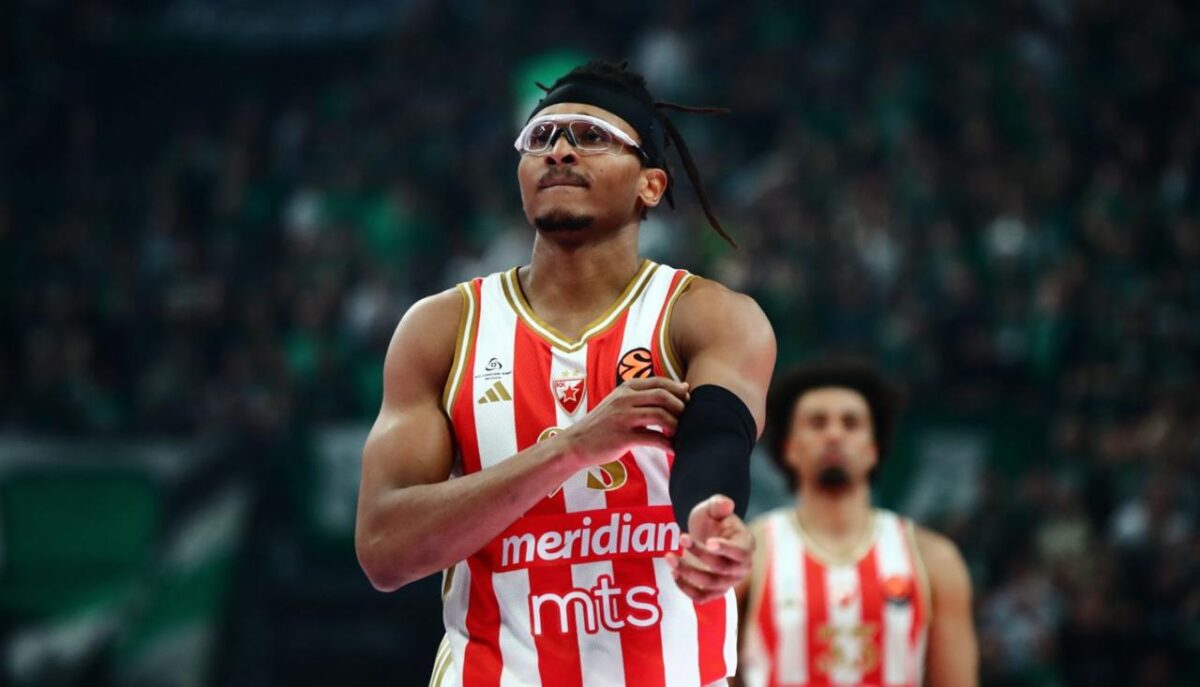
Crvena zvezda’s roster will certainly undergo some changes, but the team is built around players suited to a faster style. Last season, that was already the intended direction. When the defense worked, so did the results. As the season progressed, however, Zvezda lost its identity and often looked lost in the half court, largely because it relied too heavily on isolation basketball.
Jordan Nwora and Jared Butler were often as frustrating as they were productive. With more EuroLeague experience, they are expected to make better decisions. That will be crucial because Navarro’s system also gives players plenty of freedom to create and showcase their individual talent.
“With that kind of freedom, every player improves and eventually starts doing things he didn’t even know he was capable of,” says Đedović.
Navarro loves running sets for shooters, but what he insists on most offensively is constant movement, from which a solution usually emerges.
“Something is always happening,” Đedović says.
Aggressive Defense and a Deep Rotation
Navarro likes to defend the pick-and-roll with an aggressive hedge, while switching is also a major part of his defensive scheme – not just in ball-screen situations. That’s become standard practice across much of elite European basketball.
If offense requires strength and energy, that applies twice as much to defense. Aggressiveness and ball pressure on that end of the floor are among the foundations of Navarro’s philosophy.
That philosophy naturally leads to a deep rotation, often going 12 players deep, with nobody spending much more than around 20 minutes on the floor.
“For him, the most important thing isn’t what you can give the team – it’s what the team needs. It doesn’t matter what your name is or whether you’re capable of scoring 20 points. Give us 10 and let’s win. The minutes are distributed in a way that keeps everybody happy while helping the team win,” Đedović explains.
That style brought plenty of success to Valencia last season, but Crvena zvezda head coach Saša Obradović was often criticized for refusing to shorten his rotation, even though his main players usually played close to 30 minutes.
A Player’s Coach
Navarro is not a EuroLeague newcomer, but he coached Baskonia back in the 2014-15 season. A lot has changed since then, and the different EuroLeague format has fundamentally changed the nature of the competition. There is far less time for practice, which means coaching is now as much about managing people as it is about X’s and O’s.
Navarro will certainly have to adjust to a completely different rhythm of games, but relationships with players are one of his stronger points.
“He completely understands every kind of problem a player might have because he knows that, like everyone else, we all have things going on in our lives. That’s how he operates, and it’s brought him success,” Đedović points out.
However, Janis Sferopoulos was also considered a players’ coach, someone whose strength lay in building relationships rather than ruling with an iron fist. Yet even he lost the locker room and was fired after just two EuroLeague games with this current Zvezda roster.
Last season had not even ended, and the players had already turned their backs on another coach.
Sometimes You Need to Raise Your Voice
Navarro is a consummate professional, but that does not mean he is not relaxed. It is not unusual for shooting workouts to be done with music playing, or for the team to get sweets after scoring 100 points. Those are just some of the ways the 50-year-old, born in Vitoria, builds chemistry within the team.
Still, one of his greatest virtues – his good relationship with players – can sometimes go in the wrong direction. There are times when he gives players a second – and even a third – chance when a stronger message might be needed.
Given everything that unfolded at Zvezda last season, there will be moments when a firmer hand is required.
A Completely Different Environment
From relaxed and easy-going Málaga to Belgrade madness – that will probably be Navarro’s biggest adjustment.
In Andalusia, basketball is entertainment. In Belgrade, it is often a matter of life and death. The pressure is incomparable.
“Knowing our mentality… we’re all wired to expect instant success, so many people would probably want a bigger name. Still, analysts and everyone involved in this sport can see what Ibon Navarro has done at Unicaja over the last four years. They can see that this is the real deal,” says Đedović, before adding:
“I know the comments. I know how people think. It won’t be easy for him to adjust. Patience will be needed, and we don’t have patience for anything.”
When he left Unicaja, Navarro said he needed a new challenge.
It’s hard to imagine a bigger one.