







There are moments that redefine a sport. Moments that change it forever. Diego Maradona’s “Hand of God” at the 1986 World Cup in Mexico. Bob Beamon’s unimaginable long jump at the 1968 Olympics, also in Mexico. The 2008 Wimbledon final, when Rafael Nadal finally dethroned Roger Federer as darkness fell over Centre Court. Greg LeMond snatching the Tour de France from Laurent Fignon on the final time trial into the Champs-Élysées.
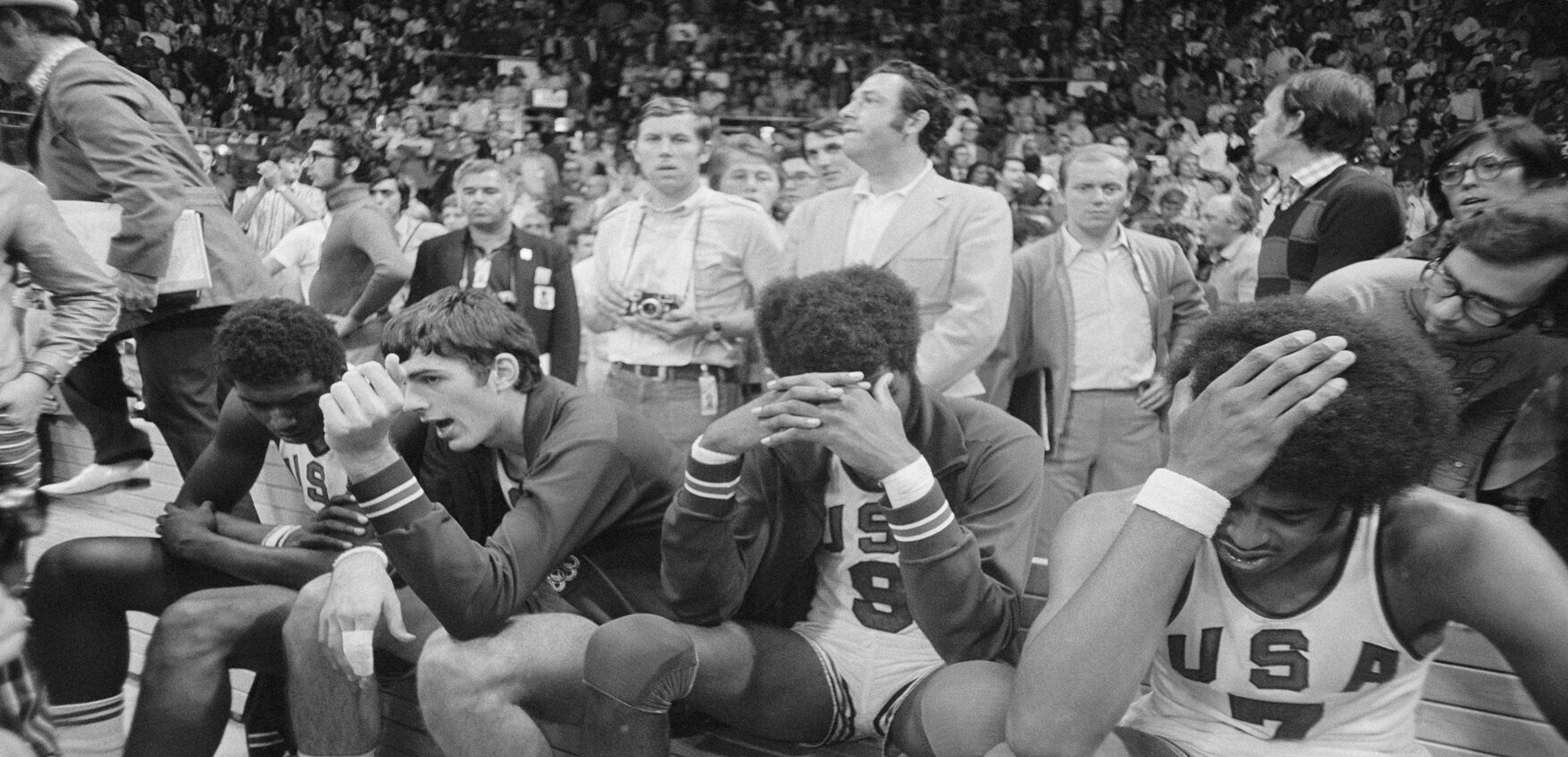
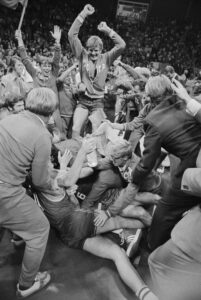
Basketball has had its share of defining moments, but few have done more to reshape the global landscape of the game than the men’s final at the 1972 Munich Olympics, when the United States suffered its first-ever defeat in Olympic competition. The executioner was the Soviet Union, in one of the most controversial championship games ever played. The dramatic closing seconds had to be replayed three times, with the Soviets finally prevailing only on the third attempt after the Americans had twice believed they had won. Those celebrations ultimately proved meaningless, as neither victory was ever made official. It is almost impossible to imagine such a scenario in today’s game, yet it became one of the defining moments in basketball history.


Any serious basketball fan remembers Aleksandr Belov’s buzzer-beating layup that, at the height of the Cold War, shattered the established order of international basketball. Fewer, however, remember the man who delivered the extraordinary full-court pass that made the play possible and turned it into one of the sport’s most iconic moments.
That man was Ivan Edeshko, who passed away last Thursday at the age of 81. A player who came to symbolize an era through one of his greatest skills: passing. Yet his legacy extends far beyond the famous assist in the Munich final. The Soviet point guard, born in Belarus, was one of the smartest and most complete floor generals European basketball has ever produced: an exceptional playmaker whose influence reached well beyond the box score.
Standing 1.96 meters, unusually tall for a point guard of his generation, Edeshko combined outstanding physical tools with extraordinary court vision. His greatest strength was an uncanny ability to read the game several plays ahead. More than a ball distributor, he was a strategist who dictated the tempo, recognized openings before they appeared, and found teammates at precisely the right moment.


His technical repertoire was highlighted by the precision of his passing, both in half-court sets and in transition. He particularly excelled at long-range outlet passes, delivering them with a combination of power and accuracy that few players could match. That skill reached its ultimate expression in Munich, when his perfectly weighted full-court pass set up the game-winning 51-50 basket in what remains one of the most celebrated assists in basketball history.
Edeshko was far more than the author of the so-called “Golden Pass.” Throughout his career, he stood out for his composure under pressure, his leadership, and his remarkable basketball IQ. He instinctively knew when to speed up the game and when to slow it down, organized his teammates with authority, and embraced responsibility in decisive moments without ever dominating the ball. He embodied the team-first philosophy that defined the Soviet basketball school.
His résumé reflects the scale of his achievements. In addition to the historic Olympic gold medal in 1972, he won bronze at the 1976 Montreal Games, captured the FIBA World Championship in 1974, and claimed two EuroBasket titles with the Soviet national team, in 1971 and 1979. At club level, he starred for CSKA Moscow, winning multiple Soviet League championships and lifting the European Champions Cup in 1971, cementing his place as one of the cornerstones of the continent’s dominant club side.
After retiring, Edeshko remained deeply involved in basketball as a coach in the Soviet Union, Russia and abroad, passing on the experience he had accumulated over decades at the highest level. Among other roles, he served as an assistant to the legendary Aleksandr Gomelsky during the Soviet national team’s preparations for the 1988 Seoul Olympics.
With Edeshko’s passing, only one member of the Soviet Union’s 1972 Olympic team remains alive: Lithuanian great Modestas Paulauskas. But Edeshko’s legacy is immense. He represented a vision of basketball in which intelligence trumped individualism. He was a point guard who transformed passing into an art form and proved that one inspired decision can alter the course of history. His name will forever be linked to those unforgettable final three seconds in Munich, but his true legacy lies in elevating the craft of orchestrating a team to the highest level.