








When Kerr Kriisa signed with Tartu in late June, he returned to the city where his basketball career had begun before taking him to Žalgiris, Arizona and the larger stage of American college basketball. After six years at universities in the United States, he was going back to his hometown club. He announced it with a short message in Estonian: “I’m back.”


Tartu was bringing home an Estonian international who had played at Eurobasket and a point guard with experience at several major college programs. At 25, Kriisa still had time to redirect his career toward European basketball after injuries and a series of transfers had disrupted his years in the United States.
From Homecoming to Federal Court
A few days later, he was arrested in Kentucky. He had been expected to play for La Familia, Kentucky’s alumni team in The Basketball Tournament, before his name was removed from the roster. Kriisa did not leave the United States after one last appearance on a basketball court. He appeared in federal court, surrendered his passport and was ordered not to contact the alleged victims or potential witnesses.


He faces five counts of wire fraud. Federal prosecutors allege that Kriisa obtained approximately $2.2 million from two people over a period of almost four years, using false identities and invented stories about illness, debt and problems involving his family. He also allegedly promised that he would repay the money once he received a loan or found a way out of financial difficulties he claimed to be facing.
Kriisa has pleaded not guilty. The allegations have not been proven, and his responsibility will be decided in court. Still, once the indictment became public, basketball was no longer the main reason his name was in the news.
The Alleged Scheme Began at Arizona
The alleged scheme began in August 2022, according to prosecutors. The timing is one of the more troubling parts of the case. Kriisa was not out of basketball or trying to hold on after his career had fallen apart. He was Arizona’s starting point guard, the leading assist man in the Pac 12 and a member of the Estonian national team at Eurobasket. He was 21 years old and playing in packed college arenas, with a professional career still ahead of him.
At the same time that he was becoming one of the most recognizable Estonian athletes of his generation, the indictment says he was telling a series of false stories in private. He allegedly assured one person that he would repay his debt after being approved for a loan. Later, he wrote that he was considering selling his organs to raise the money.
Other emails were sent under his mother’s identity, prosecutors say. In those messages, Kriisa allegedly asked for help with her supposed cancer treatment and with saving the family farm. These were not described as one desperate request or one lie that got out of control. The government’s case is that the stories continued and changed over several years as more money was requested.
The relationship with the first alleged victim eventually included more than messages and verbal promises. In April 2025, Kriisa signed an agreement stating that he would repay her $100,000 by February 2026. Prosecutors claim that he never intended to honor it and that the document was used to keep her trust and buy more time.
The Woman Who Allegedly Did Not Exist
A woman named Irene later entered the story. The government alleges that she was another identity created by Kriisa.
Posing as Irene, he allegedly asked a second person for money and told her to send it to the first alleged victim, who would then pass it along to him. While communicating under his own name, Kriisa reportedly spoke about Irene as if she were real and claimed that he had been in contact with her. The arrangement allowed him, according to the indictment, to give two people different versions of events while placing both of them inside the same flow of money.
When the second person began to suspect that Irene did not exist, Kriisa allegedly continued to deny it. The five counts in the indictment are tied to specific emails and messages sent in early February 2026. The $2.2 million figure covers the wider course of conduct that prosecutors say began in 2022 and lasted until June 2026. The government is seeking the forfeiture of at least that amount if he is convicted.
The Missing Motive
What Kriisa may have needed the money for remains unanswered. The public filings do not explain where it went, how he initially knew the two people or why they continued to believe him for so long. Nothing released so far has connected the case to gambling, game fixing or an expensive lifestyle.
Court filings refer to about 15,000 documents containing more than 50,000 pages of material. That gives some idea of how much evidence may be involved, though the size of the file does not establish guilt and does not explain the motive behind the alleged conduct.
Before the Indictment, a Basketball Story
Until the arrest, Kriisa’s life could be presented as one of the better success stories produced by Estonian basketball. He was born in Tartu in 2001 and grew up in a family where the game was always present. His father, Valmo, played professionally for years, represented Estonia and spent parts of his career in several European countries. He named his son after Steve Kerr, whom he had watched with the championship era Chicago Bulls.
The connection became even neater years later. Kerr Kriisa chose Arizona, the university where Steve Kerr had played, and wore his No. 25. By then, however, Kriisa had already done enough to be known for more than his name.
He made his debut for Tartu’s senior team at 15. The next season, he played against a team featuring his father, the first father and son matchup in the top level of Estonian basketball. After a short period in Bamberg’s development system, he moved to Žalgiris and began to build a reputation as one of the more interesting European guards in his age group.
Kriisa averaged close to 15 points and six assists for Žalgiris’ second team. He was named the most valuable player at a Euroleague junior qualifying tournament and later made his Euroleague debut with the senior team. There were physical limits to his game even then, but his feel as a point guard was easy to see.
He was not particularly quick or strong. His appeal came from his vision, confidence, pull up shooting and willingness to make plays before they fully developed. Kriisa could see a passing lane early, make shots from well beyond the college line and change the pace of a possession. He also played with a freedom that could turn into careless turnovers, forced decisions and confrontations that did little to help his team.
Arizona Made Him a National Name
Arizona recruited him in 2020 as one of the more highly regarded European players entering college basketball. He had to wait before making his debut because of NCAA questions involving his amateur status and compensation received while playing in a European professional system. Once cleared, he became the starting point guard on one of the strongest teams in the country and spent two seasons among the Pac 12’s leading playmakers.
His averages of around 10 points and five assists did not fully explain how visible he was. Kriisa recorded two triple doubles, regularly shot from several feet beyond the arc and became a favorite among Arizona supporters. Away from home, he often had the opposite effect. He spoke to opposing fans, argued with players and appeared to enjoy games more when the atmosphere turned against him.
That personality followed him to the national team. After an exchange with Luka Dončić, Kriisa said it was not especially difficult to get inside the Slovenian star’s head. At Eurobasket in 2022, he averaged almost 11 points and six assists. The NBA was never a likely destination, but a substantial career in European basketball appeared to be within reach.
His weaknesses were also becoming harder to ignore. He did not consistently beat defenders with his first step, had difficulty finishing against stronger and more athletic guards, and was not a good enough defender to remain equally valuable when his shot stopped falling. He could organize a strong college offense and create for others, but professional scouts did not see him as a dependable NBA prospect.
A Career That Lost Its Direction
Kriisa left Arizona for West Virginia, where he was suspended for the first nine games after admitting that he had received impermissible benefits at his previous school. The NCAA did not publicly disclose what those benefits were. Since his arrest, that suspension has sometimes been placed alongside the federal allegations as if the two matters were connected. No public evidence has established such a link.
His season at West Virginia was his best statistically. Kriisa averaged 11 points and nearly five assists while shooting more than 42 percent from three point range. The program was dealing with the fallout from Bob Huggins’ departure, however, and the season did little to improve Kriisa’s professional outlook.
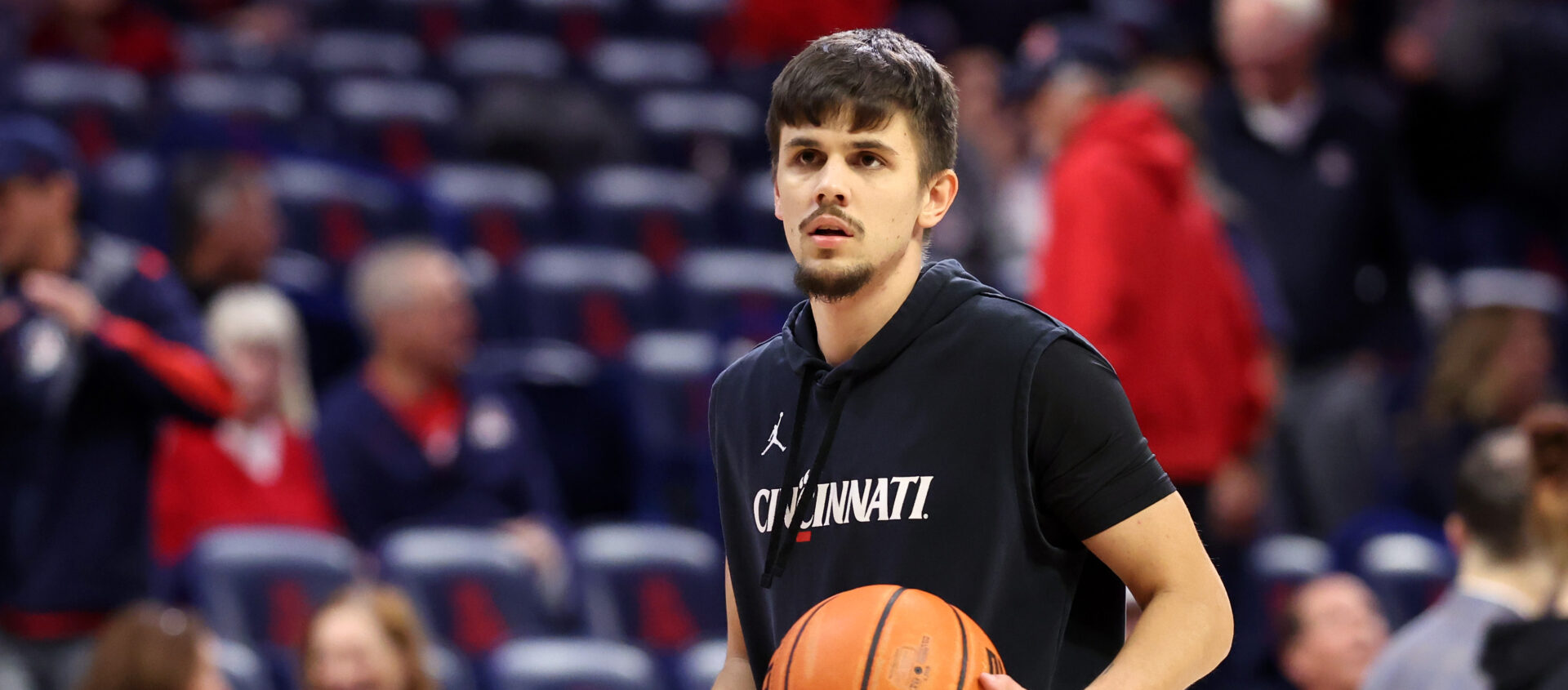
He transferred again, this time to Kentucky, where a foot injury ended his season after nine games. His final college year came at Cincinnati and was shortened by a shoulder problem. By the end of it, the player who had once appeared to be building steadily toward a solid European career had spent four seasons changing programs, waiting for eligibility decisions and recovering from injuries.
Kriisa finished his NCAA career with 127 appearances, including 106 starts, and averages of 8.8 points and 4.4 assists. It was not an empty college career. He played for major programs, won important games and spent years with his national team. It was also less than many had imagined when he was developing at Žalgiris and beginning to draw attention in the United States.
Tartu Was Supposed to Be a Restart
Signing with Tartu did not need to be treated as an admission that his career had failed. At 25, he still had time to become an important player in Europe. He was returning to a familiar club that could offer him the ball, minutes and a central role. For a player whose last few years had lacked continuity, it was a reasonable place to start again.
The arrest changed that before he had played a game. Kriisa’s guilt has not been established, but the allegations are now attached to his name: posing as his mother, inventing cancer treatment, discussing the sale of organs and using a woman who allegedly did not exist to request money.
Two Versions of Kerr Kriisa
Should the government prove its case, the hardest detail to explain will not be how his basketball career lost momentum. It will be that the alleged conduct began while the career was still moving forward. Kriisa was playing for Arizona, representing Estonia at Eurobasket and receiving opportunities that many young players spend their lives trying to reach.
The player people watched in public was confident, provocative and easy to recognize. The indictment describes someone communicating through other names and stories that changed whenever more money was needed. Whether that second person existed outside the allegations is now a question for the court.