


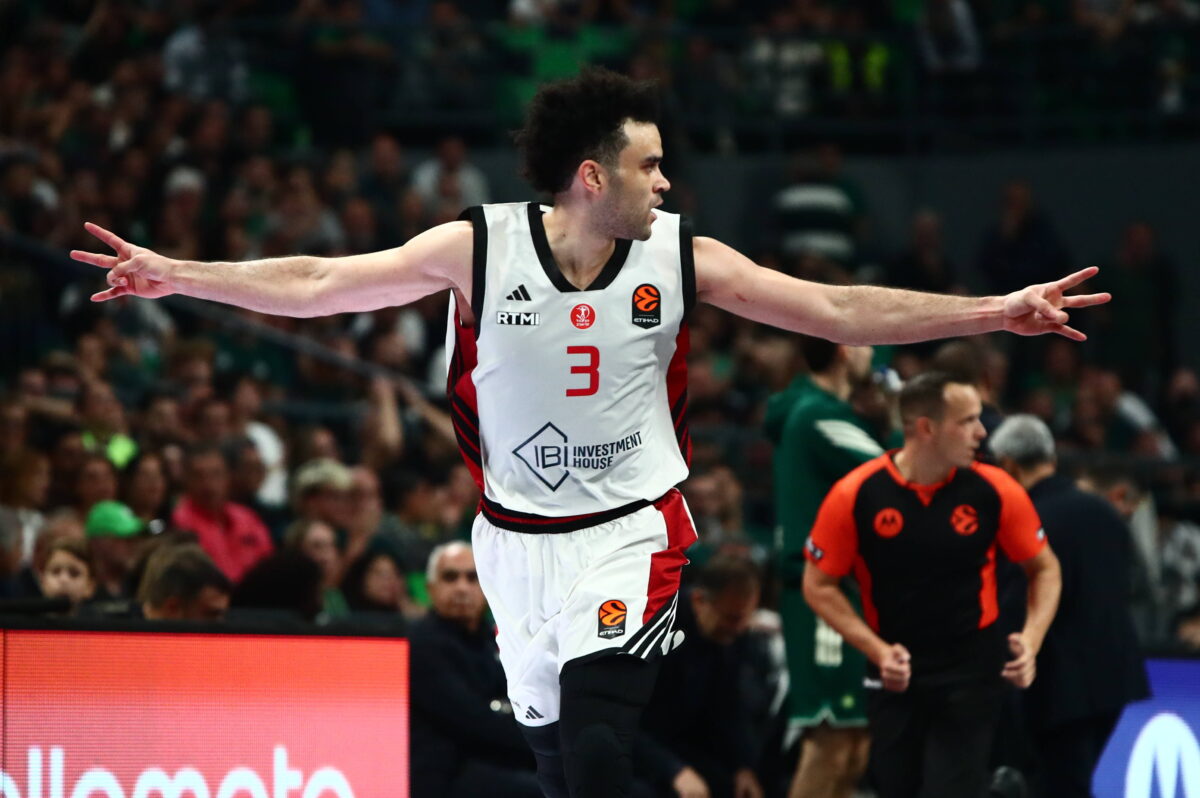
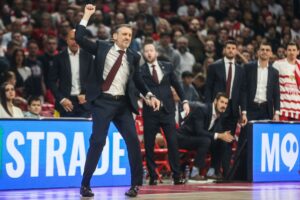




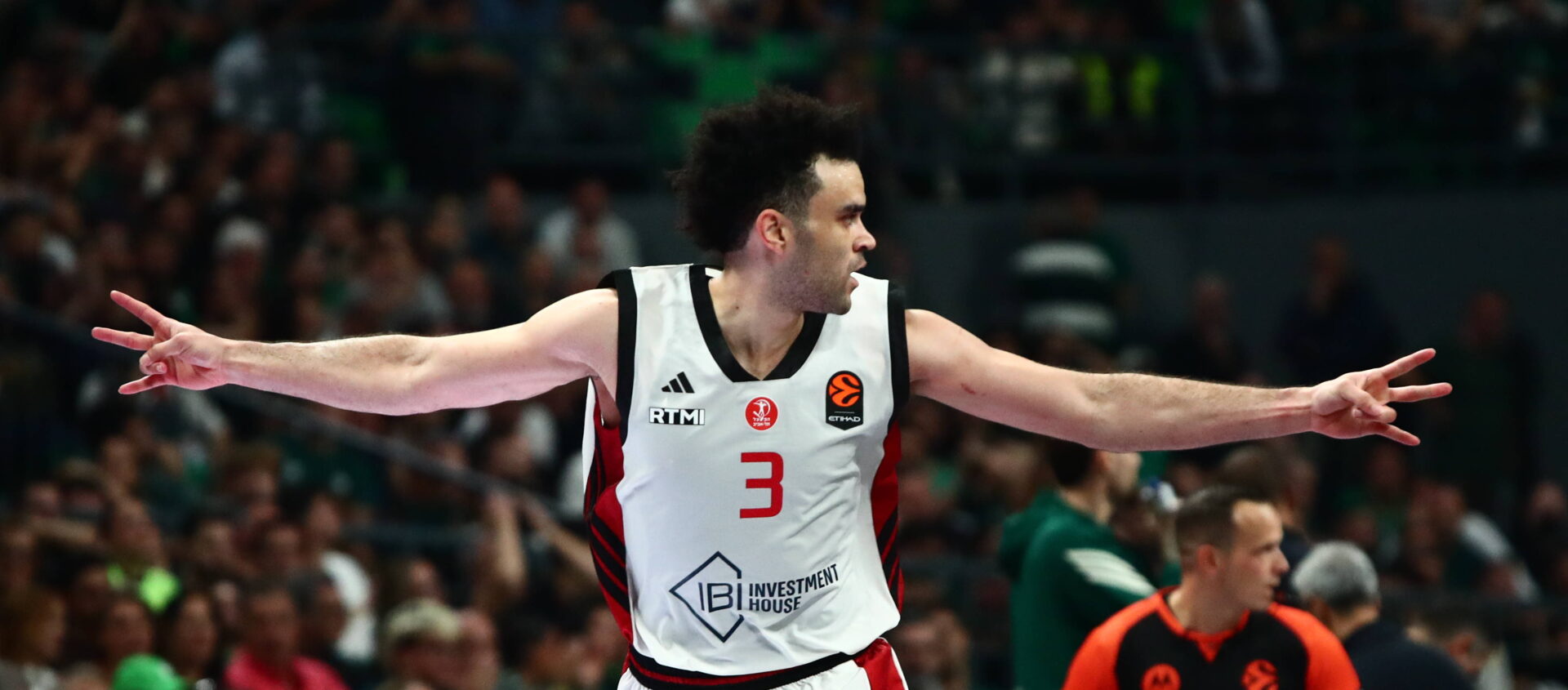
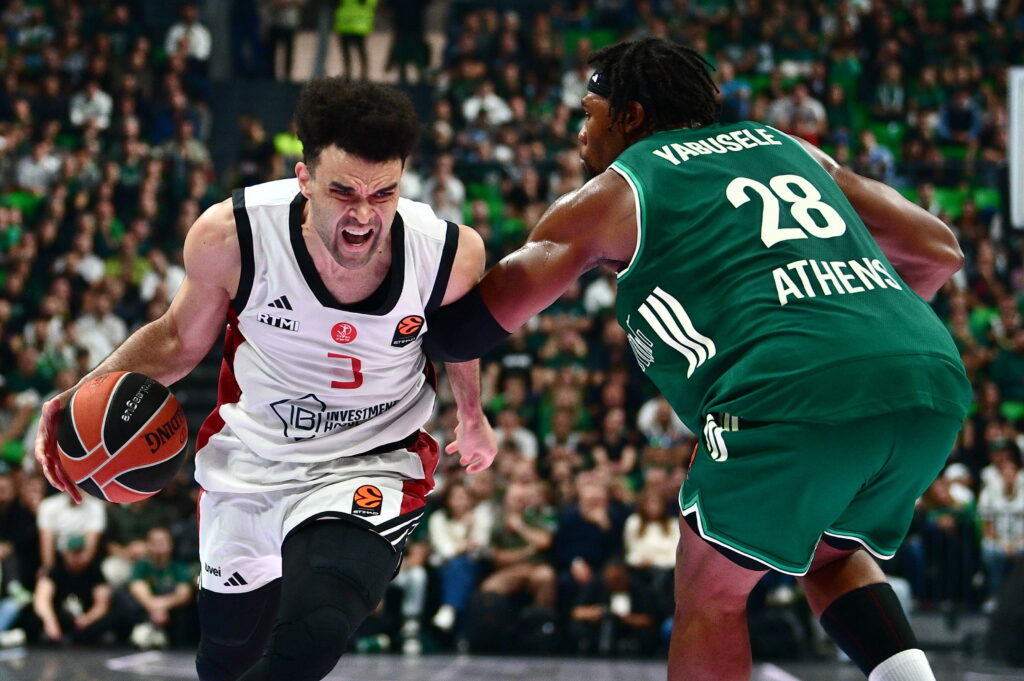
Hapoel Tel Aviv’s 91-81 victory over Panathinaikos in Athens was more than another early-season result. It ended the Greek club’s unbeaten start to the EuroLeague campaign, demonstrated Hapoel’s ability to compete in one of Europe’s most demanding environments and offered Elijah Bryant another opportunity to underline his importance to Dimitris Itoudis’ team.


Bryant finished with 14 points, six rebounds, three assists and a performance index rating of 22, playing nearly 28 minutes. Twelve of his points came after halftime, including a crucial three-pointer in the final minutes as Panathinaikos threatened to complete a comeback.
Yet speaking to SKWEEK after the game, the American guard was reluctant to attach excessive significance to the result. His reflections extended well beyond basketball, touching on his contract extension through 2029, players’ rights, the increasingly demanding EuroLeague calendar and the routines that help him remain competitive.
“It’s definitely a confidence builder for us”
For Bryant, winning in Athens carried obvious significance, although he insisted that Hapoel remains a work in progress.
“It’s obviously one of the best places to play in Europe. They’re a super talented team. We take it one step at a time, and each day we’ve got to win, but it’s early in the season, so you can’t read too much into it. We enjoy it, but we still have a lot more work that we can do and progress.”
Panathinaikos entered the encounter with five victories from five games, but several important players were unavailable. Bryant acknowledged that context rather than presenting the result as definitive proof of Hapoel’s superiority.
“It’s super early. Obviously, they’re missing key guys, we’re still gelling. It’s super early, but for us it gives us confidence going into our next EuroLeague games, Israeli league games. It’s super early, but it’s definitely a confidence builder for us.”
Asked what he expects from the season, Bryant offered a response that combined ambition with an unwillingness to make predictions.
“I have no expectations. I prepare in the summer like I’m going for a championship. At the end of the day, I go out there every single day and I respect each team I play, regardless of who it is, and give my best effort and hope for a win every time.”
Why Bryant committed to Hapoel until 2029
Bryant’s long-term contract extension reflects his confidence in Hapoel’s direction. When asked why he decided to remain with the Israeli club, he highlighted the people around him rather than financial considerations or specific competitive guarantees.
“Obviously, I like everyone here. I like the management, I like the project they’re putting together with the coach and everything, so it’s been a super gratifying experience for me and I’m excited to continue it.”
His appreciation extends beyond the basketball court.
“Everything. I like my teammates, I like my coach, I like the management, my family likes it, so I’m super grateful.”
But could Hapoel become the club where he finishes his career, even beyond 2029? Bryant preferred not to look that far ahead.
“I think, for me, I don’t look too far ahead like that. I really focus on the Lord leading the way for me, so I take it one day at a time. Obviously, it’s a long, long season and I’ll just allow God to lead the path.”
“Every player has the right to say what they want”
Bryant was asked about the debate surrounding players publicly expressing their opinions on contracts, transfers and whether to remain with their clubs.
He avoided commenting on individual disputes but was unequivocal about the principle of supporting fellow professionals.
“I think at the end of the day, every player has the right to say what they want, but for me, I always want to build up the players. I understand both sides, but at the end of the day, I want to support the players and make sure they have value and feel valued.”
Pressed on what that support means in practice, he expanded on his position.
“I think there’s support for the players. I think everyone’s in a different situation, but my perspective is obviously always going to be on the players’ side and trying to help them build their value and get the most out of what they can get.”
No easy nights in an increasingly competitive EuroLeague
The American guard also resisted identifying a clear favorite in this season’s EuroLeague, arguing that the competition remains too unpredictable for early conclusions.
“There’s a lot of very talented teams this year. I think you see teams like ASVEL almost beating teams and stuff. It’s just super early. You’ve got to take it like the EuroLeague always says: every game matters. So regardless of who you’re playing, it’s a serious team every single night.”
That competitive balance comes with increasing physical demands, particularly as the league’s calendar expands.
“There’s a lot more games, a lot more travel. But at the end of the day, we’re grateful to be able to play a game for a living, so I’m super excited to keep this journey going.”
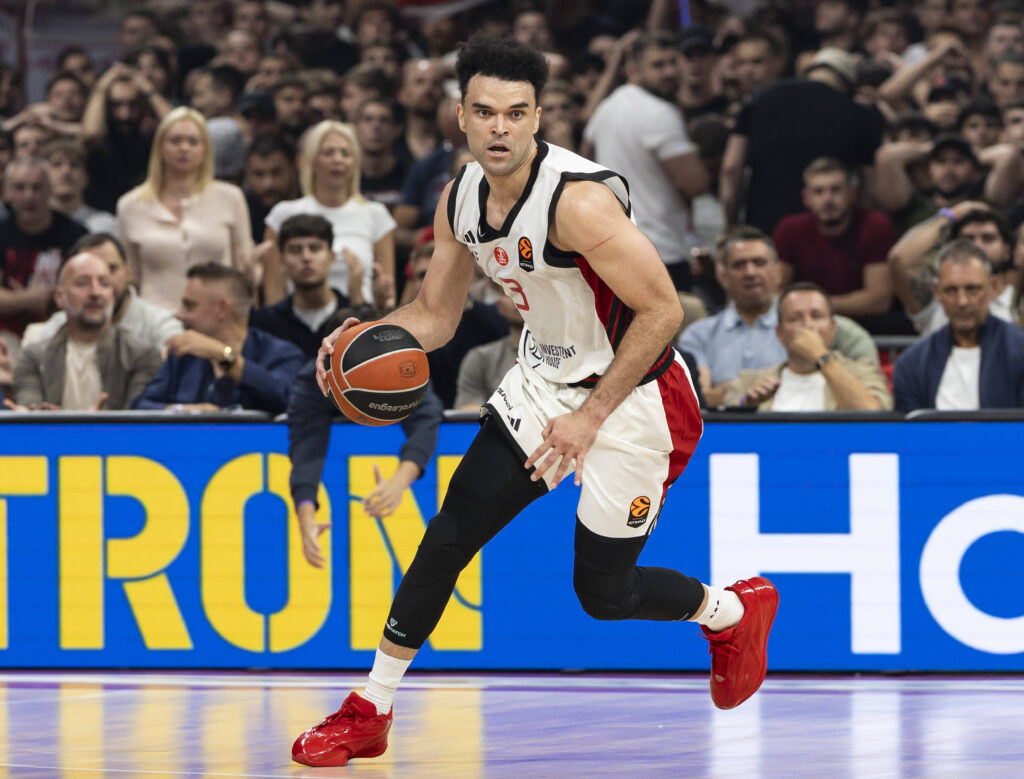
When asked whether players could withstand a future EuroLeague featuring 24 or even 30 teams, Bryant expressed confidence, emphasizing the professional responsibility to prepare for those demands.
“For sure. I think at the end of the day, as players, we’ve got to take care of our bodies. I know I do a lot of things to take care of my body. I do chambers, supplements, sleep, red light, all that stuff. It’s our job, right? Even though it’s a game, it’s our job, so we have to be prepared regardless of the situation we’re put in and show up and play to the best of our ability.”
Inside Bryant’s recovery routine
Bryant’s approach to physical preparation extends well beyond conventional practice sessions. Asked how he keeps himself ready for the demands of professional basketball, he offered a glimpse into his personal recovery setup.
“I do a lot of stuff. I have a lot of secrets in my man cave downstairs that maybe you can check out on my YouTube channel.”
When pressed to reveal at least one of those secrets, he mentioned specific recovery methods.
“Red light therapy, MitoCure. I have a lot of stuff that helps me be prepared.”
Despite experimenting with different techniques, Bryant identified the fundamentals as his most important tools.
“The main thing I would say is sleep, diet, nutrition are the best recovery tools. Just focusing on how I can do that regardless of where I’m at: hotel, airplane, travel.”
The Athens victory may have provided a significant early boost, but Bryant’s message remained remarkably consistent throughout the conversation: appreciate the moment, support the people around you and keep preparing for whatever comes next.