




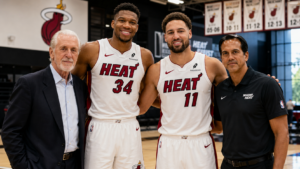



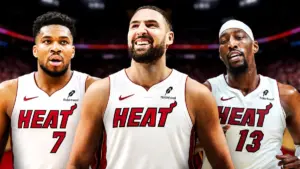

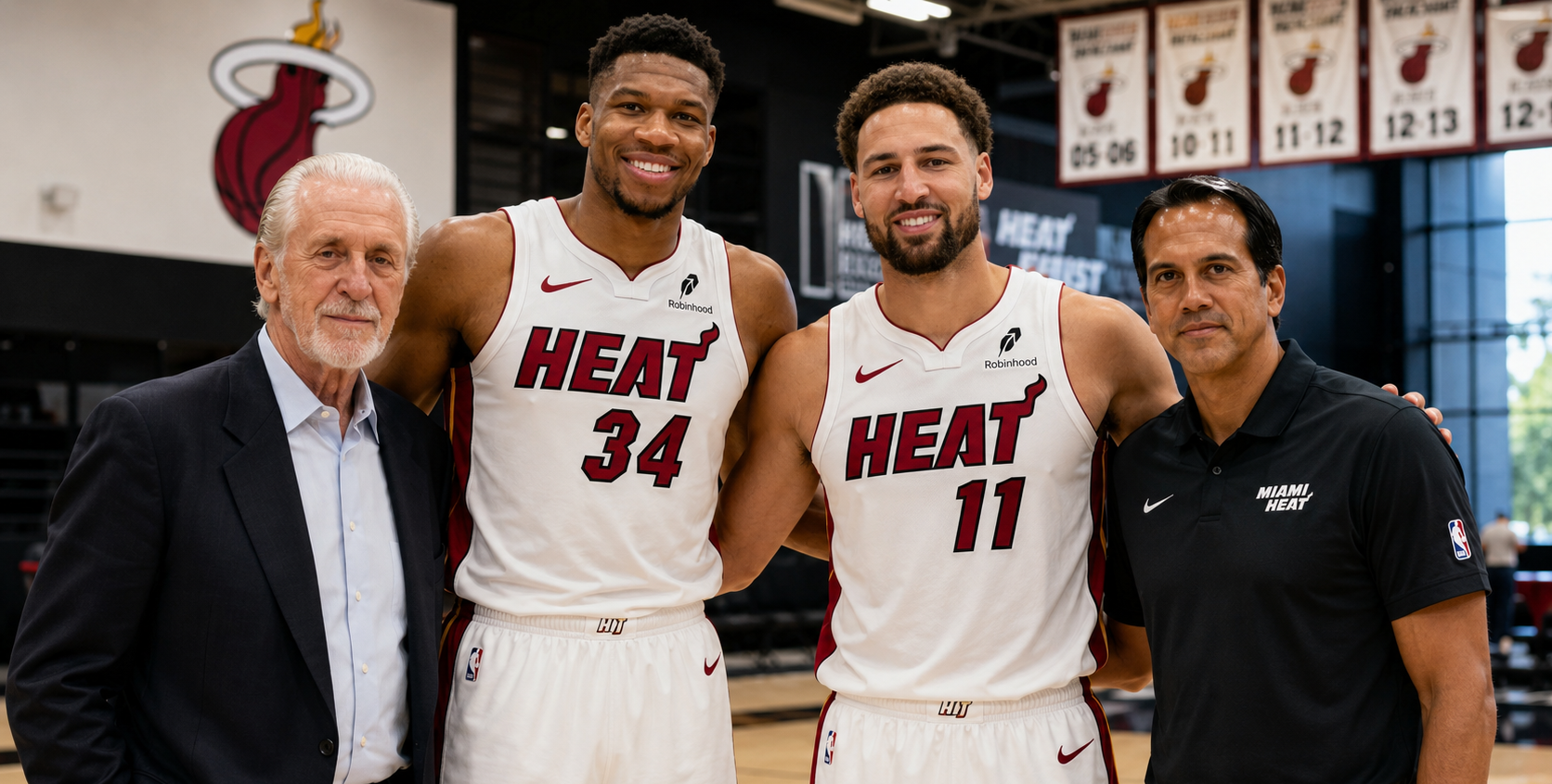

Klay Thompson’s arrival in Miami can be misleading if viewed only through the names involved. Giannis Antetokounmpo, Bam Adebayo, Klay Thompson, Andrew Wiggins, Bobby Portis, Tim Hardaway Jr…. At first glance, it looks like another version of a team Pat Riley has built before, surrounding himself with established veterans and trying to make an immediate run at an NBA title. But the essence of Miami’s offseason is not Thompson. The biggest decision came much earlier, when the Heat paid a price for Giannis that will be felt for years, and Klay is simply the logical next step.


Klay Is a Fit, Not the Gamble
After parting ways with Dallas, Thompson signed a two-year, $11.5 million contract that includes a player option for the second season and a 15 percent trade kicker. An even more interesting detail is that he gave up approximately $9.8 million in his buyout with the Mavericks to get out of the final year of his deal and put himself in position to join a team with more serious competitive ambitions. Last season, he averaged 11.7 points across 69 games and shot 38.3 percent from 3. He is no longer the two-way player he was during his best years with Golden State, nor should he be expected to consistently create offense off the dribble, but Miami does not need that from him right now. It needs a player whose presence makes it harder for defenses to load up the paint around Giannis and Bam without consequences.
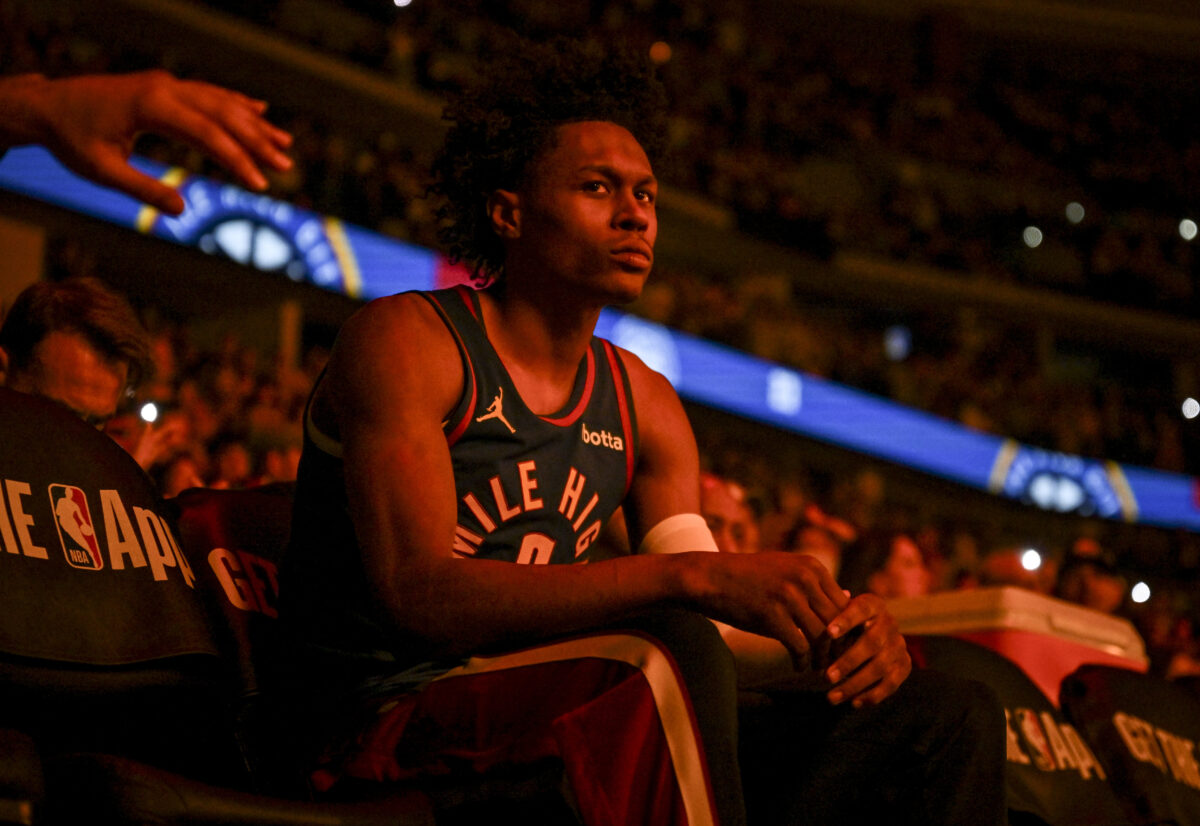
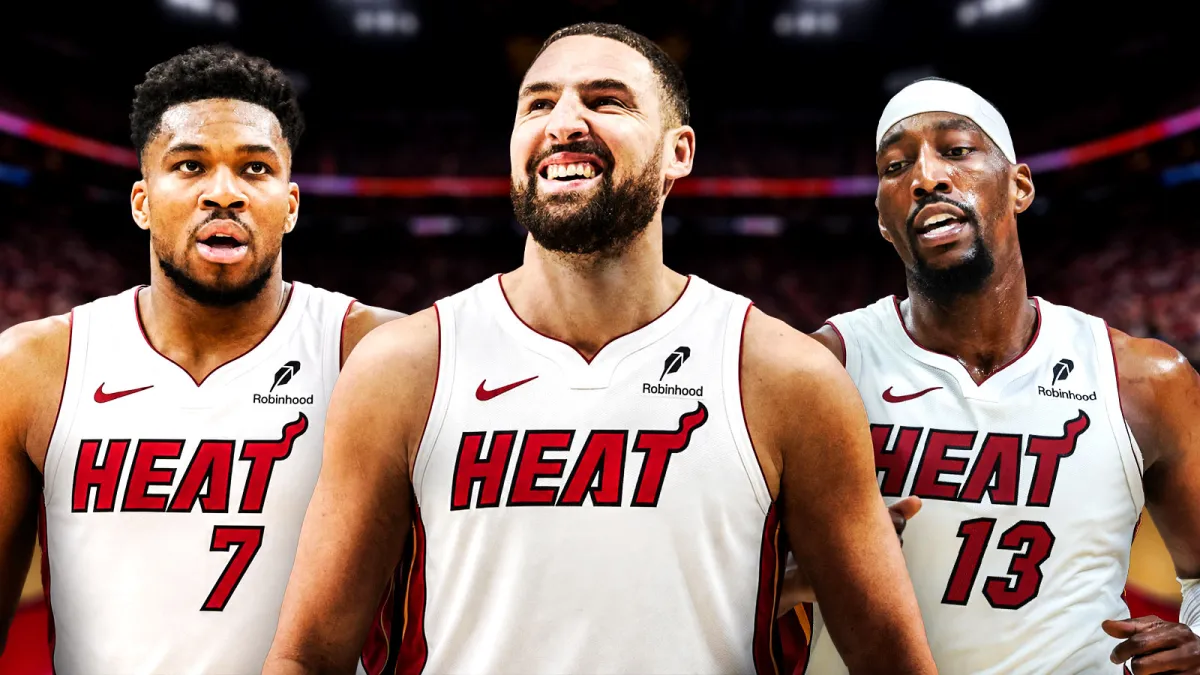
More importantly, the Heat did not give up any of their remaining assets to get him. Dallas had previously tried to find a trade, and Nikola Jović was mentioned in some possible constructions, but Miami did not want to go down that road. It waited until Thompson became a free agent and signed him for approximately $5.6 million in the first season. That says quite a bit about how the second part of the offseason has been handled. When the opportunity to get Giannis appeared, Riley was prepared to pay almost any price. When Miami later went looking for players to fill out the roster, the Heat stopped spending what little remained of their assets.
The Real Bet Was Made on Giannis
The real risk, then, is not Klay Thompson, but the trade with Milwaukee. Miami sent Tyler Herro, Kel’el Ware, Jaime Jaquez Jr. and Kasparas Jakučionis, the 13th pick in this year’s draft, first-round picks in 2031 and 2033, a 2030 pick swap and a 2033 second-round pick for Giannis and Bobby Portis. Milwaukee received four players, three first-rounders when this year’s selection is included, and control over part of Miami’s draft well into the next decade. In return, the Heat got what they had spent years unsuccessfully trying to find after Jimmy Butler’s departure, a player around whom they can once again realistically build championship ambitions.
Riley’s attitude toward that kind of risk has never been much of a secret. While there was still discussion about what Milwaukee might demand for Antetokounmpo, he reminded everyone that he is not especially attached to draft capital: “I’m not a draft pick guy”, while explaining that having a first-round pick every other year is enough for him. That philosophy has existed in Miami for decades. The Heat would much rather use their resources to acquire proven elite talent than spend years waiting to see whether draft picks might eventually become something similar.
The Future Cost Is Real
The price is particularly high this time because the 2031 and 2033 picks are unprotected, which means nobody can seriously predict what Miami will look like by then. Giannis has a player option worth around $62.8 million for the 2027/28 season. A long-term commitment is expected to become part of the conversation around his next contract, but until an extension is signed, those future picks represent a real risk the Heat have accepted. If this project ends without a championship before 2030 arrives, Milwaukee could still be cashing in on Riley’s decision years later.
Still, the rest of Miami’s offseason shows that the franchise has not completely ignored the future. Andrew Wiggins exercised his $30.2 million option for next season, then agreed to an extension under which he will earn only $16.5 million in 2027/28, with a $17.5 million player option for the following year. That structure deliberately creates greater flexibility beginning next summer, while also making Wiggins’ contract potentially useful in a future trade because his salary drops sharply after the first season.
Tim Hardaway Jr. was brought in for one year and $6.5 million. Simone Fontecchio was also retained only for next season. Ryan Conwell was added through the draft, while Miami kept Nikola Jović, whose four-year contract runs through 2030. Norman Powell left for Chicago, making it clear that the Heat needed to add shooting on the perimeter. Thompson addressed exactly that part of the roster.
Spoelstra Now Has a Clearer Shape Around Giannis and Bam
That also gives Erik Spoelstra a clearer idea of how this team can fit together. Giannis and Bam are the foundation and with those two, Miami can switch defensively, protect the rim, run off turnovers and physically attack most opposing lineups. Portis allows one of them to rest while also giving the Heat a big who can space the floor next to either Giannis or Bam. Wiggins brings size and defense on the wing, while Thompson, Hardaway and Fontecchio are there to punish the help that will inevitably collapse toward the paint.
Shooting was one of the areas Riley identified as a priority. He also said publicly that the team still needs another true creator and another big man, whether that means an athletic rim protector or a center capable of spacing the floor. Klay addresses only one part of that list.
The Bigger Offensive Question Has Not Been Solved
The biggest question therefore remains the organization of the offense. Davion Mitchell has significantly improved his shooting in Miami and brings real ball pressure defensively, but he is not a traditional point guard whom Spoelstra can comfortably ask to control a large number of possessions late in a playoff game. Dru Smith is the other option at the position. Giannis will, of course, create a large share of the offense, Bam can facilitate from the high post, and Wiggins can occasionally create his own shot, but the Heat currently do not have a perimeter player who can consistently break down a set defense out of pick-and-roll and off the dribble. Thompson does not solve that problem. His job begins once somebody else creates the advantage.
Miami Is Probably Not Finished Yet
That is why Miami’s offseason is probably not completely finished. After Klay’s signing, the Heat have 13 players on standard contracts, meaning they must add at least one more before the start of the season. Nick Richards has worked out in Miami in recent days, and the Heat are considering the possibility of signing him, although no contract has been offered. His profile makes sense because he would give Miami a more traditional center behind Bam, along with additional size and rim protection. The club can also leave the 15th roster spot open and preserve additional financial and trade flexibility during the season.
It is therefore possible that Miami’s most important next move will not happen in August. Wiggins’ salary of more than $30 million this season, before dropping by nearly half, could become a very useful contract if a quality guard or wing the Heat view as the final piece becomes available before the February trade deadline. Jović’s deal is also one of the few remaining mid-sized contracts that could help construct a larger trade. Miami does not have many picks with which to outbid other teams, but it still has enough contractual flexibility to react.
Riley Chose the Present Without Spending Everything Else
This is where the difference between a short-term approach and completely ignoring the future becomes clearest. Riley has chosen the present. After four straight trips through the play-in and years spent trying to find the next major star, he did not want another cycle of waiting. He gave up young players and draft capital for Giannis that could otherwise have formed the basis of Miami’s next team. A move like that makes little sense if the franchise then spends the next several years trying to be patient.
But Miami has not continued spending its future at the same rate. Klay arrived without compensation going the other way and on controlled money. Hardaway and Fontecchio do not carry long-term salary commitments. Wiggins’ contract is structured to become more manageable beginning next season. Jović was kept. Enough room remains for another move.
The Offseason Will Be Judged on Giannis, Not Klay
That is why the success of this offseason will not be measured by how many recognizable names Riley has once again assembled in Florida. It will depend on whether Giannis is enough of a reason to justify the price Miami paid, and whether there is enough shooting and creation around him and Bam for the Heat to become serious again in May and June. In that sense, Klay Thompson is not another major gamble. Miami already made its biggest bet when it decided to turn future draft capital and almost its entire young core into Giannis Antetokounmpo.
Now the Heat are simply trying to cash in on that decision while there is still time.