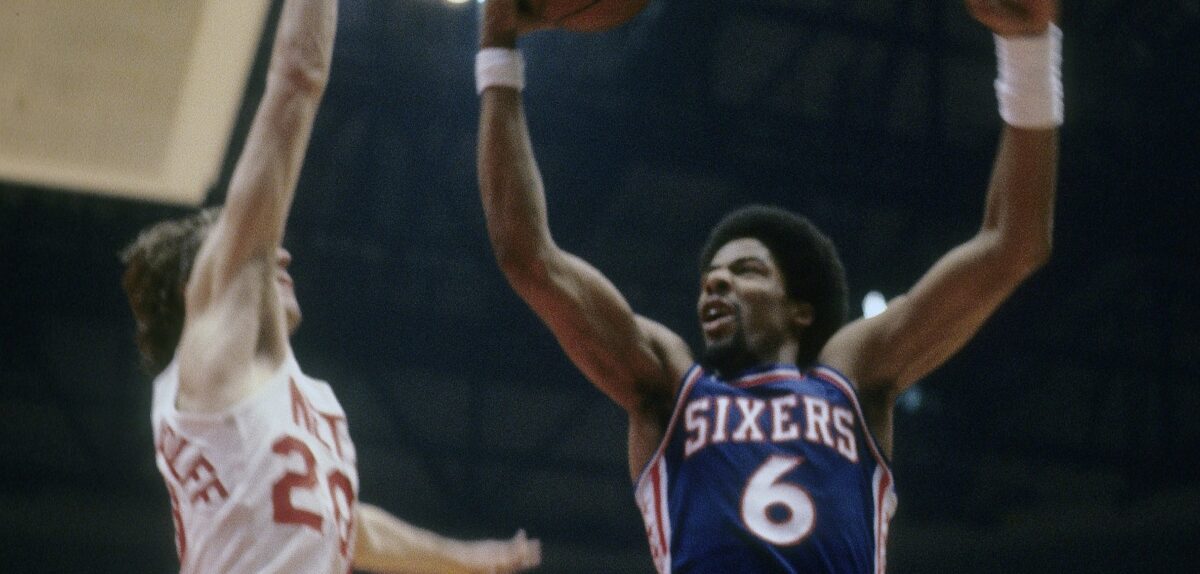


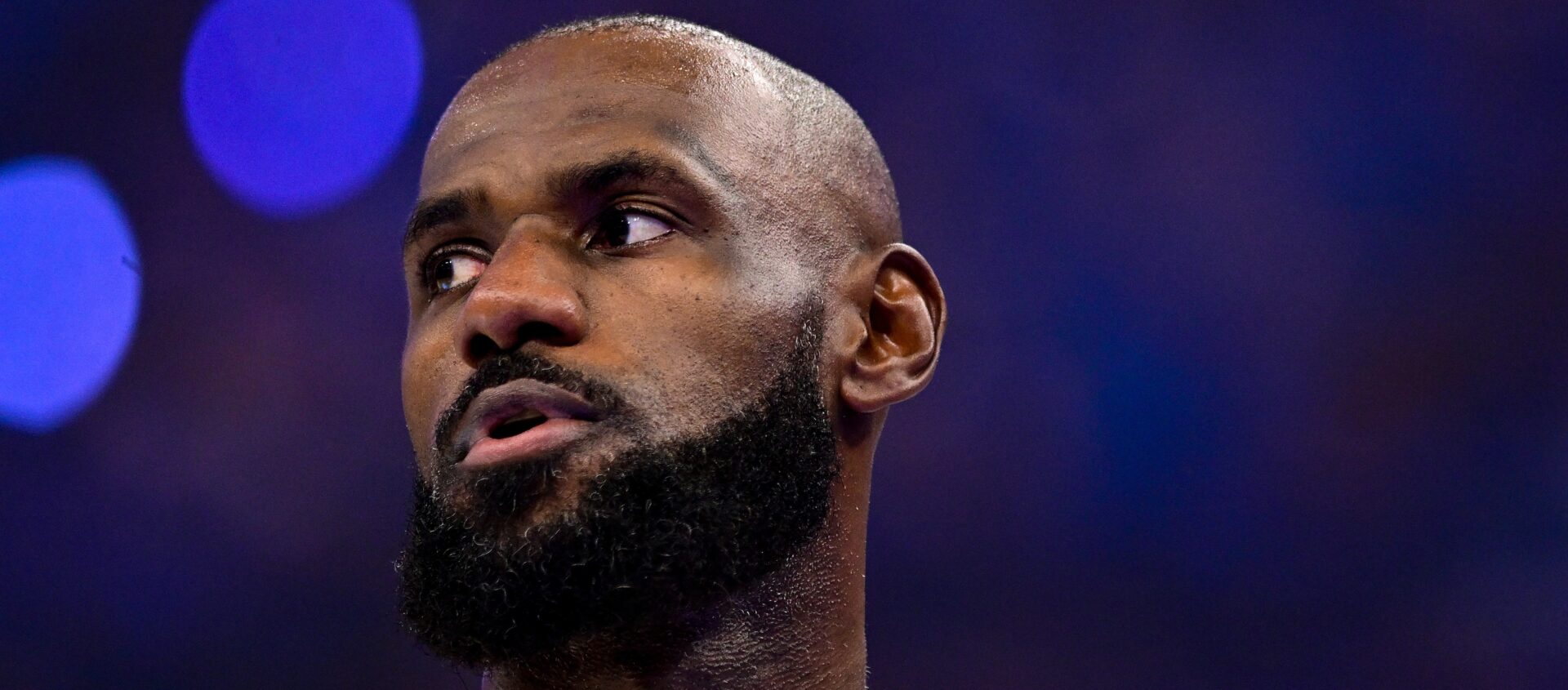

After weeks of waiting and uncertainty, LeBron James decided to return for a record-setting 24th NBA season. He had already acknowledged that the series against Houston was probably his last in a Lakers uniform, but he did not rush into what came next. After taking his time and weighing the available options, he chose Philadelphia as what will most likely be the final stop of his career.


Every time LeBron changed teams, he also changed the direction of an entire franchise. In Miami, he joined Dwyane Wade and Chris Bosh to create a new power in the Eastern Conference. His return to Cleveland accelerated the trade that sent Andrew Wiggins to Minnesota for Kevin Love. When he arrived in Los Angeles, the Lakers moved away from patiently building through their young players and invested much of their future draft capital in Anthony Davis. Signing LeBron was never treated as an isolated transaction, it became the start of a new project, built around his timeline and what he needed to compete for a championship.
This Time, the Team Came First
Philadelphia is the first team he has joined after most of the important work had already been done. The Sixers did not wait for LeBron before deciding what they wanted to be. Joel Embiid and Tyrese Maxey had long been the foundation. V.J. Edgecombe established himself as an important part of the future during his rookie season, while the deal that brought Jaylen Brown to Philadelphia for Paul George and four draft picks showed that the organization was no longer interested in delaying another run at the top. Once that group was in place, the Sixers became a serious option for James.

The attraction is obvious. He has another chance to pursue a fifth championship, which would strengthen his case as one of the greatest players ever, perhaps the greatest. It would also quiet, at least to some degree, the fixation on the Finals he has lost, a subject that has followed him through nearly every stage of his career.
The Most Team-Friendly Deal of His Career
His choice also says plenty about how his position in the league has changed. LeBron accepted a two-year, $8 million contract with a player option for the second season because he no longer needed a franchise willing to reorganize everything around his arrival. In a season during which he will turn 42, he was looking for a team capable of carrying the parts of a season he can no longer be expected to carry every night. Philadelphia gives him the chance to remain a major factor without asking him to drive the entire operation from October through June.
The salary is an important part of the arrangement. The Sixers did not have to give up any of the players who made Philadelphia attractive to him, nor did they have to sacrifice their remaining picks and roster depth to match money in a trade. They added a player who averaged 20.9 points, 7.2 assists and 6.1 rebounds last season on a contract more commonly associated with someone near the end of a rotation.
Philadelphia will probably have to make a smaller adjustment because of the first-apron rules, but LeBron’s deal has not taken away its ability to continue working on the roster. Kentavious Caldwell-Pope has already been mentioned as another possible addition. That matters for a team paying Embiid, Brown and Maxey significant salaries. LeBron has usually arrived as one of the largest financial commitments on the books. This time, the most famous player on the roster may also have its most team-friendly contract.
Philadelphia Had Already Changed Course
Philadelphia first had to change the way it operated. After Daryl Morey’s departure, Mike Gansey took over the basketball operation with an expensive roster, continuing uncertainty around Embiid’s health and another season that ended earlier than the organization expected. His biggest move was getting out of Paul George’s contract and acquiring Brown, even though doing so cost the Sixers four draft picks. Dean Wade and Anfernee Simons also arrived, while the organization retained some of the resources it will need for future moves.
LeBron did not initiate this reconstruction, his decision suggests the work had gone far enough for him to see Philadelphia as his last serious chance to win another title. That is a considerable shift from previous stops, where his commitment often came first and the reshaping of the roster followed.
A Connector Rather Than the Entire System
He will not be a secondary figure on the court, but his role no longer has to crowd out everyone else. Embiid, Maxey, Brown and Edgecombe are capable of carrying large stretches of the season themselves, and LeBron’s job should be to connect them.
The Sixers have often lacked control when the first action breaks down and playoff possessions turn slower and more physical. LeBron can organize those moments without having to dominate every possession. He can put Embiid in better positions, allow Maxey to attack a defense that has already been shifted and create easier opportunities for Brown. He can spend more time setting up the players around him while still taking responsibility when a game requires it.
Nick Nurse will have to establish some clear boundaries. Maxey, Brown, Embiid and LeBron are all accustomed to making a large number of decisions. Edgecombe also needs enough touches and developmental minutes to avoid becoming a young player stationed in the corner while the veterans take turns. Having four established stars should allow Nurse to keep at least two high-level creators on the floor for almost the entire game. It can also produce a slow and predictable offense if each of them begins waiting for his own possession.
Accepting Less Control Is the Real Adjustment
LeBron showed during his final season alongside Luka Dončić that he understood the need to adjust to a younger player who controls the offense. The challenge in Philadelphia will be broader because the Sixers do not have only one established hierarchy for him to enter. He will have to accept nights when Maxey takes more shots, Brown receives the most difficult assignment, Embiid controls the closing possessions and Edgecombe stays on the floor because his development still matters.
For LeBron, accepting less control may be more difficult than accepting less money. The real test will come on the court, where he will have to fit himself into what Philadelphia has already built rather than waiting for everyone else to adjust to him.
Save Him for May, Not January
Managing his minutes will be just as important as distributing the ball. Philadelphia has spent years trying to preserve Embiid for the postseason, while LeBron has reached an age at which unnecessary work during the winter can become costly in the spring. Maxey, Brown and Edgecombe should keep Nurse from asking his two oldest stars to rescue every poor stretch of the regular season.
The Sixers do not need LeBron trying to prove in January that age still does not apply to him. They need him to have enough left in May to control the five most important minutes of a game. That may require fewer back-to-backs, shorter stretches on certain nights and a willingness to let the younger players carry more responsibility than teammates beside LeBron have usually received.
Embiid Still Determines the Ceiling
His presence does not remove the central uncertainty surrounding Philadelphia. The team’s ceiling still depends on Embiid’s health. The Sixers can survive portions of the regular season without him by playing smaller and spreading the playmaking responsibilities among their other stars. A playoff series is different. Without Embiid’s scoring, rim protection and ability to draw multiple defenders, the structure of the team changes.
LeBron came to make Embiid’s job easier. He cannot replace everything Philadelphia loses when his former Team USA teammate is unavailable.
The Sixers Cannot Mortgage Everything for One Season
The organization also cannot repeat the pattern that followed LeBron’s previous arrivals and turn his personal timeline into the timeline of the entire franchise. James may be entering his final season and Embiid’s window may be narrowing, but Maxey and Edgecombe can remain important long after this attempt is over. Philadelphia has every reason to invest in a championship run. It does not have to spend every remaining pick and young player simply because LeBron is now in the building. The roster that attracted him should not be taken apart in another attempt to impress him.
One Final Chance, on Different Terms
That is what makes this a different ending from the one many people expected. He did not return to Cleveland or Miami. He did not make one final attempt to reshape the Lakers around himself, and the long-discussed partnership with Stephen Curry in Golden State never happened. He chose a team that already has its franchise player, a young guard, another established star and a major prospect who still needs room to grow.
Philadelphia may have given him his final realistic chance to win a fifth ring. His responsibility is to preserve enough strength and influence for the part of the season that will determine whether the gamble worked. By May and June, it will not matter much how many regular-season possessions ran through his hands. What will matter is whether, in a few of the hardest games, he can give the Sixers something nobody else on the roster has.