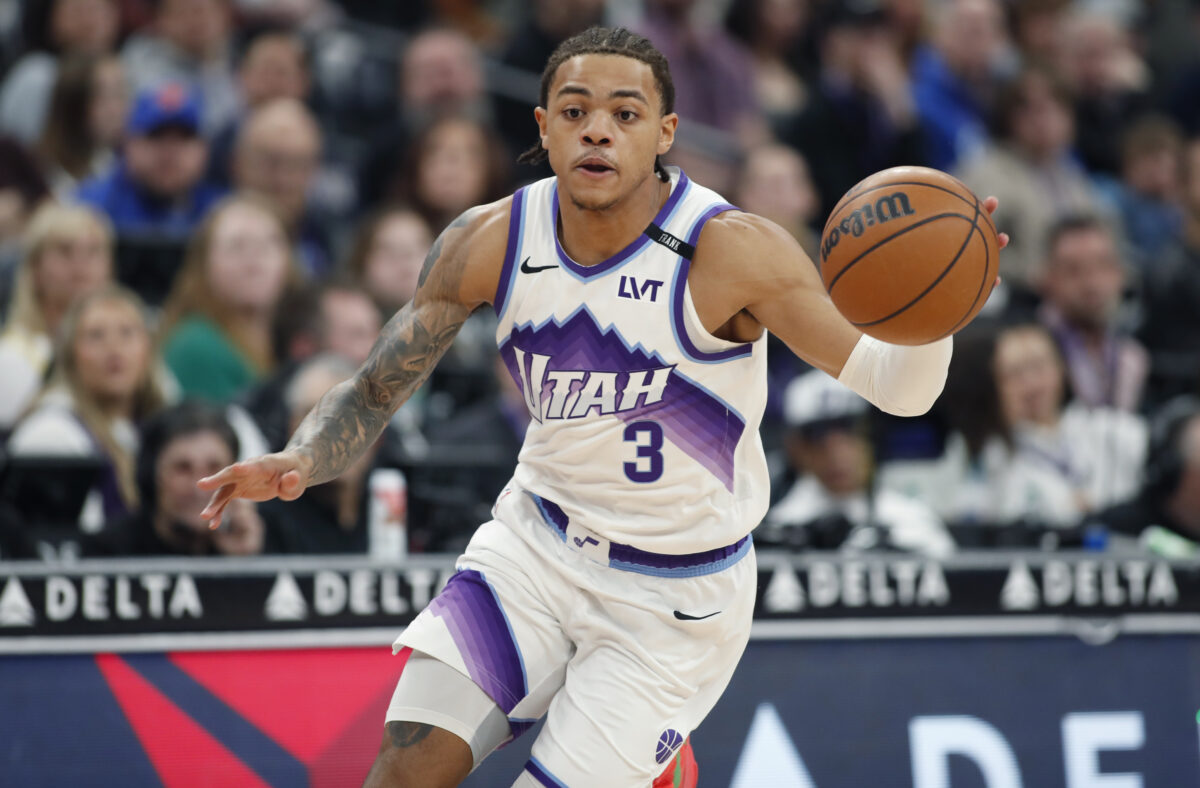







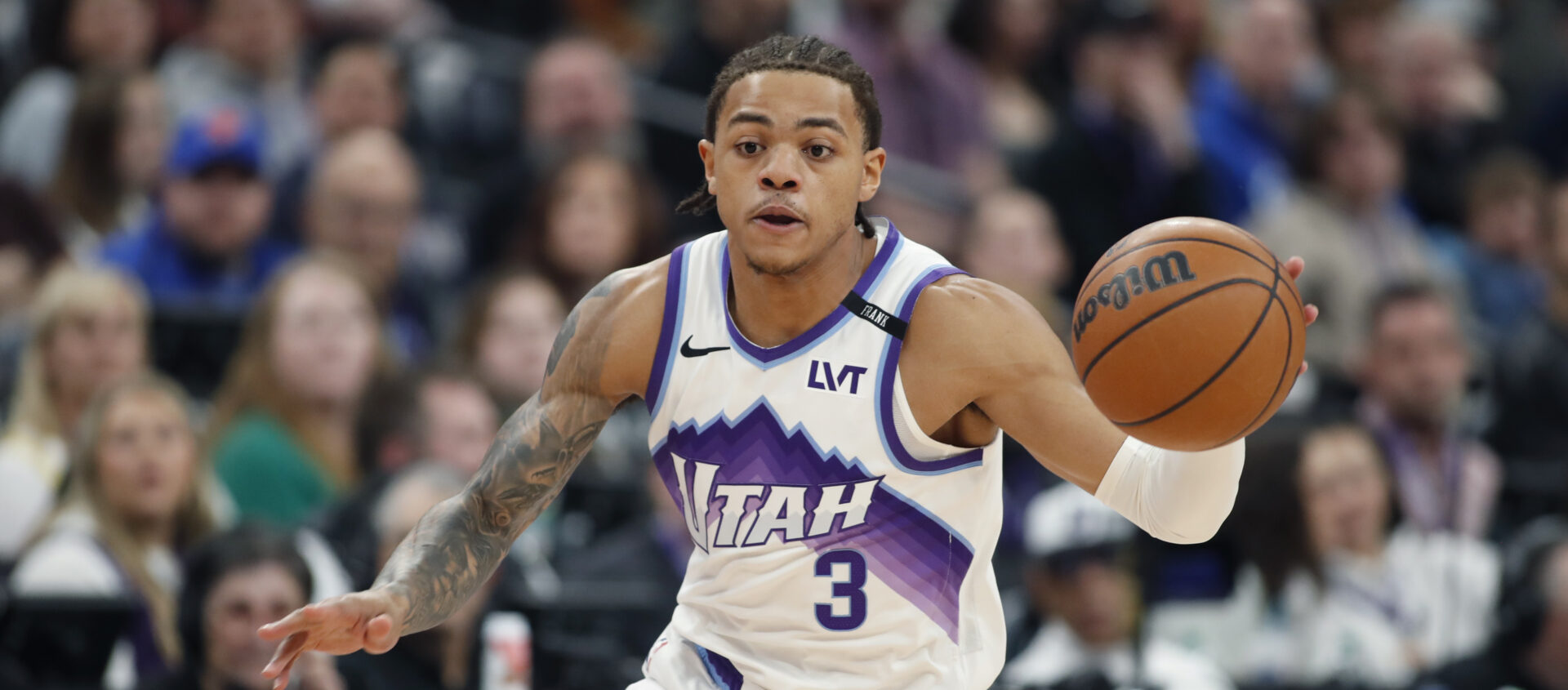

Utah Jazz fans remember how Walker Kessler left the team in early July after a year of drawn-out negotiations over a new contract. Two and a half months later, the Jazz had no interest in finding themselves in a similar situation with Keyonte George. The guard, who was entering the final year of his rookie contract, received a five-year, $157.5 million extension with no team or player option, tying him to Salt Lake City through the summer of 2032.


The deal itself, however, says more about where Utah is as a franchise than it does about the mechanics of rookie extensions. After four years of rebuilding, stockpiling draft picks and winning only 39 games over the past two seasons, the Jazz are starting to decide which players they want to build a more serious team around. Jaren Jackson Jr. arrived in February, Darryn Peterson was selected with the second pick in the draft, Ace Bailey is entering his second season, Lauri Markkanen is already on a major contract, and George has now received the clearest indication yet that the franchise sees him as part of that core. Owner Ryan Smith described the extension as part of the “major shift” the organization is going through.
Utah Is Paying for the Belief That Last Season Was Real
The question, however, is whether Utah moved too quickly to pay a player after only one season at a level that justified this kind of money. George made a major leap last year. After averaging 16.8 points in his second NBA season, he reached 23.6, along with 6.1 assists and 3.7 rebounds. More importantly, his efficiency finally caught up with his volume: 45.6 percent from the field, 37.1 percent from three and 89.2 percent from the free throw line. His true shooting percentage climbed to 60.9 percent, after he had shot only about 39 percent from the field and 34 percent from three across his first two seasons.

That is also why the contract carries a clear level of risk. George produced that season in only 54 games for a team that finished 22-60, without the kind of results-based pressure that comes with fighting for a playoff spot. Defense had already been an issue during his second season, to the point that Will Hardy moved him out of the starting lineup because of a lack of discipline on that end. Utah is not paying only for what George was last season. It is also paying for the belief that his improvement will hold up once the games begin to carry more weight.
His Breakout Started With a Difficult Conversation
There are reasons for that evaluation that go beyond the numbers. George’s second NBA season ended with an uncomfortable conversation with Hardy. In his exit meeting, the coach told him directly that he needed to grow up, change his approach to defense, improve his body language and handle adversity differently when games were not going his way. George had already been moved to the bench, and there was a real possibility within the organization that Utah could simply draft another guard and give him greater responsibility. Instead, George made physical progress over the summer, spent more time at the practice facility and took on a more active role in the locker room. One team source even described him to The Athletic as the most valuable player of that offseason.
His third season was therefore important as confirmation that his development was about more than simply taking more shots. George controlled the pace better, looked for contact less often solely to draw fouls, finished drives more effectively and became a more efficient playmaker. The Jazz clearly believe they have seen enough evidence to conclude that what happened last season was more than a statistical jump by a guard on a bad team.
$31.5 Million Is Now High-Level Starter Money
The price also has to be viewed in the context of the current NBA market. An average salary of $31.5 million per year puts George in the same general range as Immanuel Quickley, Jordan Poole, Derrick White, Jalen Suggs and Tyler Herro. When the extension begins in 2027-28, he will be only Utah’s third-highest-paid player behind Jackson and Markkanen. The Jazz, in other words, did not give him a contract that requires him to become a franchise superstar. They paid him like a high-level starter and one of their core players, with the expectation that he can grow beyond that value over the next five years.
In the summer of 2025, Utah decided not to agree to an early extension with its young center, choosing instead to preserve financial flexibility and wait until he became a restricted free agent a year later. Kessler was unhappy with that decision, and this June he turned down an offer worth approximately $140 million over five years. A few weeks later, he landed with the Lakers in a sign-and-trade on a four-year, $130 million contract.
For Utah, that outcome was not a loss in the traditional sense. The Jazz received unprotected first-round picks from the Lakers in 2031 and 2033, along with swap rights in 2028 and 2030. That is substantial draft capital for a player whose long-term price the organization eventually had to determine anyway. Utah turned Kessler into assets that could one day become part of another major trade.
Still, that situation left the Jazz with another lesson. Once a young player reaches the open market, a team no longer controls every part of the process. Kessler wanted security and a clear idea of the role he would have in the franchise’s future, and eventually received the chance to play alongside Luka Dončić on a team with greater immediate ambitions. With George, Utah had no interest in waiting until next summer and entering another negotiation in which another franchise could help set the price.
Darryn Peterson Changes George’s Role
That, of course, does not mean George will have the same status he had last season. Selecting Darryn Peterson with the second pick changes the distribution of possessions and, potentially, the long-term hierarchy of the entire team. The 19-year-old guard averaged 20.2 points at Kansas and enters the NBA as one of the most important players in the Jazz’s new generation. Utah did not draft him that high to turn him into a secondary creator over the long term.
That is why the strongest test of whether George’s contract is justified will be how he looks next to Peterson. If he needs a high usage rate and full control of the offense to score 23 or 24 points every night, Utah could have a problem. If he can remain efficient without the ball, punish closeouts, run the second unit, organize pick-and-rolls when Peterson rests and continue improving defensively, $31.5 million per year will look far more reasonable.
The Jazz should no longer be a team where individual development is measured primarily through statistics. Local media are already openly discussing the playoffs as a goal for the 2026-27 season, which automatically changes the standard. Utah has ranked among the NBA’s two worst defenses in each of the past three seasons. Adding former Defensive Player of the Year Jaren Jackson Jr. can change a great deal, but losing Kessler also means losing an elite rim protector. George’s next step therefore has to show up in areas where his 23.6 points per game could not hide the team’s problems last season.
The Draft Picks Cannot Stay on the Spreadsheet Forever
Utah now also has to determine how it will ultimately divide roles among Jackson, Markkanen, Peterson, George and Bailey, and then decide what to do with the enormous amount of draft capital that grew even further after Kessler’s departure. That collection of picks has limited value if it remains nothing more than future assets on a spreadsheet. At some point, some of it will have to be turned into a player who raises the team’s ceiling.
George’s contract matters because it is one of the first decisions showing that Utah is beginning to move from simply collecting potential toward turning it into an actual team. George does not have to become the Jazz’s best player of the future, nor does the team have to belong to him long term. With Peterson, Bailey, Markkanen and Jackson, that probably will not be necessary.
Utah made a simpler evaluation: at 22, George has already shown enough to be part of the team the franchise is trying to build. After the Kessler situation, the Jazz also learned the price of waiting, and this time they decided not to pay it.