





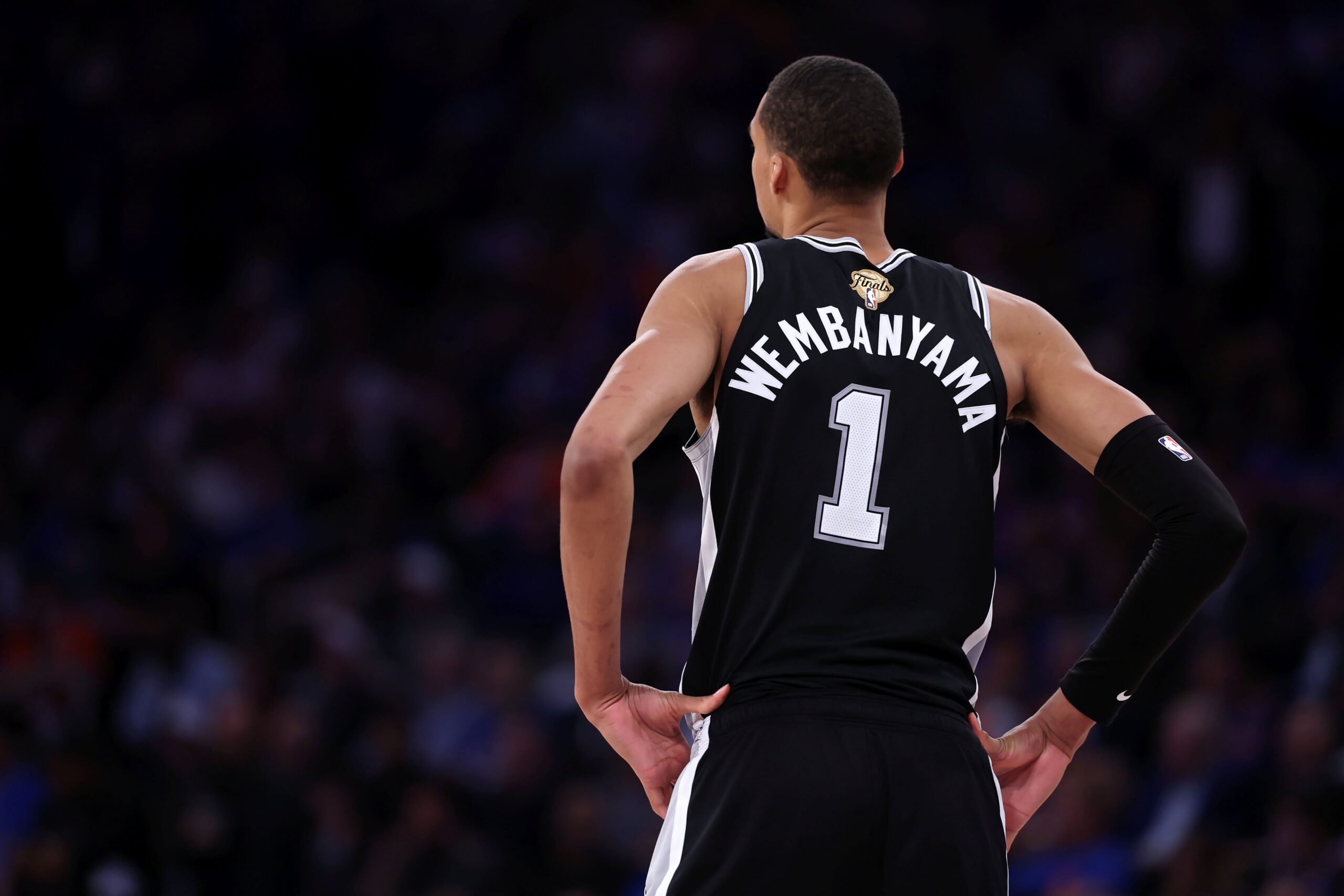

Victor Wembanyama is no longer just the most exciting young player in the NBA. He is already a superstar. In Wemby’s case, the league moved quickly from curiosity to serious expectations. Now, already in the early years of his career, he is being asked to do what is asked only of the very best: influence winning in the biggest games.


With him, San Antonio has entered a new era. They once again have a player around whom an identity can be built. Wembanyama is the central figure in that process, but not only because he is the best player on the team. He is the reason people are beginning to think differently about what a modern NBA superstar can be.
A Player Without a Clear Definition
For a long time, he was described through what is immediately visible: his height, wingspan, fluid movement, pull-up shooting, and blocks from angles where blocks are not supposed to come from. Wembanyama is not fascinating merely because he is a tall player with guard skills.
His real value lies in his ability to combine elements of the game that once belonged to different types of players. There was a time when everyone knew the center protected the rim, the guard handled the ball, the wing attacked space, and the shooter stretched the floor. With him, all of those roles appear in the same body.
That is why the usual comparisons only get you so far. It is clear that there are traces of Kevin Garnett, Kevin Durant, Hakeem Olajuwon and Tim Duncan in his game, but none of those comparisons is complete. Wembanyama does not look like the heir to one familiar basketball lineage. He looks more like the beginning of a new one. The league still does not quite know what to call him.
The Defensive Gravity of Wembanyama
You see it most clearly on defense. The blocks are spectacular, but what happens before the block, and what his mere presence creates, is far more important. Opposing players often change their decisions at the last moment against Wembanyama. A drive that would be routine against another center suddenly becomes risky. A player has to invent an angle that gives the shot a clean path to the rim. Wembanyama has begun to redefine not only the way the basket is defended, but also the way opponents perceive space when the French star is nearby.
That is the mark of the greatest defenders. His presence forces offensive players to adjust before he even makes a specific move. That is why his defensive impact cannot be measured only by the number of blocks. The most important part of his defense often remains invisible in the box score.
Still Learning How to Dominate
On offense, the story is different, but no less interesting. Wembanyama is not yet a finished product, and that may be the most important thing when thinking about his future.
He can already make three-pointers, attack facing the basket, handle the ball in transition, finish over defenders and force reactions that create space for his teammates. Wemby is still learning when to simplify the game and when the easiest play is enough, rather than the hardest one. He still has to understand that in the biggest games, the answer is not always to produce the spectacular play, but to make the correct decision.
The difference is that everything is happening faster with him. He is already in a position where people do not expect only individual development from him, but results as well. The NBA, its fans and especially its analysts have a familiar habit: first they celebrate talent, then they study it, and then they begin taking away its excuses for failure. Opponents are reading him more carefully, attacking his weaknesses, looking for ways to push him out of rhythm and force him into decisions that are not yet automatic. He is trying to adapt, and in part he is managing to do so on the fly, but there is still a great deal of work ahead of him.
San Antonio’s New Franchise Blueprint
San Antonio may be the best possible environment for that kind of development. Few NBA franchises understand better how to build around a big man who changes the destiny of a franchise. David Robinson was the foundation of the first great era. Tim Duncan brought stability, championships and an identity that lasted for more than a decade and a half. Gregg Popovich turned all of that into a basketball culture with less noise and talk, and more order and work. The franchise does not rely on the spectacle created around it, but on established principles and greater patience.
It felt like a continuation of what we had seen in earlier years, now in a completely new form. Some clubs would have built a show around him. In San Antonio, they are doing everything they can to build a winning, championship-level system. That does not mean everything is perfect, or that the path to a title will open by itself, as we saw in the first game of this year’s Finals. It means the organization understands how important it is not to waste this kind of talent on improvisation, and that patience is essential.
The Post-Popovich Question
It is especially interesting that Wembanyama’s era coincides with the end of Gregg Popovich’s coaching era. Popovich is no longer on the bench, but he remains within the organization. One of the first things Wemby said after eliminating Oklahoma City was that he needed to speak with Popovich. San Antonio is trying to carry its old identity into a new time. Mitch Johnson leads the team, and a new generation of coaches and players has taken responsibility, but the old principles remain in place. Still, above everything else stands the question that naturally imposes itself: can the Spurs remain who they are when the man who was synonymous with the club for decades is no longer there?
The arrival of De’Aaron Fox showed that the club understands how quickly basketball circumstances are changing. San Antonio could no longer behave like a team with five years to develop. When a player of Wembanyama’s profile progresses at this pace, plans change and the developmental process accelerates. Fox brought speed, downhill pressure, improved the quality of the perimeter attack and became another player capable of taking responsibility when defenses collapse too heavily around Wembanyama. More importantly, his arrival sent a clear message to the competition: the Spurs do not want only to look toward the future.
The Fragility Behind the Phenomenon
Still, the story of Wembanyama must not be only a story of dominance. There is also a measure of fragility in it. The health issue that cut short one of his seasons was a reminder that no talent exists beyond the limits of the body. With him, that question will always be present. How does a body of that height, moving the way he moves, withstand the rhythm of the NBA? How do you protect a player who must simultaneously be a rim protector, creator, finisher and the face of a franchise? How do you sustain the career of a basketball player unlike any we have seen before?
Perhaps that is why Wemby has begun doing things in his physical and mental preparation that many people see only as exotic anecdotes. Stories about unusual training methods, time spent at a Shaolin monastery, and work on the discipline of body and mind speak to a player who understands that his career cannot be managed according to the usual template we have seen with some other superstars. His development is not only about getting physically stronger or adding a new move to his arsenal. He is also trying to understand how his body can withstand what the game will demand of it over the next ten or fifteen years.
From Potential to Playoff Pressure
Wembanyama often looks as if he does not belong to the same physical category as other players, but that does not mean he is untouchable. He, too, has to go through bad nights, fatigue, pressure, pain and criticism. The public will spend less and less time talking about how young he is, and more and more time talking about what he did not do in the final moments of a game. If San Antonio wants to return to the top, Wembanyama will have to go through the same process every great star has endured.
He will have to lose important games, learn from series in which opponents figure him out, and accept that every weakness he has will be attacked. In the playoffs, there is little room to maneuver. They look for ways to break you.
What separates Wembanyama from others is that even his weaknesses come with a ceiling almost no one else has. He is not yet a fully formed player, yet he is already capable of changing the identity of a franchise. Even as he continues learning, he is already forcing opponents to change their plans. He has become one of the most influential defenders in the league. That is why San Antonio has the right to think big, but also the obligation to be careful.
What Comes Next for San Antonio
The next few years will tell us how quickly all of this can turn into championship leadership. The Spurs will have to continue building roster depth, find the right shooters, protect Wembanyama from unnecessary physical wear, and allow him to operate offensively without always having to choose difficult solutions. They need players who can make open shots, defend without help, know when to give him the ball and know when to take responsibility themselves.
In his own developmental process, Wembanyama has to simplify the game while also raising his level. Early in their careers, they fascinate us with plays no one else can make. Later, they win us over by knowing when they do not have to make them. If he manages to combine his physical uniqueness with patience and add the element of consistently making the right decisions, the league will have something that truly does not resemble anything we have seen before.
The Future of Positionless Basketball
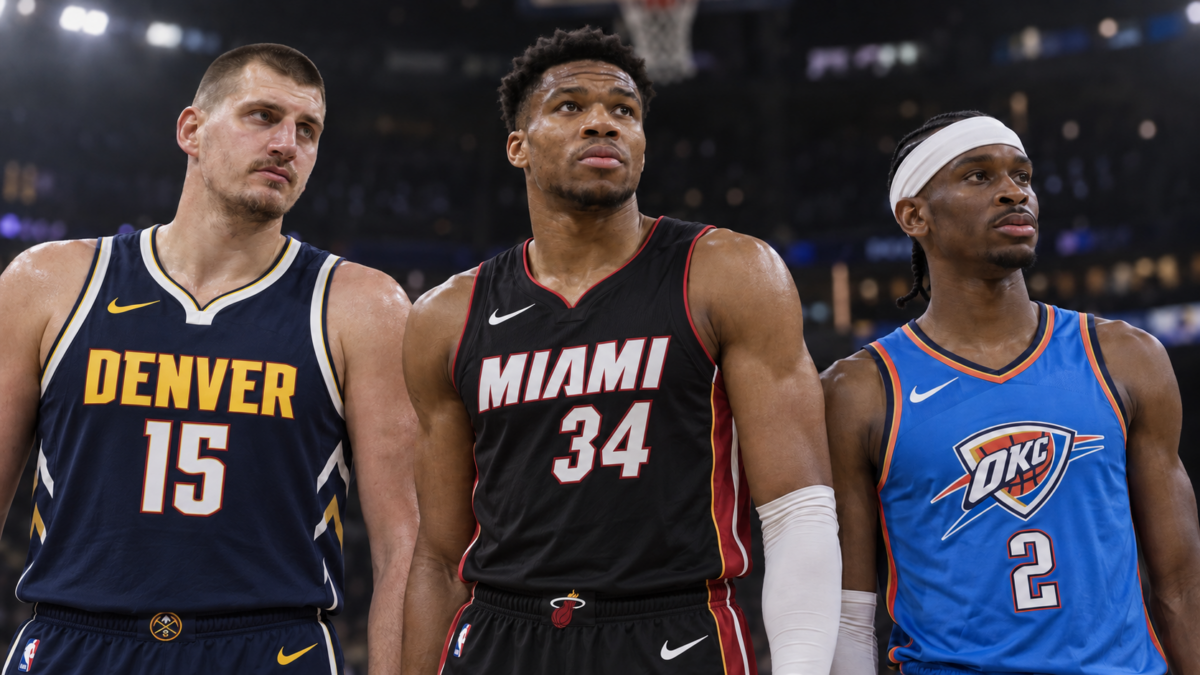
Wembanyama cannot be viewed only as the NBA’s newest superstar, but he is forcing the league to rethink what that status even means. Michael Jordan once changed the image of athletic and competitive dominance and lifted the NBA to its highest point. Shaquille O’Neal changed the way basketball’s physical dimension was understood, while Stephen Curry forever changed the way the game is played. LeBron James became a synonym for longevity and universality, while Nikola Jokić redefined the center position. Now Victor Wembanyama could change the very logic of positions and push the game fully toward positionless basketball.
San Antonio does not need him to be the next David Robinson or the next Tim Duncan. Spurs have found a player for whom basketball does not yet have a true definition. The ceiling is enormous, but nothing about it is automatic. This year, Wemby has definitively crossed the line that allowed him to hide behind youth, moving into the zone where he must deal with every mistake, every pressure and every expectation.
Wembanyama is still at the beginning of this. He will have bad nights, make the wrong reads, lose games he is expected to control and learn, that the league adjusts quickly once it starts taking you seriously. And he is already unusual enough that every opponent has to prepare for San Antonio differently.
It looks like something the rest of the league is still trying to understand.