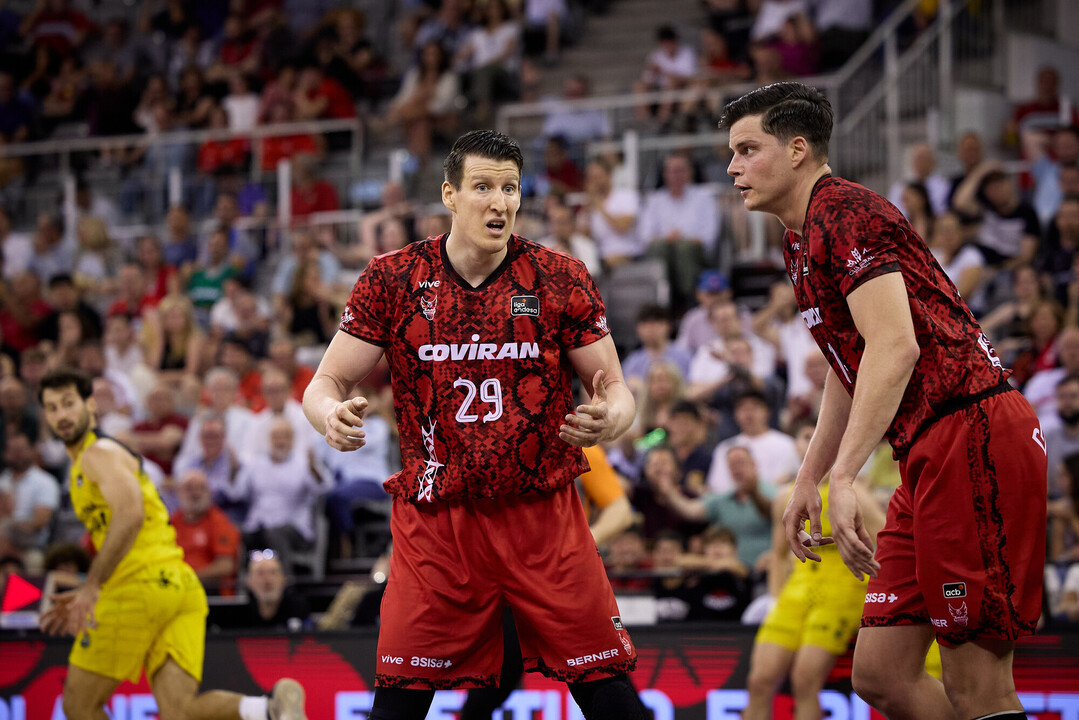

When CB Gran Canaria lifted the EuroCup trophy for the first time in club history on May 3, 2023, nobody in their right mind could have imagined that just three years later the yellow-clad side would suffer one of the most embarrassing relegations in Spanish basketball history.


As dramatic as it was —Gran Canaria spent only a single second in the relegation zone all season, the very last one— a club with its resources and pedigree should never have been anywhere near such danger.
Too many things went wrong in the island during the campaign that has just ended, and the consequences are already evident. Club president Sitapha Savane, a former player and one of the most iconic figures in Gran Canaria history, resigned on June 1. Sporting director Willy Villar will also leave his position.


The collapse has been as painful as it was unexpected. Not because of what happened throughout the season, but because almost nobody could have foreseen it when the campaign began.
Known simply as ‘Granca’ by supporters and throughout Spanish basketball, the club had spent 31 consecutive seasons in the ACB. For the last decade and a half, it had been a regular presence in the Copa del Rey, the ACB playoffs and European competitions. A fixture among the league’s upper class has suddenly found itself in Primera FEB, Spain’s second tier, where several historic clubs have fallen in recent years and discovered that returning is far from guaranteed.
Gran Canaria’s is difficult to explain from either a historical or financial perspective. Athough the club declined its place in the 2023-24 EuroLeague after winning the EuroCup —just as French team Bourg recently did— its economic potential remains significantly bigger than that of most teams traditionally fighting for survival in Spain’s top division.
The club has always got the backing of the Island Council (Cabildo Insular), the governing institution of Gran Canaria. It is true that this season it experienced delays in sponsorship payments from Dreamland, an ambitious technological and audiovisual project aimed at building a large-scale “Movie City” on the island. Administrative setbacks have repeatedly delayed the development of the initiative. Even so, the Cabildo has long served as a protective umbrella for the club’s stability. In fact, Savane publicly called for additional institutional support during the season amid the uncertainty surrounding Dreamland’s contributions.
For that reason, the roots of the relegation are easier to find on the court than off it. And looking back, one decision made last summer appears to have been particularly significant: the departure of John Shurna.
The MVP of the 2023 EuroCup Final left Gran Canaria after six seasons in which he became one of the club’s defining figures. His unique shooting form and elite three-point shooting made him invaluable on the court, but his influence inside the locker room may have been even greater. At 35 years old, his statistical output —8.8 points per game, 43% from three-point range and 2.6 rebounds— may have partially justified the decision not to renew his contract. Yet the impact of his departure on team chemistry ultimately proved more damaging than the loss of his floor spacing. Perhaps for that reason, head coach Jaka Lakovic was reportedly unhappy with the decision.
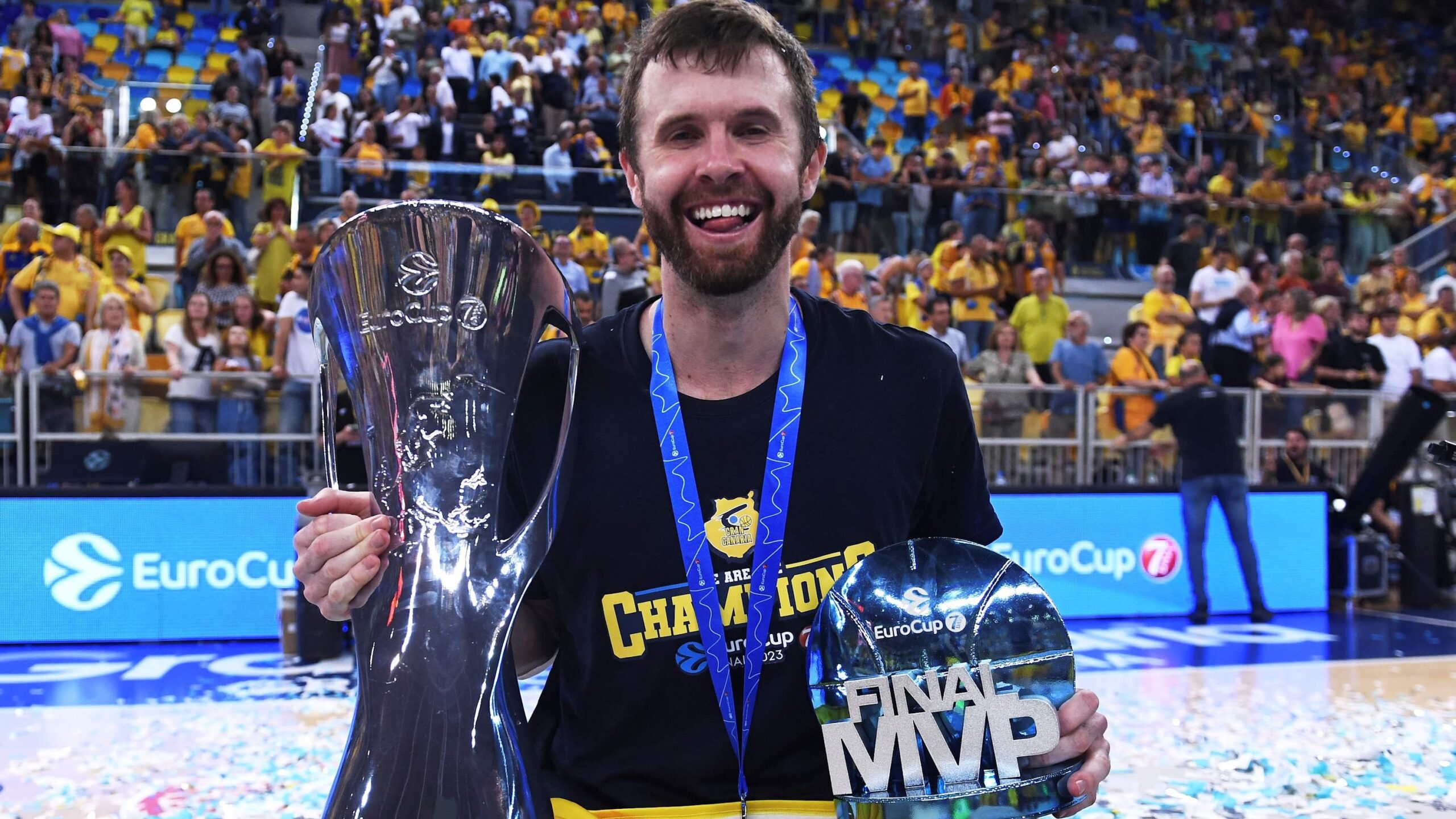
At the same time, Gran Canaria embarked on a major roster overhaul, replacing exactly half of the squad. Caleb Homesley, Joe Thomasson, George Conditt, Jovan Klajic and Jakub Urbaniak also departed. In their place arrived Louis Labeyrie, Braian Angola, Isaiah Wong, Kur Kuath, Eric Vila and Ziga Samar, although Samar had already spent part of the previous season with the club on loan from Alba Berlin. And now, it is difficult to argue that any of those additions significantly outperformed the players they replaced.
Labeyrie never fit into Lakovic’s rigid system and eventually drifted into irrelevance before leaving the club in January. Much the same can be said of Angola, although the Colombian’s subsequent performances for ASVEL —averaging 15.3 points in the EuroLeague, scoring 16 points on debut against Barcelona and earning Round 30 MVP honors against Anadolu Efes— raise questions about whether the problem lay with the player or with the coach’s stubbornness. Meanwhile, Wong, an explosive slasher but inconsistent perimeter shooter, struggled for rhythm amid an offense that lacked spacing.
The situation worsened when Miquel Salvó suffered a serious knee injury. Another key piece both on the court and in the locker room was suddenly unavailable. Little by little, Gran Canaria found itself trapped in a battle it never expected to fight. The club was eliminated prematurely from the Basketball Champions League after a painful home defeat to Nymburk. It failed to qualify for the Copa del Rey. More worrying still, it became entrenched in the lower reaches of the ACB standings.
Additional signings arrived during the season, bringing reputation more than immediate impact. Kassius Robertson failed to outperform Angola, while Chimezie Metu, returning from the Achilles tendon injury he suffered while playing for Barcelona, contributed offensively but remained vulnerable on defense. At the same time, several of the team’s supposed pillars failed to deliver. In a recent interview with local newspaper ‘La Provincia’, Savane publicly expressed his disappointment with Andrew Albicy and Mike Tobey. “We have been greatly disappointed by them,” he said.
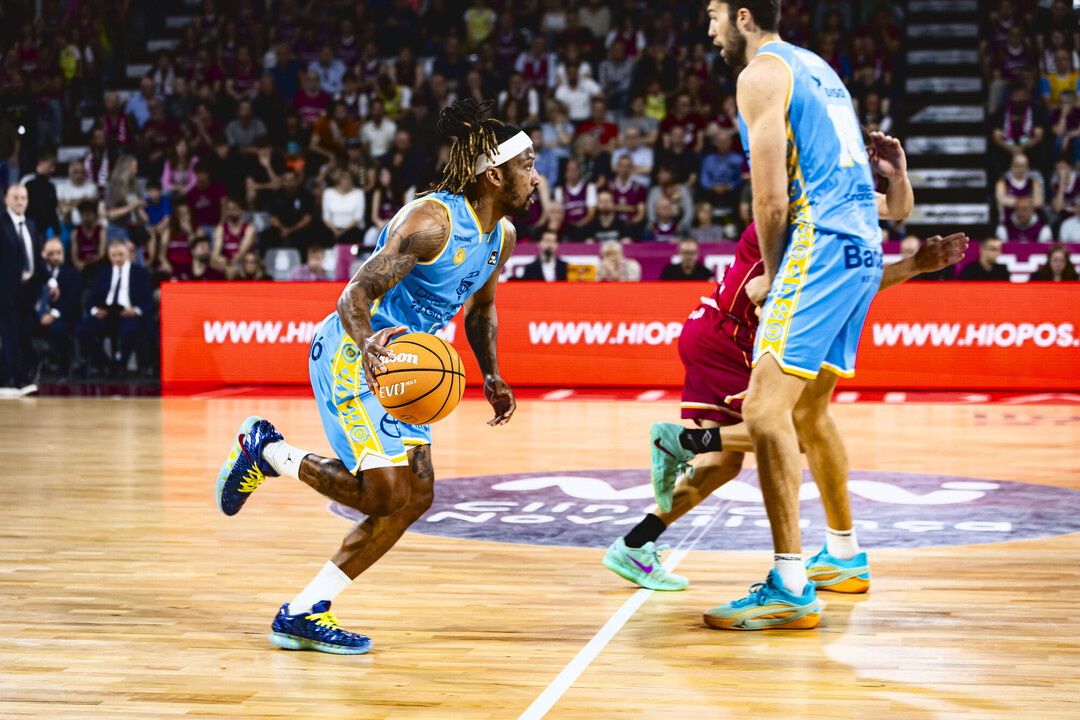
Regarding Albicy —the club’s all-time assists leader and a defensive cornerstone for six seasons—, Savane criticized the French point guard’s surprise decision to relinquish the captaincy. “He stepped down as captain in the middle of the storm and the the message it sent to his teammates was that we were on a ship without anyone at the helm. I don’t know the reason, but I am convinced that if we had seen the leadership and attitude of previous years’ Albicy, we would not be where we are today”, he said. Savane was equally critical of Tobey: “The club stood by Tobey during a difficult personal period, when he was already performing at one of the lowest levels of his career. When he returned, we expected him to repay that support. Instead, we saw no real commitment, no sense of ownership or suffering alongside the club, which is what should be expected from a player who represented our biggest financial investment”.
Those comments pointed to a clear breakdown between the locker room and the front office, a deterioration that eventually became impossible to hide.
The ship was sinking, and embarrassing home defeats began to pile up: 50-68 against Hiopos Lleida, 75-83 against Río Breogán and 95-109 against San Pablo Burgos. Eventually, they cost Lakovic his job. Savane and Villar had defended the Slovenian coach until the very end, but many within Spanish basketball believe the board waited far too long to make a change. Lakovic had spent months searching unsuccessfully for solutions.
After exploring several alternatives, Gran Canaria turned to Argentine coach Néstor ‘Ché’ García in the hope of providing an emotional spark. And initially, the move appeared to work. Victories against Girona (100-90) and Unicaja (100-101) seemed to offer the islanders a lifeline.
But the disaster unfolded over the final two rounds.
A dreadful home performance against Baxi Manresa (80-87) was followed by a crushing 105-81 defeat away to Valencia Basket. Those results ultimately sent Gran Canaria, alongside Covirán Granada, down to Spain’s second division.
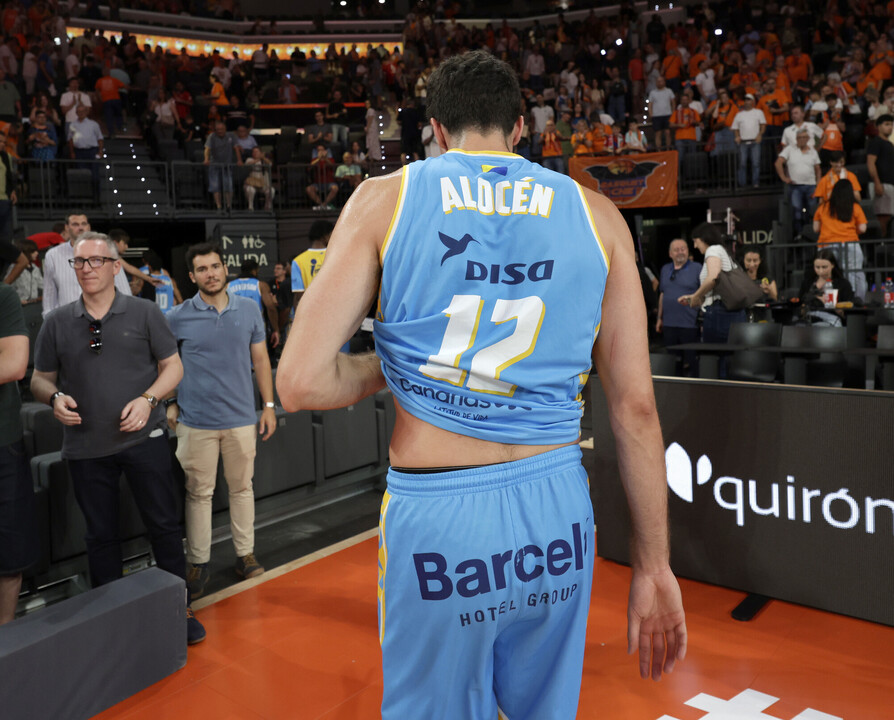
The manner of the relegation made it even more cruel. When Gran Canaria’s game in Valencia ended, the club believed it had effectively secured survival. Then, an extraordinary ending in Lugo came. Casademont Zaragoza defeated Río Breogán 94-95 thanks to an improbable finish capped by a buzzer-beating three-pointer from Marco Spissu. For the first and only second all season, Gran Canaria found itself in the relegation places.
Just one second.
But, unfortunately for Gran Canaria, it was the most important second of the entire season. The decisive one.
⌚️ Cuando el reloj estaba a punto de llegar a cero, Marco Spissu escribió historia.
La jugada contra el reloj @lotuswatches de mayo es un lanzamiento destinado a ser recordado durante años.
Un triple sobre la bocina para sellar la permanencia de @casademontBZ en #LigaEndesa y… pic.twitter.com/wkJXAnMqYy
— Liga Endesa (@ACBCOM) May 30, 2026
A fittingly cruel punishment for a disastrous year both in the boardroom and on the court, suffered by a club that should never have found itself in such a position. “To be relegated like this is extremely painful. I want to apologize to the CB Gran Canaria supporters,” said ‘Che’ García afterward.
Few could disagree.