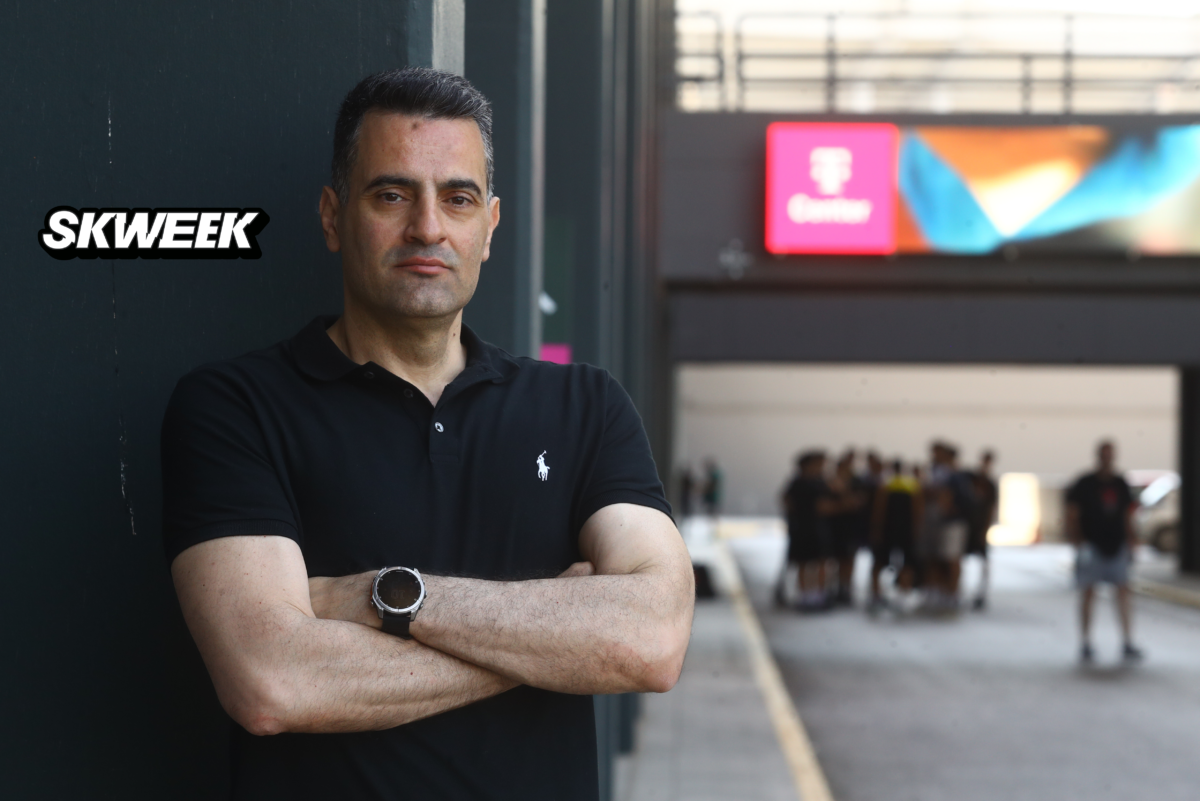


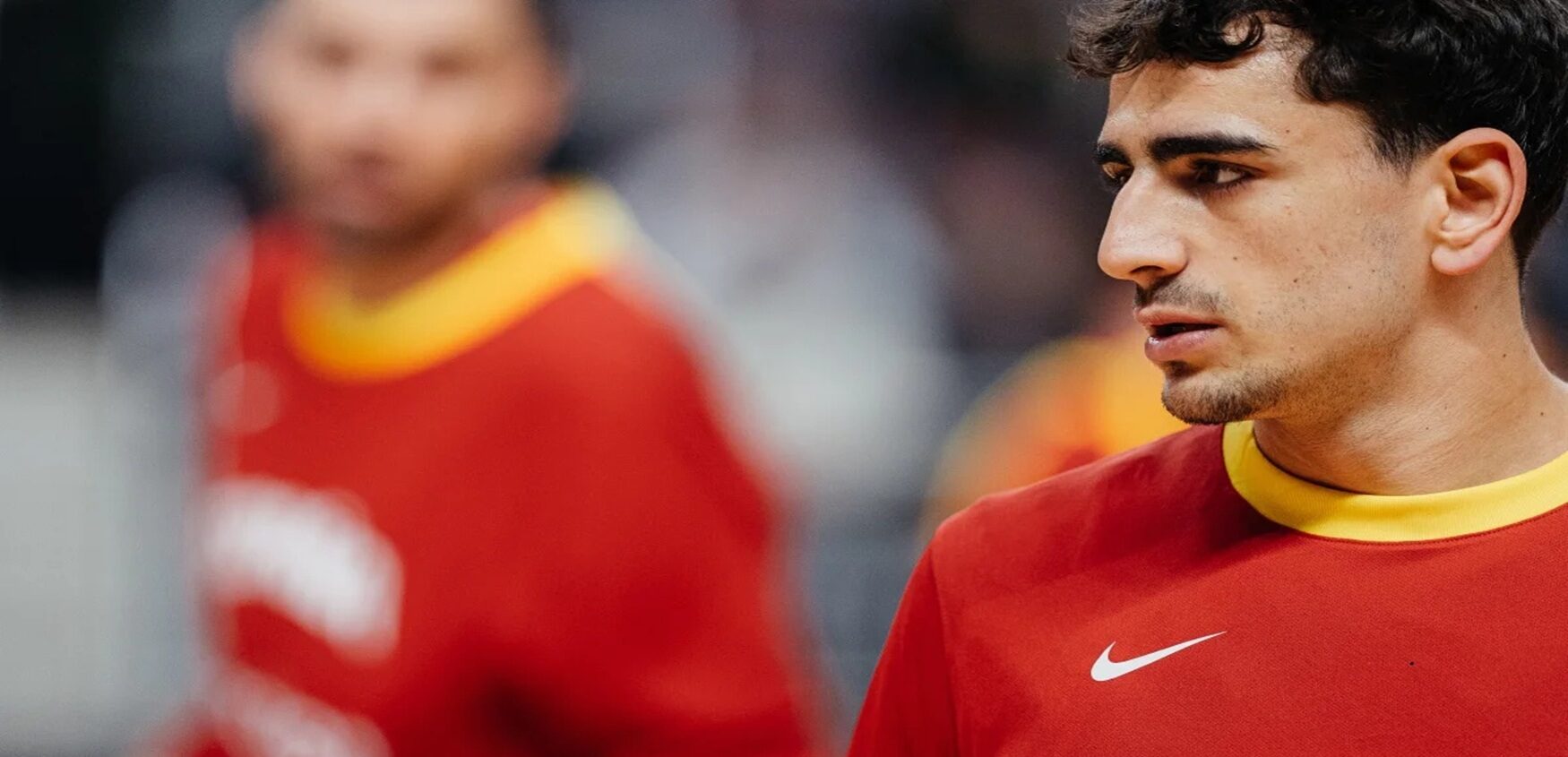

Álvaro Cárdenas has just been crowned Liga Endesa champion with Valencia Basket, capping off a final year that seems hard to believe even for him. After a season playing on loan for Peristeri, he initially arrived to the team simply to practice and speed up his adjustment ahead of next season, but just a few weeks later he found himself playing meaningful minutes and winning the ACB Finals. Now, he has also joined the Spanish national team during the latest FIBA window, taking the floor against Denmark and Georgia.


His story is one of remarkable growth. Cárdenas never came through one of Spain’s powerhouse youth academies, and few could have predicted he would end up where he is today. Recently, he shared his thoughts on the radio show Tirando a Fallar, in an interview you can now read in full.
Question: Congratulations for the title. Have you had time to process everything that’s happened?
Álvaro Cárdenas: Thank you very much. Honestly, it still feels crazy. These have been incredible months and everything has happened so fast. I’m still trying to process a lot of things right now.
Question: You seemed to be clearly in control for long stretches of the Finals. The team’s intensity was at a very high level.
Cárdenas: Barça got players with tremendous talent and they showed that from Game 1, but physically I think we were on another level. We imposed a really high pace throughout the series, and our rotation allowed us to maintain that intensity. We knew that if the series went deep, the wear and tear could catch up with them, and that’s ultimately what happened.
Question: The first game was especially tough because of the way it ended. How do you deal with something like that?
Cárdenas: We definitely could have executed that last play better, no question about it. But what surprised me the most about this team was its character. We lost in a painful way and, even so, when we got back to the locker room, there was still complete confidence. Nobody hung their heads and nobody started worrying about losing the Finals.
Question: There was also a delicate moment in Game 3, when Barça came back and the Palau crowd started building momentum.
Cárdenas: Yes. Barça had so much talent, and our style of play can create those situations too: just as we can go on huge runs, they can do the same. They switched to a zone defense that gave us problems and things got difficult for a stretch, but that’s when the team’s talent and personality showed up. Brancou Badio’s three-pointer was huge because it gave us some breathing room again.
Question: You arrived in Valencia just a month ago to practice and prepare for next season, and suddenly you’re playing important minutes in the ACB Finals. What’s that like?
Cárdenas: It’s been crazy. I finished my season in Greece with a bitter feeling because we lost our playoff series against PAOK, and honestly I thought we could have competed better. At that point I thought my season was over. Then Valencia called me and the initial idea was simply to help and start adapting for the future.
I made my debut against Bilbao and, honestly, I think I played one of the worst games of my career. Maybe one of the worst ACB debuts ever! (laughs). After that I thought I probably wouldn’t get another chance, but little by little I started getting more comfortable, understanding the system better and feeling better on the court.
I didn’t play in the next game, but shortly afterward Pedro Martínez told me he was going to start counting on me. If someone had told me a month and a half ago that I’d be playing meaningful minutes in the ACB Finals, I wouldn’t have believed them.

Question: You also joined a team that already had the season rolling and with very little room for adjustments.
Cárdenas: It was a really exciting challenge. I had watched a lot of Valencia games during the season, so that helped me understand certain things, but there are so many details that you only learn through practice. I’m really grateful to the coaching staff and my teammates because they made me feel like part of the group from day one and gave me a lot of confidence.
Question: Tell me, what’s it like guarding Jean Montero?
Cárdenas: That guy is crazy! (laughs). He’s unbelievable. It’s not just his scoring ability; he’s an extremely smart player who barely makes mistakes. His decision-making has been outstanding and he reached the end of the season playing with a ton of confidence. Honestly, I don’t know if there’s anybody in Europe playing at that level right now.
Question: You also shared this title with Omari Moore, your former teammate at San Jose State.
Cárdenas: Yes, that was really special. I consider him one of my best friends and we’ve stayed really close ever since college. The chances of ending up on the same team again with someone you played with in college are pretty small, so being able to experience something like this together has been incredible.
Question: There’s been a lot of movement involving Valencia Basket’s roster and coaching staff. At least you can feel pretty relaxed.
Cárdenas: Yes. My plan is to stay in Valencia and I’m really excited to start next season from day one. I’m very happy here. This is a club making a huge commitment to basketball, and I think I’m in the perfect place for me.
Question: How would you evaluate your time in Greece?
Cárdenas: From day one, Vassilis Xanthopoulos, Peristeri’s coach, told me he wanted me to be his starting point guard, and he stayed true to that. It was exactly what I was looking for because there were moments during the season when I made mistakes, but his trust allowed me to play without fear. With another coach, maybe those mistakes would’ve sent me straight to the bench. That’s extremely important if you want to grow.
Question: What’s it like going up against two giants like Panathinaikos and Olympiacos?
Cárdenas: One thing you think about before going to Greece is the hostile environments, but when you play against them, fans don’t always take those games that seriously and attendance isn’t always huge. Playing against them is always a challenge because my goal was to reach the EuroLeague level —if not next year, then in the years ahead— and seeing myself competing at that level was really cool.
Question: What do you think you’re missing to reach the level of someone like Thomas Walkup or Kendrick Nunn?
Cárdenas: Honestly, one thing I noticed is that defensively I’m at a respectable level. I felt good guarding them. Offensively, there were times when their physicality gave me problems, especially when there were matchup switches and I ended up against much bigger players. I can improve in those decision-making situations. But, for example, I noticed a big improvement from my first game against Panathinaikos to the second one. Obviously, though, I still have a long way to go.
Question: Everything that’s happened to you over the past year has been incredible. How do you handle it mentally?
Cárdenas: I always try to stay focused on the present. Sometimes it’s actually my parents who make me stop and look back at everything I’ve accomplished. When you’re so focused on the next challenge, you don’t always realize how important it is to enjoy and celebrate your successes.
Question: A few weeks ago, Chus Mateo described you as an example for players who didn’t come through major youth programs.
Cárdenas: I think it’s a nice story if it can help other kids. There are many paths to professional basketball, not just one. It takes a huge amount of sacrifice and hard work, but also a lot of belief in yourself. And there’s another reality too: you can do everything right and still not make it. But I preferred having the peace of mind of knowing I gave everything I had for my dream.
Question: Little by little, you’re establishing yourself with the Spanish national team. Is playing in next summer’s World Cup a goal?
Cárdenas: If I said I don’t dream about playing in a World Cup, I’d be lying. It’s something every player wants to experience. But right now I’m focused on what’s directly in front of me: practicing well and making the most of this opportunity during the FIBA window.